Location
Mount Vernon, WA 98274

Location
Mount Vernon, WA 98274
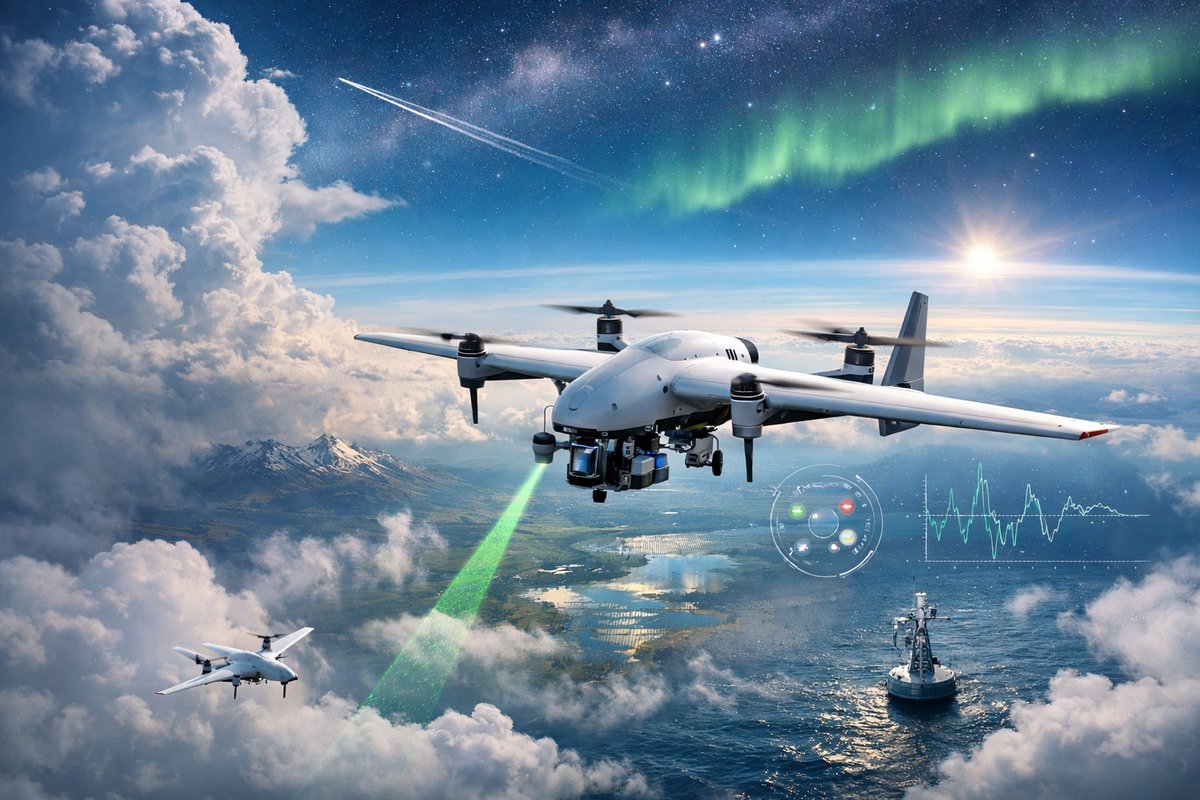
Emerging autonomous drone technology is transforming how scientists study Earth's atmosphere, offering unprecedented precision in climate data collection. These innovations promise to deepen our understanding of weather patterns, greenhouse gas dynamics, and the intricate feedback loops shaping global climate.
As the urgency to understand and mitigate climate change intensifies, scientists are turning to advanced tools that can capture the complex dynamics of Earth’s atmosphere with greater detail and frequency. Among these innovations, autonomous atmospheric monitoring drones have emerged as a groundbreaking technology, reshaping how researchers gather environmental data and model climate processes.
Traditional atmospheric measurements have relied heavily on satellites, weather balloons, and ground-based stations. While invaluable, these methods face limitations in spatial resolution, temporal coverage, and accessibility to certain atmospheric layers or remote regions. Satellites, for example, provide broad coverage but can lack fine-scale detail, whereas balloons offer vertical profiling but are constrained by drift and limited deployment duration.
Enter autonomous drones designed specifically for atmospheric research. These drones are equipped with sophisticated sensor suites capable of measuring temperature, humidity, wind velocity, aerosol concentrations, and greenhouse gases such as carbon dioxide and methane. Unlike conventional platforms, these drones can be deployed rapidly, operate at various altitudes, and navigate complex airspaces, including urban environments and remote wilderness.
One of the most transformative aspects of these drones is their ability to perform coordinated swarm operations. By deploying multiple drones simultaneously, scientists can capture three-dimensional snapshots of atmospheric conditions over extended areas. This capability enables the study of localized weather phenomena, pollutant dispersion, and microclimate variations with unprecedented granularity.
Recent field experiments have demonstrated the efficacy of these autonomous systems. In coastal regions, drone swarms have mapped sea breeze patterns and their interaction with urban heat islands, revealing how these dynamics influence local temperature extremes. In agricultural zones, drones have monitored methane emissions from soil and livestock, providing critical data to refine emission inventories and inform sustainable farming practices.
Beyond data collection, the integration of machine learning algorithms onboard drones allows real-time analysis and adaptive mission planning. Drones can identify emerging atmospheric features, such as developing storm cells or pollution plumes, and adjust their flight paths to prioritize data acquisition in these areas. This dynamic responsiveness enhances the efficiency and relevance of measurements, especially during rapidly evolving weather events.
The environmental footprint of these drones is another consideration. Many models employ electric propulsion systems powered by rechargeable batteries, minimizing emissions compared to traditional aircraft-based research methods. Advances in lightweight materials and solar energy harvesting are further extending flight durations and operational ranges, aligning with broader sustainability goals.
Challenges remain, including regulatory hurdles for drone operations in controlled airspace, data integration complexities, and the need for robust communication networks to support swarm coordination. However, ongoing collaborations between climate scientists, engineers, and policymakers are addressing these barriers to facilitate wider adoption.
Looking ahead, the proliferation of autonomous atmospheric drones promises to enrich climate models with high-resolution empirical data, enhancing predictions of extreme weather events and long-term climate trends. This technology also holds potential for real-time environmental monitoring that can inform disaster response and public health initiatives.
By harnessing the synergy of robotics, sensor technology, and artificial intelligence, autonomous drones are not only expanding the frontiers of atmospheric science but also empowering humanity to better understand and protect the delicate balance of our planet’s climate system.