Location
Mount Vernon, WA 98274

Location
Mount Vernon, WA 98274
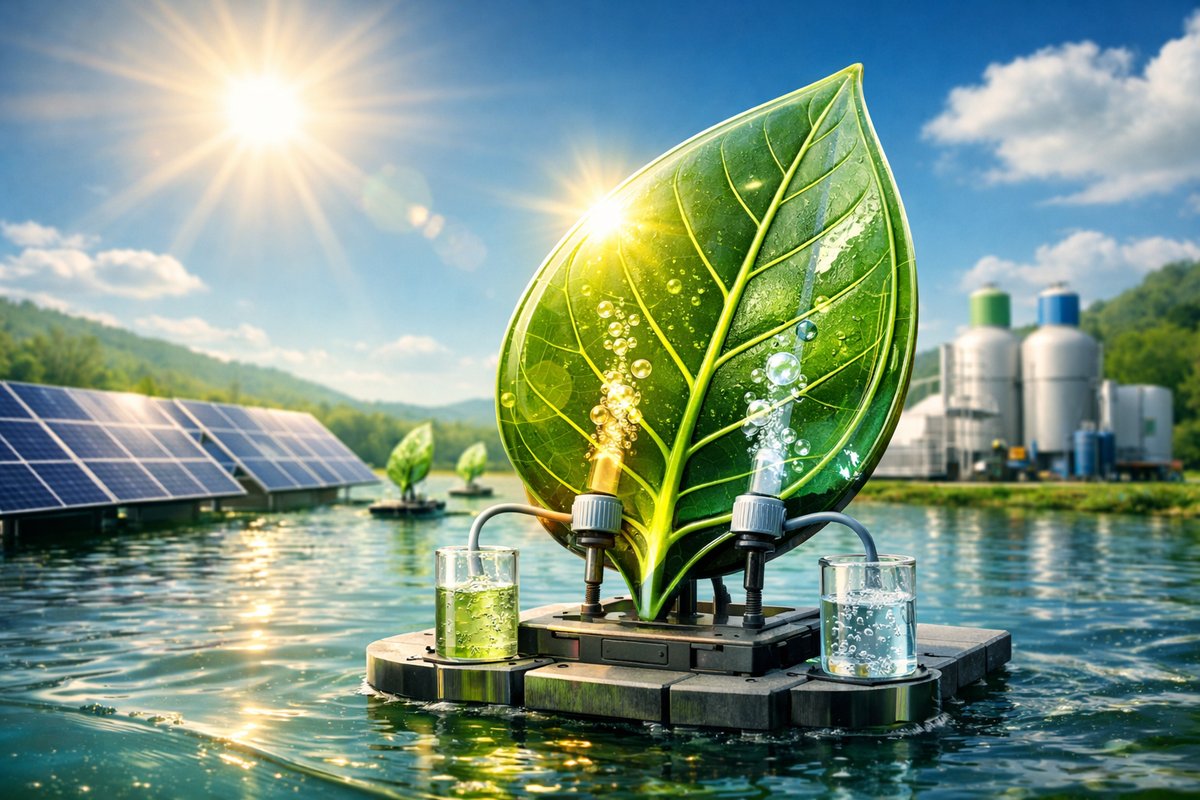
Scientists are making remarkable strides in mimicking natural photosynthesis to develop artificial leaves that convert sunlight into clean fuel. This breakthrough could revolutionize sustainable energy by providing a carbon-neutral source of power, inspired by the very process that fuels life on Earth.
Photosynthesis, the process by which plants convert sunlight, water, and carbon dioxide into energy, remains one of nature’s most elegant and efficient mechanisms. For decades, scientists have sought to replicate this process artificially to create sustainable energy solutions that could reduce reliance on fossil fuels and curb greenhouse gas emissions. Recent advances in artificial leaf technology are now bringing this vision closer to reality, promising to transform how we harness solar energy.
At its core, natural photosynthesis involves capturing sunlight to drive chemical reactions that produce glucose and oxygen. The challenge for researchers has been to engineer a synthetic system that can similarly capture solar energy and convert it into usable fuels like hydrogen or hydrocarbons, without the complexities and inefficiencies found in biological systems. Early prototypes of artificial leaves struggled with durability, cost, and energy conversion efficiency, but recent innovations in materials science and nanotechnology have begun to overcome these hurdles.
One significant breakthrough involves the development of novel catalysts that facilitate the splitting of water molecules into hydrogen and oxygen using sunlight. These catalysts, often composed of abundant and non-toxic elements such as cobalt, nickel, or iron, mimic the natural enzymes found in plant chloroplasts. By optimizing the surface structure and electronic properties of these catalysts, scientists have increased the rate of hydrogen production while reducing energy losses.
Complementing these catalysts are advances in photoelectrochemical cells, which serve as the platform for the artificial leaf. These cells integrate light-absorbing semiconductors with the catalytic components, enabling efficient capture and conversion of sunlight. Researchers have experimented with materials like silicon, titanium dioxide, and emerging perovskites, each offering unique advantages in light absorption and charge transport. The challenge remains to balance efficiency with stability, as some materials degrade under prolonged exposure to sunlight and water.
Recent laboratory demonstrations have showcased artificial leaves capable of producing hydrogen fuel at rates approaching those of natural photosynthesis, but with greater control and scalability. Unlike plants, which produce glucose stored internally, these systems generate hydrogen gas that can be collected and stored for later use in fuel cells or combustion engines. This direct production of clean fuel represents a paradigm shift in renewable energy, enabling on-demand, carbon-neutral power generation.
Beyond energy production, artificial leaf technology holds promise for addressing environmental challenges. For example, integrating these systems into wastewater treatment could simultaneously purify water while generating fuel, creating a synergistic approach to resource management. Additionally, coupling artificial leaves with carbon capture technologies may enable the conversion of captured CO2 into useful hydrocarbons, closing the carbon loop and mitigating climate change.
The path to commercial viability is still unfolding. Scaling up production while maintaining cost-effectiveness and durability remains a critical focus. Researchers are exploring modular designs that can be deployed in diverse environments, from urban rooftops to remote off-grid locations. Furthermore, ensuring that these technologies are accessible and sustainable aligns with broader goals of environmental justice and energy equity.
The quest to replicate photosynthesis artificially exemplifies the intersection of curiosity, precision, and awe that defines scientific exploration. By learning from nature’s blueprint and applying cutting-edge innovation, humanity moves closer to a future where clean, sustainable energy is abundant and integrated seamlessly into daily life. As research progresses, artificial leaves may become a cornerstone of the global energy landscape, illuminating a path toward a healthier planet and a more resilient society.