Location
Mount Vernon, WA 98274

Location
Mount Vernon, WA 98274
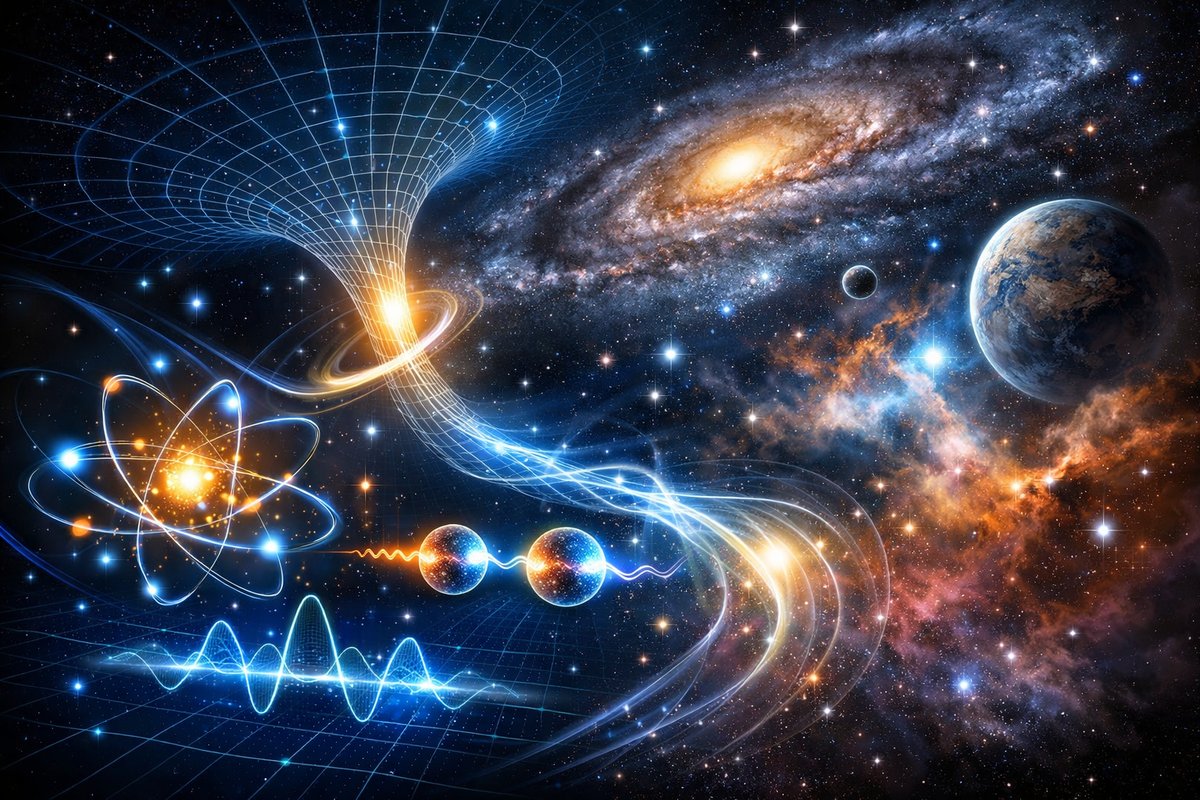
Science continues to push the boundaries of human understanding, from the enigmatic behaviors of quantum particles to the vast expanses of the cosmos. Recent discoveries are reshaping our grasp of fundamental forces and the intricate patterns that govern reality, inviting us to explore with renewed curiosity and precision.
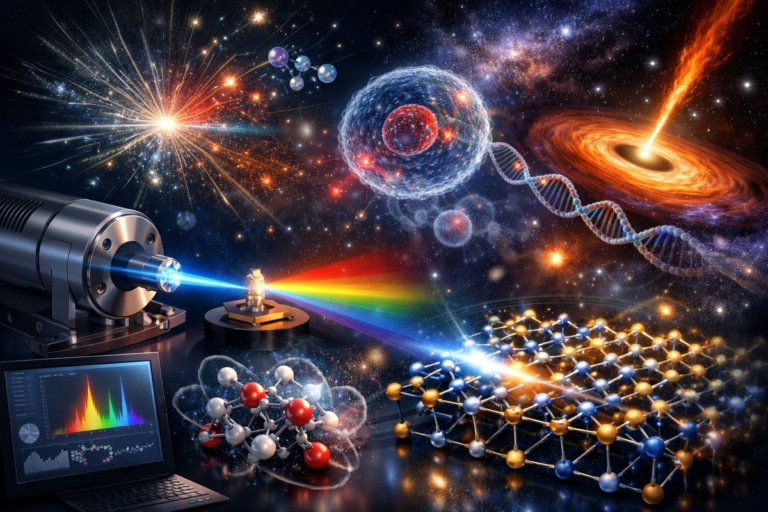
The quest to decipher the mysteries of the universe has taken remarkable strides in recent months, revealing new layers of complexity and wonder across scales both minuscule and monumental. At the heart of these advances lies an interplay between quantum mechanics-the science of the very small-and cosmology, which explores the vastness of space and time. Together, these disciplines illuminate the forces and patterns that shape existence itself.
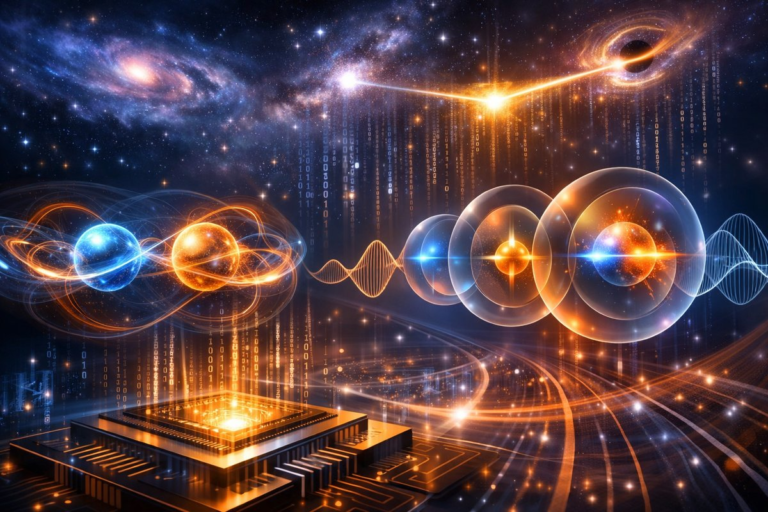
In the realm of quantum science, researchers have made significant progress in understanding entanglement and coherence, phenomena that defy classical intuition. Quantum entanglement, where particles become interconnected such that the state of one instantly influences another regardless of distance, has been demonstrated over unprecedented distances using satellite-based experiments. This not only deepens our comprehension of quantum mechanics but also paves the way for ultra-secure communication networks leveraging quantum encryption.
Advancements in quantum computing hardware have also accelerated, with new materials and architectures enabling more stable qubits-the fundamental units of quantum information. These improvements are crucial for scaling up quantum processors to solve complex problems beyond the reach of classical supercomputers, such as simulating molecular interactions for drug discovery or optimizing large-scale logistical systems.
On the cosmic front, astronomers have leveraged cutting-edge telescopes and observatories to probe the early universe with extraordinary clarity. Observations of the cosmic microwave background radiation, the afterglow of the Big Bang, have refined measurements of the universe’s expansion rate, a parameter known as the Hubble constant. Intriguingly, discrepancies between different measurement methods hint at new physics beyond the current cosmological model.
Moreover, the detection of gravitational waves-ripples in spacetime caused by cataclysmic cosmic events-has opened an unprecedented window into phenomena such as black hole mergers and neutron star collisions. These observations not only confirm predictions from Einstein’s general relativity but also enable the study of matter under extreme conditions, revealing insights into nuclear physics and the behavior of dense stellar remnants.
The study of dark matter and dark energy, which together constitute approximately 95% of the universe’s total mass-energy content, remains one of the most profound scientific challenges. Experimental efforts using highly sensitive detectors deep underground aim to capture elusive dark matter particles, while astronomical surveys map the large-scale structure of the cosmos to understand the influence of dark energy on cosmic acceleration.
At the intersection of quantum and cosmic scales, theoretical physicists are exploring frameworks such as quantum gravity and string theory to reconcile the apparent contradictions between quantum mechanics and general relativity. These ambitious endeavors seek a unified description of all fundamental forces, potentially unlocking the ultimate secrets of spacetime and matter.
Beyond the purely scientific implications, these discoveries resonate deeply with human curiosity and our desire to comprehend our place in the cosmos. They inspire new technologies, challenge philosophical perspectives, and encourage a mindful appreciation of the interconnectedness of all things-from the subatomic to the galactic.
As science continues to evolve, it invites a broad audience-from seasoned researchers to curious novices-to engage with its unfolding narrative. Embracing a values-driven approach that respects privacy, sustainability, and emotional intelligence, the scientific community strives to foster inclusive dialogue and responsible innovation.
In this spirit, the latest breakthroughs exemplify the power of collaborative inquiry and the enduring allure of the unknown. Whether decoding the quantum fabric of reality or mapping the cosmic tapestry, science remains a playground for awe and discovery, urging us to think deeply and explore boldly.