Location
Mount Vernon, WA 98274

Location
Mount Vernon, WA 98274
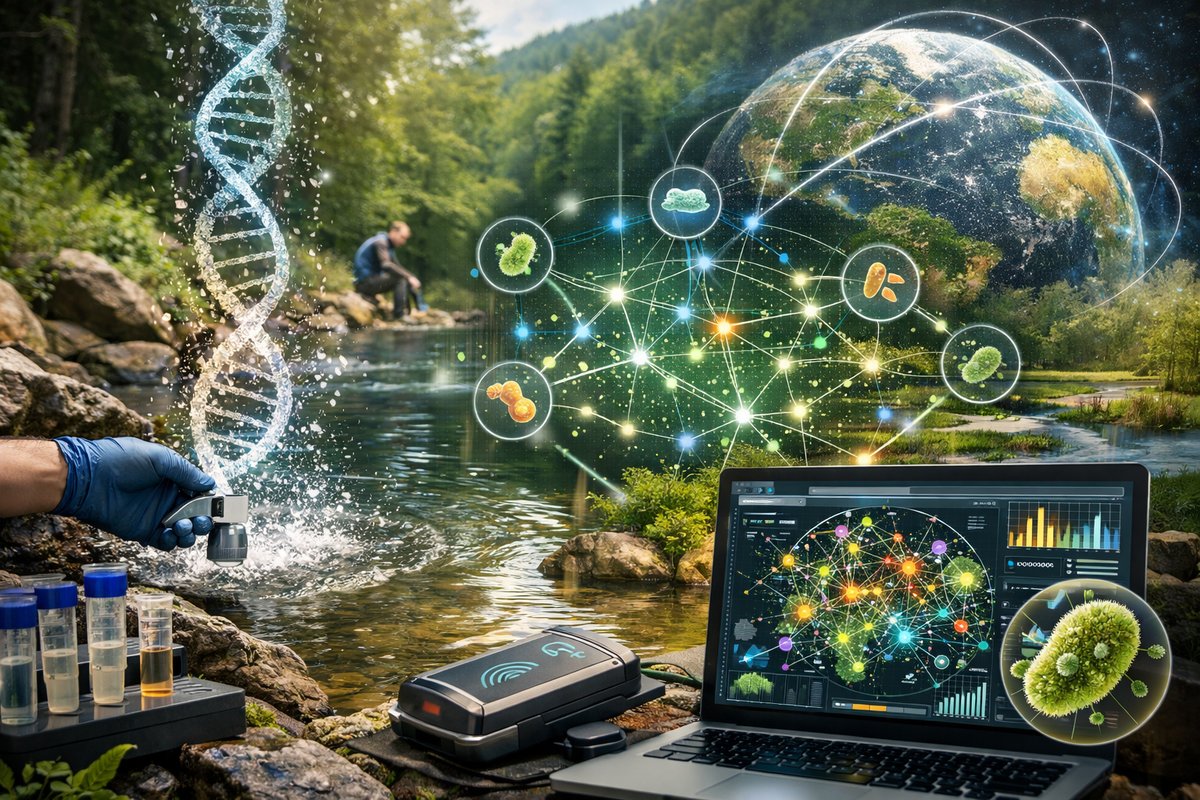
Recent advances in environmental DNA (eDNA) technology are revolutionizing how scientists explore microbial communities that underpin ecosystem health. By combining cutting-edge sampling techniques with AI-driven data analysis, researchers are beginning to map the invisible networks of microbes that sustain life on Earth.
Environmental DNA, or eDNA, refers to genetic material shed by organisms into their surroundings-soil, water, or air-offering a non-invasive window into biodiversity. While eDNA has traditionally been used to detect larger species such as fish or amphibians, a new wave of research is pushing the boundaries to uncover the complex microbial communities that form the foundation of ecosystems worldwide. These microscopic organisms, from bacteria to archaea and fungi, drive critical processes like nutrient cycling, carbon sequestration, and pollutant degradation, yet their diversity and dynamics remain largely unexplored.
Recent breakthroughs in eDNA sampling methodologies have enabled scientists to capture microbial DNA with unprecedented precision. Innovations include autonomous water samplers that collect minute volumes across varied depths, drones equipped with air filters to sample atmospheric microbes, and soil sensors capable of detecting microbial DNA signatures in situ. These tools are complemented by advances in sequencing technologies that can process vast amounts of genetic data rapidly and affordably.
One particularly exciting development is the integration of artificial intelligence and machine learning algorithms to analyze the complex datasets generated by eDNA studies. AI models can identify patterns in microbial community composition related to environmental factors such as temperature, pH, and pollutant levels. This approach allows researchers to predict ecosystem responses to climate change, land use shifts, and contamination events with greater accuracy.
For example, in coastal estuaries, where freshwater meets the ocean, microbial communities play a pivotal role in nutrient exchange and water quality. By deploying autonomous underwater vehicles equipped with eDNA samplers, scientists have mapped microbial hotspots that correspond with zones of high carbon uptake and pollutant breakdown. These insights help inform conservation strategies and pollution mitigation efforts.
In terrestrial ecosystems, soil microbial networks are equally vital but notoriously difficult to study due to their heterogeneity. Recent field studies employing soil sensor arrays capable of detecting microbial DNA in real time have begun to reveal how microbial diversity fluctuates with seasonal changes and agricultural practices. Such data empower farmers to adopt sustainable land management techniques that promote soil health and reduce reliance on chemical fertilizers.
Beyond Earth, the principles of eDNA analysis are inspiring astrobiology missions seeking signs of life on other planets. Instruments designed to detect trace biomolecules in Martian soil or icy moon plumes are being developed with lessons learned from terrestrial microbial eDNA research. This cross-disciplinary synergy exemplifies how understanding the smallest life forms on our planet can guide the search for life in the cosmos.
Despite these advances, challenges remain. Contamination risks during sampling and sequencing can obscure true microbial signals, requiring rigorous protocols and controls. Additionally, the sheer diversity of microbial life means many sequences cannot yet be matched to known organisms, highlighting gaps in reference databases. Addressing these issues will require collaborative efforts spanning microbiology, bioinformatics, engineering, and ecology.
Looking forward, the fusion of eDNA technology with remote sensing, robotics, and AI promises a new era of environmental monitoring. Continuous, high-resolution mapping of microbial communities will provide early warnings of ecosystem stress, guide restoration projects, and deepen our understanding of life’s interconnected web. As these invisible networks come into clearer focus, they remind us that even the smallest organisms hold profound influence over planetary health and resilience.
By embracing curiosity and precision, scientists are not only decoding the microbial mysteries beneath our feet and beyond our sight but also fostering a more sustainable and informed stewardship of the natural world. This journey into the unseen realms of life exemplifies the transformative power of science to reveal awe-inspiring complexity and guide thoughtful action.