Location
Mount Vernon, WA 98274

Location
Mount Vernon, WA 98274
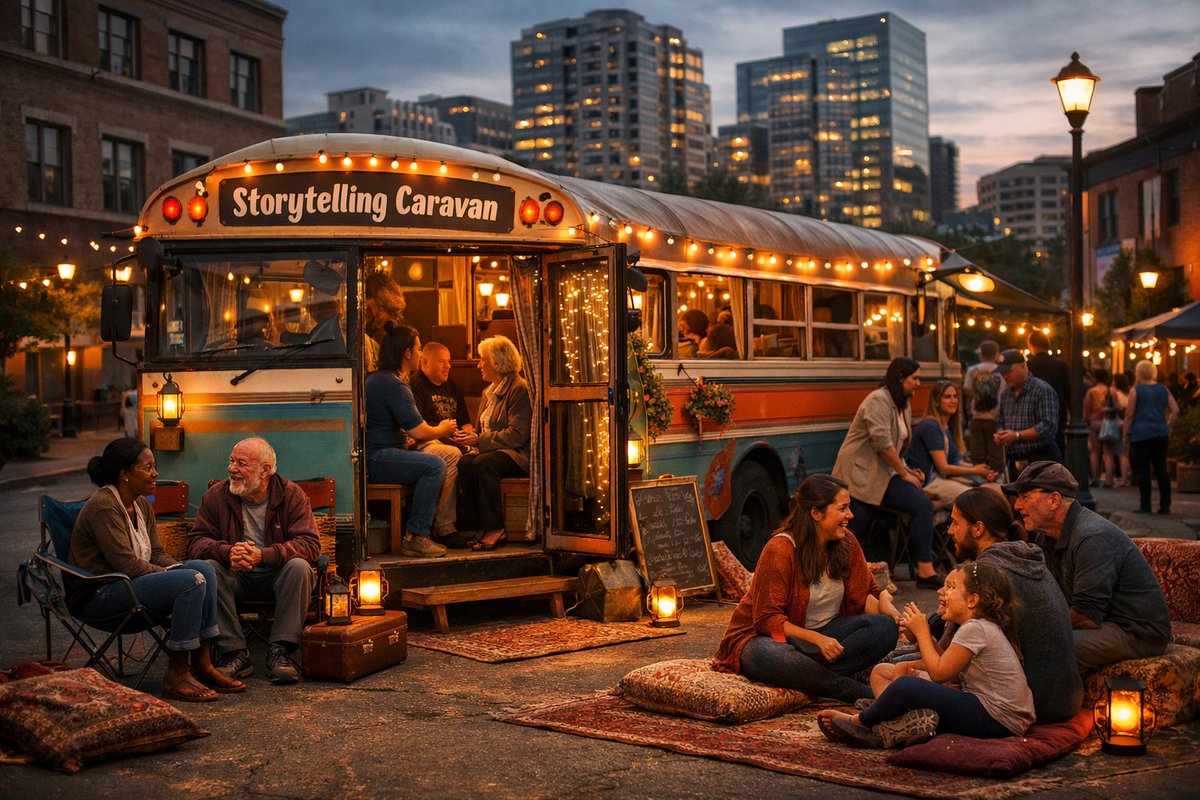
A retrofitted bus transformed into a storytelling caravan has been touring urban neighborhoods, drawing hundreds to share struggles, dreams, and acts of kindness. Amid rising loneliness rates, this traveling initiative offers a simple yet profound remedy: listening and being heard.
A retrofitted passenger bus, painted in shifting hues of teal and ochre, now serves as a nomadic storytelling hub. Since its first stop last spring, the caravan has visited eight city districts, inviting passersby to step inside and share a moment of unguarded conversation. Within its padded benches and warm lamplight, participants unspool memories of hardship-a factory closure, the ache of single parenting, the anguish of a loved one’s illness-and discover unexpected echoes in strangers’ confessions.
The initiative, called “Rolling Reflections,” sprang from a small nonprofit collective seeking to counter rising loneliness in the wake of pandemic isolation. Surveys by local universities show that nearly half of urban residents report feeling chronically alone. Project leaders saw urgency in creating a low-barrier venue for genuine human connection. The caravan’s interior is stripped of digital screens, replaced by paper journals, felt-tip pens, and a recorder for optional audio diaries. A gentle soundtrack of instrumental cello underscores each session.
Attendance has steadily climbed. In the first month, fewer than a dozen people climbed aboard. By midsummer, 75 individuals of all ages filled morning and evening sessions. Most are introduced via word of mouth, some by flyers pinned to coffee shop bulletin boards, others through community centers. Attendees range from recent college graduates grappling with career doubts to retirees who long for deeper ties after watching friends move away.
Several participants describe the experience as transformative. One single mother spoke of balancing two jobs with no time to process her fears about her teenage son. She found relief scribbling in the caravan’s journal, then reading her entry aloud in a small group. A former factory worker retracing his role in an industry that once defined his identity discovered fresh purpose mentoring a young participant considering technical school. Shared vulnerability seeded empathy and gave new direction.
“It was healing to hear someone else say they cried in their car after a rough day,” recalls a 28-year-old graphic designer. “I thought I was alone in feeling that way. Suddenly I had people nodding and sharing their own stories. I didn’t need grand solutions-just a space where my struggles were witnessed.”
Community organizers have taken note. A housing advocacy group invited Rolling Reflections to include tenants facing eviction, offering pro bono legal consultations afterward. A mental health clinic now refers patients to group sessions in the caravan for those hesitant about formal therapy. These partnerships amplify the project’s impact, weaving fresh threads into the social safety net.
Beyond personal testimony, artists have begun capturing collective narratives in murals and podcasts. In one neighborhood, a local painter transformed a boarded-up storefront into a mosaic of faces and fragments of whispered phrases: “I will try again,” “Love is a quiet act,” “Home is a circle of hands.” Beneath the mural, benches invite onlookers to pause and read journals left behind. Nearby, a small podcast studio records weekly episodes, featuring selections from audio diaries edited by aspiring sound engineers.
The caravan’s founders remain mindful of sustainability. Solar panels now top the roof, powering interior lights and audio equipment. Rainwater collected in rooftop barrels flushes the onboard sink. All writing materials are sourced from recycled or sustainably managed suppliers. Each district the caravan visits hosts a volunteer workday to repair any wear on the bus’s fixtures, fostering a sense of ownership.
Experts say the Rolling Reflections model taps into universal desires: to be acknowledged, to empathize, to affirm one another’s humanity. Sociologist Amina Patel notes that deliberate pauses in our hyper-connected lives can be radical acts of care. “Slowing down long enough to share a self-reflection counters the transactional nature of everyday interactions. It sets the stage for genuine social bonds, which are the bedrock of resilient communities.”
Challenges persist. Space on the bus limits session size, and weather can complicate outdoor waiting areas in colder months. Organizers are exploring a hybrid format, pairing shorter pop-up sessions in libraries or parks with the main caravan. Funding remains a constant concern; grants cover operational costs for only nine months a year, so grassroots fundraising efforts are critical.
Still, the anecdotal evidence grows. A dozen participants have formed monthly meetups after sessions to continue creative experiments: collaborative poetry, street photography walks, improvised music jams. These offshoot groups illustrate how a temporary space can catalyze enduring connections. When asked what keeps them coming back, many cite a desire to sustain that spark of fellowship rather than let it fade.
One participant, recently laid off from a midsize advertising firm, wrote in the caravan’s journal: “I came here to tell my failure story. I leave noticing my heart can still make space for new chapters.” Such entries multiply in the communal binder, offering a real-time chronicle of collective resilience. Organizers refer to these pages as the caravan’s living manifesto.
As autumn light stretches longer, Rolling Reflections plans to expand routes, adding suburban stops where public transit access is limited. The goal is clear: to carry rooms of listening wherever people need a moment to be seen and to see others. In a world racing forward at breakneck speed, this caravan offers proof that sometimes the most radical act is simply pausing long enough to reflect together.
In neighborhoods stitched together by anonymous transactions and fleeting digital pings, Rolling Reflections stands as a reminder that human lives are worth holding-their joys, their rifts, their hopes reborn in shared space. And with each journey, the caravan adds new chapters to a story of collective courage, reminding us that no one travels this road alone.