Location
Mount Vernon, WA 98274

Location
Mount Vernon, WA 98274
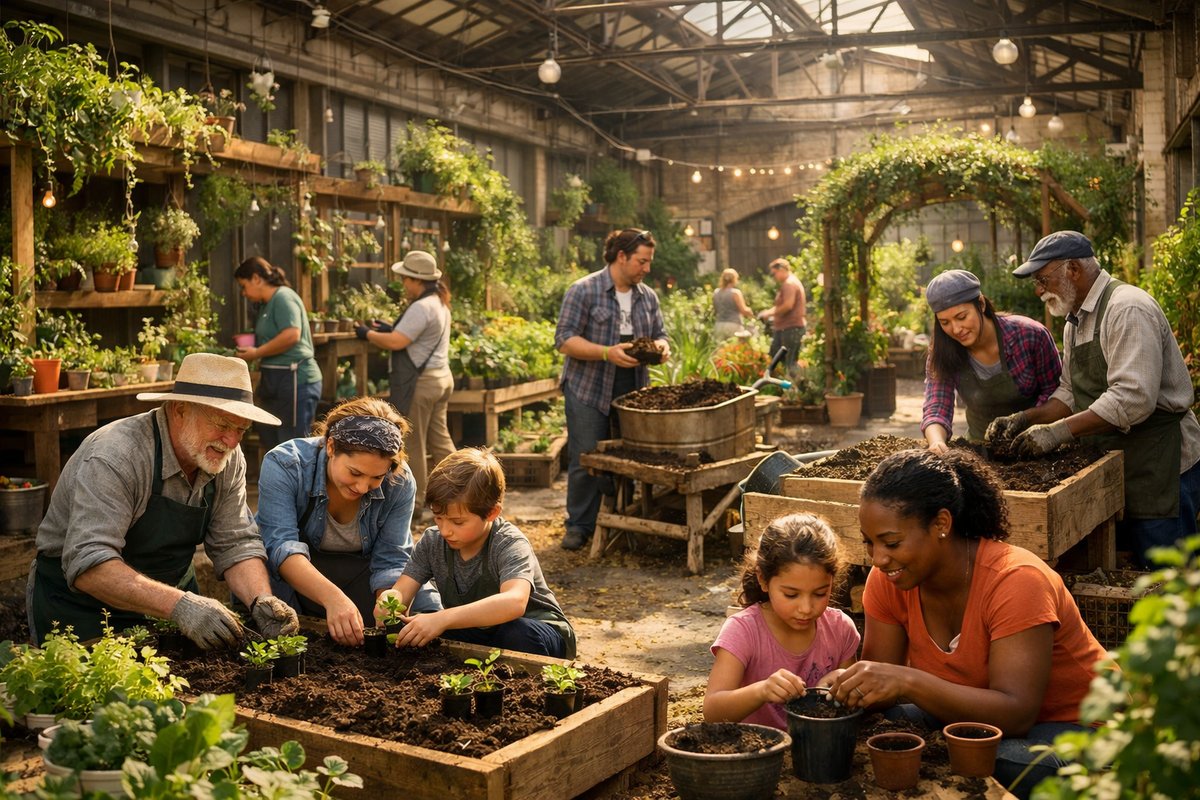
In a repurposed warehouse turned urban garden, volunteers and neighbors come together to sow seeds of hope and resilience. Through shared planting sessions, compost workshops, and gentle mentorship, this green sanctuary is transforming the city's concrete landscape-and the lives of those who tend it.
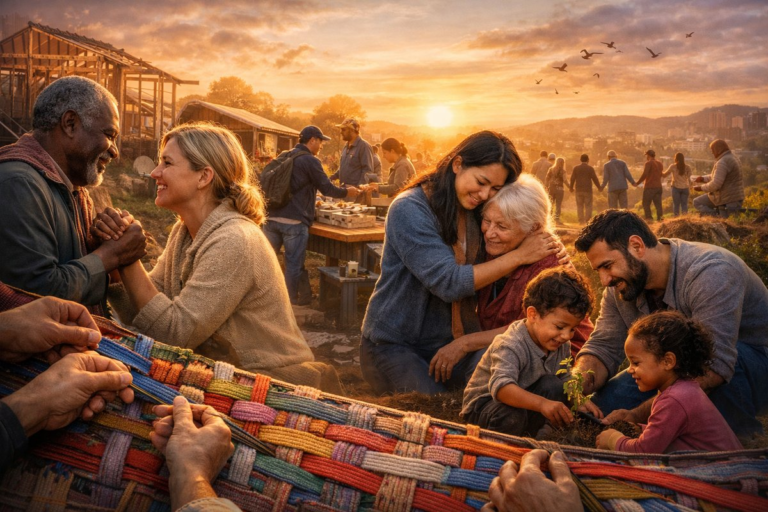
Under the skeletal rafters of a former manufacturing loft, rows of raised garden beds stand side by side in neat symmetry, each bursting with leafy greens, herbs, and bright blossoms. Community members-teenagers in hoodies, retirees with canes, and parents pushing strollers-arrive before sunrise, trowels and watering cans in hand. They trim back wilted leaves, sprinkle nourishing compost around fragile seedlings, and lean into one another’s laughter as much as they do the work. This is Green Haven, a volunteer-run urban farm that has quietly flipped the script on what a city block can be: a living, breathing nexus of purpose, learning, and collective hope.
Founded two years ago by a group of neighborhood residents and architects tired of watching vacant lots breed neglect, Green Haven struck a radical bargain with the city: permission to transform a condemned industrial space into a community greenhouse and garden beds in exchange for regular youth mentorship workshops and free produce distribution at the adjacent shelter. What started as weekend pop-up events now pulses with weekday routines: organic farming classes, soil-building seminars, elder storytelling circles, and midday harvests that feed as many as eighty families each week.
For eighteen-year-old Marcus, who dropped out of school and struggled to find stable work, the garden offered a purpose he hadn’t known he craved. “I used to feel invisible, like I was spinning my wheels,” he says, his hands cupped around a fistful of rich, crumbly soil. “Here, I see things grow because of what I do. I planted these radishes last week, and now they’re on somebody’s dinner plate.” His eyes light up when he describes how a local café agreed to serve microgreens grown by Green Haven volunteers, with 10 percent of profits funneled back into seed purchases and tool repairs.
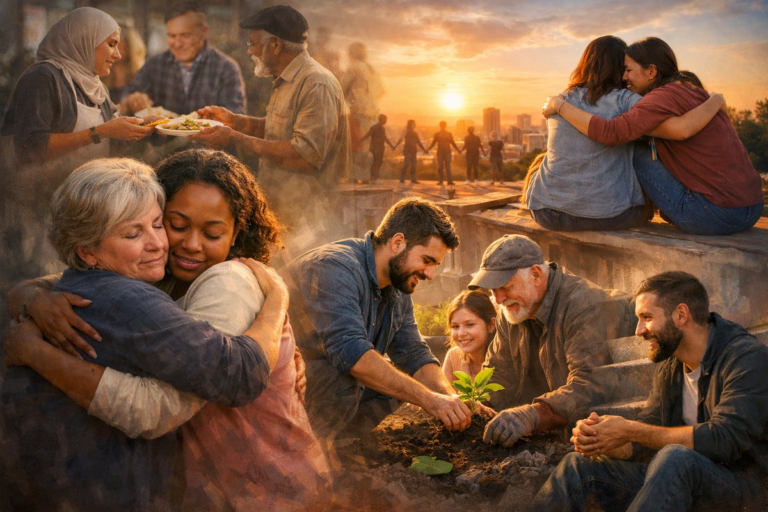
Just three containers away, Maria, a retired social worker, kneels on a foam pad as she inspects tomato vines for signs of blight. After losing her husband and retiring early, she worried that her days would settle into monotony. Instead, she discovered a new chapter in these communal beds. “When I’m here, I’m part of something bigger. I share tips with the teens, and I learn from them, too. I’ve found laughter again.” Her gentle guidance calms the jitters of newcomers: how to gauge moisture levels, the science behind crop rotation, the miracle of compost tea bubbling in a reclaimed barrel.
Volunteers credit an unspoken alchemy at work: soil, sweat, and solidarity coalescing into something richer than the sum of its parts. Dr. Elaine Foster, a community psychologist from the local university, has begun collecting data on participants’ mental health before and after joining Green Haven. Preliminary surveys point to measurable drops in stress, anxiety, and feelings of isolation, especially among seniors and young adults. “Gardening taps into deep human instincts-to nurture, to create, and to connect,” Foster explains. “When you witness a seed sprout under your care, you reaffirm your own capacity for growth.”
Beyond emotional uplift, Green Haven prides itself on sustainability. Volunteers built most of the raised beds using salvaged lumber from a demolished warehouse, and barrels once used to store industrial solvents now ferment kitchen scraps into nutrient-rich compost. A self-watering system, crafted from repurposed plastic containers and drip tubing, relies on captured rainwater to irrigate the crops. Every tool-from half-inch nozzles on garden hoses to ergonomic trowels-is donated or recycled, aligning with the project’s zero-waste philosophy.
Workshops run every Sunday afternoon cover topics ranging from seed-saving techniques to building low-cost drip-irrigation rigs. Michelle, a trained master gardener who grew up down the block, leads a session on companion planting next week, teaching how marigolds deter harmful insects and how basil can intensify tomato flavor. “I love demystifying the science so people feel empowered,” she says. “This knowledge used to live behind paywalls or expensive extension-service fees. Here, it’s free and shared among neighbors.”
Green Haven’s impact has rippled through the surrounding blocks. A corner deli now offers free cups of sun tea brewed with herbs from the garden, and a local bookstore hosts monthly “Seed Swap and Story Hour” gatherings for parents and toddlers. An afterschool program invites children to chart the seasonal cycles of lettuce, pumpkins, and kale, reinforcing lessons in ecology, math, and patience. Even graffiti artists have joined in, painting murals of bees, butterflies, and roots winding beneath the soil.
That spirit of co-creation extends to Green Haven’s governance. Monthly community meetings rotate between the warehouse and an adjacent park pavilion, where attendees propose new initiatives-like a pollinator garden to support urban bees or a greenhouse extension for winter growing. Decisions are made by consensus, ensuring that voices from every age group and background shape the project’s direction. “It feels like a true democracy,” says Amir, a volunteer coordinator. “No one’s standing in front telling us what to do. We all have a stake in the harvest.”
The produce distribution has become a lifeline for many. Families who once relied on distant food pantries now swing by on Thursday evenings, baskets in hand. They pick cucumbers, Swiss chard, and scallions grown mere yards from where they live. For those battling food insecurity, this access to fresh vegetables brings tangible health benefits and the dignity of choosing their own ingredients.
Green Haven’s founders plan to replicate the model in other neighborhoods, using abandoned lots as incubators for social bonds and environmental stewardship. They’ve started fundraising to acquire a mobile greenhouse trailer that can travel to underserved areas lacking green space. The trailer would host pop-up gardening clinics, compost workshops, and community potlucks-an outpost of resilience on wheels.
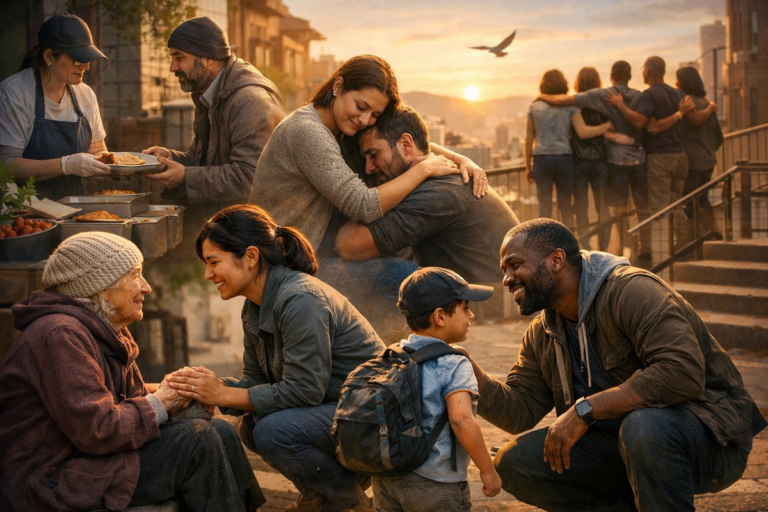
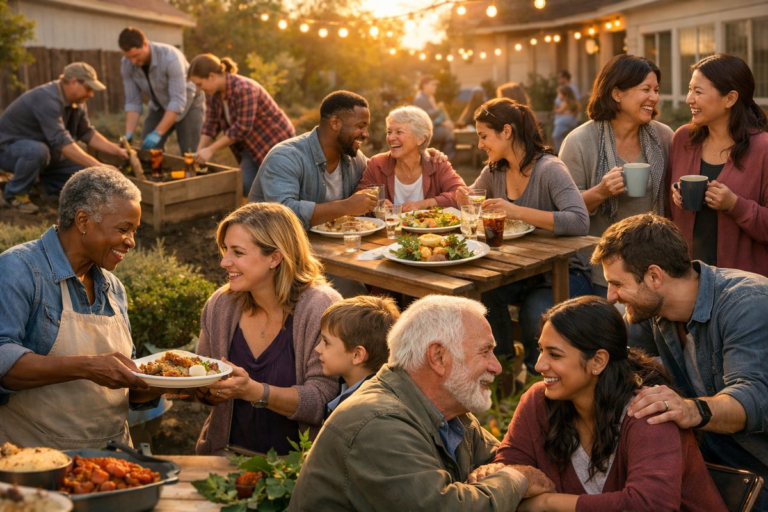
One evening in late spring, as the sun sets and fireflies drift among the tomato trellises, volunteers gather for a potluck dinner beneath strings of recycled glass lanterns. Someone uncovers a batch of homemade bread, another carries bowls of kale salad drizzled with lemon and olive oil. Conversation flows from seed-starting tips to the best way to tame volunteer mint. Laughter echoes off the corrugated walls, sealing a collective realization: this place isn’t just about plants, it’s about people.
In a city once defined by stretched fences and vacant storefronts, Green Haven has become a beating heart. It reminds participants-young and old, long-time residents and recent arrivals-that roots run deeper when they run together. Through the unglamorous daily rituals of sowing, pruning, and harvesting, each person finds their own quiet redemption and tools to cultivate hope.
As the volunteers tidy up benches, roll up hoses, and gently tuck tender seedlings under protective covers for the night, an ember of possibility glows in every shared glance. Here, under open sky and amid the earthy perfume of growing things, the community rediscovers a simple truth: when we care for the soil, we learn to care for one another. And in doing so, we grow stronger-one seed, one story, one shared harvest at a time.
With winter on the horizon, Green Haven’s core team is already sketching plans for cold-frame installations and year-round crop rotations. They envision a small greenhouse with solar-powered ventilation and a heat-retaining wall built from recycled bricks. But beyond bricks and plastic sheeting, the project’s most enduring structure remains the network of relationships it has forged. Underneath every leaf and stem lies the promise of renewal: that even in the city’s unlikeliest corners, life will flourish when nurtured with empathy and shared purpose.