Location
Mount Vernon, WA 98274

Location
Mount Vernon, WA 98274
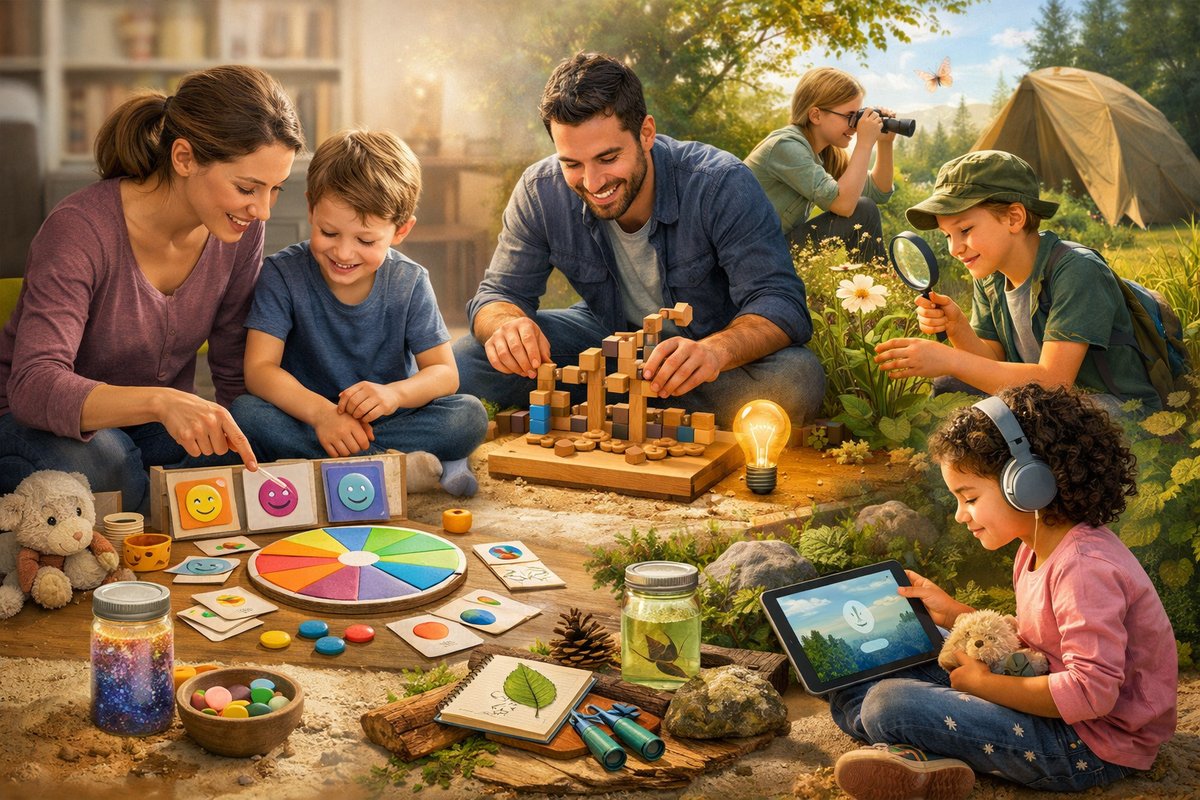
A wave of new approaches is reshaping how parents support both the cognitive and emotional development of children in domestic learning environments. From emotion-focused game kits to nature immersion tools, discover how these practical innovations empower families to cultivate curiosity, agency, and resilience.
The landscape of home-based learning is evolving beyond worksheets and screen time. Today’s parents are seeking experiences that honor a child’s emotional world as much as their intellectual growth. Driven by fresh research in developmental psychology and neuroscience, a host of innovation labs, community workshops, and independent creators are launching products and programs that integrate emotional intelligence seamlessly with core academic skills. The goal is to support childhood growth with heart-fostering self-awareness, empathy, and curiosity in equal measure.
In Portland, a nonprofit collective recently debuted a pilot workshop for caregivers, inviting families to co-create “emotion zones” in their living spaces. Participants painted feelings maps on cardboard panels and placed them strategically around kitchens and playrooms. By labeling corners with terms like “Joy Spot” and “Calm Cove,” parents reported a 30 percent reduction in bedtime struggles, according to preliminary survey data released by the organizers. The workshop’s leaders emphasize that acknowledging and naming feelings lowers tension, paving the way for more open-ended exploration and learning.
Meanwhile, several startups have launched card decks designed to spark conversations around emotions. One popular set features illustrated prompts such as “Draw a color that matches how you feel right now” or “Share a time you felt proud this week.” These emotion flashcards for kids encourage candid dialogue over breakfast or during car rides. Educators who have trialed the decks in hybrid classrooms note improvements in group collaboration and conflict resolution among students. For busy families, the portability and simplicity make these decks an accessible tool for emotional check-ins on the go.
Embracing sustainability and tactile engagement, a small design studio in Michigan has introduced a DIY feelings wheel craft kit. Each kit includes recycled paper circles, wooden brads, markers, and stickers with emotion words in multiple languages. Children build their own rotating wheels to identify a spectrum of internal states-from excitement and curiosity to frustration and sadness. This maker-friendly approach transforms abstract feelings into an interactive learning artifact. Parents share photos on social media of homemade wheels proudly displayed on bedroom walls, reinforcing the idea that emotional awareness is both visible and celebrated in daily life.
Storytelling remains a timeless method for connecting emotional themes with cognitive lessons. A new mindful storytelling kit arrives monthly in mailboxes, containing illustrated hardcover tales paired with guided reflection cards. After reading, families draw scenes that represent key emotional turning points in the narrative. Psychologists collaborating on the project highlight how narrative empathy builds neural pathways associated with perspective-taking and ethical reasoning. Early subscribers report that children immersed in these kits demonstrate higher tolerance for ambiguity and stronger narrative comprehension tests when they return to traditional classroom assessments.
Nature immersion is another frontier where emotional intelligence meets home education. Outdoor learning advocates have introduced compact nature explorer backpacks filled with magnifying lenses, field journals, noninvasive insect observation tools, and emotion-themed scavenger hunts. One scavenger prompt might ask, “Find a leaf that makes you feel calm,” or “Spot something that surprises you.” This gentle framing encourages children to link sensory discovery with introspection. Park educators in several cities have partnered with schools to incorporate these kits into afterschool programs, reporting measurable gains in mood regulation and increased hours spent outdoors by participating families.
On the digital front, a handful of emotion-tracking apps have integrated game mechanics to sustain engagement. One platform rewards children for logging feelings and accompanying thoughts in short, voice-recorded entries. Over time, the app generates a visual mood timeline and suggests simple breathing exercises or gratitude prompts when patterns of anxiety or frustration appear. Although screen-based strategies can raise concerns about device dependence, developers stress that their design follows strict privacy guidelines: no data is shared outside the family unit, and usage limits remind users to take offline breaks for reflection or play.
Professional voices are lauding these developments. At a recent international summit on early childhood innovation, researchers presented data linking emotional self-regulation exercises in home settings with enhanced problem-solving skills during kindergarten assessments. One neuroscientist explained that children who learned to pause and label their feelings demonstrated stronger working memory and greater flexibility when faced with unexpected tasks. Educators applauded the shift toward holistic measures of readiness that go beyond letter recognition and counting drills.
Parents interviewed for this article describe tangible benefits. A mother who hosts weekly playdates introduced a collaborative feelings board where guests add sticky notes about joyful, challenging, or new emotions experienced in the previous week. Her guests aged five to eight now refer to it spontaneously, launching peer-to-peer discussions about empathy and kindness. Another father highlighted how a wooden Montessori stacking blocks set became the backdrop for open-ended mathematical exploration, but also spontaneous storytelling about shapes-sparking conversations about structure, balance, and trial-and-error resilience.
Challenges remain in ensuring equitable access. Many of these curated products come at premium price points, making them inaccessible to lower-income households. In response, community centers in urban neighborhoods have started sharing libraries of emotional learning kits and hosting sliding-scale workshops. Funded by local philanthropy, these programs underscore that emotional intelligence is a universal right, not an optional afterthought.
What does the future hold? Experts predict that home learning will continue to evolve as a hybrid tapestry of analog and digital experiences, strategically designed to honor each child’s inner world. Collaborative maker-spaces, pop-up emotion cafés for families, and open-source toolkits for DIY educators are on the horizon. As parents embrace their role as both nurturers and facilitators of thinking, they are redefining what it means to support growth with heart.
Families looking to enrich their home-learning environment now have a wealth of options that address emotions as primary building blocks of cognition. By weaving tools that foster empathy, self-awareness, and curiosity into daily routines, parents can nurture resilient thinkers equipped to navigate an ever-changing world with compassion and creativity. The journey is as dynamic as a child’s imagination-and the innovations arriving today promise to make it more joyful, connected, and deeply meaningful than ever before.