Location
Mount Vernon, WA 98274

Location
Mount Vernon, WA 98274
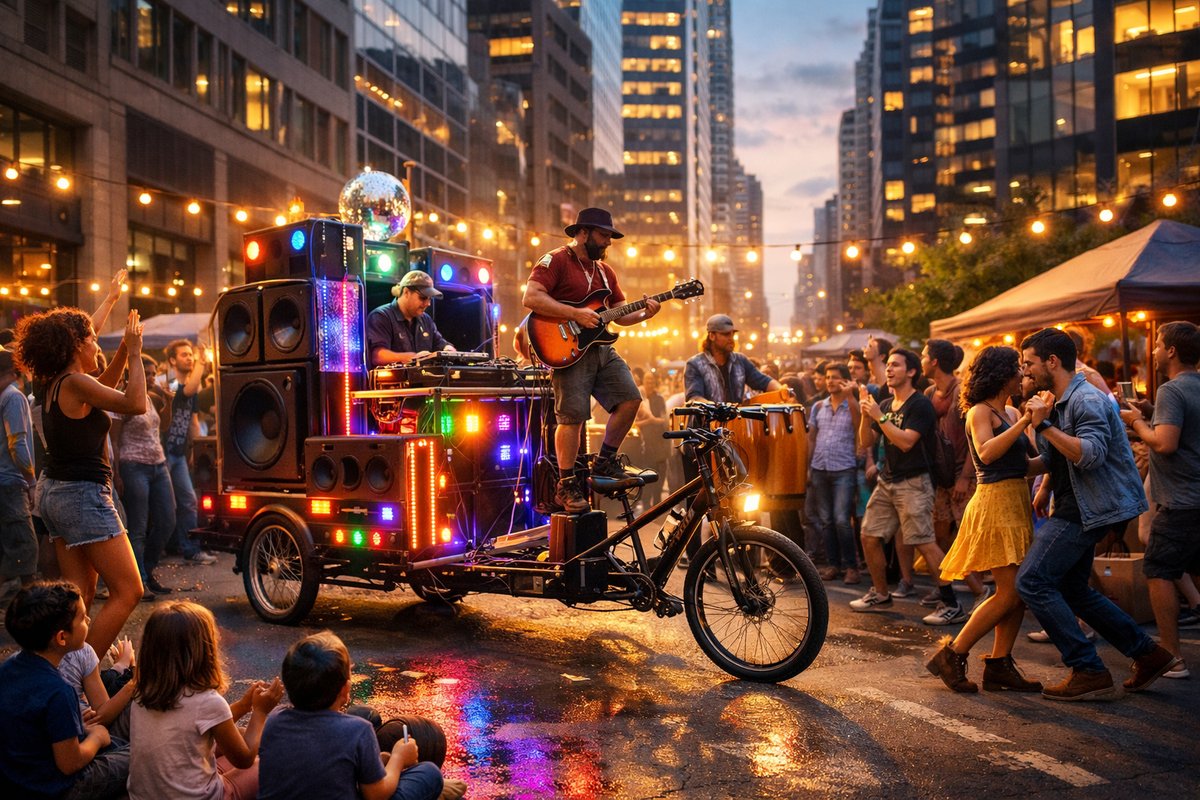
In neighborhoods where concrete and glass often replace faces and voices, a bike-powered music caravan is pedaling hope back into the streets. By hauling speakers, lights, and instruments on two wheels, this mobile collective sparks impromptu gatherings that remind city dwellers how resilience, creativity, and unconditional connection can flourish even in the tightest spaces.
In a quiet corner of a bustling city, a small group of volunteers readies their cargo bikes before dusk. On the first rig, a bright neon speaker slides into a custom frame; on the next, knotted LED string lights coil neatly against a weatherproof case; further down, a rolling cart stacks folding stools and a portable mixer. Soon, they’ll become a moving tapestry of sound and color, weaving themselves through alleyways and open squares to bring a pulse of music and shared presence to streets that often echo with isolation.
Urban loneliness has become an unexpected epidemic. Recent studies suggest that nearly half of adults in metropolitan areas report feeling disconnected from neighbors and community life. High-rise living, packed schedules, and digital distractions all play their part, but beneath the statistics is a human ache-the search for purpose, the longing for a smile from a passerby, the soft relief of voices raised together in song. This bike-powered music caravan isn’t just a performance troupe; it’s a traveling antidote, a rolling gathering ground that invites anyone within earshot to pause and become part of something collective.
The caravan, known simply as Sound on Wheels, began as a DIY experiment. What started with a borrowed amplifier and a handful of friends has grown into a loosely organized ensemble of DJs, sound engineers, dancers, visual artists, and curious neighbors. Each rider brings their own toolkit: battery packs salvaged from old laptops, lightweight solar panels secured to trailers, collapsible picnic tables for sharing snacks and stories. There’s no fixed stage and no admission fee-only a shared belief that music can bridge gaps faster than any pamphlet or poster might.
Their methodology is as improvisational as the city itself. Some nights, the crew will set up under an overpass, transforming graffiti-strewn pillars into a backdrop for rhythmic beats and spontaneous breakdance circles. Other times, they’ll roll into a quieter avenue, string lights between lampposts and invite families to join for acoustic jams. Word of mouth spreads through neighborhood group chats and handwritten flyers tucked into building lobbies. When the caravan arrives, streetlights seem to dim in deference, and the hum of engines and voices fades into the collective thrum of community storytelling through rhythm.
One evening, the caravan paused in a courtyard where the tenants-many of whom work multiple jobs-had only just finished their dinner. Children hurried out wearing mismatched socks, and a few elders shuffled toward folding chairs, curious what all the commotion would unveil. A volunteer DJ cued up a soulful bassline, and a dancer almost shyly tapped out a tempo. Gradually, more feet joined the rhythm, hands clapped, and a chorus of voices rose in a spontaneous singalong. For an hour, the neighborhood breathed as one entity, suspended above worries about rent, deadlines, and digital screens.
The collaborative spirit extends beyond entertainment. On nights when the forecast calls for rain, the caravan doubles as a pop-up awareness hub for local aid organizations, offering emergency blankets, water bottles, and flyers about community services. When a nearby school faced budget cuts to its arts program, the collective organized an afternoon workshop, pedaling instruments and printmaking supplies to a playground. Children painted their dreams onto recycled cardboard drums, then joined a makeshift percussion ensemble. By turning transportation into an act of solidarity, the group nurtures creative expression and amplifies voices that might otherwise remain unheard.
Beneath the upbeat soundtrack lies a deeper resonance: vulnerability. Organizers have watched attendees wipe away tears in candlelit circles, confessing fears of unemployment, loneliness, or loss. In that shared space, the pounding bass becomes a heartbeat of empathy, and the glow of LED lights feels like a hand reaching in the dark. The caravan offers no easy answers, but it carves out a moment to breathe, to bear witness, and to step forward together. When the amplified notes send vibrations through concrete, they nudge open the doors to honest conversation.
Operating on a shoestring budget has its challenges. Obtaining permits for public performances can feel like navigating an endless maze of bureaucracy. Sustaining battery packs and charging stations demands constant fundraising and donations. Mechanical hiccups-the occasional flat tire or short-circuit-require quick thinking and resourcefulness. Yet each obstacle reveals another opportunity for community ownership: bike mechanics volunteer their Sunday mornings for repairs, local cafés donate pastry ends in exchange for a shout-out on the mic, and retired engineers design DIY charging rigs out of scrap electronics. What might have been a breakdown becomes a bridge to collective ingenuity.
City planners have taken notice. A pilot program funded by a local arts council now explores designated “music lanes” where portable performances can thrive with fewer legal hurdles. Neighborhood associations are drafting guidelines for shared equipment libraries, where residents can check out anything from wireless microphones to folding stools. In some districts, the caravan’s influence has sparked block parties that endure long after the last speaker is packed away-a testament to the enduring power of shared experience.
Yet the impact isn’t measured in social media likes or ticket sales. It’s visible in the small miracles: a teenager who booked their first gig after watching the caravan’s DJ, a single parent who found solace in late-night drum circles, an elderly man who finally shared his life story in a low-lit corner beside flickering lights. These moments rewrite definitions of community, shifting from passive consumption to active participation. A stranger today becomes a neighbor tomorrow, bound by a melody shared in an unexpected place.
Looking ahead, members of Sound on Wheels imagine regional chapters linked by open-source manuals and online forums. They’re exploring partnerships with local transit agencies, logistical collaborations that could transform buses or trams into traveling amphitheaters. Ambitious as it sounds, the idea stems from a simple conviction: public space belongs to everyone, and art can make the invisible visible. When a city breathes with collective creativity, its streets become stages where each person finds a line in a larger song.
In a world that often measures progress in square footage and quarterly profits, the caravan reminds us that true value lies in shared moments of grace. Music isn’t merely an escape-it’s a language of resilience, a salve for cultural fractures, a declaration that despite silence or distance, we can pedal toward one another. As the volunteers lock their bikes at the end of the night and unplug speakers from their frames, they carry home more than equipment. They carry stories of laughter by lamplight, tears turned to cheers, and the gentle proof that humanity’s greatest soundtrack is forged in community.
When the dawn breaks and the city stirs again, few will know that their pavements hosted a spontaneous concert just hours before. Still, they’ll hear an echo in new sounds-maybe a distant hum of bass or the faint clang of a drum-reminding them that even in solitude, they’re never truly alone. The caravan rolls on, a luminous thread stitching together neighborhoods, one beat at a time.