Location
Mount Vernon, WA 98274

Location
Mount Vernon, WA 98274
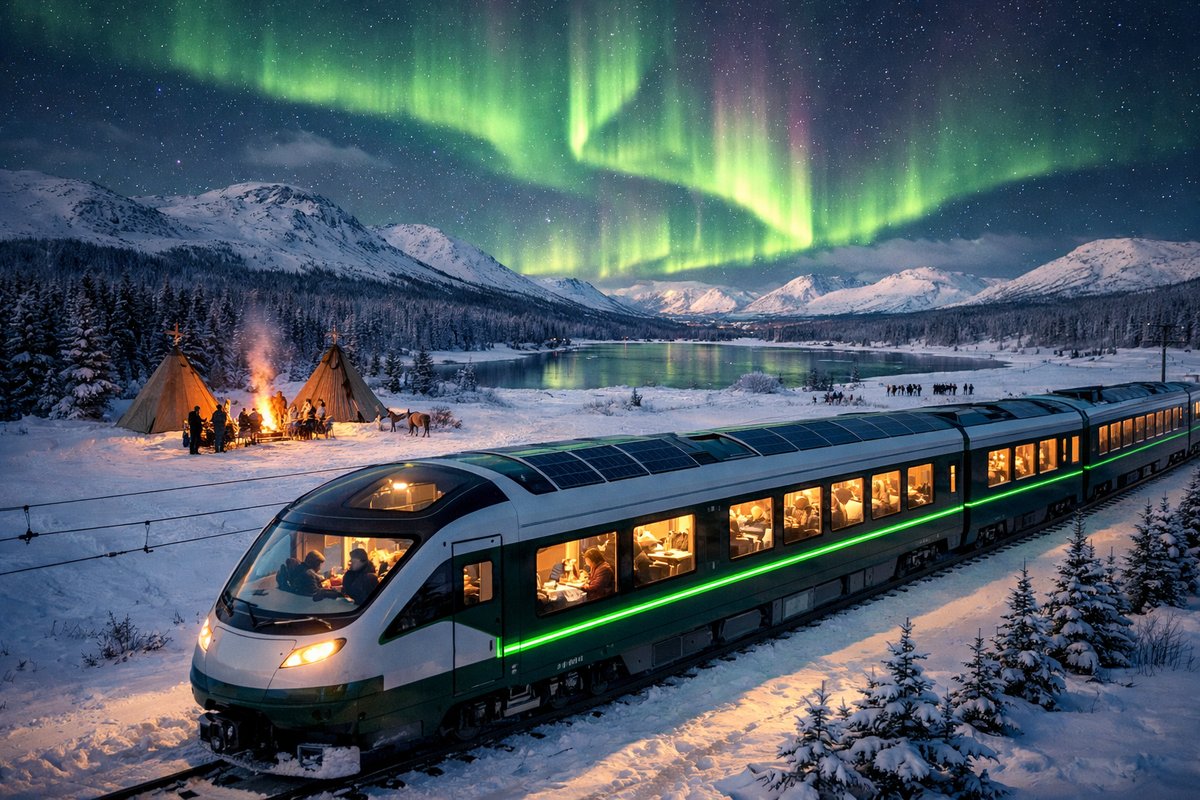
A new hybrid-electric sleeper service now links the capitals of the Nordic region to the Arctic Circle, offering panoramic aurora viewing, curated indigenous experiences, and a carbon-light alternative to flights. Passengers on the Arctic Aurora Express can expect cutting-edge sustainability features, local gastronomy, and immersive cultural encounters as they journey through remote winter landscapes.
When the Arctic Aurora Express pulled out of the central station at dawn, passengers aboard the hybrid-electric sleeper service embarked on more than just a scenic journey. This newly unveiled rail connection bridges the Nordic capitals with the remote reaches of the Arctic Circle, promising a fresh model of sustainable, experiential travel. Over the course of the inaugural season, which launched amid a flurry of winter snows and aurora forecasts, more than 2,500 tickets sold within the first week-underscoring the growing appetite for journeys that blend low-impact transport with deep cultural engagement.
The 1,200-kilometer route weaves from the region’s largest urban centers into a landscape of frozen lakes, tundra plains, and snow-dusted spruce forests. Instead of conventional diesel engines, the train uses a hybrid powertrain that combines onboard batteries recharged at electrified terminals with biodiesel-enhanced generators for stretches of non-electrified track. According to data shared by the International Union of Railways, such hybrid systems can cut greenhouse gas emissions by up to 40 percent compared to conventional rail. For passengers, the result is a smoother, quieter ride and the chance to witness the aurora borealis from panoramic lounge cars equipped with adjustable climate controls and noise-dampening windows.
Beyond the mechanical innovations, the Arctic Aurora Express differentiates itself through an emphasis on place-based storytelling. At select stops-including winter villages where Sámi reindeer herders maintain centuries-old traditions-local guides board the train to share tales of seasonal migration, animal tracker techniques, and joik chanting. Travelers can sample regional dishes prepared by onboard chefs who source ingredients like cloudberry jam, cured fish, and reindeer sausage from cooperatives in Lapland. Each meal service is paired with short presentations on Arctic ecology, highlighting how thawing permafrost and shifting weather patterns are affecting both cultural practices and wildlife habitats.
“I’ve taken scenic trains before, but this feels different,” said one passenger who departed at first light, her breath misting in a panoramic dome car. “There’s a mindfulness in how the staff talks about the land and its stewards. When the green lights of the aurora appeared overhead, it wasn’t just a spectacle-it felt like a shared moment of respect.” Such firsthand accounts are resonating on social media platforms, where travelers post time-lapse videos of swirling lights, tagged with hashtags invoking slow travel and eco-tourism.
Operational partners point out that the project grew from a collaboration between regional rail authorities and climate-focused NGOs. During the service’s planning phase, engineers conducted energy audits on freight and passenger lines, identifying sections that could support battery recharging infrastructure. Locations near hydroelectric reservoirs were prioritized for electrification, while biodiesel-fueled “last-mile” modules fill gaps where overhead lines aren’t feasible. The result is a continuous corridor that balances technical feasibility with environmental stewardship.
The Arctic Aurora Express also taps into emerging trends in rail tourism. A 2022 report from the European Rail Freight Association noted a 15 percent increase in long-distance sleeper journeys since 2020, driven by heightened interest in climate-conscious alternatives to short-haul flights. Meanwhile, survey data from the Nordic Tourism Board indicates that 68 percent of prospective travelers would choose rail over air if durations remain under 24 hours. By offering overnight travel with comfortable repose-private sleeping cabins, shared lounge areas, and wellness modules for yoga and stretching-the service bridges the gap between speed and sustainability.
Local communities along the line are already seeing economic benefits. Artisans, homestay hosts, and cooperatives reporting early bookings of private cultural excursions have experienced a 20 percent uptick in winter tourism revenue. One Sámi craft collective, previously accessible only by snowmobile during the darkest weeks, now hosts fiber-arts workshops in a refurbished station house. Proceeds from tourist visits help fund reindeer herd maintenance and language revitalization classes for younger generations.
Of course, running a sleeper train through subarctic terrain is not without logistical challenges. Extreme temperatures can strain battery performance, and snowfall requires constant track-clearing operations. To mitigate delays, crews have deployed solar-tracking snowplows along exposed stretches, while onboard monitoring systems alert maintenance teams in real time to potential mechanical issues. So far, initial reports suggest a punctuality rate above 92 percent-well above the average for comparable long-distance winter services.
For those seeking an alternative to standard package tours, the Arctic Aurora Express blends autonomy with expert curation. Travelers book modular ticket packages that can include guided hikes on frozen lakes, visits to geothermal hot springs, and dinners hosted by indigenous storytellers around open-flame hearths. A digital platform allows customization up to 48 hours before departure, ensuring that meal preferences, activity levels, and accessibility needs are accommodated seamlessly.
Sustainability remains front and center. The operator has committed to offsetting any residual emissions through investments in boreal forest restoration projects and micro-hydro installations in remote fjord communities. Packaging on board is entirely compostable or reusable, while water stations dispense filtered glacier runoff in stainless steel containers to minimize single-use plastics. Staff uniforms are made from recycled textiles, and onboard waste processing units convert organic refuse into biochar for nearby greenhouse projects.
In a travel landscape often dominated by fast-paced itineraries and carbon-intensive modes, the Arctic Aurora Express stands out as a model of thoughtful, place-driven exploration. It arrives at a moment when many travelers are reevaluating the true cost of rapid transit, seeking journeys that leave lasting memories rather than oversized footprints. By weaving together emerging rail technologies, local partnerships, and an ethos of shared stewardship, this new service offers a glimpse of how travel can help preserve the very landscapes and cultures that make it so compelling.
As the first train of the season slipped into the polar night, its dome car lights dimmed to a gentle glow. Outside, the curtain of dancing green and purple seemed to embrace the vessel in a silent recognition. For passengers inside, the moment crystallized what a journey can become when it honors both the mechanics of transit and the spirit of the land.
Bringing the world’s edge into view, the Arctic Aurora Express invites us to travel differently-to carry stories home as mindfully as we traverse the tracks beneath our feet. And for a new generation of explorers, the promise is this: when you go slow, you see more, connect deeper, and come back changed in ways you never expected.