Location
Mount Vernon, WA 98274

Location
Mount Vernon, WA 98274
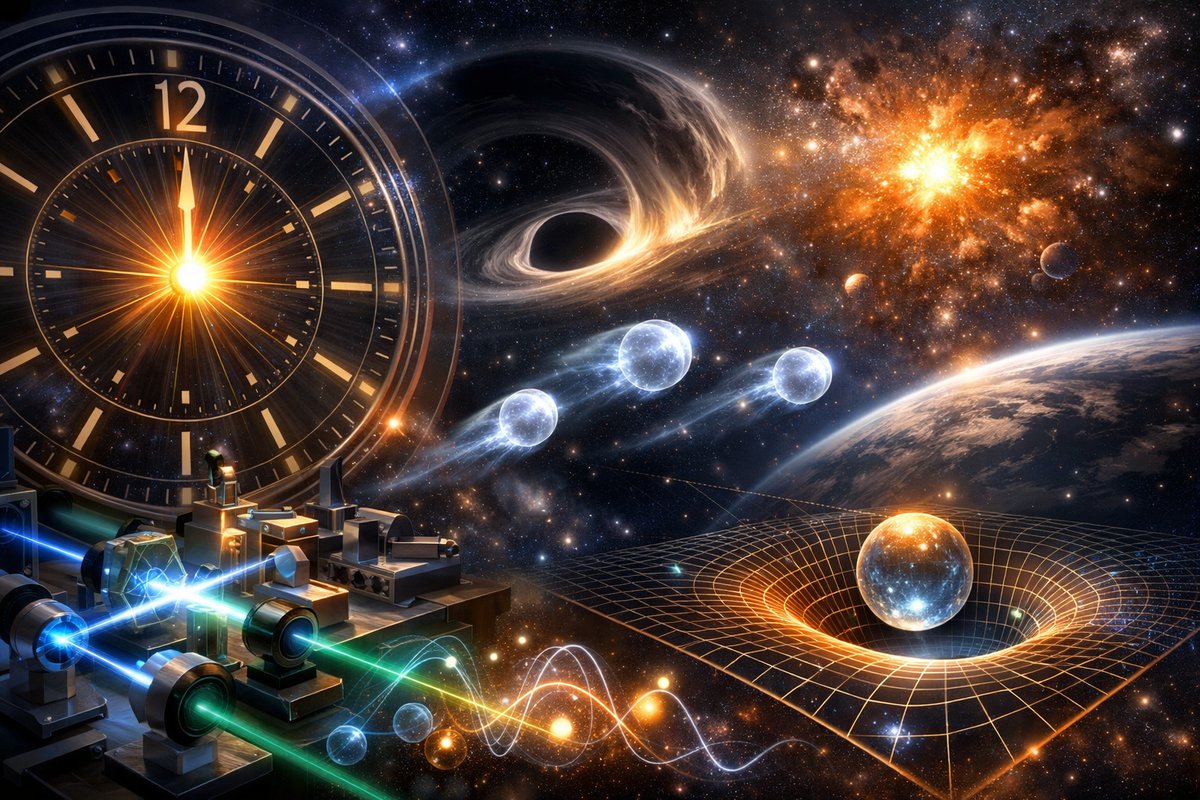
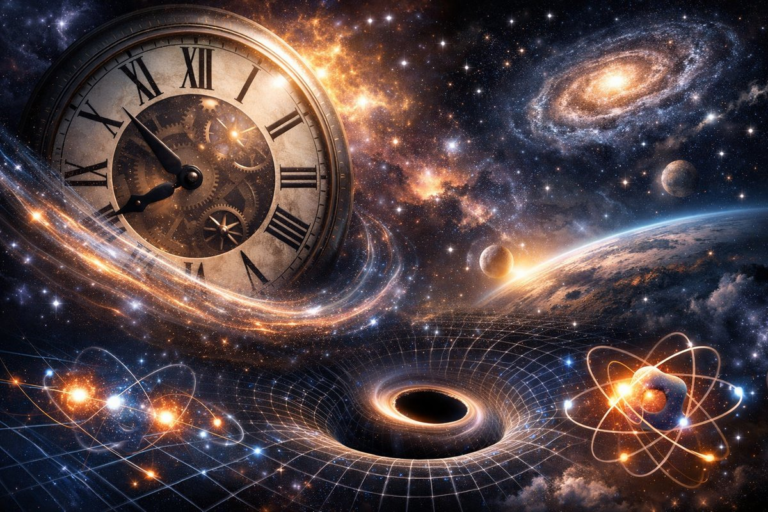
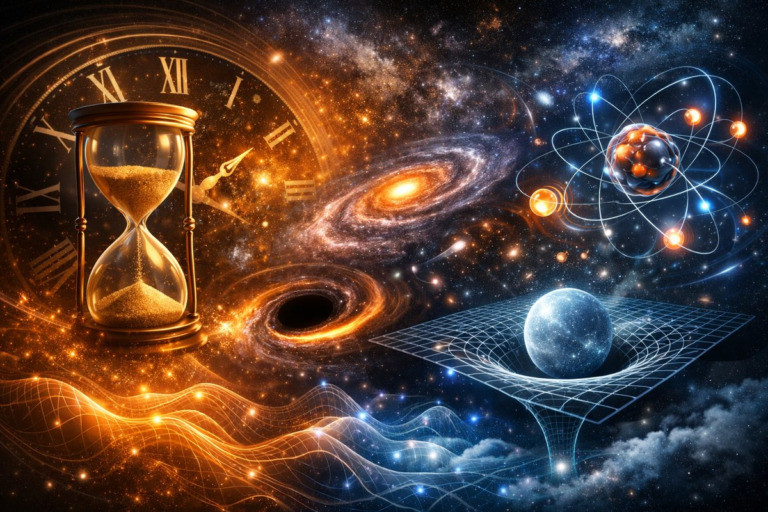
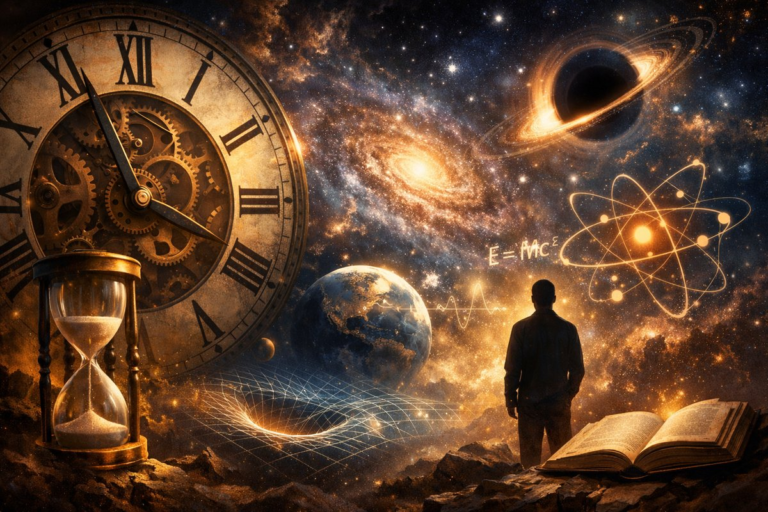
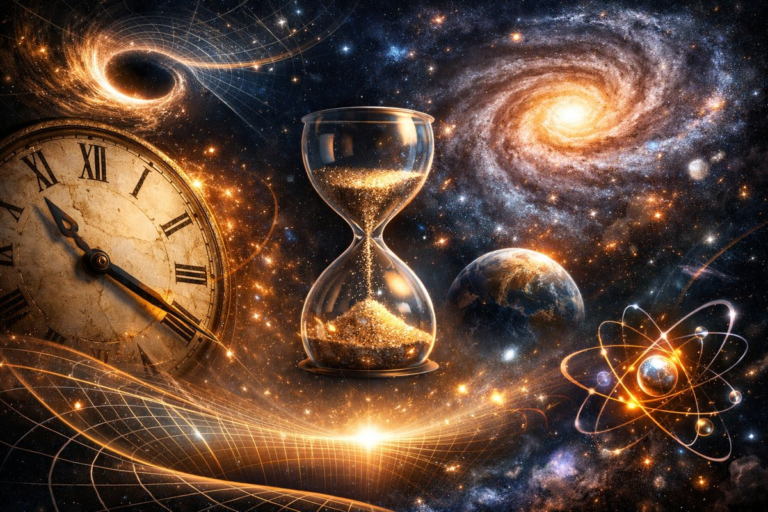
From quantum clocks ticking at billion-billionth-of-a-second intervals to ghostly neutrinos from the depths of space, scientists are charting new territory at the nexus of time and matter. This article explores the latest experiments, cosmic observations, and theoretical breakthroughs that reveal the subtle dance shaping our universe.
In a subterranean laboratory far from city lights, an array of quantum oscillators hums in near-perfect synchrony. These state-of-the-art clocks, engineered to split a second into billions of billion ticks, are more than precision instruments-they’re portals into the fabric of reality. By comparing two of these clocks separated by a height of just a few centimeters, researchers can detect the slightest warping of time caused by Earth’s gravity. It’s a reminder that time isn’t uniform but a malleable dimension that interacts intimately with matter.
Meanwhile, deep beneath the Antarctic ice sheet, a separate quest unfolds. Endless strings of detectors embedded in the ice capture fleeting flashes of light from neutrino collisions-ghostly particles born in distant supernovae or within the sun’s core. These neutrinos traverse light years of cosmic expanse, barely interacting with anything until they strike an atom in the ice. Every captured event illuminates a new corner of cosmic history, linking the subatomic realm to grand scales of space and time.
At particle accelerators across the globe, physicists race heavy ions at near-light speed. When lead nuclei smash into each other, they recreate a primordial soup of quarks and gluons that existed microseconds after the Big Bang. Analyzing the resulting particles and radiation, teams are piecing together why matter came to dominate antimatter in our universe. The asymmetry that allowed galaxies, stars, and planets to form hinges on subtle violations of time-translation symmetry-a clue that even the arrow of time itself may have been different in those first instants.
Astronomical observatories contribute their own revelations. Gravitational wave detectors have already captured mergers of black holes and neutron stars, offering real-time glimpses of spacetime ripples. Each detection calibrates our cosmic stopwatch and refines our understanding of how matter behaves under extreme gravity. When two neutron stars collide, for instance, they forge heavy elements like gold and platinum, scattering them across the cosmos. In effect, the universe’s most precious materials emerge from the collision of timebound objects.
The theoretical frontier is equally mesmerizing. Researchers propose exotic states of matter-time crystals-that defy conventional thermodynamics by oscillating in their ground state. These structures repeatedly return to their initial configuration without consuming energy, resembling perpetual motion at the quantum level. While practical applications remain speculative, time crystals challenge our most basic notions of equilibrium, order, and entropy.
Entropy, the measure of disorder, ties all these threads together. In thermodynamics, it dictates the arrow of time: why heat flows one way and ice cubes never spontaneously reform in a warm room. But on cosmic scales, entropy influences the fate of stars and galaxies, and it may even shape the emergence of consciousness. Some thinkers suggest our perception of a forward-moving time could arise from the brain’s tendency to assemble memories, creating a psychological arrow that mirrors the universe’s overall increase in entropy.
This interplay of time and matter raises profound philosophical questions. If quantum clocks can detect minute gravitational differences over centimeters, could future instruments measure time distortions across entire continents? And if time crystals become practical, might we one day build devices that exploit temporal order in ways we can’t yet imagine? Each advance in measurement spawns new puzzles, blurring the line between what is known and what remains mystery.
The human impulse to quantify time stretches back millennia, from sundials to pendulums to the latest optical lattice clocks. Each innovation has reshaped how we live and think: global navigation, data networks, even stock markets rely on nanosecond precision. Yet as our clocks grow ever more accurate, they also reveal the subtle wrinkles in spacetime predicted by Einstein. Relativistic time dilation isn’t confined to exotic thought experiments-it’s a measurable factor for high-frequency traders and GPS satellites alike.
On the cosmic side, matter still guards its secrets. Dark matter, an invisible component thought to outweigh ordinary atoms by a factor of five, remains undetected except through its gravitational pull. Underground laboratories sieving through cosmic rays hope to capture rare interactions with dark matter candidates. Any signal would revolutionize our understanding of particle physics and cosmology, showing how unseen matter shapes the structure of galaxies and the passage of time on grand scales.
But perhaps the most humbling lesson comes from neutrinos, those near-speed-of-light messengers. When a massive star exhausts its fuel and collapses, it floods space with neutrinos before the light even emerges. Detectors in deep mines or frozen ice can pick up these first tremors, giving astronomers an early alert to supernova events. In a way, neutrinos are time travelers-carrying information about cataclysms that occurred millions of years ago and arriving at our instruments long before photons.
The collaborative spirit driving these discoveries underscores a universal truth: breakthroughs happen at the intersection of disciplines. Particle physics experiments inform astrophysical models; quantum information research inspires new clock designs; gravitational wave observations constrain theories of spacetime. It’s an expanding network of experiments and observations that weave time and matter into an ever richer tapestry.
For curious readers and lifelong learners, the invitation is clear. You don’t need a subterranean lab or a multi-billion-dollar observatory to engage with these ideas. A well-crafted mechanical clock can spark wonder at time’s passage. A cloud chamber kit can reveal the daily barrage of cosmic particles. A backyard telescope or planetarium projector can map the stars where time’s earliest chapters were written in starlight.
As we peer deeper into time and matter, one truth remains constant: every answer births new questions. What if time behaves differently in interstellar voids? Could undiscovered forces tweak inertia? Does the universe’s accelerating expansion hint at an unseen connection between entropy and dark energy? These mysteries beckon, urging us to refine our measurements, expand our theories, and never lose sight of the awe that birthed science itself.
In the unfolding drama of existence, we stand at a vantage point where quantum and cosmos converge. From tabletop experiments to the edge of the observable universe, the dialogue between time and matter continues. And for every tick of a precision clock, every flash of light in a neutrino detector, and every ripple in spacetime, we’re reminded that reality is both stranger and more beautiful than fiction.
Keep watching the skies, calibrate your instruments, and let curiosity guide you. The next revelation may emerge not from a distant galaxy or giant collider, but from a sudden insight sparked by a humble experiment in your own home. Time, matter, and mystery await-ready to enthrall anyone brave enough to explore.