Location
Mount Vernon, WA 98274

Location
Mount Vernon, WA 98274
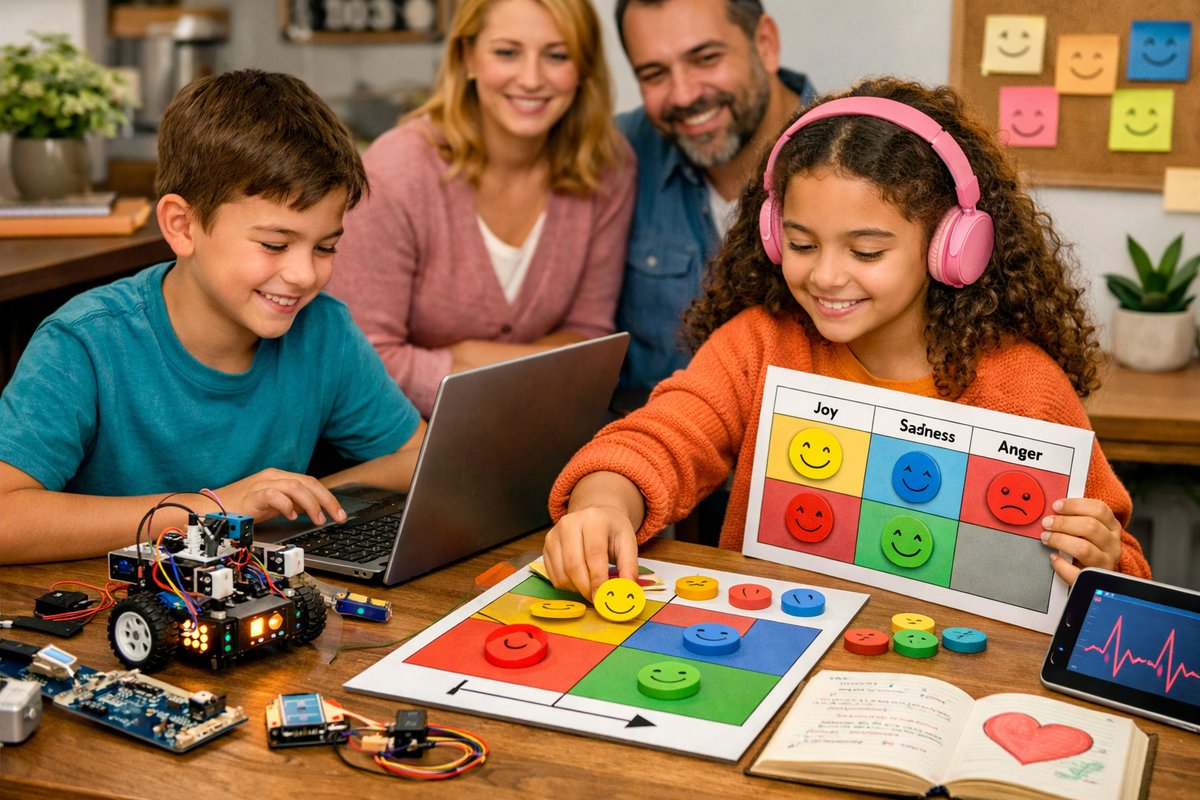
Families across the country are experimenting with hybrid kits and routines that unite coding challenges with emotion-mapping exercises, aiming to nurture both the mind and the heart. Educators and parents report that these hands-on, reflective approaches are boosting children's enthusiasm for STEM subjects while reinforcing social and emotional skills.
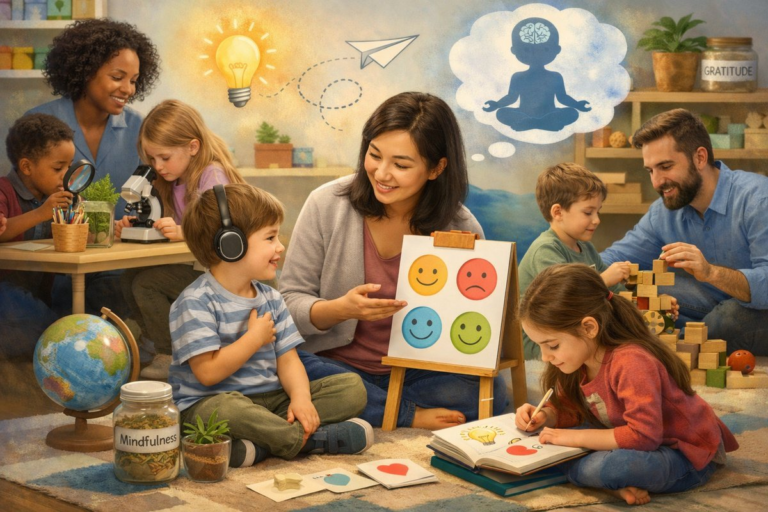
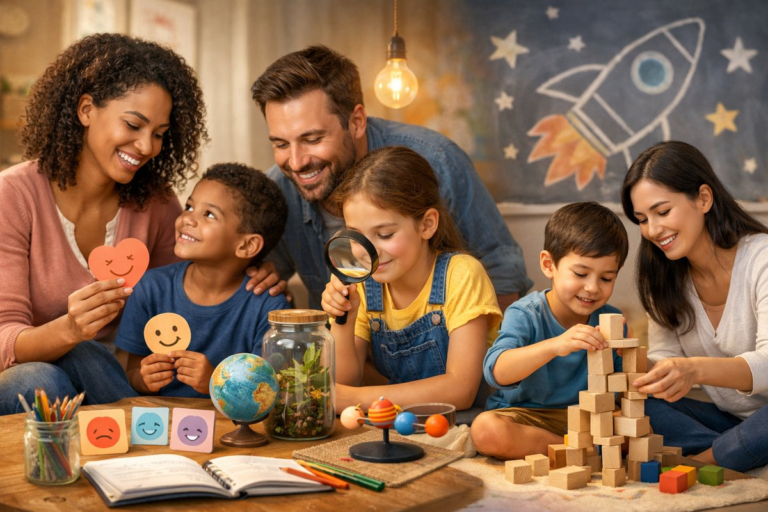
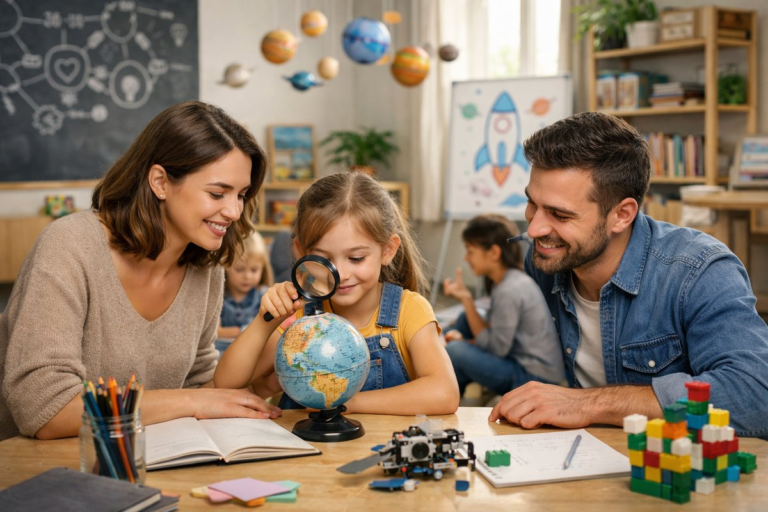
On a rainy Saturday afternoon in a suburban garage-turned-studio, eight-year-old Amina guides a small programmable robot through a foam maze, pausing at colored emotion cards to record how the mini-bot “feels.” Her father, a mechanical engineer by training, leans in to ask what the robot might feel when it sees red walls or a yellow turntable. Amina draws on a deck of feelings flashcards to select “curious” or “confused,” inserting the matching card into a slot. Nearby, her younger brother practices mindful breathing with a mindfulness card set, then reflects on what “calm” really means. This simple, playful routine is part of a growing movement among families, educators, and child development experts who are redefining home learning as an integrated mix of STEM exploration and emotional intelligence development.
Just a few years ago, at-home education tended to lean heavily on academic drills or entertainment-driven apps. Now, parents and learning advocates are introducing heart-centered elements-emotion puzzles, reflective journals, and guided conversation prompts-to anchor intellectual curiosity in empathy and self-awareness. According to a 2023 survey by Common Sense Media, 68 percent of parents worry that the digital devices their children rely on for lessons underserve opportunities to talk about feelings. Meanwhile, the EdWeek 2023 Social-Emotional Learning Report found that 54 percent of schools are embedding SEL modules into at least half of their lesson plans. These data points underscore a shift: children’s emotional lives are finally being woven into the fabric of STEM and literacy activities at home.
Driving the trend is a new nonprofit pilot called “Circle of Curiosity,” launched last spring by a coalition of child psychologists and educators. The initiative provides families with mixed-material kits-programmable micro-robots, magnetic building tiles, and emotion-map cards-paired with a digital guide that coaches parents through daily prompts. Launched in three districts, Circle of Curiosity recently shared early findings: over eight weeks, participating children scored 20 percent higher on tasks measuring perspective-taking, and parents reported a 30 percent increase in willingness to discuss difficult emotions during free play.
Circle of Curiosity’s director, a former elementary teacher turned child development researcher, explains that the key lies in pairing concrete problem-solving with reflective pauses. “When kids code a robot to pick up blocks, they’re learning logic and spatial reasoning,” she says. “When they stop to talk about how the robot might feel lost or excited, they’re practicing empathy and vocabulary for their own emotions.” That blend not only sustains engagement but also equips children with transferable skills-self-awareness, impulse control, teamwork-that matter in school, friendships, and future careers.
For many families, adopting these hybrid methods poses a few challenges. Parents juggling remote or hybrid work schedules often search for tools that can slot into ten-minute windows rather than hourlong lessons. To meet this need, several education startups have launched micro-modules-brief story-based coding puzzles coupled with quick reflection exercises. One popular kit frames each coding challenge as a quest: a virtual character encounters an obstacle, then invites the child to assess whether the character feels brave, anxious, or frustrated. After coding a solution, the child answers a question such as, “When was the last time you felt frustrated, and how did you overcome it?”
Teachers are taking note, too. In districts where budget cuts have trimmed dedicated SEL instructors, classroom teachers have begun co-teaching with parents at home, using synchronized kits. A second-grade teacher in Minnesota reports that when children arrive in class having already discussed calm-down strategies with their parents at breakfast, transitions from recess back to reading groups are smoother and less disruptive. This home-to-school continuity builds a shared language around feelings, letting children say things like, “Remember my robot felt confused? I feel that way now because I forgot my pencil.”
Not everyone has lab space or a parent with an engineering background, however. To democratize access, many kits now leverage readily available materials: emotion wheels printed on cardstock, cardboard circuit boards, and open-source code snippets that run on inexpensive microcontrollers. Several community libraries and after-school programs have begun circulating these kits on loan, much like books. One public library in Oregon piloted an “Emotion & Engineering” backpack program, checking out everything from magnetic building blocks to family reflection journals. Librarians have reported waitlists for these backpacks longer than for the latest bestselling novels, indicating eager uptake.
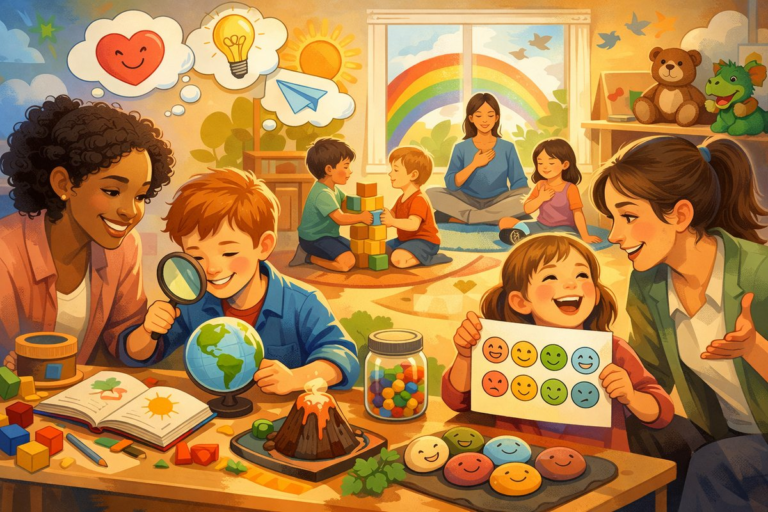
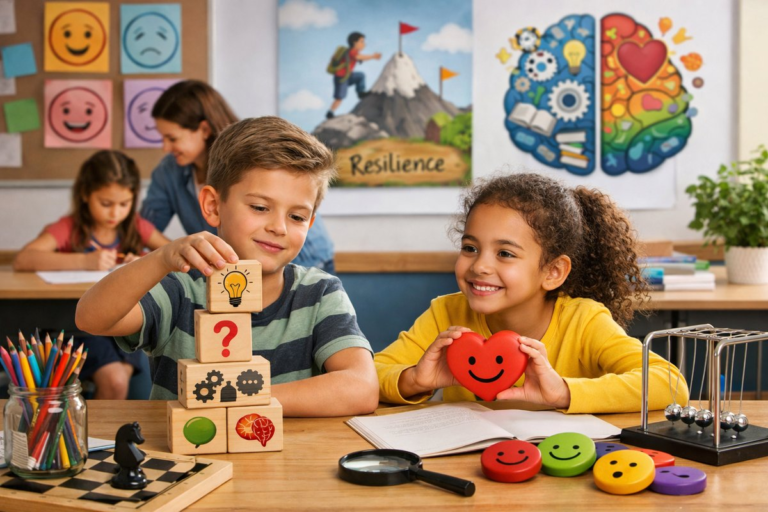
Experts caution that the most effective approach is not about owning every new gadget but using basic tools thoughtfully. Child psychologist Dr. Maria Alvarez points out that families can adapt household objects: a set of colored sticky notes becomes feeling-flashcards when kids draw faces on them, and a cardboard box transforms into a mini-coding arena simply by labeling “start” and “end” points. “The goal is to show children their emotions matter and that they can influence outcomes through both technical skill and emotional insight,” she explains.
In a recent webinar hosted by an educational foundation, preschool teachers and technology coaches shared tips for designing hybrid lessons in less than ten minutes. One suggestion involved combining a storytelling prompt with a brief design challenge: children hear a two-minute tale about a lost kitten, then sketch a simple map for a search robot and jot down how the kitten might feel in each location. This type of rapid-cycle learning can fit into the drive-through line at school pickup or a lunch break, making heart-centered learning part of daily routines without overhauling family schedules.
Families practicing these methods report surprising side benefits. Real-world problem solving-like engineering a parachute to protect a dropped plush toy-can spark excitement that carries over into quieter moments of emotional sharing. Parents say they are learning emotional vocabulary right alongside their children, deepening connections and reducing misunderstandings. One mother observed that bedtime talks shifted from rote recounting of daily events to more open-ended questions: “What was the trickiest part of your coding puzzle? How did you feel when it worked?”
Looking ahead, advocates hope to see more cross-disciplinary teacher training that bridges SEL, STEM, and literacy. A handful of university teacher-prep programs have begun integrating heart-centered STEM modules into their coursework, believing that tomorrow’s educators must be as fluent in emotional learning strategies as they are in math or reading instruction. Meanwhile, the Circle of Curiosity coalition is planning a national symposium where parents, librarians, and educators will swap toolkits, curriculum ideas, and lesson templates, fostering a community of practice around integrated home learning.
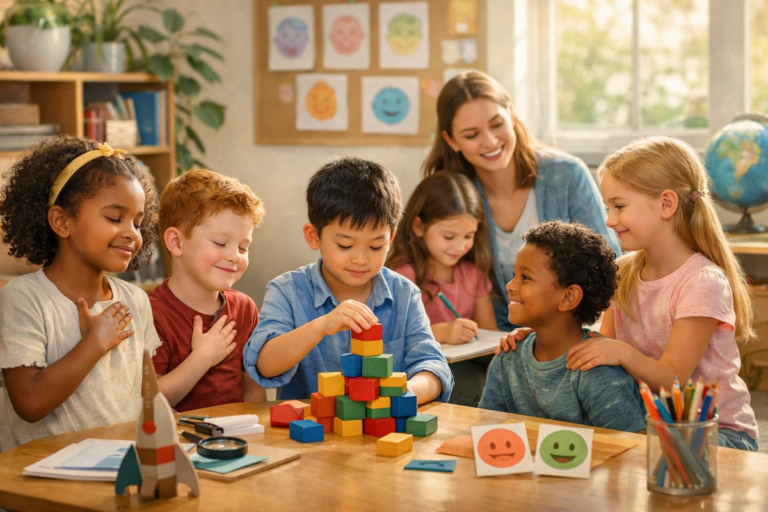
As families navigate these new offerings, they often wonder how to choose among dozens of kits on the market. Experts recommend starting small: pick one tool that resonates-maybe a deck of emotion flashcards or a basic coding toy-and weave it into a familiar routine. Observe how children respond, adjust the prompts, and expand from there. Just as building blocks lay the foundation for complex structures, these heart-centered practices aim to build emotional resilience and intellectual curiosity from the ground up.
Back in that suburban garage, Amina’s robot finally navigates the last corner of its foam maze. She beams as it stops by a green emotion card and selects “proud” from her flashcard deck. Her father asks what she feels proud of, and she pauses, then says, “I made something that can think-kind of like we do when we understand feelings.” In this moment, the line between bolts and bonds, circuits and sentiments, feels effortlessly blurred-exactly what the next wave of home learning hopes to achieve.