Location
Mount Vernon, WA 98274

Location
Mount Vernon, WA 98274
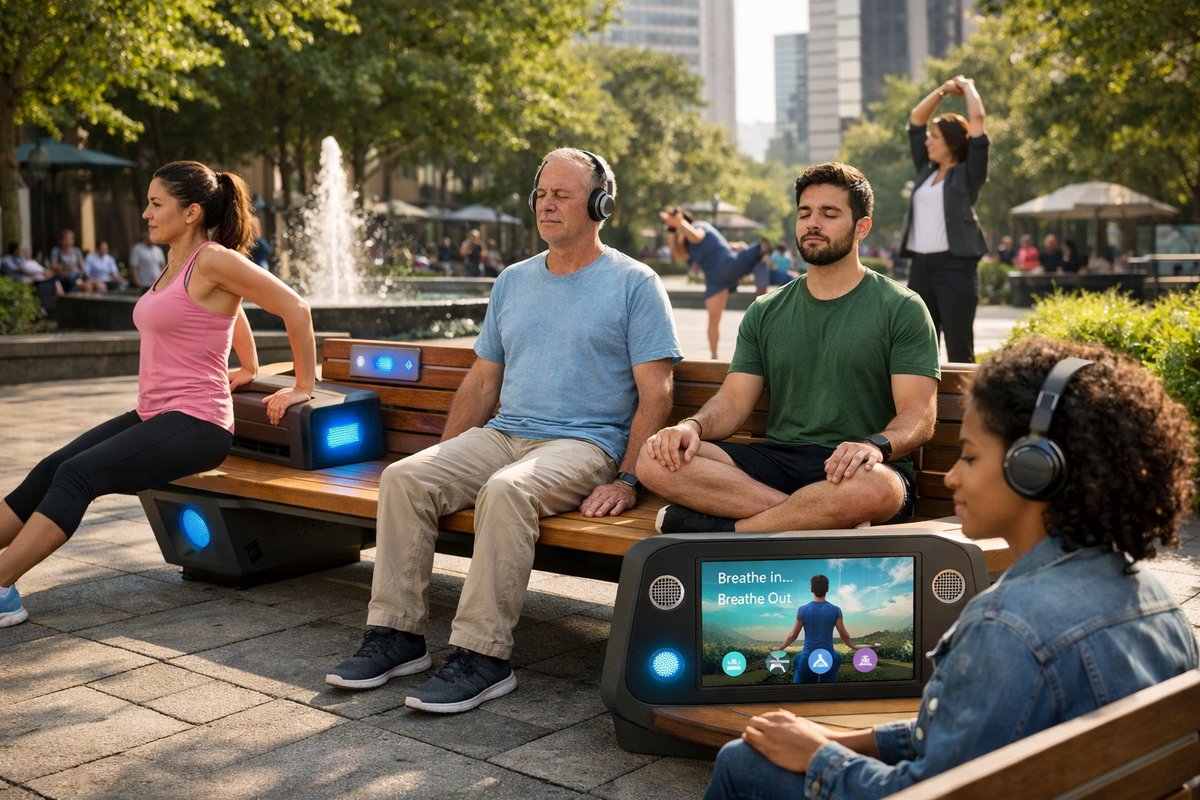
A pilot program has turned ordinary park benches into smart wellness hubs that guide micro-workouts, breathing breaks, and sound therapy sessions. Early results show improved mood, increased movement, and surprising moments of calm in urban plazas.
On a crisp morning in a mid-sized city plaza, passersby pause at a seemingly ordinary bench. Tucked beneath a solar panel canopy and crafted from recycled materials, the seat pulses with soft light, guiding visitors through a 60-second breathing exercise. Moments later, a gentle voice suggests a quick stretch with an integrated resistance band. This is not a tech demo-it’s the first wave of smart wellness benches designed to weave vitality, movement, and mental clarity into everyday life.
The pilot program, launched by a public health nonprofit in partnership with local urban planners and engineers, has installed a dozen of these benches in high-traffic parks, transit stops, and pedestrian plazas. Each unit features embedded sensors that detect when someone sits, triggering a suite of guided experiences: a brief cardio burst using a retractable mini-resistance band, a two-minute guided meditation delivered through speaker filters tuned to ambient noise levels, or a quick 90-second tai chi movement sequence illustrated on a low-energy LED display. For city dwellers accustomed to rushing from point A to point B, these benches offer an unexpected pause-a chance to recharge mind and body before moving on.
Early participant surveys reveal that 7 in 10 users felt noticeably more alert after using the bench’s micro-workout option, while 65% reported a measurable drop in perceived stress following the guided breathing sequence. The program’s data scientists are analyzing anonymized biometric input-heart rate readings captured through onboard photoplethysmography sensors-to fine-tune the timing and intensity of each suggestion. By adapting exercises to real-time stress markers, the benches deliver personalized care without collecting identifying information.
Behind the scenes, engineers prioritized sustainability at every turn. The benches are made from post-consumer plastics reclaimed from local recycling facilities and powered by flexible solar cells that charge integrated batteries. Circuit boards are coated with a corrosion-resistant polymer, and all wiring is modular and easily replaceable, extending the benches’ lifespan. Maintenance teams can swap out worn components in minutes, reducing electronic waste and lowering long-term costs.
One bench in a leafy park sits beside a community garden. Visitors emerging from planting beds often settle in for a two-minute guided visualization set to a custom soundscape of rustling leaves and distant bird calls. Others choose a brief guided sequence to relieve stiffness in their shoulders-a welcome break after hauling compost. Over a month, the local parks department noted a 25% uptick in average bench occupancy time compared with nearby traditional benches, indicating a genuine interest in these wellness interventions.
In another location adjacent to a busy bus stop, the bench’s audio guidance offers a rapid focus protocol: thirty seconds of rhythmic clapping exercises paired with a metronome pulse and a thirty-second breathing reset. Commuters report feeling more grounded before diving into their day, and some have even returned in the evening to try the 15-minute evening wind-down sequence-a gentle yoga flow accompanied by mellow piano chords.
Urban planners involved in the project emphasize the benches’ role as social catalysts. By offering universally accessible wellness tools, the installations break down barriers to movement and mindfulness. Anyone-whether wearing work attire or workout gear-can join a quick mobility routine without needing to carry specialized equipment. The presence of these benches also sparks conversations among neighbors, creating an unplanned, informal network of mutual encouragement. “It’s become a meeting spot,” explains one park volunteer. “People show up to see what the bench offers today, then swap stories about their favorite breathing or stretching tips.”
The technical design includes an optional companion app, allowing users to bookmark favorite sequences and receive reminders when they’re near a bench. No personal health data is stored on the bench itself-only anonymized usage metrics and sensor-detected heart-rate fluctuations. App users can opt in to receive weekly reports on total micro-workouts performed, average breathing session duration, and suggested next steps for improving sleep quality and movement variety.
Researchers from the local university’s public health department are tracking the pilot’s impact on overall well-being. Initial findings suggest a modest but significant correlation between frequent bench interactions and improved self-reported sleep quality. Study participants who used the benches at least three times per week reported fewer nighttime awakenings and a reduced reliance on sleep aids. While causation remains to be fully established, the benches’ combination of movement prompts and guided relaxation appears to foster healthier rest patterns.
As the pilot enters its third month, organizers are exploring expansion into suburban transit hubs and corporate campuses. Plans include adding modular attachments-a fold-out desk surface for micro-journaling prompts, UV-curing panels for vitamin D simulation on cloudy days, and even a hydration reminder system synced to seasonal temperature changes. Long-term ambitions envision a city-wide network that seamlessly integrates wellness into daily commutes, park visits, and lunch breaks.
Community members have also proposed rotating seasonal content, such as winter tai chi routines focusing on warming stretches, or a summer hydration break with brief guided neck massage techniques. By leveraging open-source software and community-driven content creation, the project aims to stay responsive to local needs, cultures, and environmental conditions.
While the concept of public wellness infrastructure isn’t entirely new, smart benches represent a fresh approach to democratizing health tools. Their modular design ensures that each seat can evolve without full replacement, supporting both sustainability goals and budget constraints. City officials note that the per-unit cost-driven down by recycled materials, solar power, and open hardware-compares favorably with single-use public art installations or one-off fitness classes, yet offers ongoing, scalable benefits.
Looking ahead, stakeholders envision partnerships with local health providers, mental-health counselors, and fitness instructors who can contribute specialized content. By combining neighborhood expertise with data insights, the benches could host pop-up workshops, virtual classes, or seasonal festivals centered on communal well-being. The ultimate goal is to blur the line between public space and personal care, making every bench an invitation to pause, breathe, move, and reflect.
As urban life accelerates, these smart wellness benches stand as a reminder that moments of calm and vitality can be woven into the city’s fabric. Whether you’re rushing to a meeting, waiting for a bus, or strolling through a park, a brief stop on these benches offers practical tools to improve mood, boost circulation, and clear mental fog. In the evolving landscape of public health innovation, sometimes the simplest interventions-a guided stretch, a focused breath-can create ripple effects far beyond the bench itself. Welcome to the next frontier of integrated wellness: where the city becomes your partner in health.
In the spirit of modular, adaptable solutions, these benches invite replication, remixing, and ongoing refinement. As more communities pilot similar initiatives, the blueprint for weaving wellness into public life will only grow richer. And for the city dweller seeking that extra spark of clarity or energy, all it takes is one brief pause on a bench that’s anything but ordinary.