Location
Mount Vernon, WA 98274

Location
Mount Vernon, WA 98274
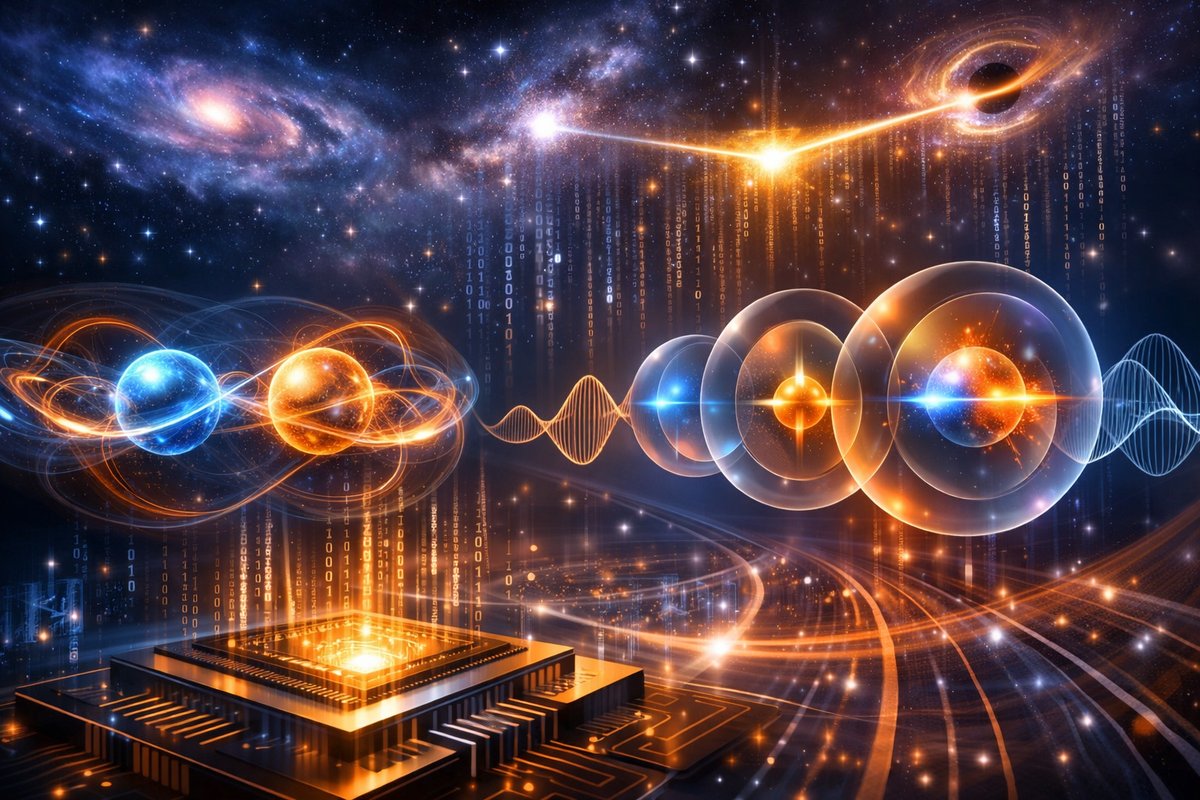
Recent breakthroughs in quantum physics are challenging our classical perceptions of reality, revealing a world where particles can exist in multiple states simultaneously and entanglement defies conventional notions of space and time. These discoveries not only deepen our understanding of the universe but also pave the way for revolutionary technologies in computing and communication.
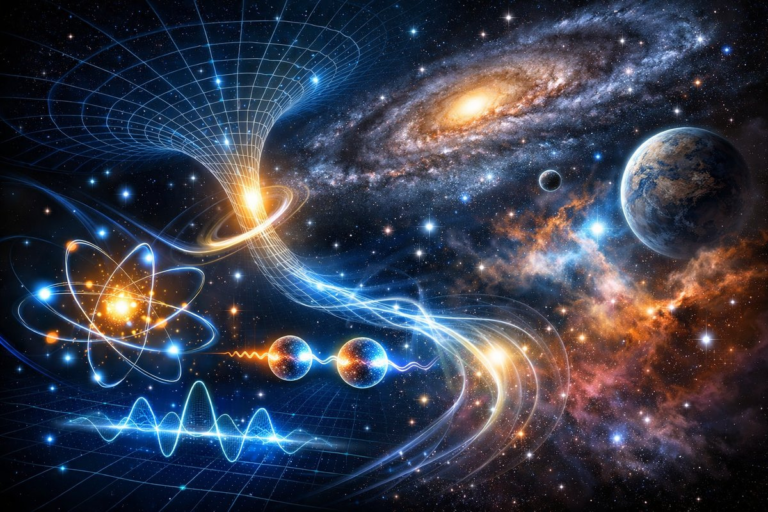
In the ever-evolving landscape of scientific inquiry, quantum physics stands out as a realm of both profound mystery and transformative potential. Recent experiments and theoretical advancements have propelled this field into new territories, inviting us to reconsider the very fabric of reality. At the heart of these developments lies the phenomenon of quantum superposition, where particles such as electrons or photons can exist in multiple states at once until observed. This defies classical intuition and has been experimentally verified with increasing precision.
Entanglement, another cornerstone of quantum mechanics, further challenges our understanding by linking particles across distances instantaneously. This ‘spooky action at a distance,’ as Einstein famously dubbed it, has been demonstrated over ever-growing scales, including satellite-based experiments that confirm entanglement over hundreds of kilometers. Such findings not only validate quantum theory but also suggest new avenues for secure communication through quantum encryption methods impervious to conventional hacking.
These quantum phenomena have direct implications for the development of quantum computing, a technology that leverages superposition and entanglement to perform computations at speeds unattainable by classical computers. Recent prototypes of quantum processors have shown promise in solving specific problems like factoring large numbers or simulating complex molecular interactions, tasks crucial for cryptography, drug discovery, and materials science.
Beyond the laboratory, these insights invite philosophical reflection on the nature of consciousness and observation. The observer effect, wherein measurement affects the state of a quantum system, raises questions about the role of awareness in shaping reality. While interpretations vary-from the Copenhagen interpretation to many-worlds theory-the dialogue between physics and philosophy continues to enrich both fields.
Moreover, the quest to unify quantum mechanics with general relativity remains a central challenge. Efforts to develop a theory of quantum gravity, such as string theory or loop quantum gravity, aim to reconcile the behavior of the very small with the cosmic scale of spacetime curvature. Success in this endeavor could unlock a comprehensive framework explaining phenomena from black holes to the Big Bang.
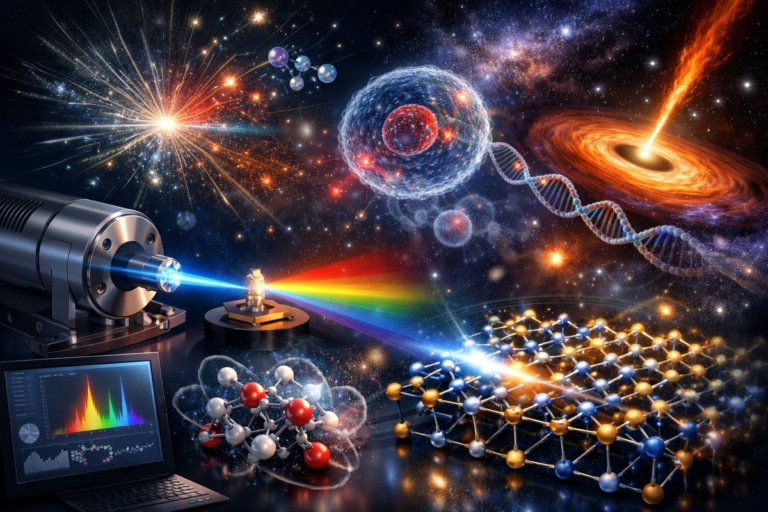
As we delve deeper into the quantum realm, the importance of fostering curiosity, precision, and interdisciplinary collaboration becomes evident. These discoveries underscore the interconnectedness of the universe, from subatomic particles to galactic structures, inspiring awe and driving innovation. The journey ahead promises not only technological breakthroughs but also a richer understanding of our place within the cosmos.