Location
Mount Vernon, WA 98274

Location
Mount Vernon, WA 98274
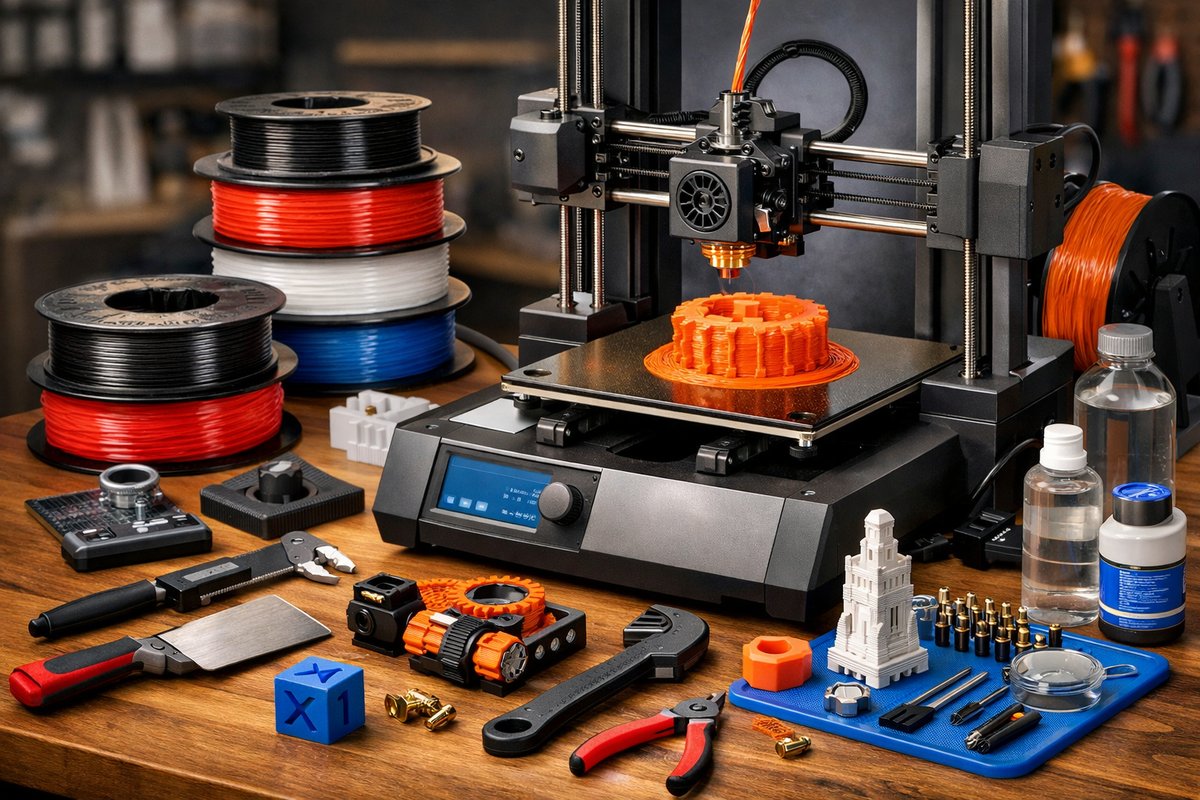
Fused Filament Fabrication (FFF) stands as one of the most accessible and versatile additive manufacturing techniques, transforming spools of plastic filament into intricate, functional objects layer by layer. This guide dives deep into the practicalities of FFF, exploring essential components and tools that elevate your 3D printing experience from basic to exceptional.
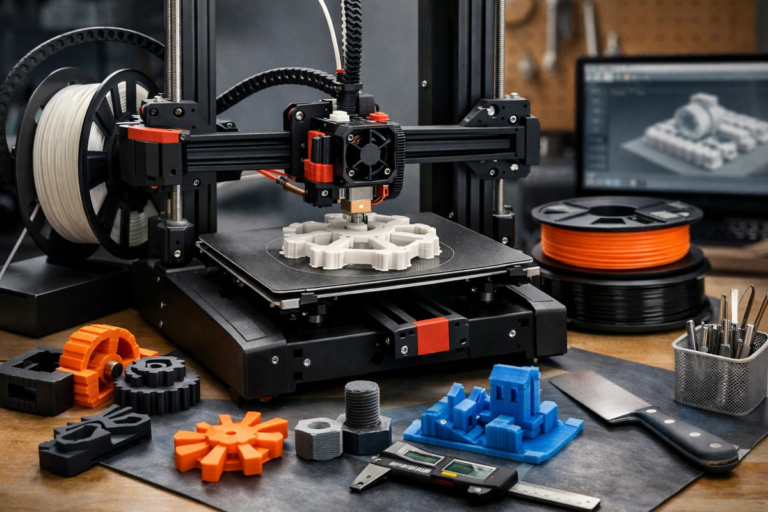
Additive manufacturing has revolutionized the way we approach fabrication, offering new freedoms beyond the subtractive methods of cutting and milling. Among the various additive techniques, Fused Filament Fabrication (FFF) is particularly popular for its accessibility, affordability, and adaptability. This method involves extruding thermoplastic filament through a heated nozzle, depositing material in successive layers to build up a three-dimensional object. While the concept is straightforward, mastering FFF requires understanding the intricacies of the process and the tools that make it possible.
At its core, FFF depends on a precise balance of hardware, software, and materials. The printer itself is a complex mechanical system that must coordinate motion, temperature, and extrusion with exact timing. The filament material-commonly PLA, ABS, PETG, or specialty blends-must be chosen to suit the desired strength, flexibility, or finish of the final product. Meanwhile, slicing software translates digital 3D models into instructions the printer can follow, controlling layer height, infill patterns, and support structures.
One of the most critical components in an FFF setup is the print head assembly, which includes the hot end and the extruder. The hot end melts the filament, and the extruder pushes it through the nozzle. A high-quality all-metal hot end allows for higher temperature printing and compatibility with a wider range of materials, including advanced composites and flexible filaments. Paired with a reliable extruder-whether direct drive or Bowden style-this setup ensures consistent filament flow and reduces issues like clogging or under-extrusion.
The choice of nozzle diameter also influences print resolution and speed. Standard nozzles are typically 0.4 mm, providing a good balance between detail and build time. However, smaller nozzles (0.2 mm or 0.3 mm) can produce finer details at the cost of longer print durations, while larger nozzles (0.6 mm or 0.8 mm) accelerate printing but sacrifice some precision. Experimenting with nozzle sizes can help tailor the process to specific project needs.
Equally important is the print bed, which must provide a stable, flat surface with good adhesion to prevent warping or shifting during printing. Heated beds are common and help maintain adhesion for materials prone to curling, like ABS. Surface treatments such as PEI sheets, glass plates, or specialized tapes can further enhance first-layer bonding and ease part removal.
Calibration is a cornerstone of successful FFF printing. Ensuring the bed is level and the nozzle height is precisely set can dramatically improve print quality. Many modern printers feature automatic bed leveling sensors, but manual calibration remains a valuable skill for troubleshooting and fine-tuning.
The slicing software offers a rich set of parameters to control the print. Layer height determines vertical resolution, typically ranging from 0.1 mm for high-detail prints to 0.3 mm or more for rapid prototyping. Infill density and pattern affect the internal structure, balancing weight, strength, and material usage. Support structures enable printing of complex geometries with overhangs but require careful removal and post-processing.
Material selection is another vital consideration. PLA is favored for its ease of use and biodegradability, making it ideal for beginners and environmentally conscious projects. ABS offers greater strength and temperature resistance but demands a heated enclosure to minimize warping. PETG combines strength and flexibility with chemical resistance, striking a middle ground suitable for functional parts.
To elevate your FFF experience, consider integrating a quality CNC router or mill for post-processing. These subtractive tools can refine surfaces, create precise holes, or add intricate details that are challenging to print directly. Combining additive and subtractive manufacturing techniques unlocks a hybrid workflow, blending the strengths of both approaches.
Safety and maintenance should not be overlooked. Proper ventilation is essential when printing with materials that emit fumes, such as ABS. Regular cleaning of the nozzle and lubrication of mechanical parts extend printer longevity and maintain print quality.
Embarking on FFF additive manufacturing opens a world of creative possibilities. Whether crafting prototypes, custom tools, artistic sculptures, or functional components, mastering this technique empowers makers to bring their digital designs into tangible reality. With patience, experimentation, and the right tools, you can harness the full potential of Fused Filament Fabrication and contribute to the evolving craft of modern manufacturing.