Location
Mount Vernon, WA 98274

Location
Mount Vernon, WA 98274
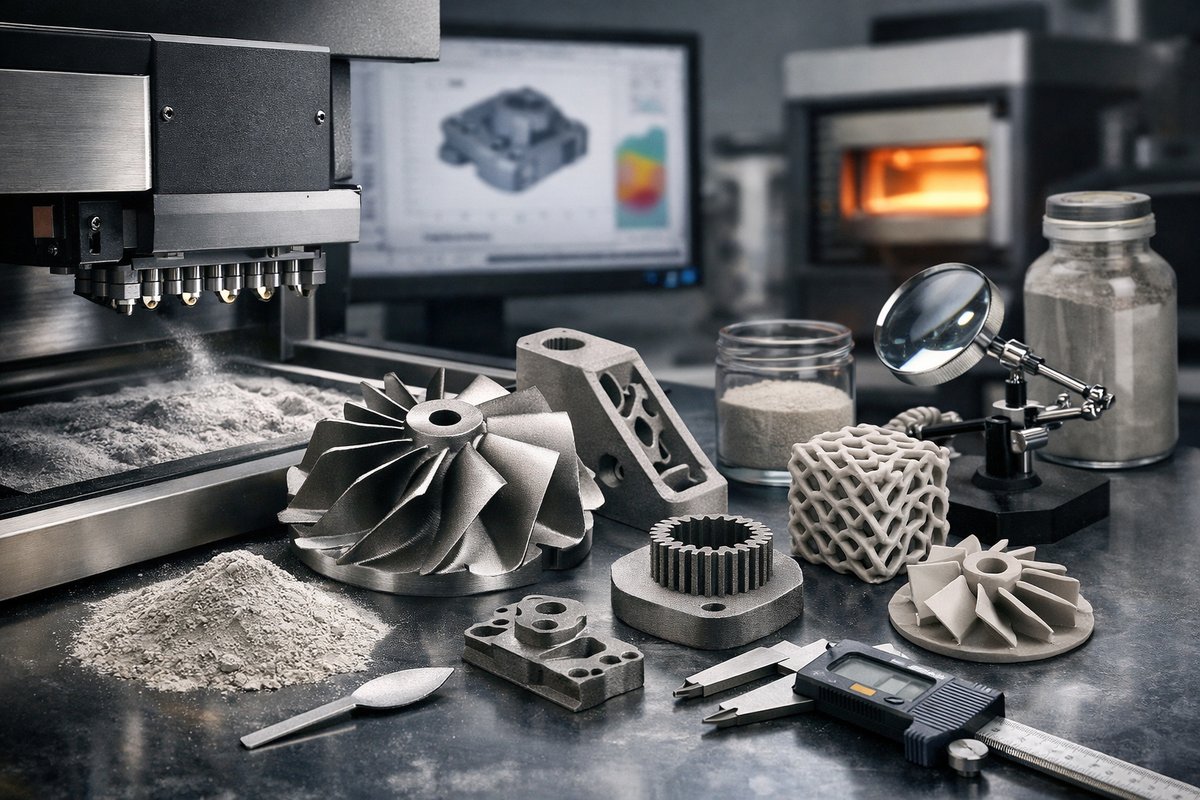
Binder jetting is an additive manufacturing technique that offers unique advantages for producing complex metal and ceramic parts with excellent surface finish and mechanical properties. This guide explores the process, essential tools, and materials, empowering makers and engineers to confidently incorporate binder jetting into their fabrication toolkit.
Additive manufacturing has revolutionized how we think about making objects, shifting from subtractive methods that remove material to build form, to processes that add material layer by layer. Among the diverse array of additive manufacturing techniques, binder jetting stands out for its ability to produce dense, functional metal and ceramic parts with intricate geometries and minimal post-processing. This article delves into the binder jetting process, highlights the components and tools that make it effective, and encourages hands-on experimentation to appreciate its capabilities.
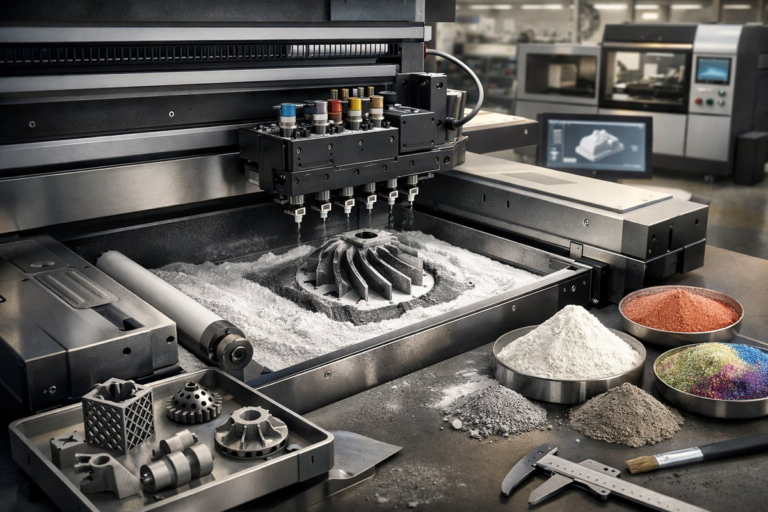
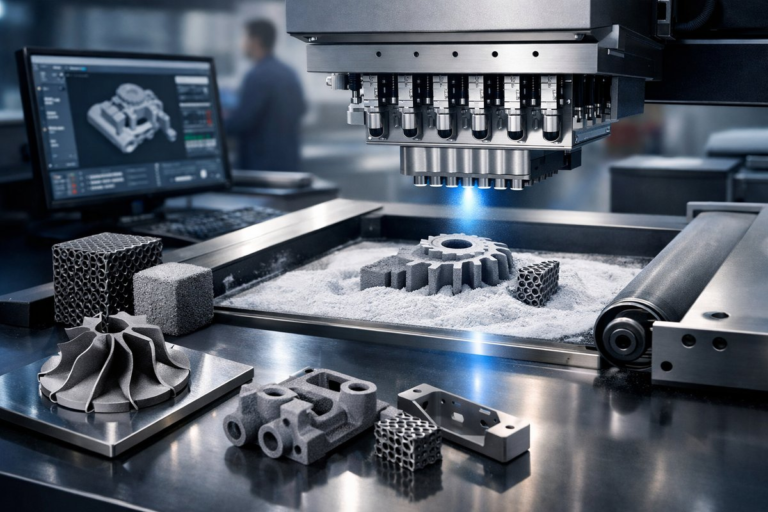
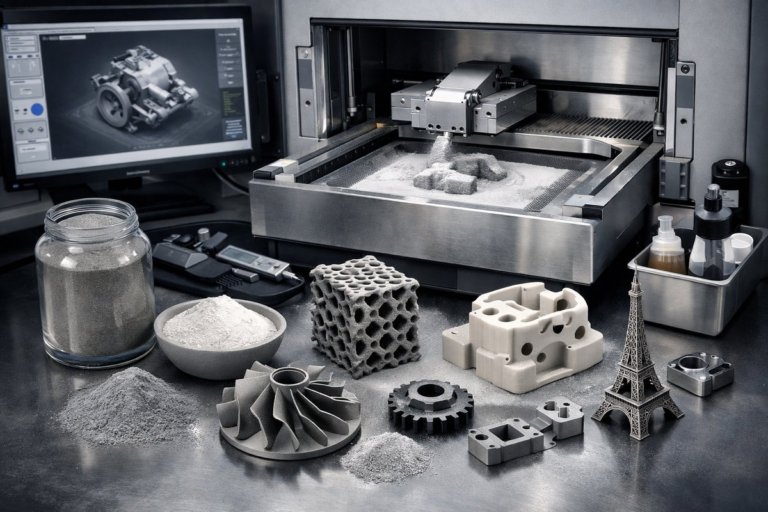
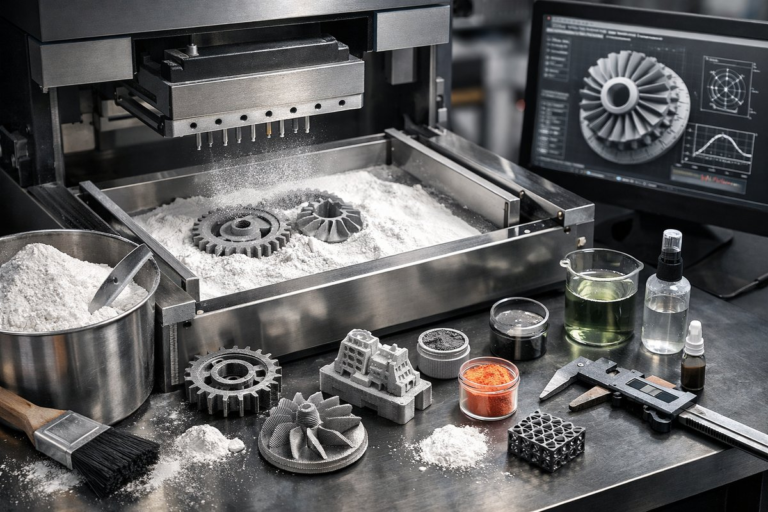
Binder jetting works by selectively depositing a liquid binding agent onto a thin layer of powder material, typically metal or ceramic. After each layer is bound, a new layer of powder is spread over the surface, and the process repeats. Once the build is complete, the unbound powder is removed, and the part undergoes curing and sintering to fuse the particles into a solid, durable object. This approach contrasts with laser-based powder bed fusion methods, as it avoids high thermal gradients and allows faster build speeds with less energy consumption.
One of the core strengths of binder jetting is its versatility in materials. Metals such as stainless steel, bronze, and tool steels can be printed, as well as ceramics like alumina and zirconia. This versatility enables applications ranging from aerospace components and tooling inserts to biomedical implants and decorative objects. The technique also excels at producing parts with complex internal channels and lattice structures that would be difficult or impossible to machine subtractively.
To get started with binder jetting, understanding the key components of the system is essential. The powder bed provides the raw material in finely powdered form, and its particle size distribution directly impacts the surface finish and resolution of the printed part. Powders with a narrow size distribution and spherical morphology typically flow better and pack more densely, leading to higher quality prints.
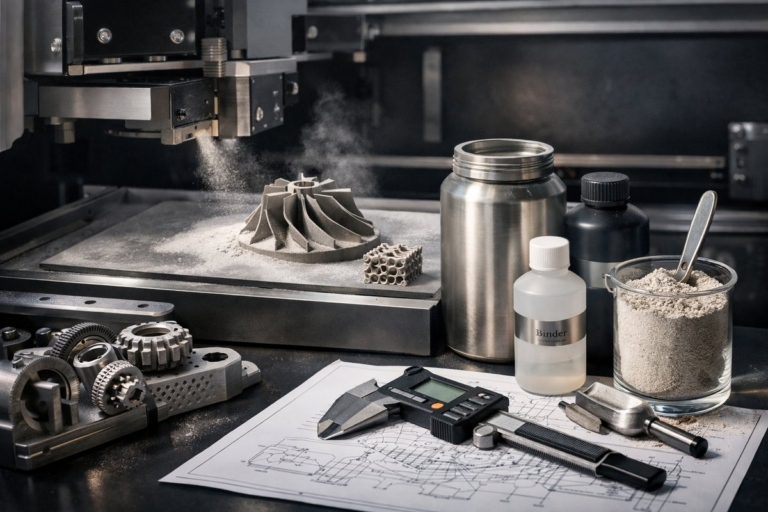
The printhead is another critical element, responsible for accurately depositing the binder droplets. Precision piezoelectric or thermal inkjet printheads are commonly used, capable of laying down binder in micron-scale patterns. Calibration of the printhead ensures consistent droplet size and placement, which directly influences dimensional accuracy and mechanical strength.
Spreading mechanisms evenly distribute powder layers, and they must be carefully tuned to avoid defects such as uneven thickness or powder agglomeration. Some systems use doctor blades or rollers, while others employ vibrating spreaders to achieve uniform layers as thin as 20 to 100 microns.
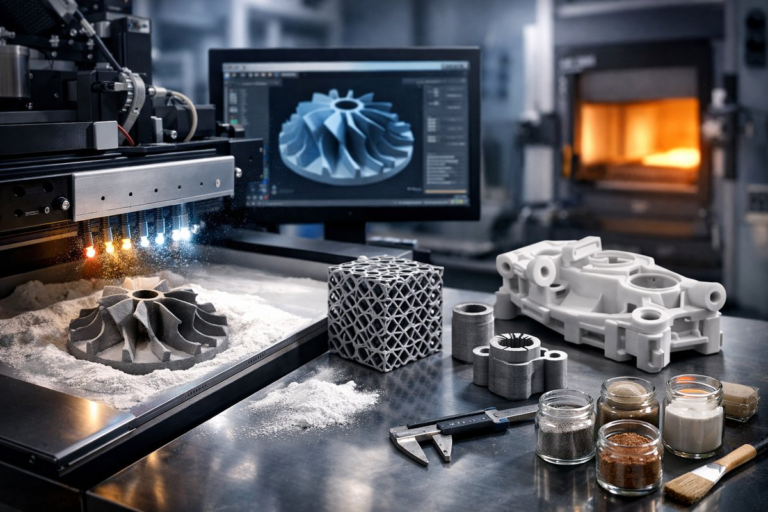
Post-processing is a vital phase in binder jetting. After printing, parts are fragile green bodies held together by the binder. They must be cured to harden the binder and then sintered at high temperatures to fuse the powder particles. Sintering schedules depend on the material but typically involve controlled heating ramps and atmospheres to prevent oxidation and warping. Some parts may also require infiltration with lower melting point metals to enhance density and mechanical properties.
For hobbyists or small-scale fabricators interested in exploring binder jetting, desktop or benchtop machines are emerging, offering accessible entry points without industrial-scale investment. While these machines may have smaller build volumes and slower speeds, they provide invaluable hands-on experience with the process and its nuances.
Complementary tools enhance the binder jetting workflow. A high-quality powder sieve ensures consistent particle size and removes contaminants. Precision digital scales allow accurate powder and binder measurements. Temperature-controlled curing ovens and programmable sintering furnaces help replicate industrial post-processing conditions at a smaller scale. Additionally, software for 3D model slicing and printhead control is indispensable for preparing and executing prints.
Binder jetting also invites creative experimentation. By mixing powders or adjusting binder formulations, makers can tailor mechanical properties, colors, and textures. Combining binder jetting with subtractive finishing techniques like CNC milling or polishing can produce parts with exceptional surface quality and dimensional precision.
In conclusion, binder jetting offers a compelling additive manufacturing technique that balances speed, material diversity, and geometric complexity. Its reliance on powder and binder deposition opens new frontiers in design freedom, enabling parts that are lightweight yet strong, intricate yet functional. With the right tools and materials, anyone curious about additive manufacturing can explore binder jetting to unlock innovative possibilities in metal and ceramic fabrication.
Whether you are an engineer seeking rapid prototyping solutions, a maker exploring new fabrication methods, or an educator demonstrating advanced manufacturing concepts, binder jetting provides a rich, hands-on experience. By investing in quality powders, precise printheads, and controlled post-processing equipment, you can achieve impressive results that showcase the power of additive manufacturing beyond the conventional.