Location
Mount Vernon, WA 98274

Location
Mount Vernon, WA 98274
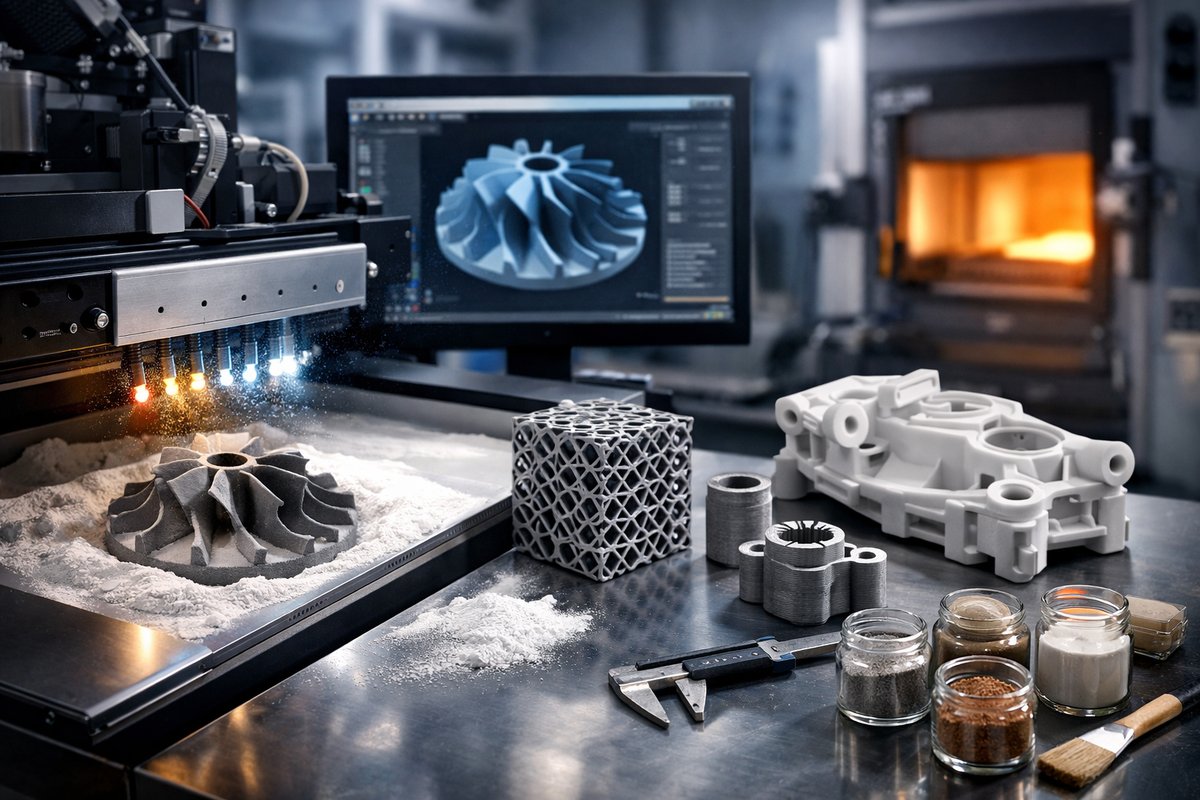
Binder jetting is an additive manufacturing technique that offers unique advantages in speed, material versatility, and cost-effectiveness. This article explores the process in detail, highlighting essential components and tools to help you get started on creating complex, high-quality parts with this innovative method.
Additive manufacturing continues to reshape how we conceive, design, and produce objects, offering alternatives to traditional subtractive methods by building parts layer by layer. Among the many additive techniques, binder jetting stands out for its ability to rapidly create complex geometries from a variety of powdered materials without the need for high-temperature lasers or extensive post-processing. This guide will walk you through the fundamentals of binder jetting, outline the key components involved, and provide practical advice on how to leverage this technology effectively.
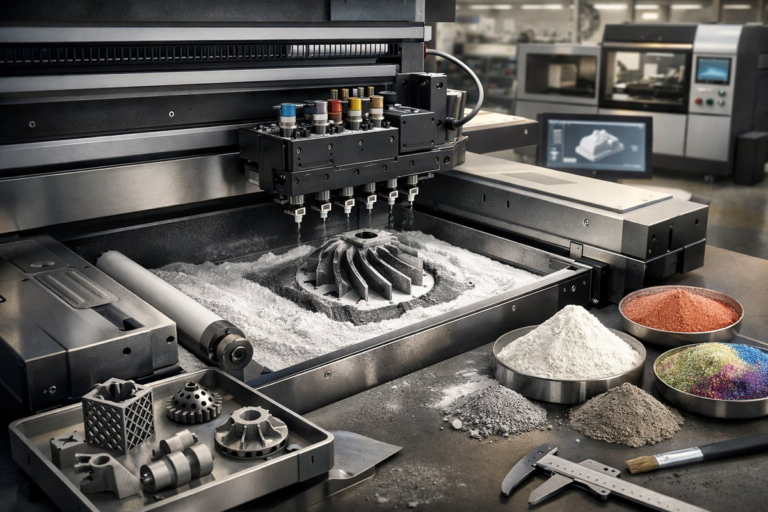
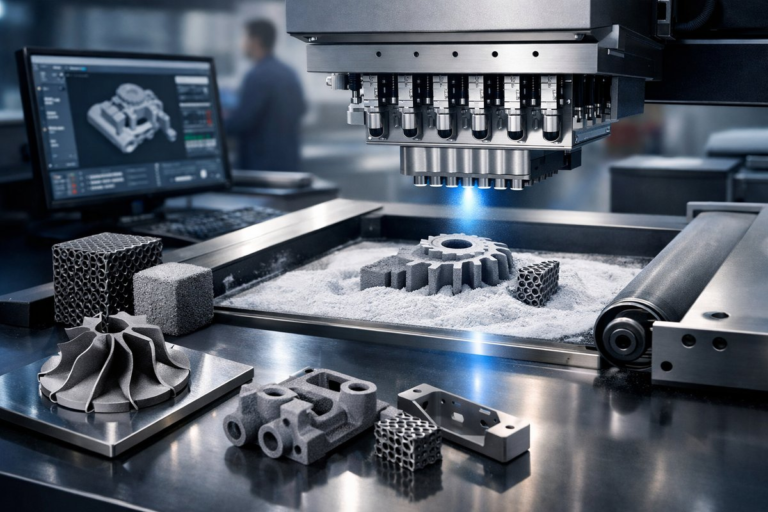
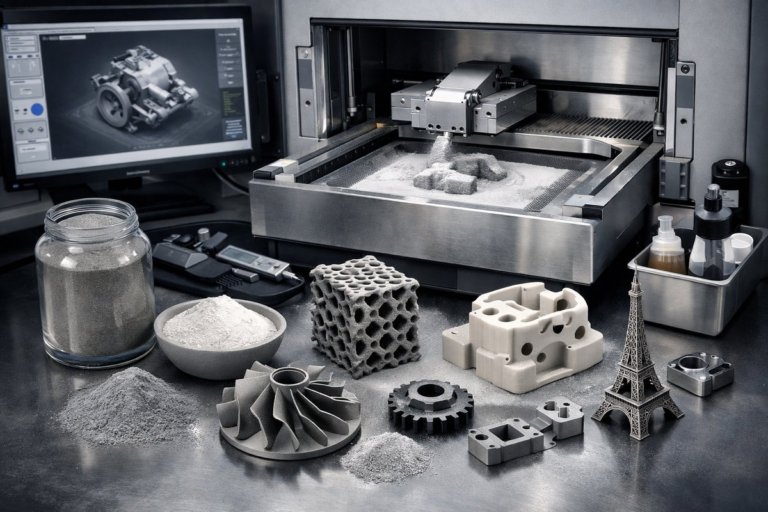
Binder jetting operates by selectively depositing a liquid binding agent onto a thin layer of powder material spread across a build platform. The binder acts as an adhesive, fusing the powder particles together in the desired pattern. Once a layer is completed, a new layer of powder is spread, and the process repeats until the entire part is formed. Unlike laser-based methods such as selective laser sintering, binder jetting does not involve melting the powder, which allows it to work with a broader range of materials including metals, ceramics, and even sand.
One of the primary advantages of binder jetting is its speed. Because it does not rely on melting, the process can be faster and less energy-intensive. Additionally, the absence of heat distortion means parts maintain better dimensional accuracy and exhibit less residual stress. This is particularly beneficial when producing large or intricate components that would be challenging to machine or mold.
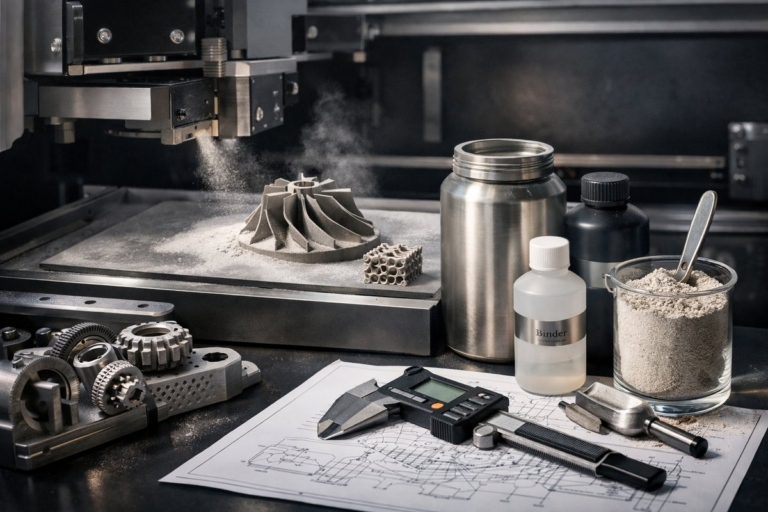
To get started with binder jetting, understanding the essential hardware components is crucial. The powder delivery system is responsible for evenly spreading thin layers of powder across the build area. Precision in this step ensures consistent layer thickness and surface finish. Next, the print head deposits the binder with high accuracy, typically using inkjet technology adapted for the specific binder fluid. The build platform lowers incrementally to accommodate each new powder layer, and an automated recoater smooths the powder to prepare for the next pass.
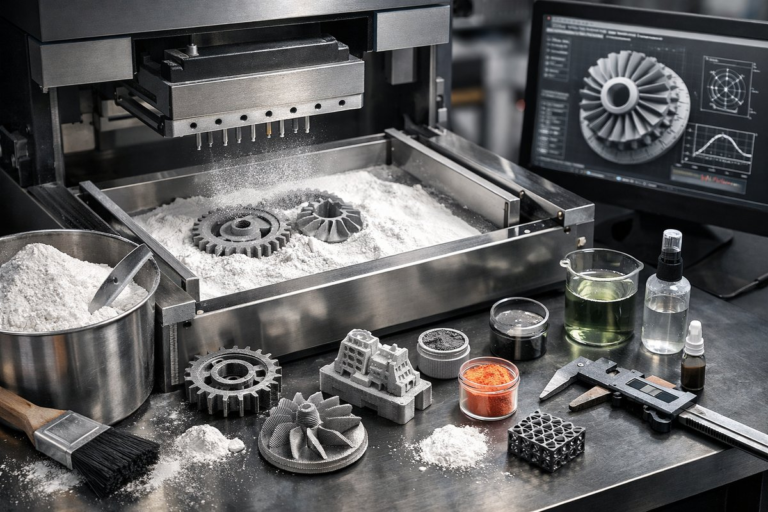
Material selection plays a vital role in binder jetting success. Metal powders such as stainless steel, bronze, and tool steel are popular for functional parts, while ceramics and sand powders are used for molds and artistic applications. The particle size distribution and flowability of the powder affect layer uniformity and final part density, so sourcing high-quality powders designed for binder jetting is recommended.
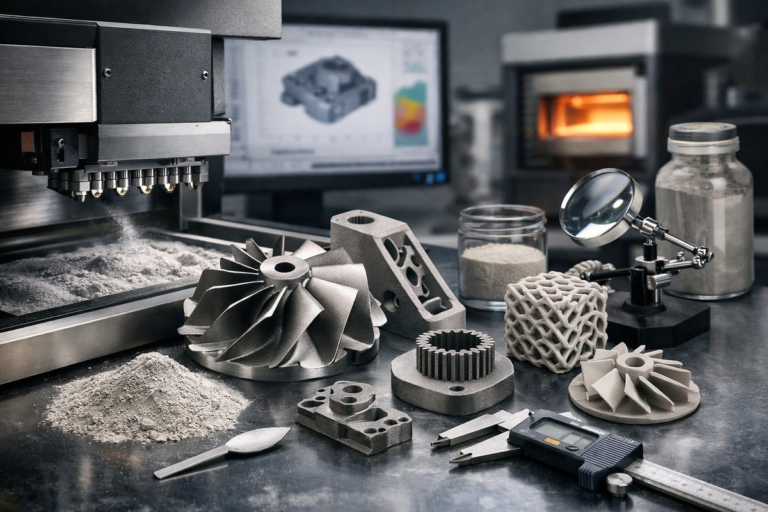
Post-processing is a necessary step to transform the fragile, “green” parts into fully functional objects. After printing, parts typically undergo curing to harden the binder, followed by sintering or infiltration. Sintering involves heating the part below the melting point of the base material to fuse the particles, increasing strength and density. Infiltration uses a secondary material, such as bronze, to fill pores and enhance mechanical properties. These steps require access to furnaces or ovens capable of precise temperature control.
For those interested in exploring binder jetting, several tools and accessories can enhance the experience and outcomes. A high-quality powder handling system with containment and filtration helps maintain a clean workspace and reduces health risks associated with fine powders. Precision scales and moisture analyzers ensure the powder is stored and prepared optimally. Software capable of slicing 3D models into layers compatible with the binder jetting process is also essential, with some platforms offering specialized settings for powder types and binder volumes.
Safety should never be overlooked. Working with fine powders demands proper ventilation, personal protective equipment such as respirators and gloves, and strict adherence to handling protocols to prevent inhalation or dust explosions. Furthermore, the binder fluids may contain chemicals requiring careful storage and disposal.
Binder jetting presents an exciting frontier for makers, engineers, and designers seeking to expand their additive manufacturing capabilities. Its combination of speed, material flexibility, and relatively low thermal stress opens doors to applications ranging from rapid prototyping to small-batch production of complex metal parts. By investing in the right equipment, understanding material properties, and mastering post-processing techniques, you can harness binder jetting to realize designs that were once difficult or impossible to fabricate.
The journey into binder jetting is both a technical challenge and a creative opportunity. As you experiment with different powders, binders, and print parameters, you’ll develop an intuitive sense for how this subtractive-adjacent additive method reveals form through the careful layering and bonding of particles. This balance of precision and exploration embodies the spirit of modern manufacturing, where tradition meets innovation to craft objects with purpose and beauty.