Location
Mount Vernon, WA 98274

Location
Mount Vernon, WA 98274
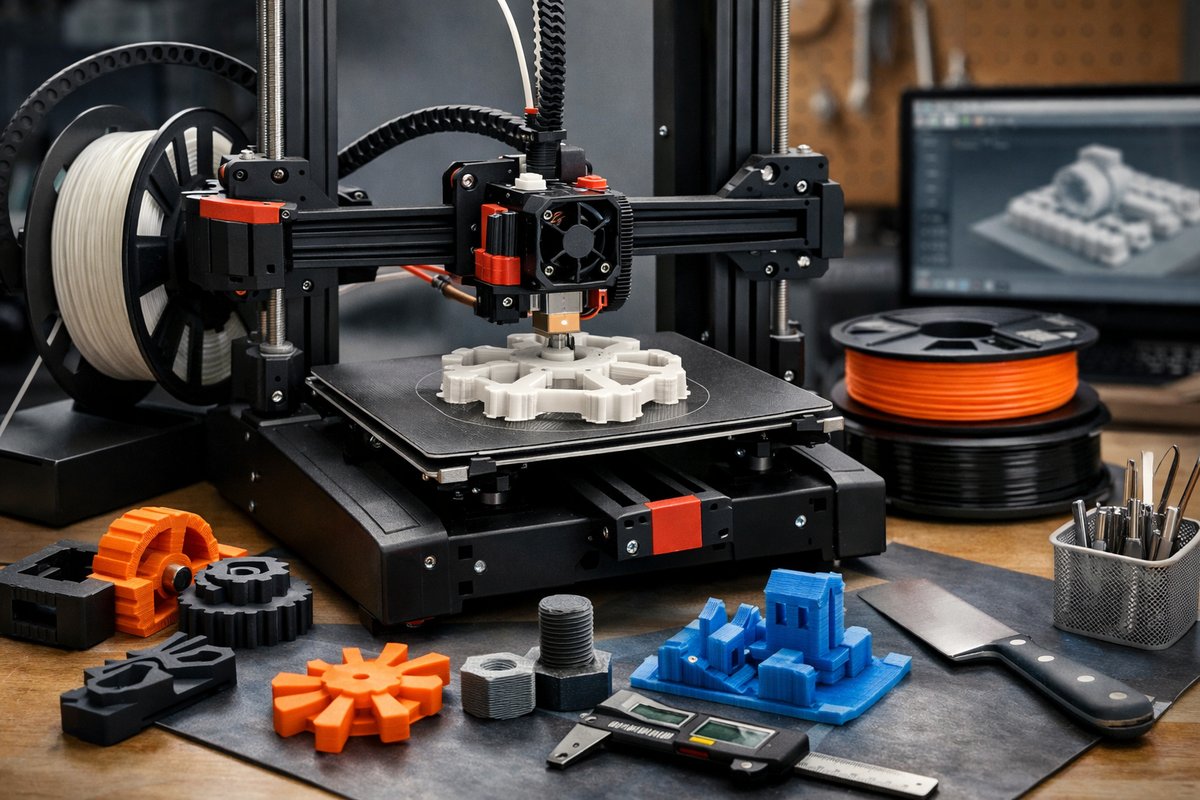
Fused Deposition Modeling (FDM) stands as one of the most accessible and versatile additive manufacturing techniques, transforming thermoplastic filaments into intricate, functional parts. This guide delves into the essentials of FDM, exploring key components and tools that empower makers and professionals alike to bring their designs to life with precision and creativity.
Additive manufacturing has revolutionized how we approach fabrication, offering a process that builds objects layer by layer rather than subtracting material. Among the many techniques available, Fused Deposition Modeling (FDM) has become a cornerstone for hobbyists, educators, and industry professionals due to its relative simplicity, affordability, and adaptability.
At its core, FDM works by extruding thermoplastic filament through a heated nozzle, depositing material layer upon layer to form a three-dimensional object. Unlike subtractive methods, which carve away material from a solid block, FDM adds material only where needed, reducing waste and enabling complex geometries that would be difficult or impossible to machine traditionally.
To successfully harness FDM, understanding the interplay between the printer’s hardware, the filament material, and the slicing software is essential. Let’s explore the key components and tools that define the FDM process and how they contribute to achieving high-quality prints.
The Printer Frame and Motion System
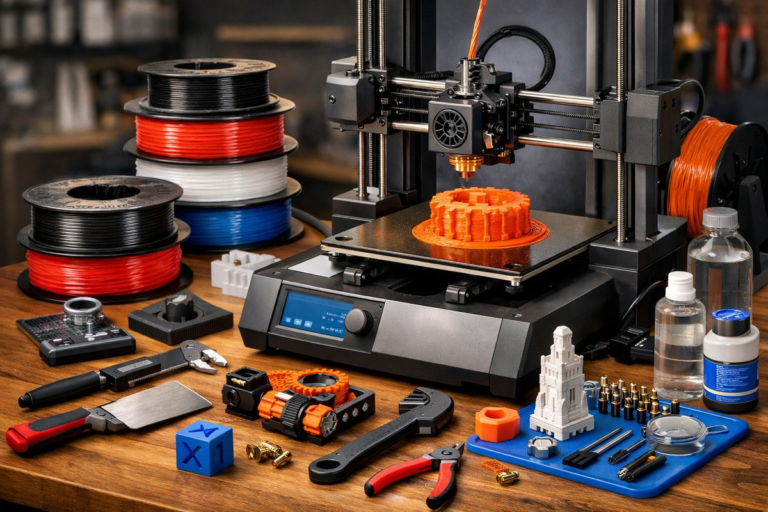
FDM printers typically feature a rigid frame constructed from metal or high-strength plastic to minimize vibrations during printing. Stability is crucial because even slight movements can cause layer misalignment, leading to defects. The motion system, often driven by stepper motors, moves the print head and build platform along the X, Y, and Z axes with precision. Common configurations include Cartesian and CoreXY setups, each offering distinct advantages in speed and accuracy.
Extruder and Hotend Assembly
The extruder is responsible for feeding filament into the hotend, where it is melted and extruded through a nozzle. Direct-drive extruders position the motor close to the hotend, improving control over flexible filaments, while Bowden setups separate the motor from the hotend to reduce moving mass and increase print speed. The hotend’s temperature control is critical; it must maintain stable heat to ensure consistent extrusion without degrading the filament.
Build Platform and Adhesion
The build platform, or print bed, serves as the foundation for the object being printed. Many FDM printers feature heated beds to prevent warping by maintaining adhesion and controlling cooling rates. Surface materials such as glass, PEI sheets, or specialized adhesives enhance the first layer’s grip, which is vital for print success. Calibration of bed leveling ensures the nozzle maintains an optimal distance from the bed, balancing adhesion and nozzle clearance.
Filament Selection and Handling
Filament choice profoundly influences the mechanical properties, finish, and usability of printed parts. Common materials include PLA, known for ease of printing and biodegradability; ABS, offering strength and heat resistance; PETG, which balances toughness and flexibility; and specialty filaments like TPU for elastomeric parts or carbon-fiber-infused composites for rigidity. Proper storage in dry conditions prevents moisture absorption, which can cause print defects.
Slicing Software and Print Settings
Slicing software translates 3D models into printer-specific instructions, determining layer height, infill density, print speed, and support structures. Fine-tuning these parameters tailors the balance between print quality, strength, and time. For example, lower layer heights produce smoother surfaces but increase print duration, while higher infill percentages enhance part strength at the cost of material and time.
Post-Processing Tools and Techniques
Although FDM parts emerge ready to use in many cases, post-processing can elevate their aesthetics and functionality. Techniques include sanding to smooth layer lines, chemical vapor smoothing for ABS, and painting or sealing for enhanced durability. Tools such as precision files, heat guns, and ultrasonic cleaners facilitate these refinements.
Embracing FDM opens a gateway to rapid prototyping, custom tooling, and creative expression. It invites users to experiment with design iteration cycles previously constrained by traditional manufacturing timelines. By mastering the components and settings outlined here, users can confidently embark on additive manufacturing projects that blend technical precision with artistic freedom.
Whether you are a novice maker seeking your first printer or an experienced technician optimizing production workflows, understanding the nuances of FDM empowers you to push the boundaries of what can be created layer by layer. The synergy of hardware, materials, and software transforms digital visions into tangible realities, one filament strand at a time.