Location
Mount Vernon, WA 98274

Location
Mount Vernon, WA 98274

Resin-based additive manufacturing, particularly stereolithography (SLA), offers unmatched detail and surface finish for creators eager to transform digital designs into tangible realities. This guide explores the essentials of SLA printing, from selecting the right resin and printer to mastering post-processing techniques, empowering you to dive confidently into this versatile technology.
Additive manufacturing has revolutionized how we approach prototyping, product development, and even artistic expression. Among the various techniques, resin-based additive manufacturing-commonly known as stereolithography (SLA)-stands out for its ability to produce highly detailed, smooth, and complex parts. Unlike filament-based 3D printing, which extrudes melted plastic, SLA uses a light source to selectively cure liquid resin layer by layer. This process yields finer resolution and surface quality, making it ideal for applications ranging from jewelry design to dental modeling.
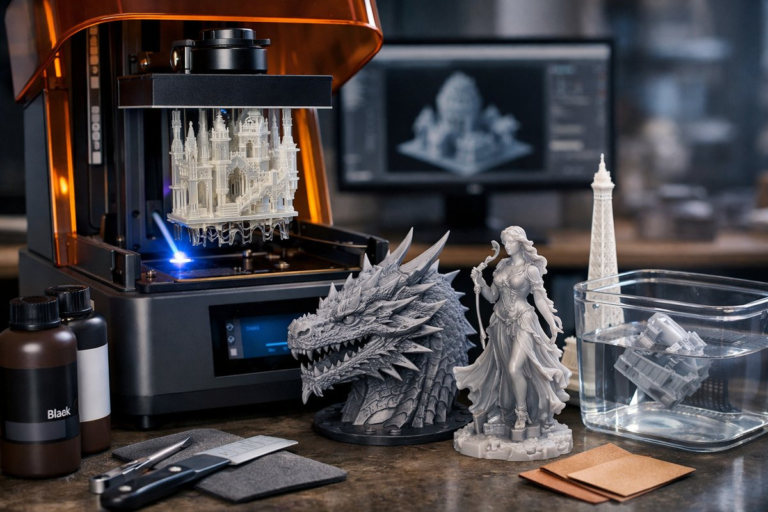
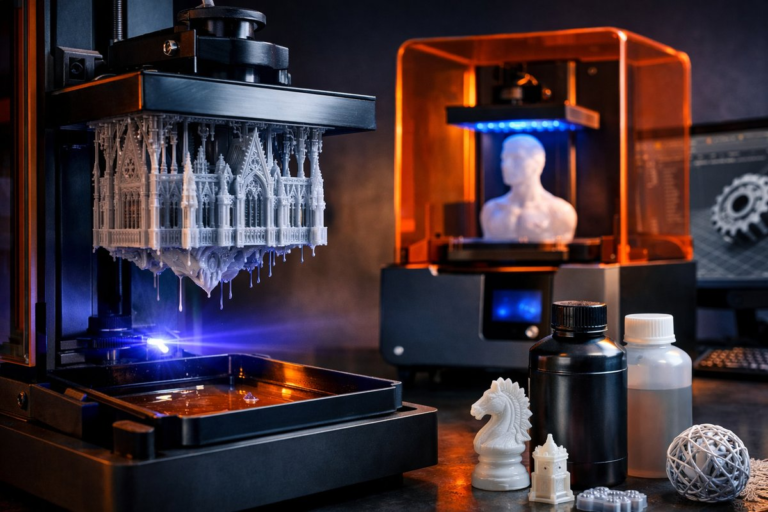
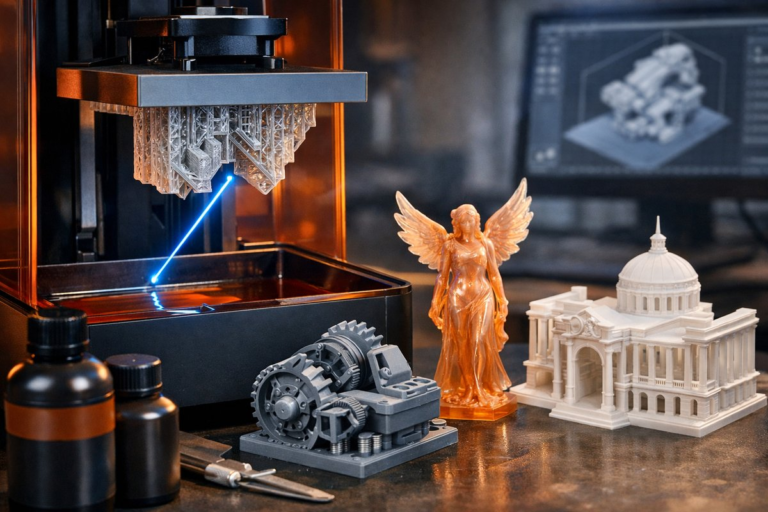
Getting started with SLA printing involves understanding the core components and workflow that make this technology both accessible and powerful. At its heart, an SLA printer consists of a vat filled with photosensitive resin, a build platform that moves vertically, and a light source-usually a UV laser or LCD screen-that cures the resin precisely where needed. The digital model, sliced into ultra-thin layers, guides the light to solidify resin sequentially, building the object from the bottom up.
One of the key advantages of SLA is the variety of resins available, each tailored for specific properties. Standard resins provide excellent detail and smoothness for prototypes and display models. Engineering resins offer enhanced mechanical strength, flexibility, or heat resistance, suitable for functional parts. Biocompatible resins enable medical and dental applications, while castable resins allow jewelers to create molds directly from prints. Selecting the right resin depends on your project’s demands-balancing factors like durability, finish, and safety.
To embark on your SLA journey, start by choosing a reliable printer known for consistent performance and user-friendly software. Entry-level models often feature LCD screens to cure layers simultaneously, offering a balance between cost and speed. Higher-end machines use lasers for pinpoint accuracy, ideal for ultra-fine details. Regardless of the choice, ensure the printer supports the resin types you intend to use and has a sturdy build platform for stable prints.
Once your printer and resin are ready, preparing the digital file is the next crucial step. Use slicing software compatible with your printer to convert your 3D model into layers, adjusting parameters such as layer thickness, exposure time, and support structures. Thinner layers yield smoother surfaces but increase print time, so find a balance that suits your needs. Properly designed supports are essential to prevent deformation and ensure complex geometries print successfully.
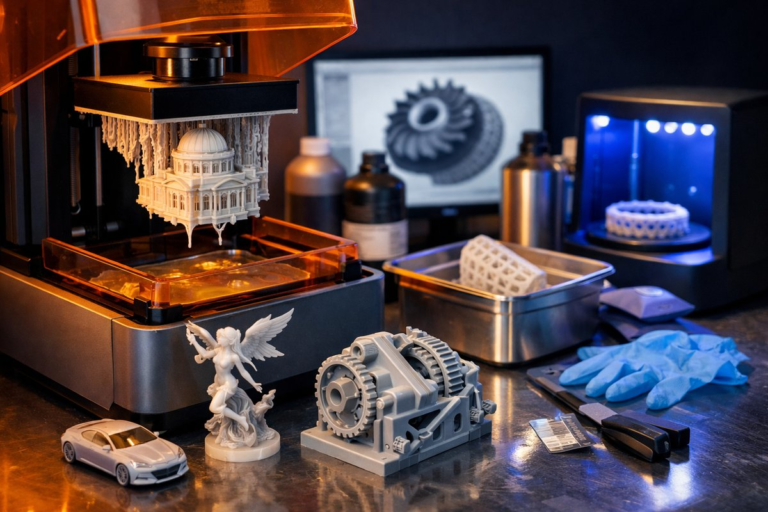
After printing, post-processing transforms your raw print into a finished piece. Begin by carefully removing the build platform and detaching the print, typically using tools like spatulas or cutters. The print will still be tacky and fragile, so handle it gently. Rinse the object in isopropyl alcohol to wash away uncured resin, often requiring multiple baths and gentle agitation. After drying, cure the print under UV light to fully harden the resin and achieve optimal mechanical properties.
Safety considerations are paramount when working with resins and UV light. Always wear nitrile gloves to avoid skin contact with uncured resin, and work in a well-ventilated area or use a fume extractor to minimize inhalation of volatile compounds. UV curing should be done with appropriate shielding to protect eyes and skin. Proper disposal of resin waste and cleaning materials helps reduce environmental impact, aligning with sustainable practices.
Exploring SLA printing opens doors to creating objects that were once difficult or impossible to fabricate with traditional methods. Whether you are a hobbyist crafting intricate miniatures, an engineer prototyping functional parts, or an artist pushing creative boundaries, resin-based additive manufacturing offers precision, versatility, and a rewarding hands-on experience.
With patience and practice, mastering SLA printing can become a cornerstone of your creative toolkit, enabling rapid iteration and innovation. The tactile satisfaction of holding a finely detailed object born from digital design embodies the essence of additive manufacturing’s transformative power.