Location
Mount Vernon, WA 98274

Location
Mount Vernon, WA 98274
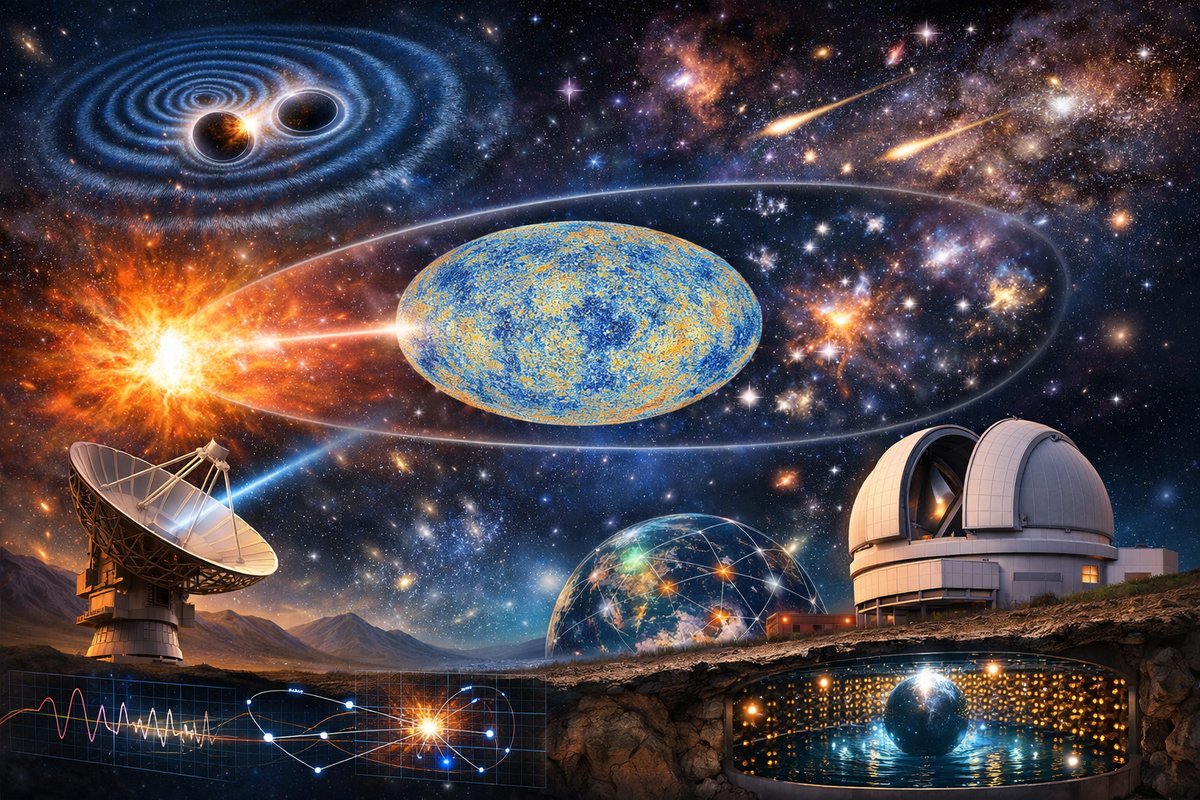
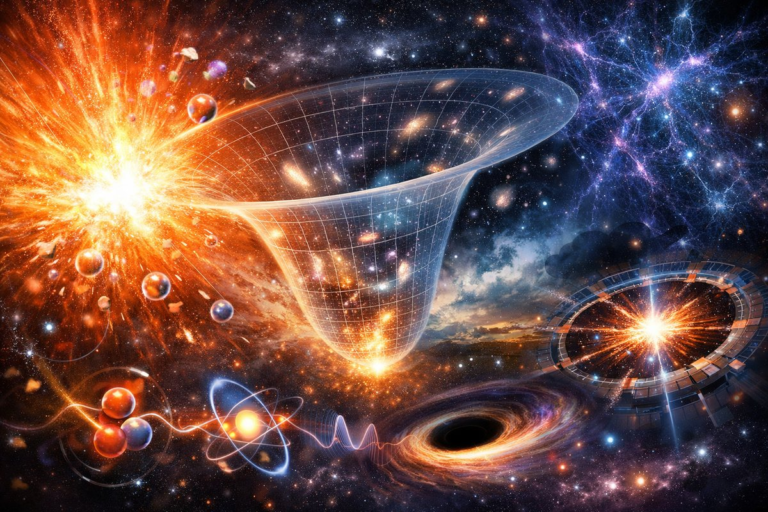
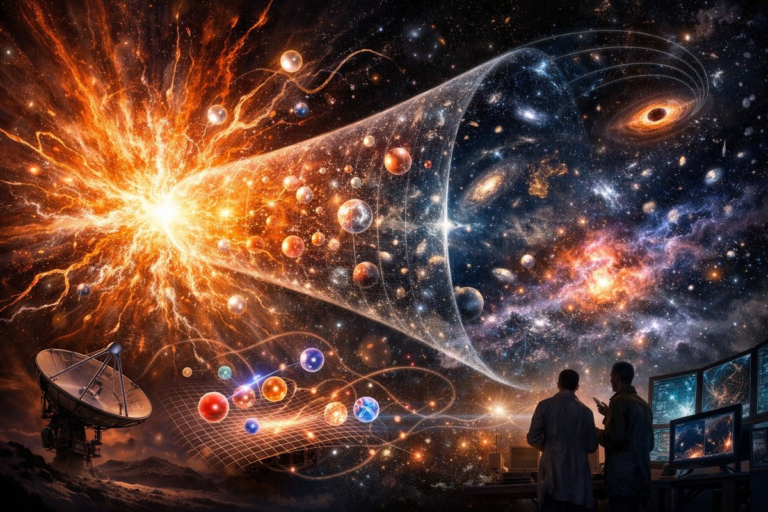
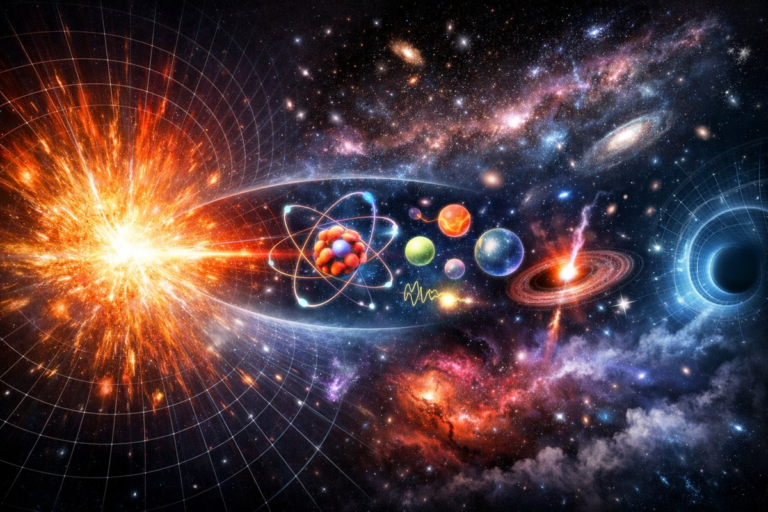
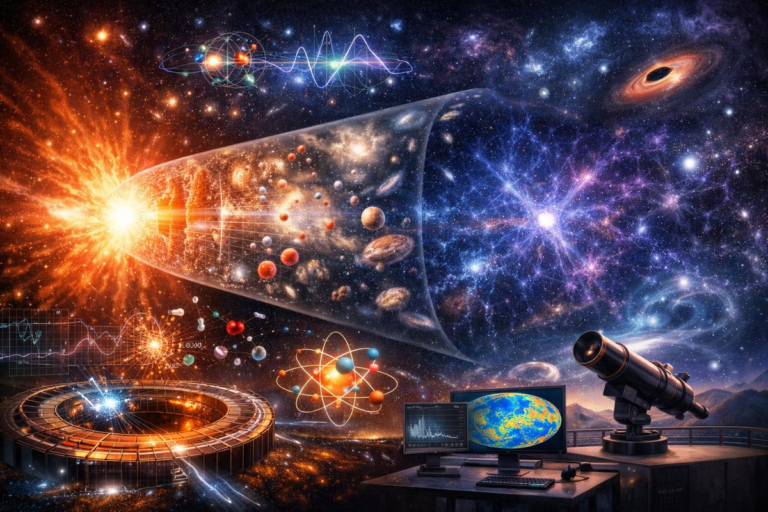
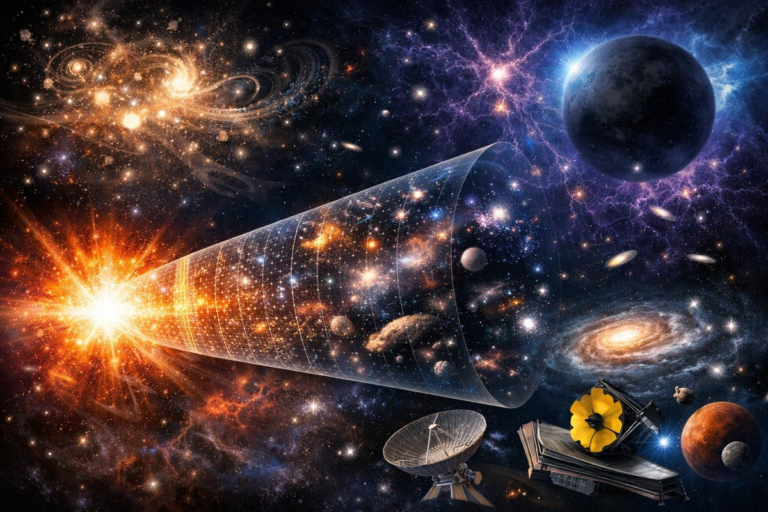
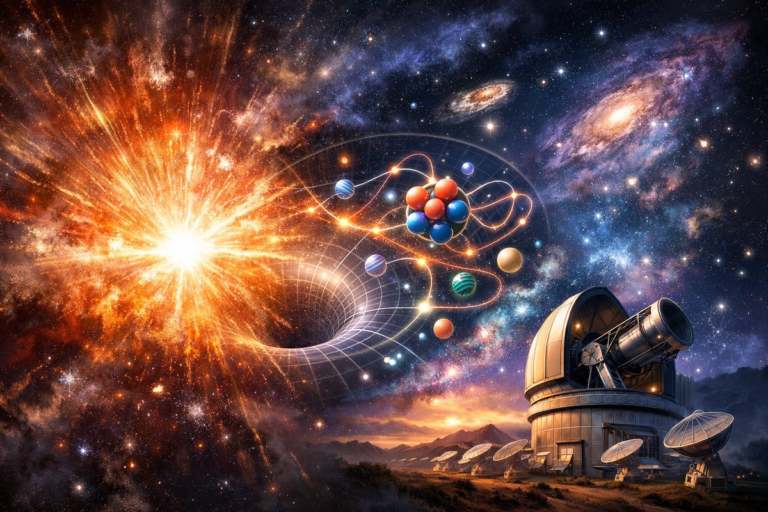
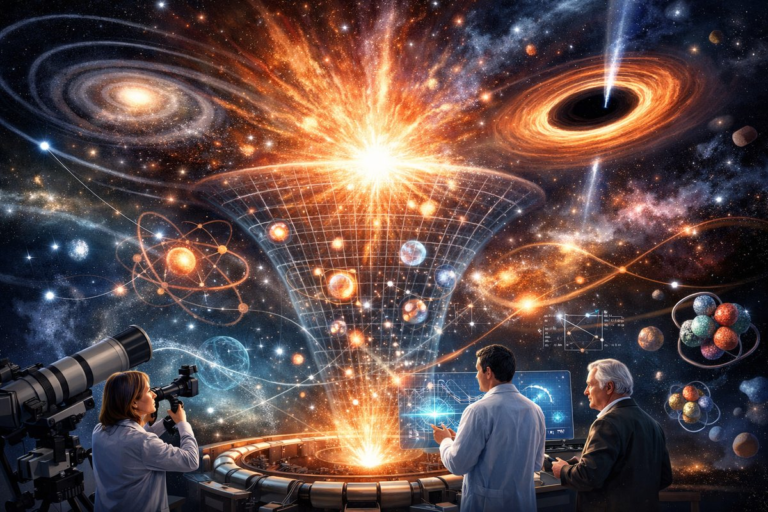
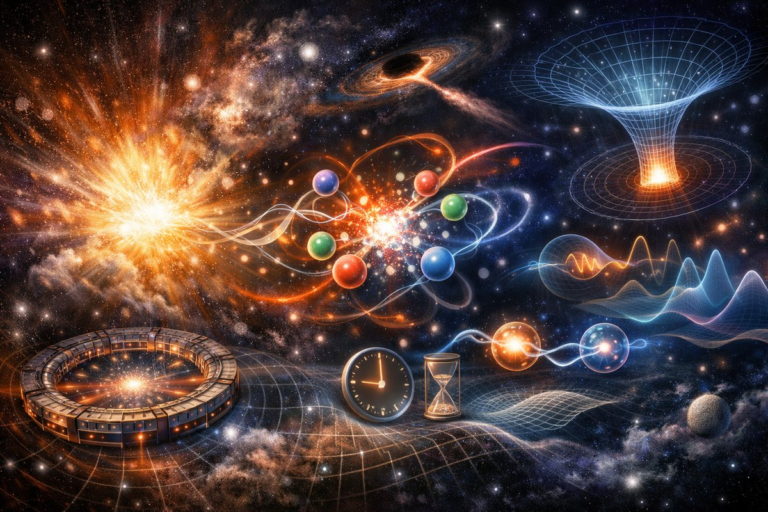
A convergence of advanced observatories, innovative detectors, and theoretical breakthroughs is pushing the frontier of cosmology closer to the universe's origin point. Researchers are piecing together data from cosmic background radiation, gravitational waves, and high-energy neutrinos to probe from the Planck epoch to the first galaxies.
Every so often, a leap in technology or theory reshapes our understanding of time’s first heartbeat. Today, an array of ground-based telescopes, space-borne sensors, and particle-detector arrays is converging to unravel the universe’s birth pangs. New polarization maps of the cosmic microwave background reveal subtle irregularities that hint at physics beyond standard inflationary models. At the same time, gravitational wave observatories are tuning in to signals from primordial phase transitions, offering a direct channel into the high-energy drama of the first fraction of a second. Complementing these electromagnetic and gravitational probes, networks of neutrino detectors deep beneath ice and rock are hunting elusive particles born in the universe’s infancy. Together, these instruments are forming a composite portrait of the cosmos when it was smaller than a proton.
One of the most tantalizing results in recent months comes from an upgraded radio interferometer array mapping the sky at 21-centimeter wavelengths. By charting hydrogen’s faint glow across cosmic time, researchers are tracing how density fluctuations grew into the web of galaxies we observe today. Preliminary results show unexpected temperature variations at high redshift, challenging some predictions of early dark matter behavior. This could signal interactions between dark matter and ordinary matter that standard models do not capture, or it might point to an exotic form of energy in the young universe. Physicists caution that confirmation will require cross-validation with a separate network of small satellite missions slated for launch next year. If corroborated, these anomalies could open a fresh line of inquiry into the nature of the unseen majority of cosmic matter.
In parallel, gravitational wave detectors on Earth have begun to explore lower frequencies previously masked by seismic noise. Innovative vibration-cancellation techniques and cryogenic mirror suspensions are pushing sensitivity thresholds ever lower, allowing searches for relic waves generated by symmetry-breaking events in the early universe. A handful of candidate signals has appeared near the instrument’s noise floor, and analysts are developing rigorous statistical tests to rule out terrestrial interference. Should these whispers from the past prove genuine, they will provide direct evidence of cosmic inflation’s energy scale and perhaps reveal the mechanism by which space itself expanded at an exponential rate. Future space-based interferometers aim to survey an even broader frequency band, reaching toward signals from a hypothetical pre-inflationary bounce or string-theory-inspired oscillations.
Neutrino observatories located beneath polar ice and deep underground are also revealing glimpses of cosmic dawn. High-energy neutrinos originating billions of light-years away carry information about the most violent processes in the universe’s history, including potential remnants of primordial black hole evaporation. Recent upgrades in photodetector arrays have doubled the event-capture rate, making it possible to distinguish a faint diffuse background of cosmic neutrinos from local sources. While pinpointing the exact origin of each neutrino remains challenging, statistical patterns in arrival directions are already hinting at contributions from the earliest star-forming regions. Continued monitoring over the next decade could confirm whether these ghostly particles trace back to supernovae from the universe’s first generation of stars or even more exotic phenomena occurring at energy scales unreachable by human accelerators.
Theoretical physicists are racing to interpret these observational breakthroughs, confronting paradoxes that straddle quantum mechanics and general relativity. The horizon problem, the flatness problem, and the matter-antimatter asymmetry each point to physics beyond the current standard model of cosmology. New variants of inflationary theory propose that our universe might be a single bubble among many in a grander multiverse, each bubble governed by different physical laws. Others suggest that a quantum “bounce” replaced the classical singularity, implying that a prior contracting universe set the stage for our expansion. In each scenario, the deepest questions revolve around how to reconcile the smooth geometry of spacetime with the probabilistic nature of quantum fields.
Among the most profound puzzles is the information paradox, first identified in the context of black hole evaporation but now echoing in cosmological models. If the early universe sprung from a singularity, what happened to the information encoded in the quantum state before that point? Some researchers turn to holographic principles, proposing that all information within a volume of space is encoded on its boundary. Applied to the nascent cosmos, this could mean that our three-dimensional expanding universe remains a projection of a more fundamental two-dimensional quantum reality. Others explore loop quantum gravity, where space itself is quantized, avoiding singularities by allowing spacetime to weave and rebreathe in discrete loops.
Emerging theoretical frameworks are not just abstract speculations; they leave signatures that near-term experiments might detect. For instance, certain string-inspired models predict distinct patterns of non-Gaussianity in the CMB or specific spectral lines in the high-energy neutrino background. Detecting such patterns would lend weight to the idea that fundamental strings or branes played a role in the universe’s birth. Meanwhile, models of early cosmic phase transitions forecast the energy spectrum and polarization of gravitational waves, guiding the next generation of detectors in their design and data-analysis strategies.
Backing these efforts is a growing network of global collaborations spanning astronomy, particle physics, and pure mathematics. Data from microwave, radio, and optical telescopes are combined with particle-detector outputs in shared repositories, enabling cross-disciplinary teams to search for coincident signals. Citizen science platforms invite volunteers to classify sky maps and flag anomalies that might otherwise slip through automated filters. On the theoretical front, open-source simulation codes now model cosmic evolution from the Planck scale through galaxy formation, accessible to both seasoned researchers and university students alike.
Plans are underway for ambitious new instruments that promise even sharper glimpses of the universe’s nascent moments. A proposed network of space-borne radio antennas will seek to map the 21-cm signal from cosmic dawn across the full sky, free from Earth’s ionospheric distortions. Gravity experiments aboard microgravity platforms aim to probe the behavior of dark energy under conditions unattainable in terrestrial labs. Quantum sensors leveraging entangled particles are envisioned as next-generation gravitational wave detectors, capable of surpassing classical noise limits. Taken together, these technological leaps could converge on a detailed timeline of events from fractions of a second after the big bang through the emergence of the first luminous objects.
Beyond the scientific realm, the quest to understand our cosmic origins resonates deeply with public imagination. Museum exhibits featuring interactive holograms allow visitors to step through a simulated quantum field, while planetariums project the sky as it appeared billions of years ago. Educational outreach programs distribute star charts and buildable cosmic ray detectors to classrooms around the world, inspiring the next generation of explorers. Virtual reality applications transport users inside a simulated inflationary bubble, where they can witness space itself stretching in real time. These experiences bridge the gap between technical jargon and visceral awe, reminding us that every point of light in the night sky carries a story that began almost fourteen billion years ago.
As researchers piece together clues from radiation, particles, and gravitational echoes, they edge ever closer to the universe’s primal moment. Each anomaly detected and every theoretical paradox confronted brings us nearer to answering questions that have burned since humanity first gazed at the stars. While the road ahead may twist through landscapes of exotic mathematics and cutting-edge engineering, the guiding star remains-and will always remain-the desire to comprehend our own cosmic origins. In that endeavor, every photon, every neutrino, and every faint gravitational ripple serves as a messenger from the dawn of time.