Location
Mount Vernon, WA 98274

Location
Mount Vernon, WA 98274
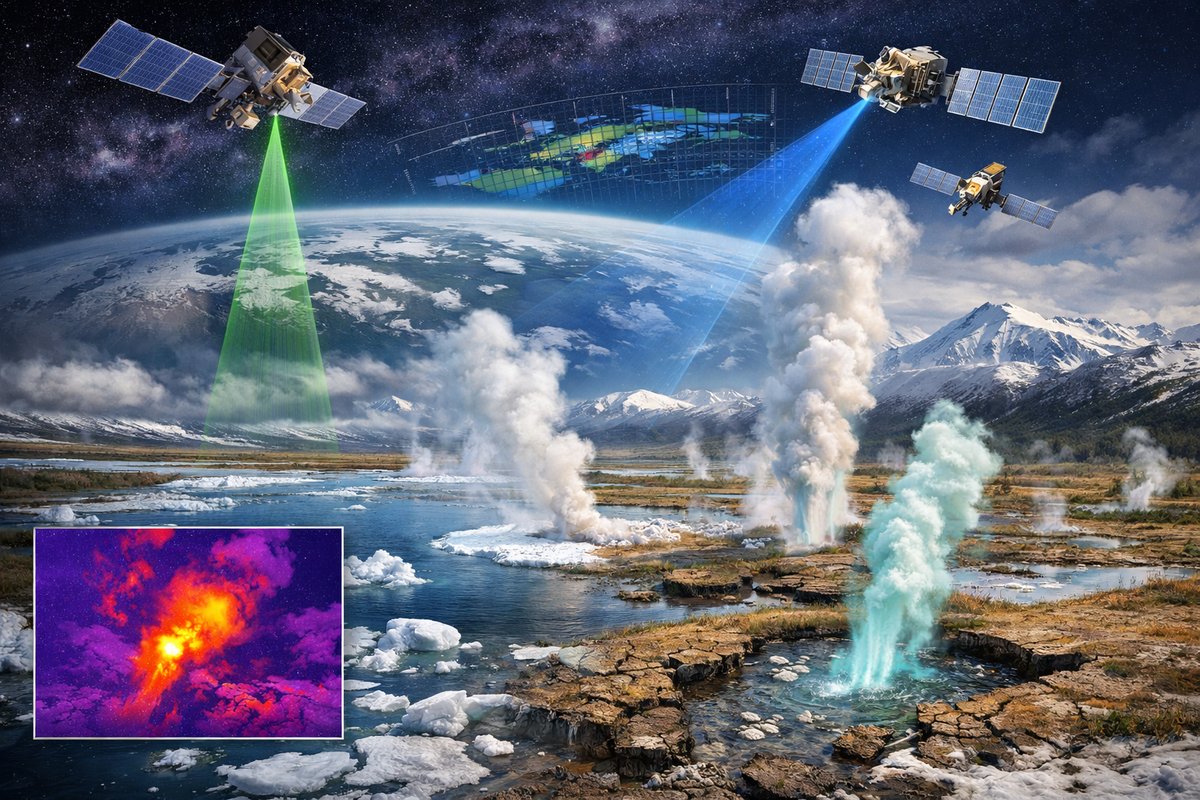
A novel study tapping into data from a network of earth-observing satellites has identified previously undetected methane "super-emitters" erupting from the Arctic's thawing permafrost. These concentrated plumes of greenhouse gas not only challenge existing climate projections but also reveal the critical need for continuous, high-resolution monitoring in vulnerable polar regions.
In recent years, the Arctic’s vulnerable permafrost has been thawing at an accelerating pace, releasing ancient carbon stores back into the atmosphere. While point measurements on the ground have offered glimpses of localized emissions, a new effort harnessing a constellation of satellites has painted a far more detailed picture. Using precise spectral imaging and advanced data-fusion techniques, researchers have pinpointed dozens of hotspots-dubbed methane “super-emitters”-that were previously invisible to traditional climate models.
These findings emerge from the collaborative analysis of infrared sensors aboard multiple low-Earth-orbit platforms. Each instrument detects the distinct absorption signature of methane in the short-wave infrared range, allowing scientists to estimate plume strength even under challenging atmospheric conditions. Rather than relying on a single pass or coarse resolution, the study integrated overlapping measurements from five separate satellites to achieve spatial resolution down to a few tens of meters. This granular view has revealed emissions hundreds of times stronger than the background release rates assumed in global carbon models.
One of the most startling revelations is the sheer intensity of certain plumes over Siberian tundra regions. In areas where permafrost thaw is already advanced, satellite data show methane fluxes that would, if sustained year-round, rival the emissions of medium-sized industrial facilities. Similar hotspots have been detected in parts of Alaska and northern Canada, where ground surveys had previously recorded only moderate increases. The discrepancy underscores the limitations of ground-based monitoring networks in capturing transient yet powerful release events.
To differentiate true super-emitters from background noise, researchers employed machine-learning algorithms trained on known methane leak signatures. The algorithms flag rapid, concentrated spikes in reflectance data and cross-validate them using meteorological information such as wind speed and temperature. By filtering out false positives-like water vapor interference or sensor artifacts-the team achieved over 90 percent accuracy in identifying genuine methane releases.
Beyond the raw detection, the study assessed the potential climate impact of these super-emitters. Methane, while shorter-lived than carbon dioxide, has a global warming potential more than 25 times greater over a 100-year horizon. Each detected hotspot, therefore, represents a significant pulse of radiative forcing. When aggregated, these episodic emissions could account for up to 5 percent of the annual Arctic methane budget, a figure far higher than previous estimates.
Climate modelers are now revisiting global warming projections in light of this new data. Traditional models often simplify permafrost methane release into steady, low-level fluxes. The discovery of episodic super-emitters suggests a more volatile dynamic: sudden bursts of gas that could accelerate near-term warming and potentially trigger feedback loops. For instance, increased methane levels can amplify atmospheric heating, leading to further permafrost destabilization and additional emissions-a self-reinforcing cycle.
The study also sheds light on the role of microbial activity in driving extreme release events. As permafrost thaws, organic matter becomes available to methanogenic microbes, which produce methane under anaerobic conditions. Satellite observations indicate that certain thaw slumps or thermokarst ponds serve as focal points for rapid microbial metabolism, generating intense localized plumes. Ongoing work aims to link surface features visible in high-resolution optical imagery to spectral methane hotspots, providing clues about underlying microbial processes.
While satellites reveal where and when super-emitters occur, they cannot yet fully explain why specific areas exhibit such dramatic releases. To bridge this gap, scientists emphasize the need for coordinated field campaigns. Researchers equipped with portable gas analyzers, soil temperature probes, and core-sampling tools will descend on identified hotspots to collect on-site measurements. These in situ data will validate satellite estimates and refine our understanding of subsurface conditions, microbial communities, and thaw dynamics.
Conducting fieldwork in the Arctic poses logistical challenges. Remote sites often require helicopter or icebreaker access, and extreme cold demands robust equipment design. Nonetheless, the urgency of the findings has galvanized international research teams. In one planned expedition, instruments will be mounted on drones to capture low-altitude plume profiles, while autonomous buoy systems will monitor methane concentrations in thermokarst lakes over winter months. Such synergistic approaches promise to unravel the complex interplay between physical thaw processes and biological activity.
This satellite-ground partnership also has implications for monitoring other greenhouse gases and pollutants. The framework developed for methane detection can be adapted to track nitrous oxide emissions from agricultural regions or ozone precursors over megacities. By integrating spectral sensors with machine-learning workflows, scientists can maintain continuous vigilance over a range of atmospheric compounds-key to informed policy decisions and emission mitigation strategies.
Policymakers and climate negotiators are already taking note. The revelation of previously undetected methane super-emitters strengthens the case for targeted mitigation in high-latitude regions. Solutions may include active permafrost cooling experiments, improved land-use practices to limit thermokarst formation, and support for indigenous communities grappling with infrastructure damage from thaw subsidence. Moreover, the data can inform carbon pricing schemes by assigning higher risk premiums to activities that exacerbate permafrost degradation.
Looking ahead, next-generation satellite missions promise even finer resolution and spectral breadth. Instruments under development will cover additional methane absorption bands and operate in tandem with lidar systems to map surface topography changes in near real time. When combined with artificial intelligence and cloud-based data processing, these new platforms could offer continuous, global methane vigilance-critical for tracking the success of climate mitigation efforts.
The discovery of hidden methane super-emitters beneath thawing permafrost underscores how much remains to be learned about Earth’s changing climate. By coupling high-resolution satellite observations with targeted field investigations, scientists are illuminating key processes that influence near-term warming trajectories. As the planet warms and permafrost continues to yield its ancient carbon stores, maintaining a vigilant, data-driven approach will be essential for understanding-and ultimately managing-the risks posed by this potent greenhouse gas.