Location
Mount Vernon, WA 98274

Location
Mount Vernon, WA 98274
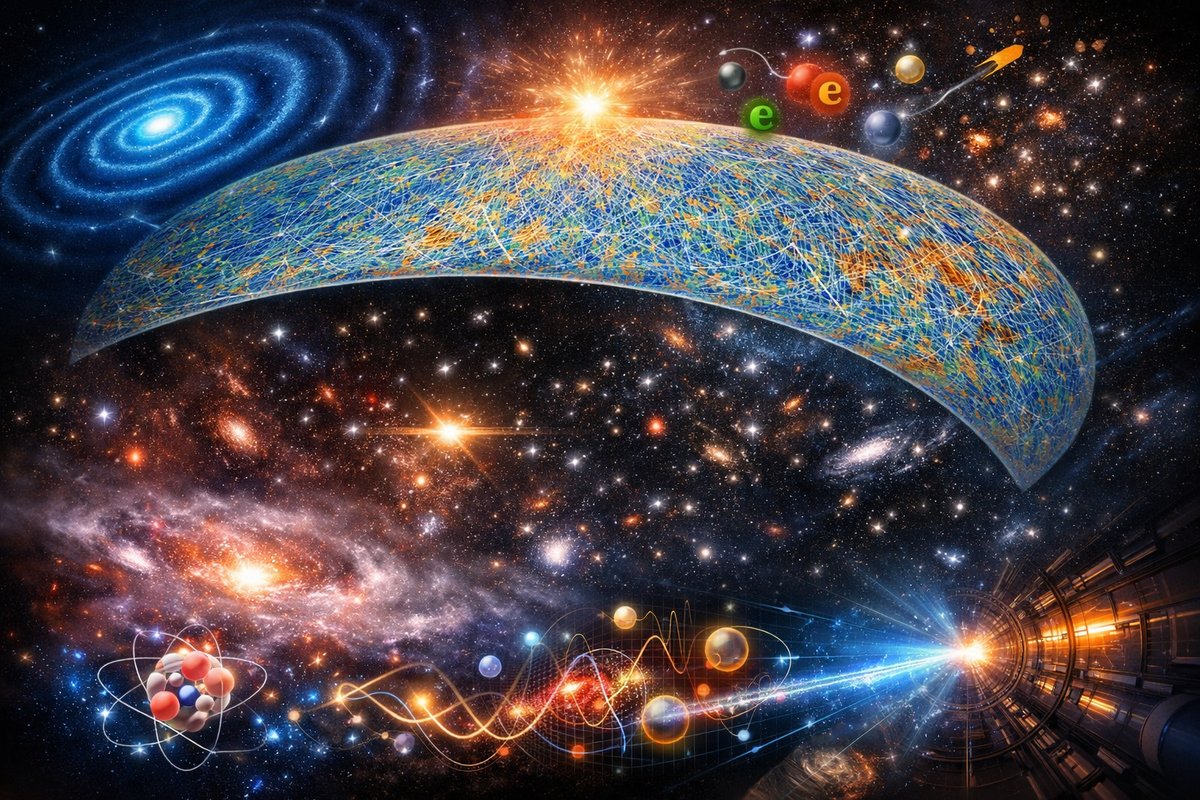
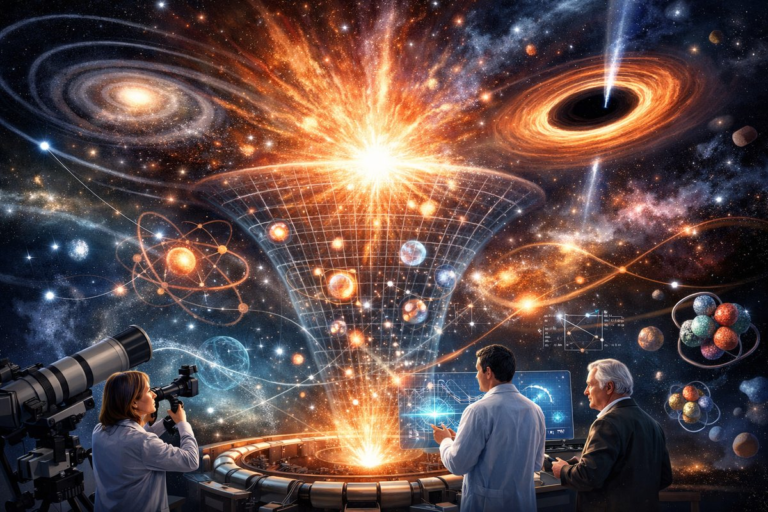
A wave of recent observations and analyses is reshaping our understanding of the universe's first moments. From polarized whispers in the cosmic microwave background to deep-field glimpses of the earliest galaxies, scientists are piecing together the forces, particles and paradoxes that set space and time into motion.
Since the first detection of the cosmic microwave background in 1965, each new instrument has pushed back the curtain on the universe’s infancy. Today, a convergence of breakthroughs-from ground-based polarization measurements to space-telescope deep fields-is forging a coherent narrative of the cosmos’s origin. Researchers are closing in on the signatures of primordial inflation, probing the quantum seeds of galaxies, and exploring how particles and fields interacted under conditions that exist nowhere else in nature.
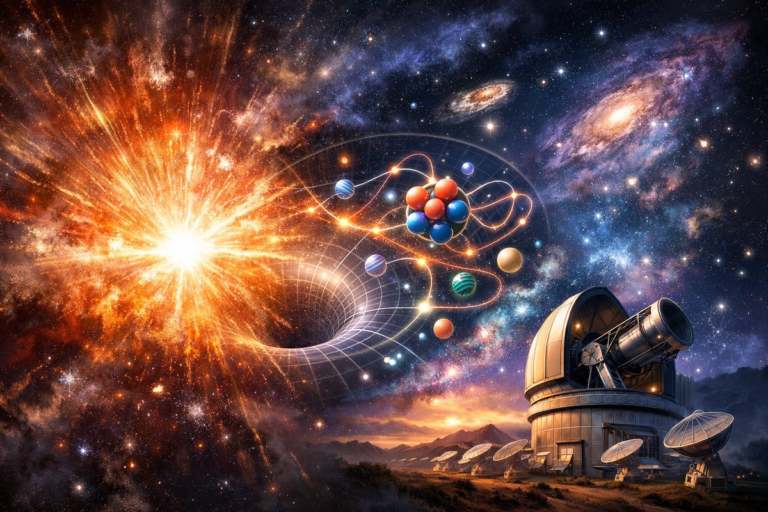
On the frozen antarctic plateau, arrays of telescopes are scouring the sky at millimeter wavelengths, hunting faint swirls of polarized light in the cosmic microwave background. These B-mode patterns, twisted by gravitational lensing or imprinted by primordial gravitational waves, carry encoded information about the universe a fraction of a second after the Big Bang. In a joint analysis released last quarter, the teams behind the South Pole Telescope and the BICEP Array reported refined constraints on the tensor-to-scalar ratio, pushing the upper limit on primordial gravitational-wave amplitude to unprecedentedly low levels. Though a decisive detection remains elusive, these measurements are ruling out large swaths of inflationary models and illuminating the energy scales at play when space itself expanded faster than light.
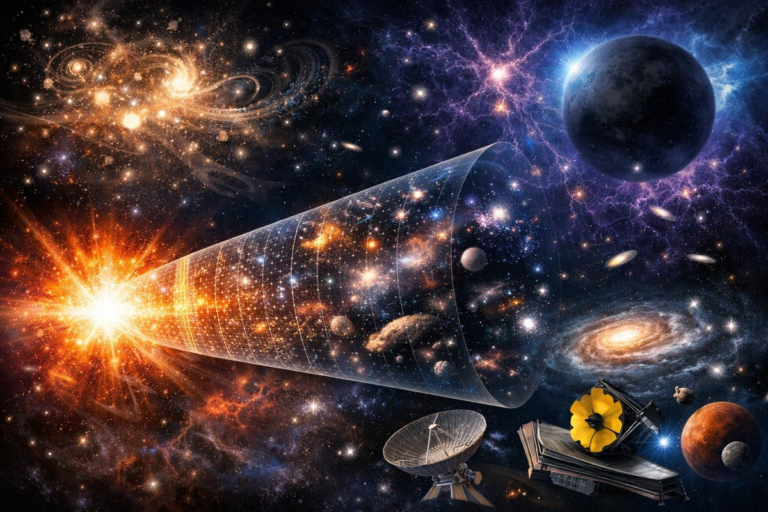
Meanwhile, orbital observatories are capturing galaxies so distant they formed within a few hundred million years of the primordial expansion. The latest deep-field campaign of a near-infrared space telescope has uncovered dozens of candidate galaxies at redshifts beyond 12, challenging theorists to explain how massive stellar nurseries could assemble so quickly. Spectroscopic follow-up with ground-based instruments has confirmed that some of these systems are already chemically enriched with heavy elements, hinting at an earlier generation of stars that lived and died before our observational window opened. These infant galaxies are not just faint smudges on a detector-they are laboratories for testing how matter cooled, coalesced and ignited nuclear fusion in the dark ages before reionization.
Between these two frontiers-swirls in ancient microwaves and flickers of early starlight-lurks the cosmic neutrino background, a sea of ghostly particles that decoupled one second after the Big Bang. Though direct detection remains beyond current capabilities, experiments optimized for ultralow energy thresholds, such as cryogenic bolometers and coherent scattering detectors, are charting new territory in low-mass target design. By probing the neutrino floor and measuring coherent scattering signals in ultrapure materials, researchers aim to glimpse the faint hum of neutrinos that once shaped the universe’s expansion rate and primordial element abundances.
In parallel, gravitational-wave observatories operating at higher frequencies are scanning for mergers of primordial black holes-hypothetical relics from density fluctuations in the early universe. Analysis of recent observation runs from the global network of interferometers has set stringent limits on the fraction of dark matter that could take the form of sub-solar-mass black holes. Although no definitive primordial-black-hole signals have emerged, the absence of detections is itself a clue, narrowing the space of viable dark-matter candidates and refining models of small-scale structure growth.
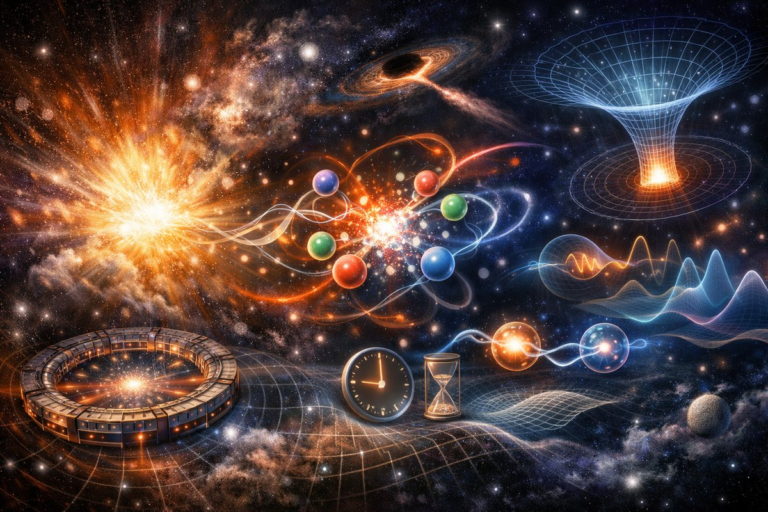
Cosmologists are also wrestling with a profound paradox: how to reconcile quantum mechanics and gravity in the crucible of the Big Bang. Theoretical frameworks such as string theory, loop quantum gravity and holographic duality offer competing visions of spacetime’s fundamental nature. Recent progress in the study of quantum entanglement entropy and its connection to spacetime geometry has provided tantalizing hints that space itself may be an emergent phenomenon, woven from entangled qubits. Experiments in tabletop quantum optics and superconducting circuits are beginning to simulate aspects of these ideas, offering testbeds for concepts that once seemed purely abstract.
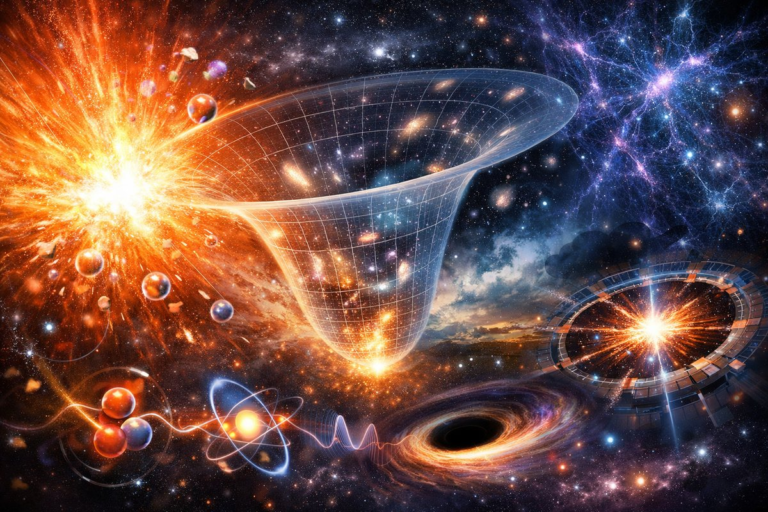
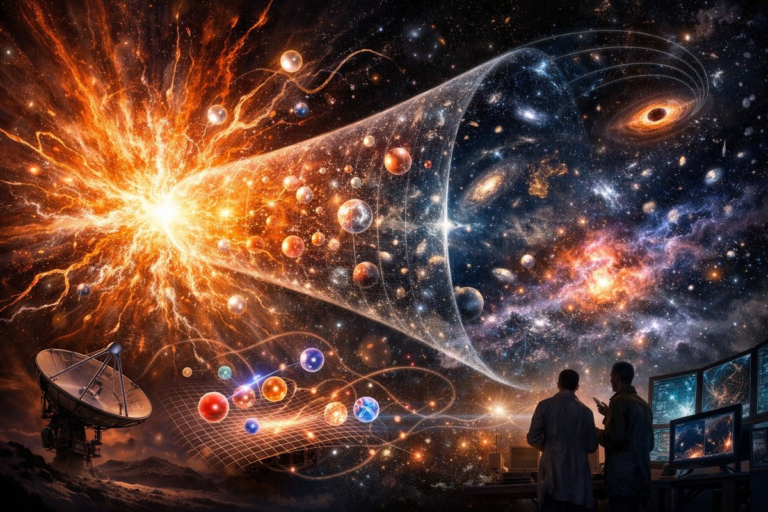
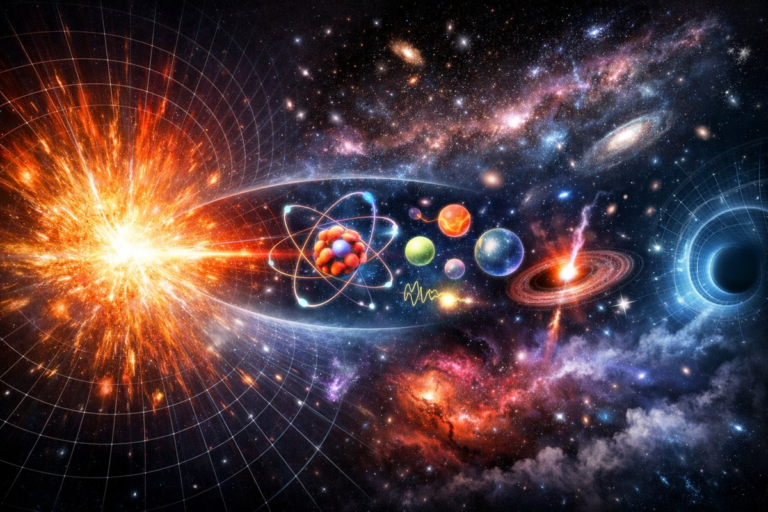
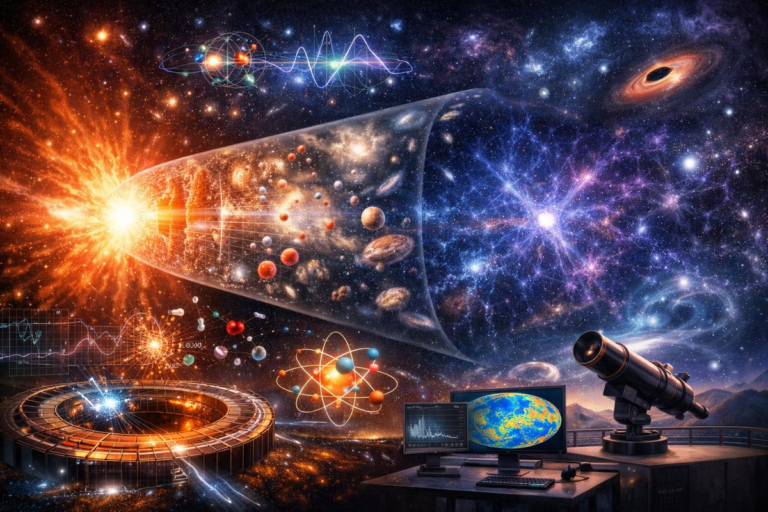
Despite the dizzying complexity of these investigations, a coherent picture is slowly emerging. In the first trillionth of a trillionth of a trillionth of a second, a field permeating all of space underwent a runaway expansion that smoothed out primordial irregularities while stretching quantum fluctuations to macroscopic scales. As inflation ended, the energy stored in this field decayed into a hot plasma of particles. That plasma cooled, first allowing neutrinos to stream freely and then photons to decouple, leaving behind the faint microwave echo we detect today. Over hundreds of millions of years, gravity amplified tiny density variations, forging the web of galaxies and dark-matter filaments that define the universe on large scales.
Yet many mysteries remain. What triggered inflation and how did it stop? What is the precise makeup of dark matter, and how did it interact with ordinary matter in the earliest moments? Might there be additional forces or particles-such as axions or dark photons-that shaped the cosmic evolution? Efforts are underway to deploy next-generation cosmic-microwave-background observatories in the Atacama Desert and the South Pole, aiming to improve sensitivity to primordial B-modes by orders of magnitude. Meanwhile, ambitious proposals for a space-based gravitational-wave detector promise to open a new frequency window on the inflationary era. Back on Earth, the design phase has begun for a dedicated cosmic neutrino detector capable of directly measuring the neutrino background through capture on tritium targets.
This renaissance in observational cosmology goes hand in hand with advances in simulation and data analysis. Petabyte-scale datasets from sky surveys require sophisticated machine-learning algorithms to identify rare signals and disentangle overlapping astrophysical sources. Cloud computing platforms and open-source frameworks enable researchers around the globe to collaborate in real time, pouring over cross-correlated maps of matter distribution, galaxy positions and microwave polarization.
For students and citizen scientists, this era offers unparalleled opportunities to participate. Public data releases from major observatories allow enthusiasts to hunt for gravitational-lensing arcs, map the interstellar medium, or even contribute to gravitational-wave searches. Amateur astronomers equipped with modern digital cameras and modest telescopes are recording supernovae in nearby galaxies and characterizing exoplanet transits, complementing the high-precision efforts of professional facilities.
As humanity continues to probe the forces, particles and paradoxes that shaped our cosmic beginnings, one truth stands out: the quest for origins is far from over. Each new measurement refines our understanding, closing off some avenues while opening unexpected possibilities. Whether we ultimately uncover a single, elegant theory that unites all interactions, or embrace a multiverse of varied cosmic histories, the pursuit itself illuminates our place in the grand tapestry of existence.
In the coming decade, with the deployment of more sensitive detectors and the maturation of quantum-simulation platforms, we may finally catch a direct glimpse of the universe’s birth certificate. Until then, every faint microwave whisper, every spectral line from a primordial galaxy, and every neutrino that slips through Earth’s crust will guide us a step closer to the ultimate origin story.
These investigations are not merely academic. They fuel new technologies in cryogenics, superconductors, data analysis and materials science. They inspire generations of learners to tackle big questions and drive innovations that ripple well beyond the ivory tower. In unraveling the universe’s earliest epochs, we sharpen our tools, expand our horizons and reaffirm the enduring human impulse to understand where we come from-and what comes next.