Location
Mount Vernon, WA 98274

Location
Mount Vernon, WA 98274
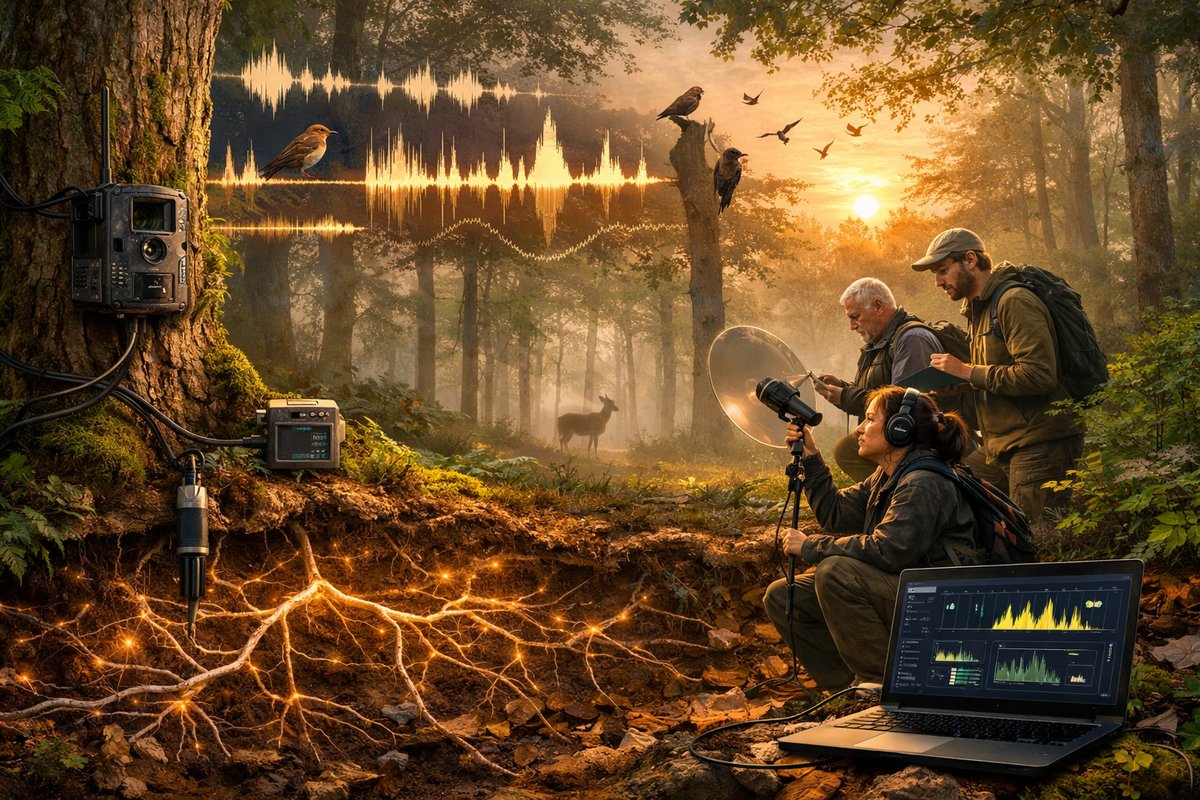
Ancient woodlands are revealing their secrets through a blend of AI-powered bioacoustics, soil sensors, and community-driven fieldwork. From dawn choruses to root networks, a new wave of nature monitoring unites technology and curiosity to safeguard forest resilience.
At first light, a complex symphony stirs beneath the emerald canopy. Tiny warblers, thrushes and owls join a chorus that pulses through moss-draped trunks and dapples the forest floor with sound. This dawn chorus is more than an aural marvel-it is a living barometer of ecosystem health. Today, researchers and volunteers are pairing this age-old ritual with cutting-edge gear to decode the hidden rhythms of forests and ensure their resilience in a changing climate.
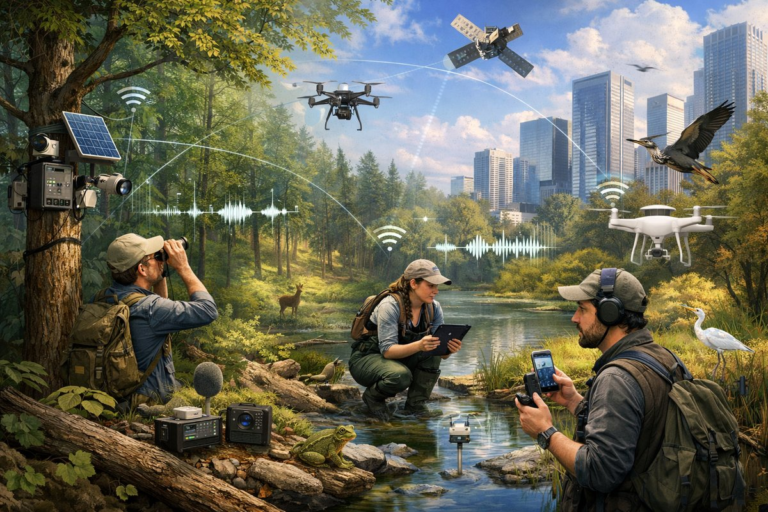
Across North America and Europe, networks of citizen scientists are installing weather-proof, portable bioacoustic recorders among pine stands and hardwood groves. These devices capture continuous 24-hour audio, archiving birdsong, amphibian calls and even the distant hum of insects. Once uploaded to the cloud, AI algorithms trained on millions of samples identify species by their unique vocal signatures. Over weeks and months, data streams transform into dynamic maps of biodiversity hotspots and silent zones where bird populations may be under stress.
In the Appalachian highlands, a recent pilot project demonstrated the power of this approach. Volunteers from local schools deployed twenty recorders along an old logging road. Machine-learning models flagged a sudden drop in grouse calls, prompting follow-up surveys that uncovered a nesting failure tied to a late spring freeze. Armed with that knowledge, land managers adjusted timing for controlled burns and temporary road closures to protect breeding grounds.
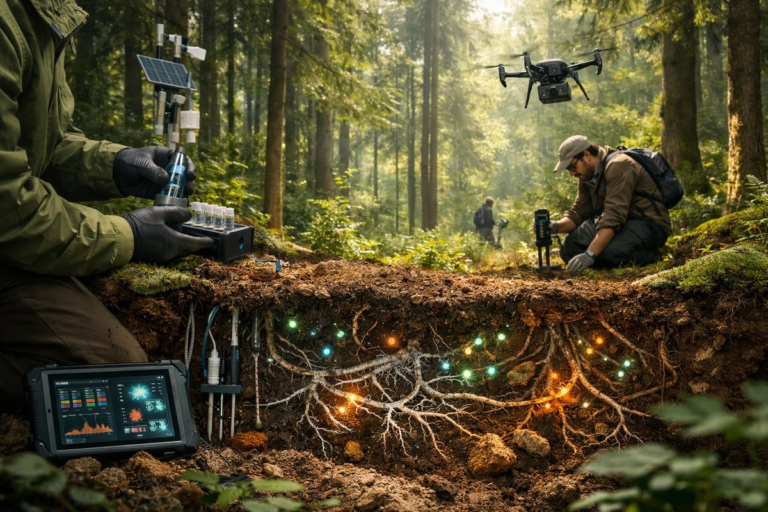
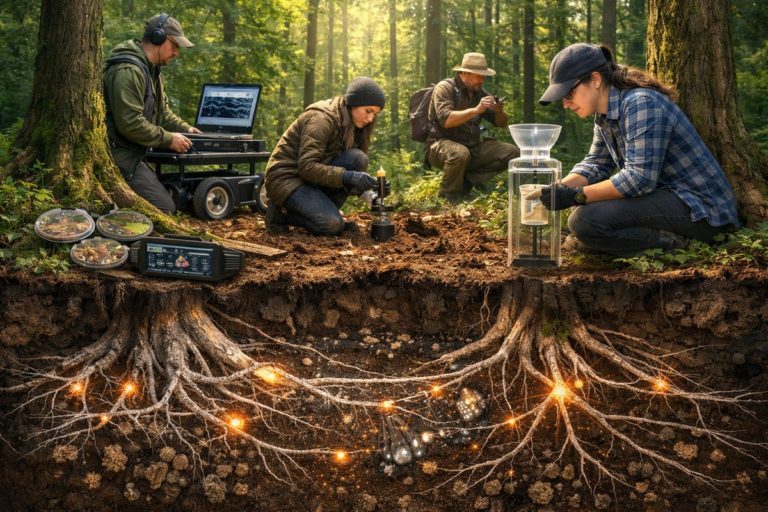
Beyond birds, soil-dwelling fungi are finally getting their share of attention. Researchers are experimenting with miniature fungal mycelium sensors-electrodes embedded in nutrient-rich blocks of agar that measure electrical potential as mycelial networks grow. These biohybrid probes detect subtle shifts in moisture, temperature and pH, revealing how underground networks respond to droughts or tree mortality. Some teams even pair these sensors with smartphone apps that visualize fungal activity in real time, turning every forest floor expedition into a live data moment.
Soil health monitoring has also gone digital. Hand-held soil moisture and pH meters allow hikers and environmental stewards to log measurements on the spot. In tropical cloud forests, rapid testing kits have helped quantify changes in acidity caused by acid rain. In temperate woodlands, periodic moisture readings feed into long-term databases that track how increasingly erratic weather affects root systems. Armed with that information, conservationists can time reforestation efforts to coincide with optimal soil conditions, boosting sapling survival rates.
Meanwhile, the canopy itself is getting a close-up. Lightweight quad-copters equipped with high-resolution multispectral cameras are mapping light penetration, leaf area index and chlorophyll density over thousands of acres. Piloted by local cooperatives, these drones deliver precise 3D models of forest structure. Combined with historical satellite imagery, researchers can compare canopy changes over the past two decades-spotting early signs of pest infestations, storm damage or invasive species encroachment.
One striking use case unfolded in a coastal old-growth grove recently designated for enhanced protection. Drone surveys revealed a cluster of dying fir trees on a windswept ridge long thought to be stable. Ground teams dispatched portable spectroscopy scanners and sap flow sensors, confirming an uptick in drought stress that was aggravated by warmer winters. The data convinced park authorities to reroute tourist trails and establish a new seed harvesting initiative to bolster genetic diversity.
At the heart of these innovations is community engagement. Bioacoustic workshops draw families into the woods at dusk, where they learn to assemble recorders and interpret spectrograms. Soil-testing pop-ups invite curious passersby to examine root cores under magnifying glasses. Drone-piloting courses train youth to gather aerial data while nurturing stewardship of the forest. This hands-on approach sparks wonder and builds the next generation of naturalists and data analysts.
Yet challenges remain. Continuous monitoring demands reliable power sources-batteries must withstand cold snaps and heavy rain. Field teams grapple with data overload: thousands of hours of audio and terabytes of imagery must be stored, processed and interpreted. Open-source platforms are emerging to streamline workflows, but they require robust internet connectivity that is often lacking in remote woodlands.
To address these hurdles, some initiatives are experimenting with solar-recharging stations and long-duration lithium packs wrapped in waterproof enclosures. Modular base stations equipped with satellite uplinks bridge the connectivity gap, uploading compressed data daily. On the software side, federated learning models allow on-device AI to pre-filter irrelevant recordings, transmitting only high-priority snippets for central analysis.
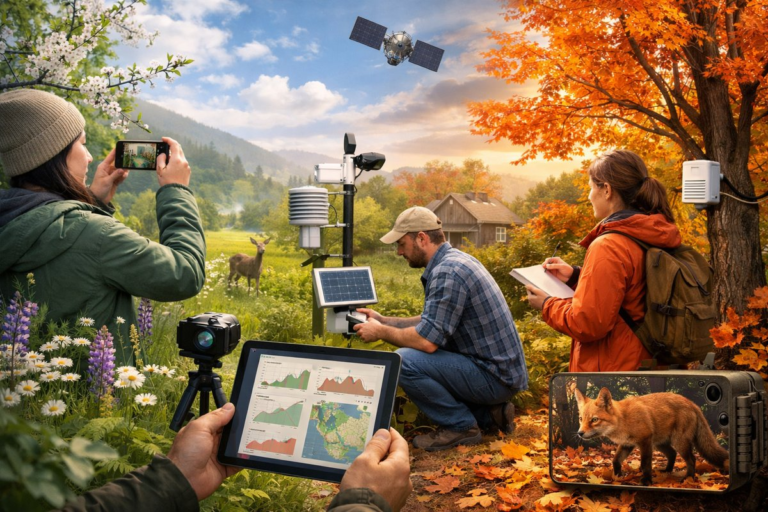
For those eager to contribute from afar, smartphone apps offer a gateway. Gamified sound-logging platforms challenge users to record frog choruses or identify tree species, turning each forest walk into a participation opportunity. Simple citizen science kits-including pocket microscopes for leaf cell counts and portable water-quality strips for stream testing-invite urban dwellers to connect with wild places near home.
Every tool and sensor carries the same promise: to sharpen our understanding of complex ecosystems and empower communities to respond swiftly to environmental change. As technology and curiosity converge beneath the treetops, a delicate truth emerges: the health of forests hinges on listening-to every call, rustle and root whisper. In that shared silence, we find both awe and actionable insight. The living canopy is speaking; all we have to do is tune our ears and lend a hand.