Location
Mount Vernon, WA 98274

Location
Mount Vernon, WA 98274
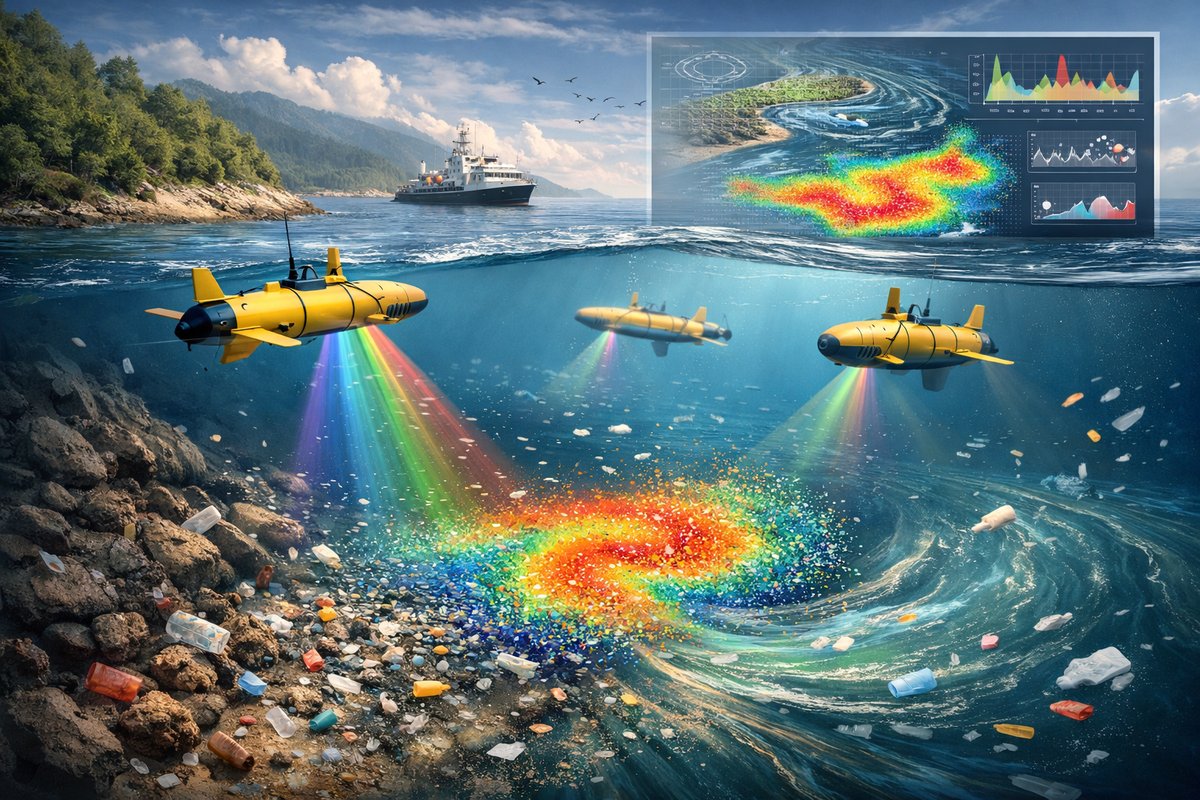
A fleet of AI-equipped underwater gliders has mapped swirling concentrations of microplastics near river estuaries, revealing hidden pollution patterns. By integrating hyperspectral sensing, machine learning algorithms and ocean current models, researchers are charting a new path toward more precise monitoring of plastic contaminants in our waterways.
A recent collaboration between marine scientists and ocean engineers has broken new ground in the fight against microplastic pollution. Over a six-week expedition, a network of autonomous underwater gliders swept coastal waters near a major river mouth, using hyperspectral imaging and onboard AI to distinguish microplastic fragments from organic particles. This represents one of the first large-scale applications of real-time machine learning at sea, offering insights into how currents and eddies trap and concentrate tiny plastic debris.
Each glider, roughly two meters long and equipped with a SpectroWave 2000 hyperspectral sensor, surveyed up to 50 kilometers of coastline before surfacing to transmit data via satellite. Underwater, the vehicles navigated at depths from two to fifty meters, sampling nearly a million individual light spectra. By comparing spectral signatures against a library of known plastic polymers, the onboard neural network flagged microplastic presence with more than 95 percent accuracy against laboratory analyses.
The glider fleet crisscrossed a dynamic zone where freshwater outflow meets saltwater tides. Strong currents carried suspended sediment and organic matter, but they also corralled microplastics into persistent eddies roughly 200 to 500 meters in diameter. At times, concentrations spiked to five particles per liter-levels comparable to some of the world’s most polluted coastal regions. The patterns emerged most strongly near tributary discharge points, suggesting that land-based sources remain a dominant driver of coastal plastic contamination.
To validate the autonomous readings, support vessels performed discrete water sampling at glider-identified hotspots. Lab analyses confirmed the sensor readings and highlighted a mix of polymer types-from polyethylene fragments likely originating in packaging waste to nylon fibers shed by synthetic textiles. The concordance between shipboard sampling and glider data underscores the potential for remote platforms to deliver rapid, high-resolution monitoring without the time and expense of traditional surveys.
Behind the scenes, oceanographers integrated the glider observations with current-model forecasts to understand how eddies form and persist. Simulations indicate that small topographic features on the seabed and seasonal wind shifts create zones of recirculation where debris accumulates. The coupling of predictive modeling and real-time sensing means future gliders could even adapt their routes on-the-fly, homing in on emerging pollution plumes and extending missions when new eddies are detected.
The project team points out that most existing efforts to track microplastics rely on snapshot surveys or surface trawls. These methods capture limited spatial coverage and often miss debris below the surface film. In contrast, autonomous gliders can operate continuously regardless of weather, depth or daylight, offering a more complete three-dimensional picture of microplastic distribution.
Early results have already influenced local management strategies. Coastal authorities, armed with precise maps of pollution hotspots, plan targeted clean-up operations and tighter controls on upstream waste discharge. There is growing interest in expanding the network into adjacent coastal areas and estuaries, where similar eddy dynamics may be at play but remain largely uncharted.
Beyond plastics research, the gliders’ versatile sensor suite holds promise for monitoring temperature, salinity, dissolved oxygen and even algal pigments. This modular approach aligns with broader sustainability goals, maximizing the value of each deployment. Funding agencies are taking note, with new grants focusing on multi-parameter coastal observatories that can tackle marine pollution, biodiversity assessments and climate-driven shifts in water chemistry all at once.
Privacy and ethical considerations have also shaped the project. While the gliders record environmental parameters, they deliberately avoid any form of acoustic or optical surveillance that might capture private vessel activity. Data policies emphasize open access to aggregated, anonymized information, ensuring that communities and researchers worldwide can benefit from shared insights without compromising proprietary data.
Scientists involved in the mission stress that confronting the microplastic crisis demands both technological innovation and public engagement. In some harbor towns, citizen science groups have already begun deploying low-cost water samplers to corroborate glider data. Educational workshops teach residents how to recognize plastic sources in their neighborhoods and encourage simple changes-like switching to refillable bottles-to reduce local contributions to the problem.
Looking ahead, the team envisions an international network of cooperating glider fleets, each feeding cloud-based platforms with hyper-local pollution metrics. When combined with satellite imagery and coastal radar arrays, this system could produce near-real-time pollution maps at regional or even global scales. Such a network would empower governments, conservation groups and industry to respond swiftly to emerging threats, from plastic waves to harmful algal blooms.
The expedition has already spawned follow-on projects exploring microplastic interactions with marine food webs. Preliminary studies suggest that filter-feeding organisms ingest plastic fragments at far greater rates in eddy-intensive zones. Understanding these pathways will be crucial for assessing risks to fisheries, aquaculture and ultimately human health.
By marrying artificial intelligence with persistent ocean platforms, this research charts a new course for environmental science. It demonstrates how automation can augment human expertise, turning vast, dynamic seascapes into actionable data that guide policy and spark community action. As microplastics continue to infiltrate global waterways, innovative tools like these autonomous gliders offer a scalable strategy for mapping, mitigating and ultimately reducing the footprint of plastic pollution.
Charting clearer waters ahead will require continued collaboration across disciplines, from data scientists refining classification algorithms to marine biologists studying ecosystem impacts. But the promise of a connected, responsive ocean observatory is already within reach, buoyed by the insights gathered beneath the surface.