Location
Mount Vernon, WA 98274

Location
Mount Vernon, WA 98274
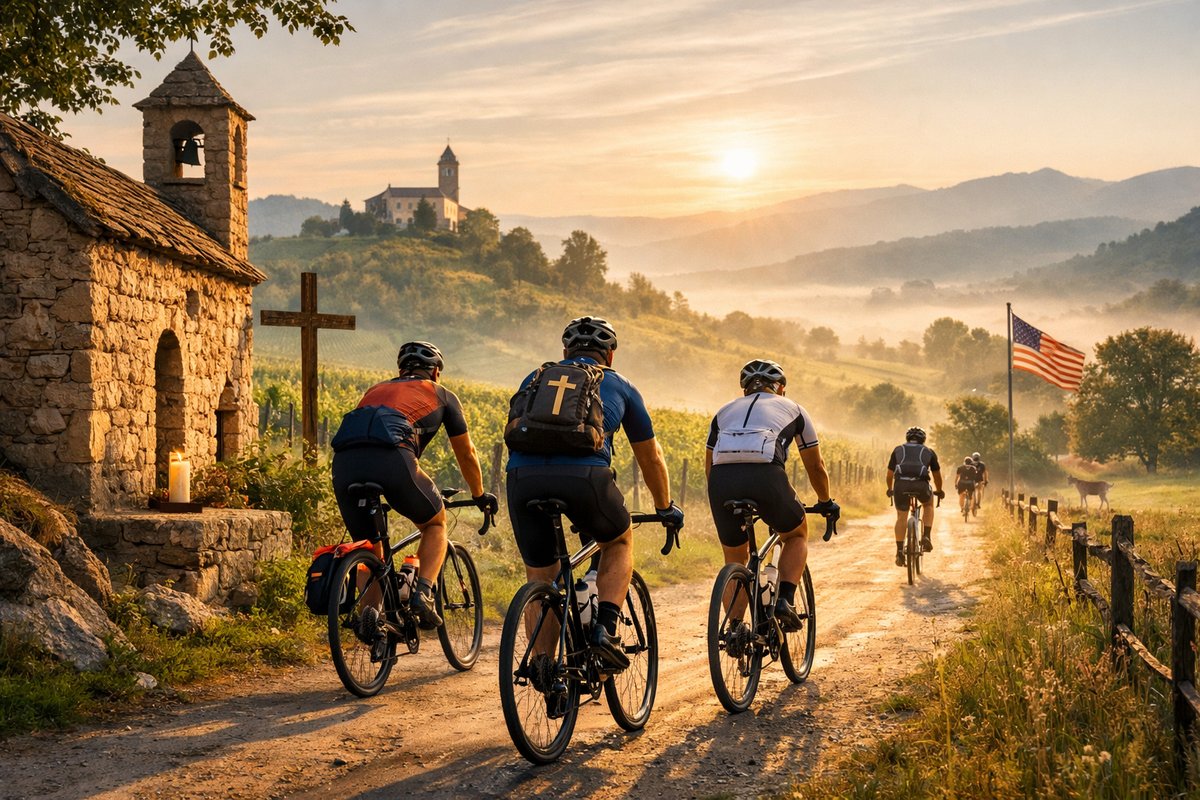
A new wave of Christians is trading hiking boots for bicycle cleats, embarking on two-wheeled pilgrimages that blend ancient devotion, environmental stewardship, and modern connectivity. From sunlit vineyards of northern Italy to quiet country lanes in rural America, faith-driven cyclists are reshaping pilgrimage for a post-pandemic world.
At dawn, the hush of a small village outside Florence gives way to a chorus of bicycle bells and whispered prayers. Fourteen cyclists, each with panniers lashed to sturdy frames, gather at the ancient stone church of San Martino. They exchange the sign of peace, share a moment of silent reflection-and then roll out toward Santiago de Compostela. This is not a scenic tour or a charity ride; it is a contemporary Christian pilgrimage on two wheels.
Interest in cycling pilgrimages has surged in recent years. A survey conducted by a leading faith travel organization found a 35 percent increase in sign-ups for guided two-wheeled retreats over the past three seasons. In Europe, routes once trodden by footseekers are now lined with cyclists clipping in and clipping out-seeking testimonies of transformation, daily masses in roadside chapels, and the camaraderie of fellow pilgrims.
The tradition of pilgrimage goes back millennia, from Abraham’s journey to Canaan to medieval pilgrims trudging to Canterbury. What’s new is the bike-a symbol of freedom, sustainability, and personal challenge. For many, it offers a sacred pace: faster than walking, yet slow enough to notice dew on olive leaves, to greet farmers with a nod, and to pause at wayside shrines. The hum of rubber on asphalt becomes a contemplative rhythm, aligning body and spirit.
“I used to struggle with silent retreats indoors,” says Maria Lopez, 42, a nurse and first-time cycling pilgrim. “But on a bike, I pray with every pedal stroke. When I crest a hill and the valley unfolds below, I feel God’s creation at my feet. It’s like Eucharist on the go.” Maria keeps a slim leather-bound travel prayer journal, jotting gratitude lists and scripture verses by candlelight in rustic guesthouses.
Environmental stewardship is woven into this trend. Many pilgrims are motivated by ecological concerns and choose cycling over gas-powered vehicles. Group leaders emphasize “leave no trace” camping, reusable water bottles, and eco-friendly toiletries. Partnerships between dioceses and sustainable travel nonprofits are sprouting up, offering grants for carbon‐neutral routes and solar‐powered hostel lighting.
Communities along the way have responded with open arms. In rural France, a network of small churches reopened their doors to host cyclists overnight, serving cold fruit, homemade soup, and impromptu evening prayer services. In urban centers, campus ministries organize bike tune‐ups and blessing ceremonies, anointing handlebars with olive oil and offering laminated pilgrimage passports stamped at each stop.
Technology has also found a place in this modern ritual. Dedicated GPS apps plot elevation profiles alongside nearby Eucharistic celebrations. Digital rosary apps chime gently every decade. Online platforms allow pilgrims to track each other on group rides, share reflections in real time, and upload photos of roadside crosses draped with ribbons. Still, leaders caution against excessive screen time-reminding traveling faithful to lift their eyes to the horizon, not their heads to a screen.
Logistics can be daunting: route planning, luggage transfers, and unexpected weather. But specialized travel agencies offer curated packages, complete with rear-rack panniers ready to go, maps of pilgrim-friendly repair shops, and mobile support vans for emergencies. Many cyclists invest in gear tuned for the journey-a robust hybrid bike, waterproof panniers, and a compact solar charger for their phone or e-reader.
Pastors and spiritual directors are discovering pastoral opportunities on two wheels. Some host weekend “blessing of the bicycles” ceremonies in spring. Others lead small groups through Stations of the Cross mapped to local bike trails. Sermons touch on endurance, letting go of baggage, and the healing power of communal journey. One priest even composed a bike blessing hymn, which he distributes as a pocket-sized lyric sheet.
While Europe remains a hotspot, cycling pilgrimages are blossoming in North America, Latin America, and Australia. Pilgrims gather at trailheads that run near former pilgrimage roads, historic missions, or national park shrines. In the Pacific Northwest, a recent 200-mile route connects ancient redwood cathedrals with riverside retreats. In Colombia, cyclists follow paths trodden by early missionaries, pausing to pray under centuries-old fig trees.
Challenges persist. Gear malfunctions, flat tires, and physical fatigue test both faith and fortitude. Yet many pilgrims describe moments of breakthrough when they realize their dependence on God is stronger than their dependence on gears. The road becomes a monastery, the bike seat an altar, and every hill a metaphor for spiritual ascent.
Back in that Tuscan village, the cyclists reach a limestone chapel just as the sun crests the hilltop. They dismount, lock their bikes, and enter in a hush. A lone candle flickers beside an ancient fresco of a pilgrim saint. The small group kneels for midday prayer. Outside, their bicycles stand like silent testimonies-stories of faith in motion, carried forward by tire, chain, and conviction.
The rise of Christian bicycle pilgrimages signals a deeper shift in contemporary faith practice: an embrace of movement, community, and creation care. It offers a template for exploring ancient traditions in fresh ways-where devotion meets adventure and the road becomes both a journey outward and an inward pilgrimage of the soul.