Location
Mount Vernon, WA 98274

Location
Mount Vernon, WA 98274
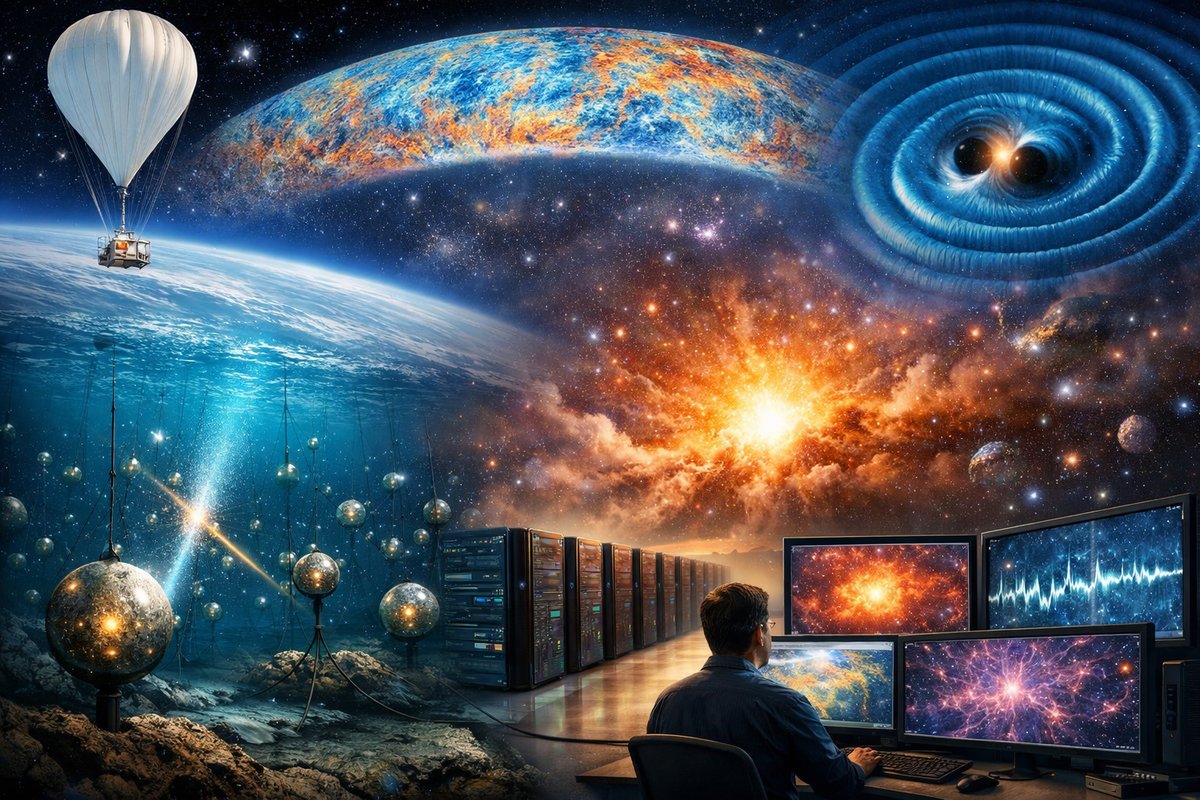
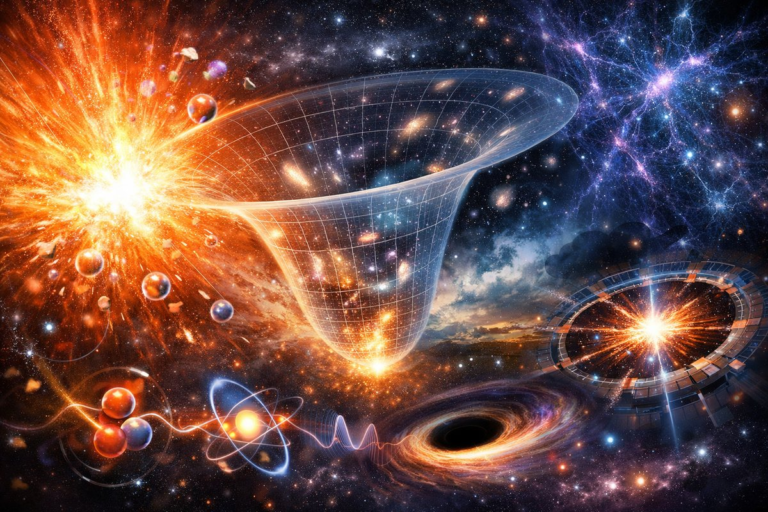
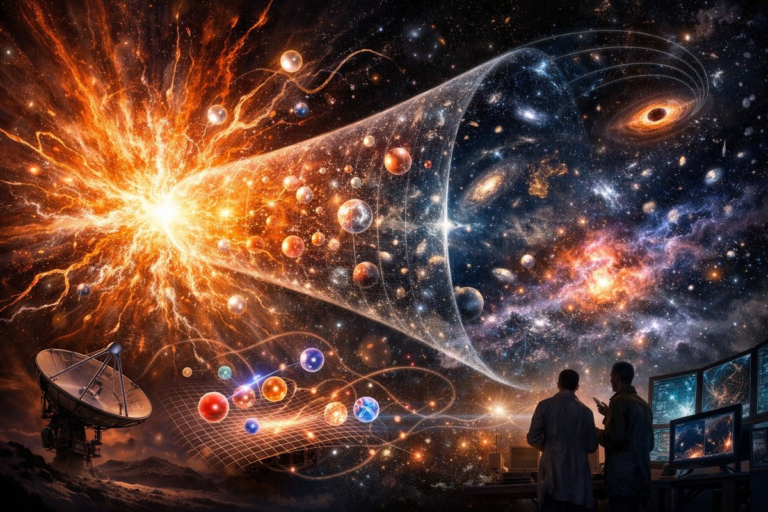
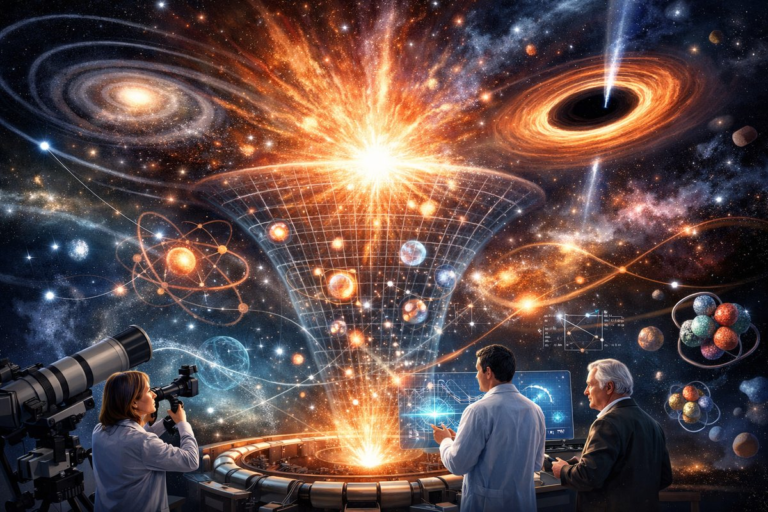
Unprecedented analyses of cosmic neutrinos, microwave background polarization, and gravitational wave imprints are converging to rewrite our narrative of cosmic dawn. From high-altitude balloon experiments to deep-sea detectors and supercomputer simulations, researchers are piecing together a portrait of the universe's earliest instants-one that challenges long-held assumptions and invites fresh questions about what came before time itself.
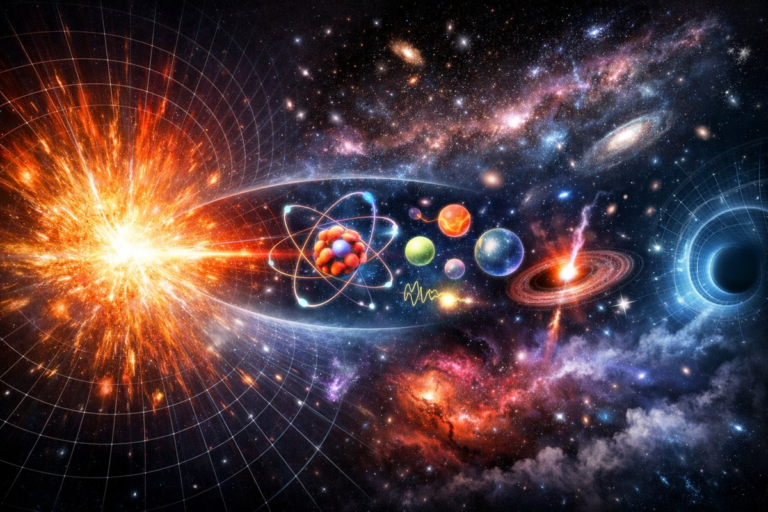
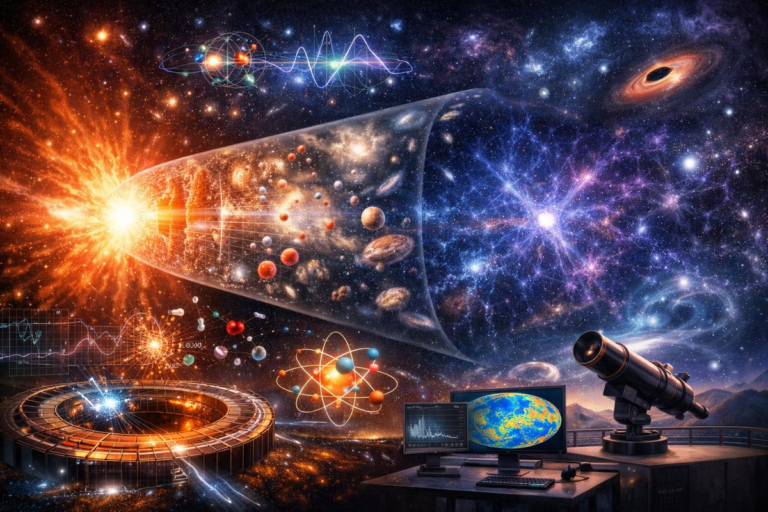
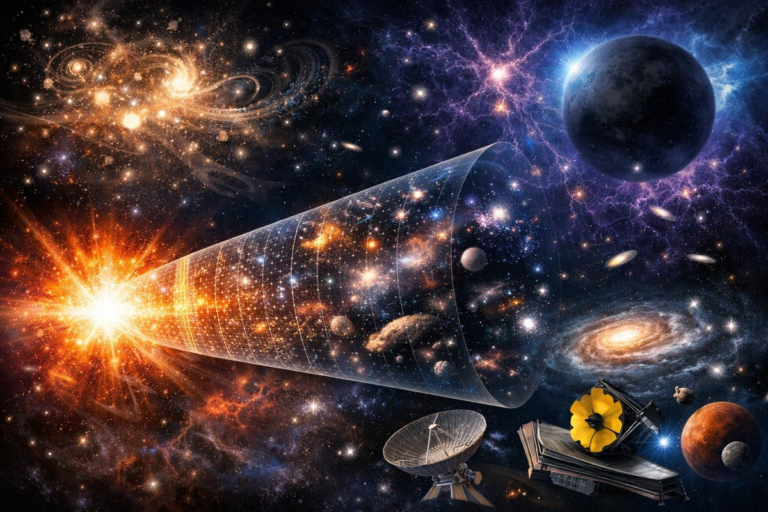
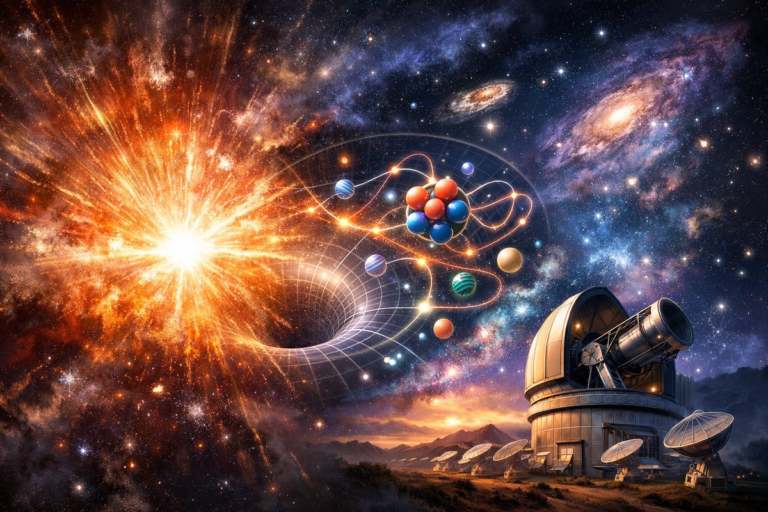
A recent convergence of observational breakthroughs and theoretical advances is painting an ever-richer portrait of the universe’s earliest instants. Long after the initial balloon payloads measured faint fluctuations in the cosmic microwave background, today’s experiments are probing new messengers-high-energy cosmic neutrinos, primordial gravitational wave backgrounds, and subtle polarization patterns-seeking to unlock clues that lie buried in the cosmic dawn. Each dataset is a thread in a tapestry that stretches all the way back to a fraction of a second after the Big Bang, where quantum fluctuations seeded the vast structures we see today.
In high-altitude balloon campaigns over Antarctica and the Atacama Desert, polarization-sensitive telescopes have detected minute swirls in the relic radiation left over from the hot plasma era. These B-mode polarization patterns offer a potential signature of gravitational waves generated during inflation, the hypothetical exponential expansion that may have stretched space-time in its infancy. Recent measurements from ground-based observatories suggest a lower amplitude for primordial B-modes than first anticipated, forcing theorists to refine models of inflationary energy scales and reheating processes.
Meanwhile, deep under the Antarctic ice, next-generation neutrino telescopes have logged dozens of ultra-high-energy neutrino events. These ghostly particles traverse the cosmos almost unimpeded, carrying direct information from the densest regions and earliest times. Upgrades to existing detector arrays and planned expansions promise greater sensitivity to neutrinos with energies above 10^15 electronvolts-energies so extreme they could reveal black hole evaporation remnants or traces of exotic heavy particles that decayed within the first microseconds after the Big Bang.
On a different front, gravitational wave observatories are beginning to hunt for a stochastic background of cosmic ripples. While LIGO and Virgo have detected signals from merging black holes and neutron stars, future instruments aim to lower the noise floor enough to detect a background hum of waves generated by phase transitions in the early universe or by networks of cosmic strings. These theoretical relics of high-energy physics could leave a faint but persistent imprint across the entire frequency spectrum.
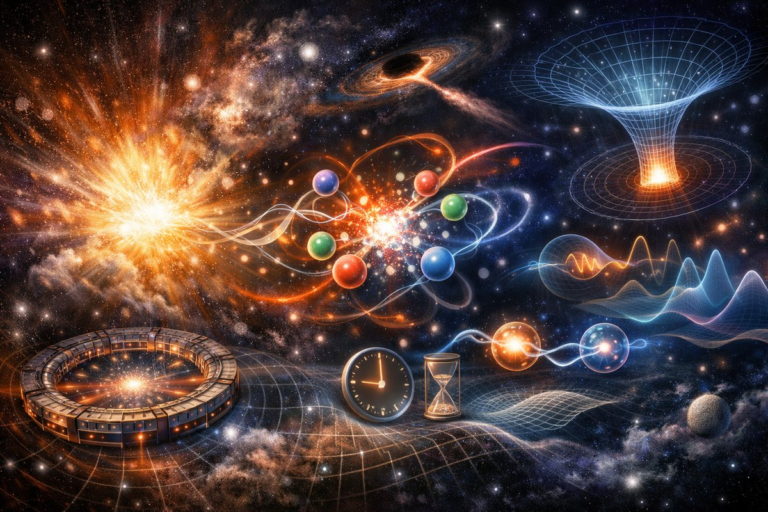
Bridging observations and theory, researchers face profound paradoxes at the intersection of quantum mechanics and general relativity. How can we trace particle interactions back to energies well above the Planck scale, where space-time itself may become quantized? What mechanisms could smooth out trans-Planckian irregularities during inflation without violating well-tested principles of quantum field theory? Addressing these questions requires new mathematical frameworks-candidates such as loop quantum gravity, string theory dualities, and noncommutative geometry vie for attention, each offering different resolutions to the same core puzzles.
Underpinning all of these efforts are massive simulations that reconstruct inflationary dynamics, subsequent reheating, and the growth of large-scale structure. Supercomputers like Summit and Frontier have run cosmological codes that evolve billions of virtual particles through billions of years of cosmic time. Recent advances in machine learning help identify subtle patterns in simulated data, enabling comparisons with real sky maps at an unprecedented level of precision. These synthetic universes provide crucial testbeds for verifying whether a given theoretical scenario can reproduce the cosmic web, galaxy clustering, and the faint polarization fingerprints we observe today.
Back in the laboratory, physicists are building table-top analogues of early-universe phenomena using ultracold atoms, superfluid helium, and photonic metamaterials. Bose-Einstein condensates can mimic aspects of cosmic inflation in a controlled environment, letting researchers watch horizon-like effects emerge in real time. Such experiments inject a dose of practicality into a domain that can otherwise feel remote-offering a tangible link between the quantum phenomena on Earth and the grand dynamics of the entire cosmos.
Beyond purely academic collaboration, this new era of cosmic archaeology has invited fresh voices into the conversation. Philosophers of science are reexamining the metaphysical implications of multiverse scenarios, while artists are translating abstract data streams into immersive audiovisual installations. Citizen scientist networks are harnessing backyard telescopes and distributed computing projects to triage real-time detection alerts for supernovae, gamma-ray bursts, and transient radio pulses-ensuring that professional observatories can pivot quickly to capture fleeting phenomena.
For astronomy enthusiasts without access to national lab facilities, there are accessible ways to engage with the exploration of cosmic origins. Portable planetarium projectors let you recreate the night sky indoors, complete with accurate star fields, nebula overlays, and time-lapse motion. Hobbyist refractor telescope kits equipped with smartphone adapters can capture images of the Moon’s terminator line, the craters of Mars, or the faint glow of distant galaxies. These hands-on tools foster wonder and build intuition-reminding us that even the most sophisticated research begins with a simple gaze upward.
Meanwhile, researchers emphasize the importance of robust infrastructure and mindful work habits. High-performance computing clusters and large-capacity data storage solutions are indispensable for crunching terabytes of observational and simulated data. Noise-cancelling headphones help maintain focus during marathon coding sessions, while adjustable lighting and ergonomic workspaces protect eyes and bodies when analyzing faint cosmic signals late into the night. A whiteboard or digital sketch pad serves as a canvas for wrestling with complex equations, mapping out timelines, and brainstorming new detection strategies.
At the heart of this endeavor is the emotional intelligence to navigate scientific uncertainty-and the humility to follow the evidence wherever it leads. As data pours in, cherished theoretical frameworks may fracture, requiring swift adaptation. Yet the persistent human drive to understand our origins fuels creativity, teamwork, and the willingness to embrace unexpected discoveries. Each new constraint sharpened by observation is also an invitation to conceive bolder ideas and deeper questions.
The broader significance of probing cosmic origins extends far beyond academia. Insights into the universe’s birth conditions inform our understanding of fundamental forces, particle physics, and the fate of all matter and energy. The techniques and technologies developed-ultra-sensitive detectors, high-throughput computing, advanced materials-often find applications in medical imaging, communication networks, and sustainable energy solutions. In grappling with the universe’s most extreme environments, scientists uncover new tools and processes that benefit society at large.
Looking ahead, a suite of next-generation missions will push the frontier even farther. CMB-Stage 4 ground arrays will deepen polarization maps, balloon payloads will refine neutrino cross-section measurements, and space-based gravitational wave observatories will open low-frequency windows untouched by terrestrial noise. Together, these instruments promise to pierce the veil of the primordial universe, offering the first direct glimpses of events that shaped every star, planet, and living organism that ever existed.
In this unfolding narrative, the universe’s first breath is not a distant curiosity; it is an active dialogue between theory, observation, and human imagination. As we sift through the faint echoes of creation, we are reminded that every advance in our cosmic map brings new mysteries into view. And it is this endless horizon of the unknown that inspires us to keep looking up-curious, persistent, and ever awed by the cosmic story we all share.