Location
Mount Vernon, WA 98274

Location
Mount Vernon, WA 98274
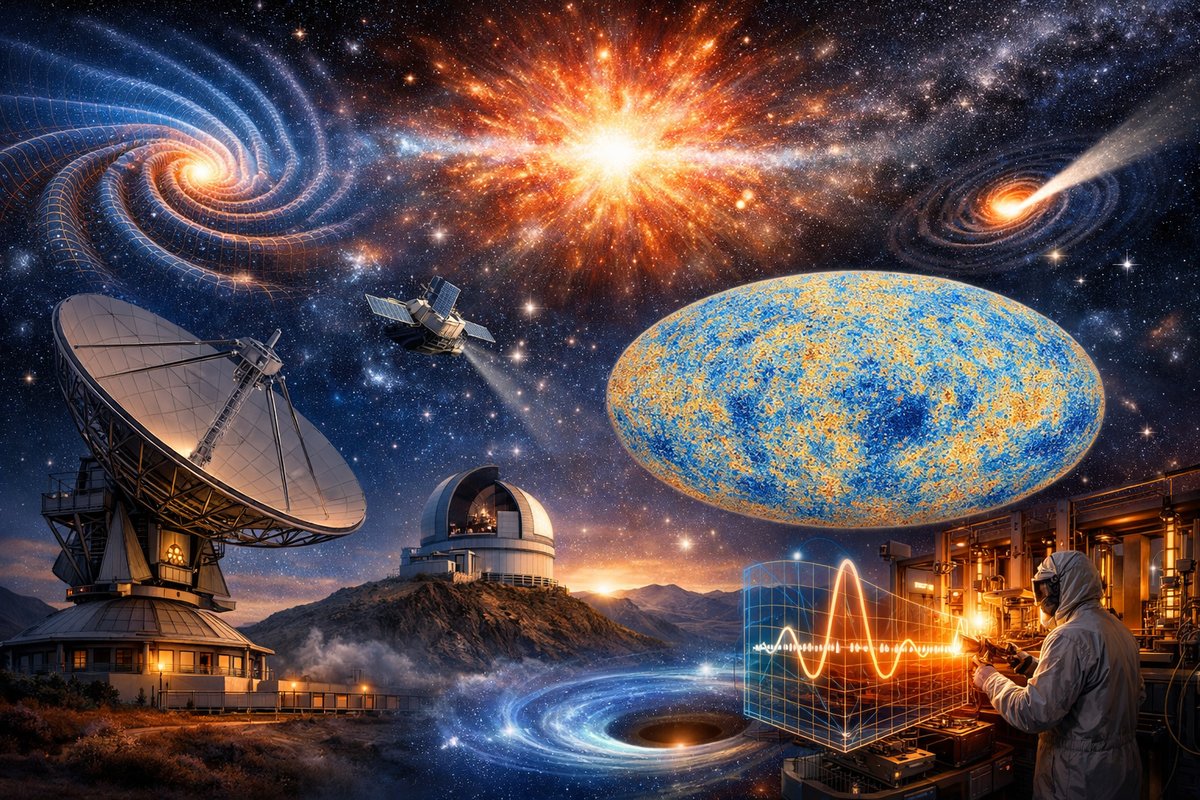
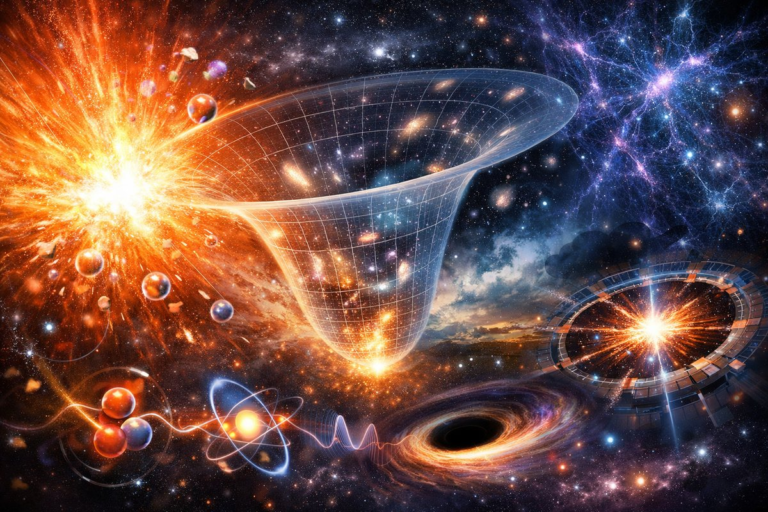
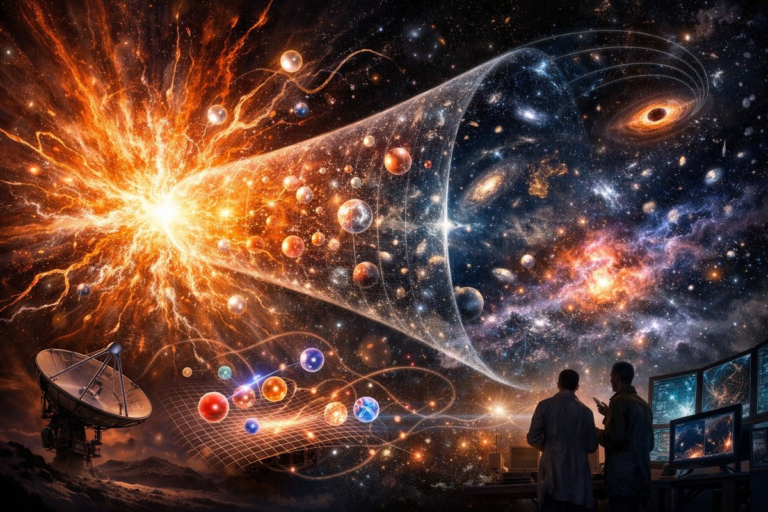
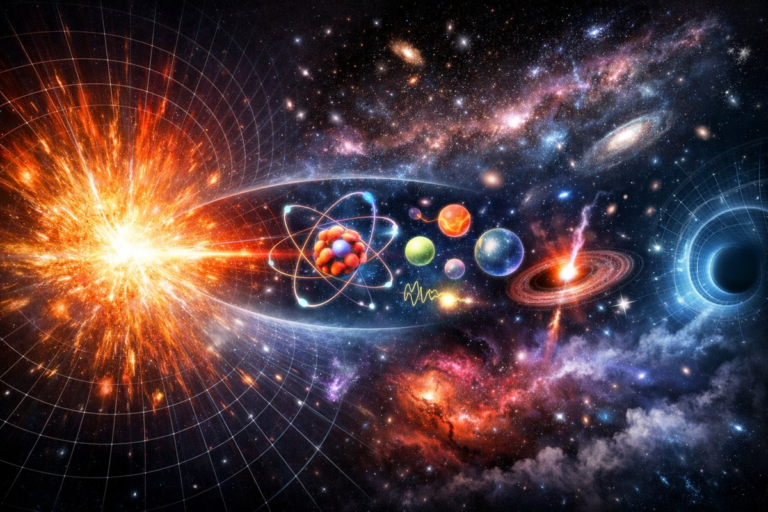
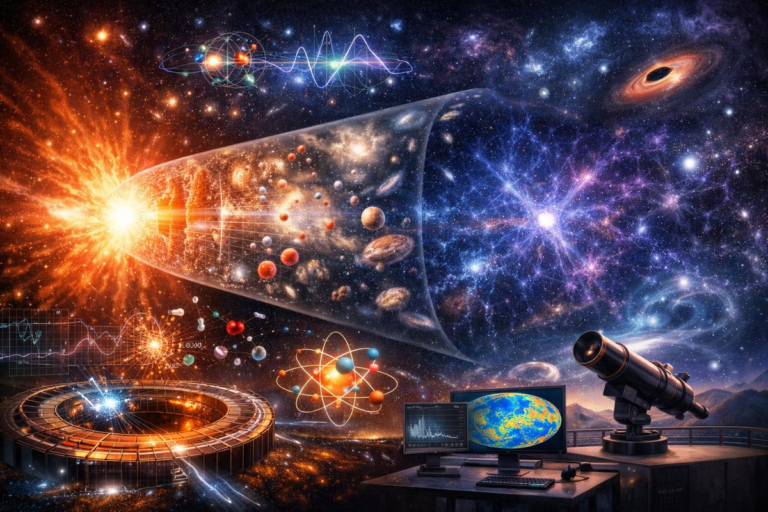
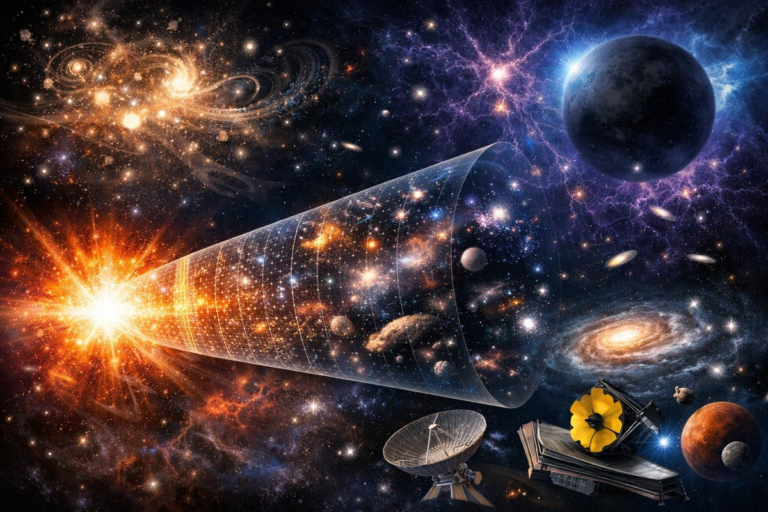
As cutting-edge observatories and particle experiments refine their gaze on the cosmos, researchers are uncovering traces of the universe's birth that challenge established paradigms. From the hunt for primordial gravitational waves to precision mapping of the cosmic microwave background, the quest to decode the first moments taps into quantum mysteries and astronomical ingenuity.
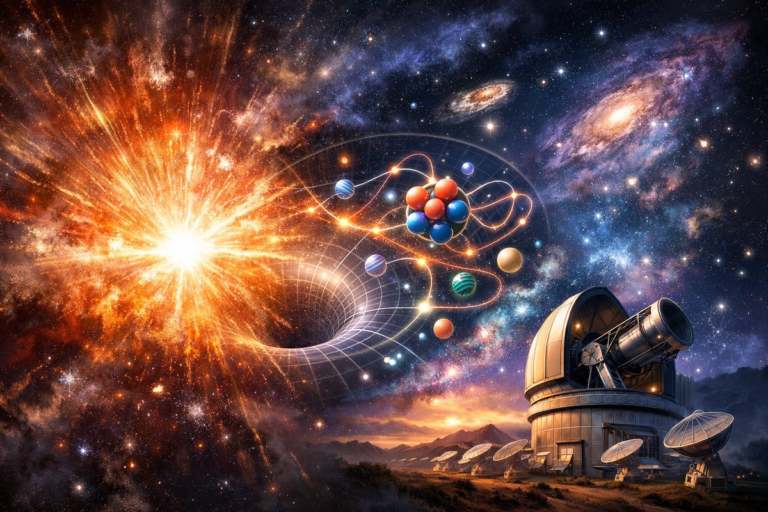
An intricate tapestry of particles, forces and quantum quirks is woven into every corner of our observable universe. Recent advances in telescopic arrays, gravitational wave interferometers and underground detectors are now combining forces to probe a realm once thought beyond reach: the instants immediately following the Big Bang. As these instruments push toward unprecedented sensitivities, they’re teasing out whispers from a time when space and time themselves were in flux.
At the forefront of this effort is the next generation of cosmic microwave background (CMB) experiments. Building on decades of satellite missions and ground-based telescopes, projects now aim to map minute polarization patterns imprinted by primordial gravitational waves. Tiny rips in spacetime generated during the inflationary era-an explosive growth spurt fractions of a second after the Big Bang-could leave swirling “B-mode” signatures in the CMB. Detecting these signals would confirm the rapid expansion theory and offer a direct glimpse into the quantum gravitational processes at play.
One flagship initiative will deploy a fleet of millimeter-wave telescopes at high-altitude sites, from the Atacama Desert to the South Pole. These instruments will cool their detectors to near absolute zero to register temperature fluctuations measured in millionths of a degree. Collaborative teams are also developing balloon-borne platforms capable of rising above most of the atmosphere for weeks at a time, mapping the sky with reduced interference.
Meanwhile, terrestrial interferometers originally built to catch black hole mergers are being retooled for a new mission. By extending their operating frequencies and improving seismic isolation, these detectors can probe lower-frequency gravitational waves-those that might carry information from the universe’s inflationary heartbeat. International consortia are coordinating upgrades across multiple sites, synchronizing data streams to dampen noise and amplify faint primordial echoes.
On a separate front, underground laboratories are scaling up efforts to capture relic neutrinos from the cosmic neutrino background. These ghostly particles were released seconds after the Big Bang and have coasted through space ever since, virtually undisturbed. Though their energies are minute, recent breakthroughs in coherent scattering techniques and cryogenic target materials have boosted detection prospects. If successful, this would mark the first direct observation of neutrinos produced during the earliest cosmic seconds.
The hunt for dark matter-the invisible substance that comprises nearly 85% of all matter-has also entered a new chapter. Deep-underground detectors filled with liquefied noble gases are now sensitive enough to spot rare collisions between dark matter candidates and atomic nuclei. Researchers hope to distinguish between weakly interacting massive particles (WIMPs) and more exotic candidates such as axions or sterile neutrinos. Finding one of these particles would reshape our picture of the cosmos and lock down missing pieces in models of structure formation.
Yet it is on the theoretical front where some of the most profound puzzles are taking shape. Tensions between competing measurements of the universe’s expansion rate-known as the Hubble constant discrepancy-suggest that new physics may be lurking in the early cosmos. Could an additional force carrier have acted briefly before fading away? Or might interactions among dark matter and dark energy have influenced cosmic dynamics in ways not captured by current models? Researchers are developing modified gravity theories and alternative inflation scenarios to account for these anomalies.
A particularly intriguing proposal involves “primordial black hole” populations formed during inflation. If dense quantum fluctuations had collapsed into tiny black holes, their evaporation or gravitational effects could influence both the CMB and the distribution of galaxies today. Specialized surveys are now combing through microlensing events and high-resolution sky maps to test this hypothesis.
Complementing these large-scale efforts are ambitious quantum sensor programs. Physicists are engineering superconducting qubits and atomic interferometers to detect minute perturbations in spacetime or exotic fields predicted by extensions of the Standard Model. These tabletop experiments are establishing a parallel frontier in cosmological exploration, one that blurs the line between particle physics and deep-space astronomy.
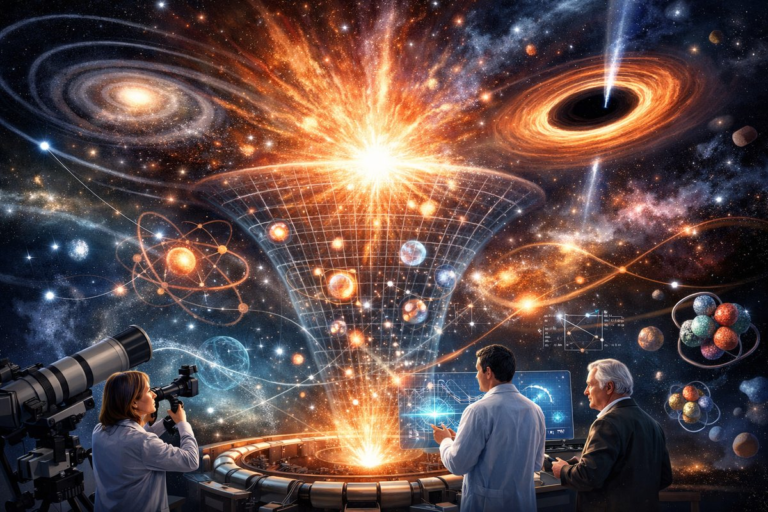
The synergy of these diverse probes is vital. A confirmed detection of primordial B-modes in the CMB, matched with underground neutrino sightings and direct dark matter hits, would provide a unified narrative of the universe’s first minutes. Conversely, null results in any channel sharpen theoretical frameworks by closing off swaths of parameter space, guiding future instrument designs.
International cooperation has never been more crucial. Shared data repositories, open-source analysis software and coordinated observation campaigns are breaking down traditional silos. Teams spanning continents are pooling resources to build modular detectors and share cryogenic technology. Young researchers are likewise collaborating across disciplines, melding astrophysics, particle theory and quantum engineering in joint PhD projects.
Beyond academic journals, this quest resonates with the public imagination. Citizens worldwide are following live feeds from Antarctica-based telescopes and cheering on high-altitude balloon launches. Virtual citizen-science platforms invite enthusiasts to classify sky patches or flag potential neutrino events. These collective efforts underscore a shared curiosity: to trace our cosmic origins even if it means challenging our most cherished assumptions.
Looking ahead, the next decade promises a leap in sensitivity and scale. Plans for a CMB satellite mission with revolutionary detector arrays could map the entire sky at sub-microkelvin precision. A space-borne gravitational wave observatory designed to detect waves from inflationary times could operate free from Earth’s seismic jitter. Meanwhile, new materials such as two-dimensional superconductors may power quantum sensors with record low noise.
As the boundaries of measurement precision expand, so too will our capacity to envision the pre-Big Bang landscape-or even test multiverse scenarios where our universe is one among many. Paradoxes that once belonged to philosophical debates are gradually entering the realm of empirical science.
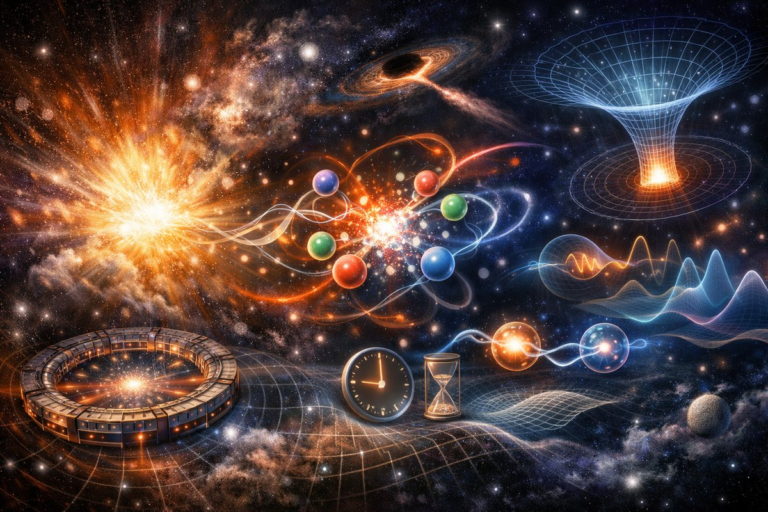
In the interplay of cosmic telescopes and quantum detectors, researchers are assembling a time machine of sorts-a mosaic of clues that trace back to the universe’s opening chords. Each refined map of the microwave sky, each gravitons’ faint murmur and every elusive neutrino track brings us closer to a grand narrative: how emptiness bloomed into matter, space unfurled its expanses, and time itself began its inexorable march.
We stand at a crossroads of discovery. With each technological stride, the primordial fog is lifting, revealing the first vibrations of reality. Our journey into the cosmic dawn has only just begun, but already it promises to reshape our understanding of all that exists-and all that has yet to be imagined.