Location
Mount Vernon, WA 98274

Location
Mount Vernon, WA 98274
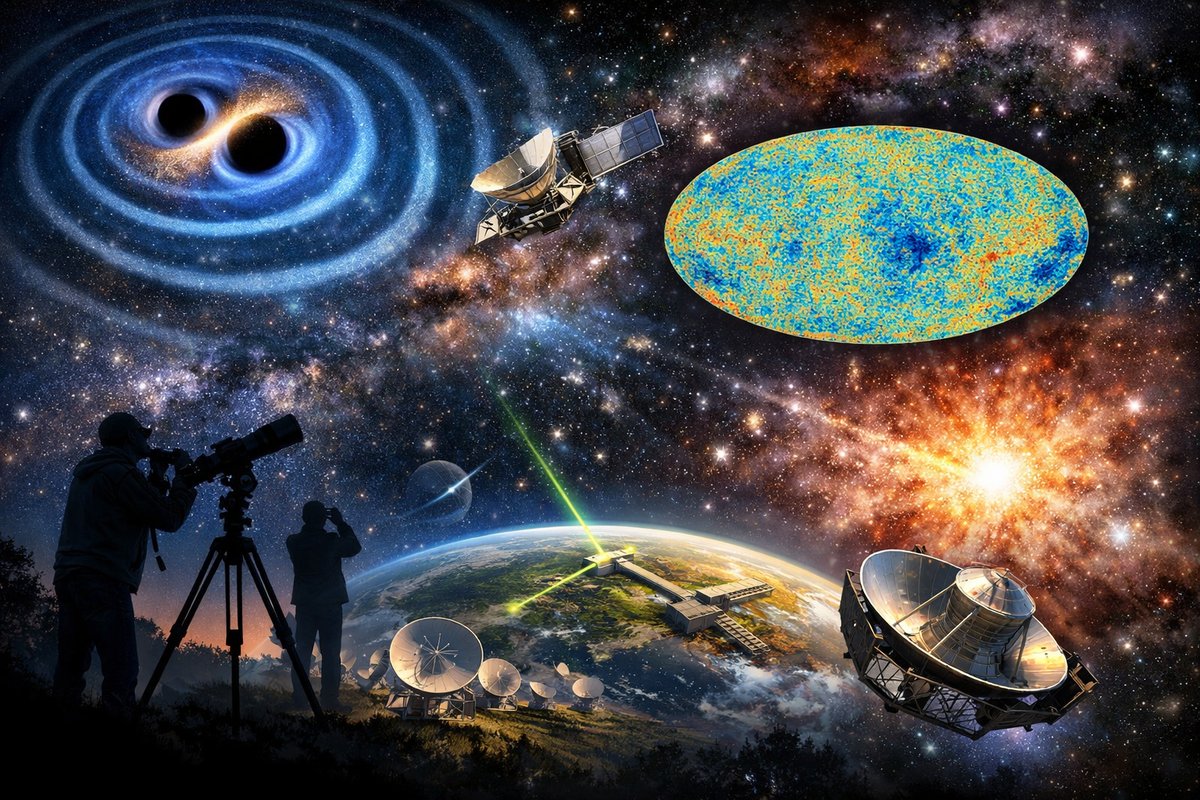
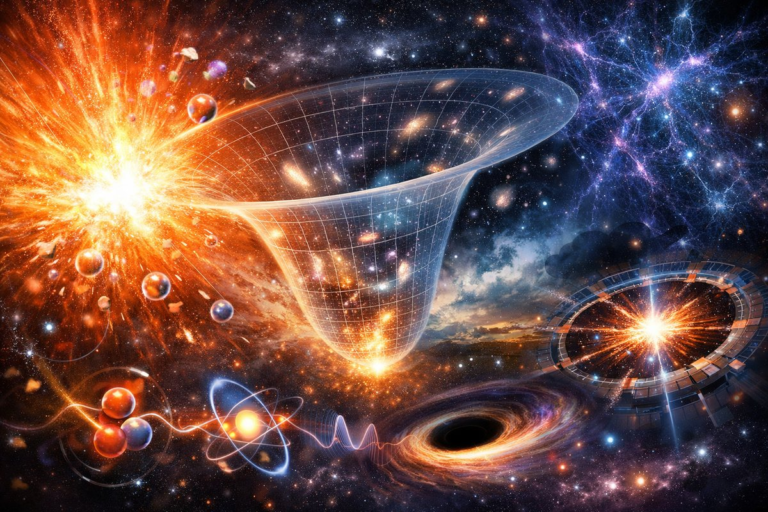
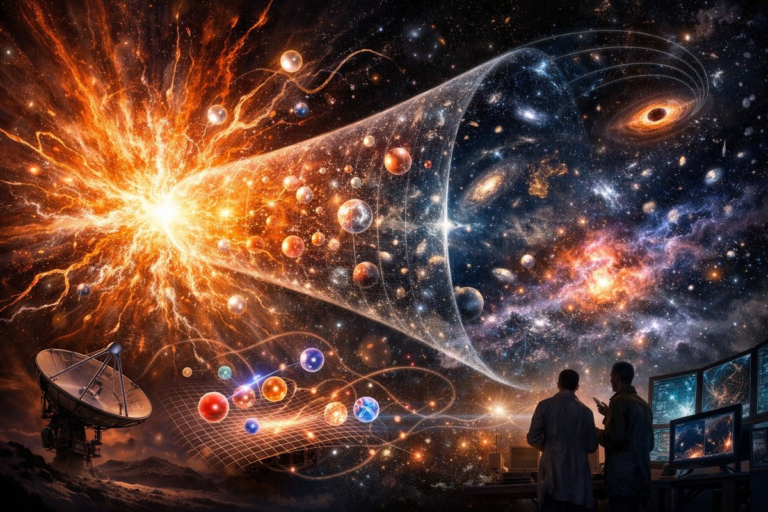
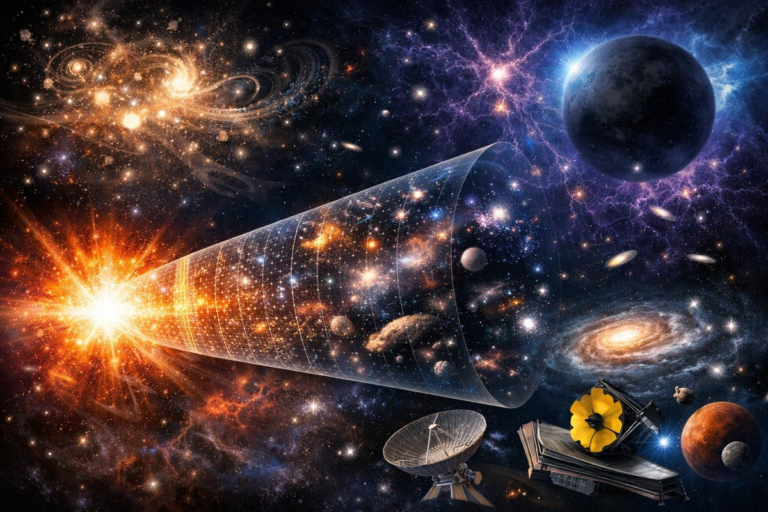
A new wave of multi-messenger observatories is peeling back the veil on the universe's pre-inflation era, combining gravitational wave detections and high-precision microwave background maps. Amateur astronomers and curious minds alike are poised to explore unprecedented clues about dark matter, quantum fluctuations, and the very origin of space-time.
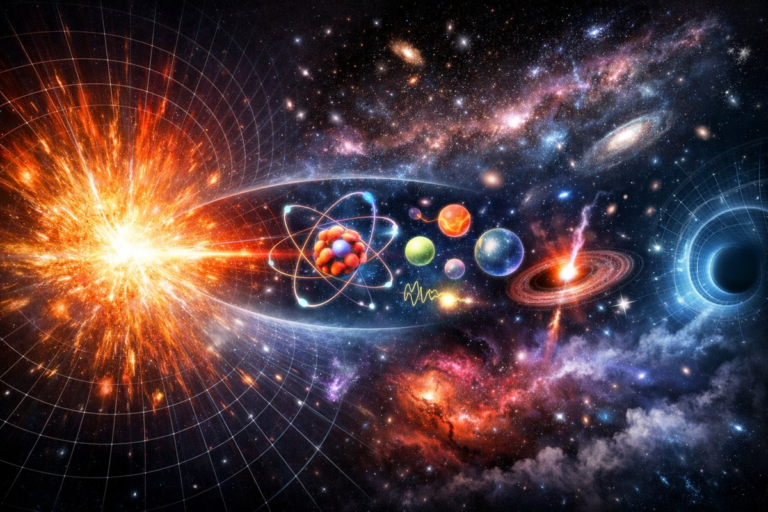
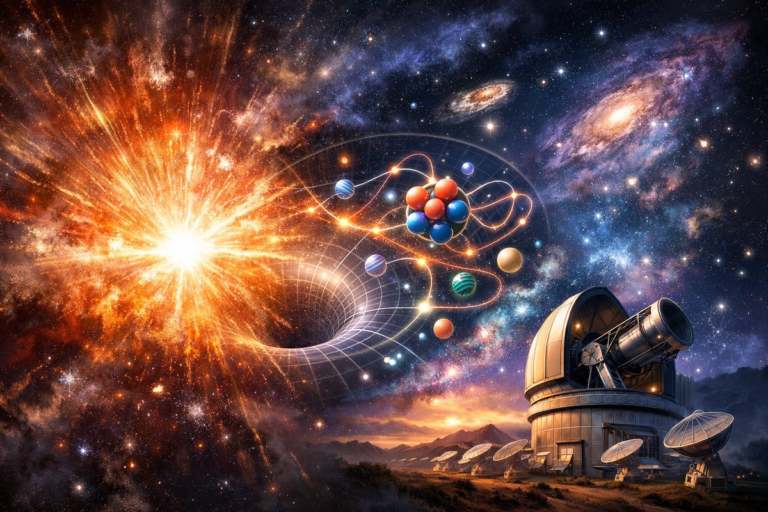
The quest to understand how everything began has entered a thrilling new phase. Recent advances in gravitational wave detection, coupled with ever more sensitive measurements of the cosmic microwave background (CMB), are transforming our view of the universe’s infancy. Where once cosmologists relied on theoretical extrapolations, today they can listen to faint ripples in space-time and map minute temperature variations that trace back to the first trillionths of a second after the Big Bang. Every anomaly in these data sets may carry the imprint of primordial physics, teasing out clues about forces and particles that shaped our cosmos.
At the heart of this revolution lie interferometric observatories spread across the globe and in space. By measuring tiny distortions caused by passing gravitational waves, these instruments act like cosmic stethoscopes, sensing the echoes of ancient events. Originally designed to catch merging black holes or colliding neutron stars, next-generation detectors are now tuning into background hums that could originate from phase transitions in the early universe. Detecting this stochastic gravitational-wave background would be akin to hearing the whisper of cosmic inflation itself.
Meanwhile, ground-based arrays scanning the microwave sky have achieved temperature sensitivity at the microkelvin level. As researchers refine their maps of the CMB, they uncover subtle anisotropies-tiny hot and cold spots-that encode information about density fluctuations seeded by quantum mechanics. These primordial ripples eventually grew into galaxies and clusters, but in their infancy they reveal the interplay of gravity, radiation, and the enigmatic dark sector. Each pixel in a microwave map represents a frozen snapshot of cosmic structure in its earliest form.
Recently, teams analyzing the polarization of the CMB reported tentative evidence of B-mode patterns. These swirling polarization signatures could originate from gravitational waves imprinted during inflation, providing a direct window into energy scales trillions of times higher than those probed by particle accelerators. Confirming these patterns would be a watershed moment for cosmology, offering empirical proof of rapid expansion and offering constraints on competing inflationary models.
Beyond photons and gravitational waves, scientists are striving to detect the cosmic neutrino background-relic neutrinos that decoupled seconds after the Big Bang. Though these ghostly particles interact only feebly, novel detector concepts using dense tritium targets or crystalline lattices aim to measure their feeble kicks. Detection of this neutrino background would round out our multi-messenger portrait of the early universe, tracing the behavior of the lightest known fermions in primordial seething plasma.
Underpinning all these efforts is the quantum nature of early fluctuations. Theoretical physicists explore how vacuum fluctuations could tunnel between different energy states, potentially spawning entire universes in a vast multiverse landscape. While direct evidence remains elusive, correlations in large-scale structure or tiny anomalies in CMB maps might hint at collisions with other “bubble” universes or imprints of higher-dimensional physics. Such scenarios stretch our understanding of space-time and challenge the notion that our universe is the only one.
Dark matter remains another profound mystery driving cosmic origin studies. Simulations seeded by CMB data produce virtual universes where invisible matter scaffolds emerge, guiding galaxy formation. Observational programs hunting for faint gravitational lensing signals hope to map the dark web directly. Should they succeed, these maps would reveal how dark matter clumped during the universe’s first billion years, providing insights into its particle nature and interactions.
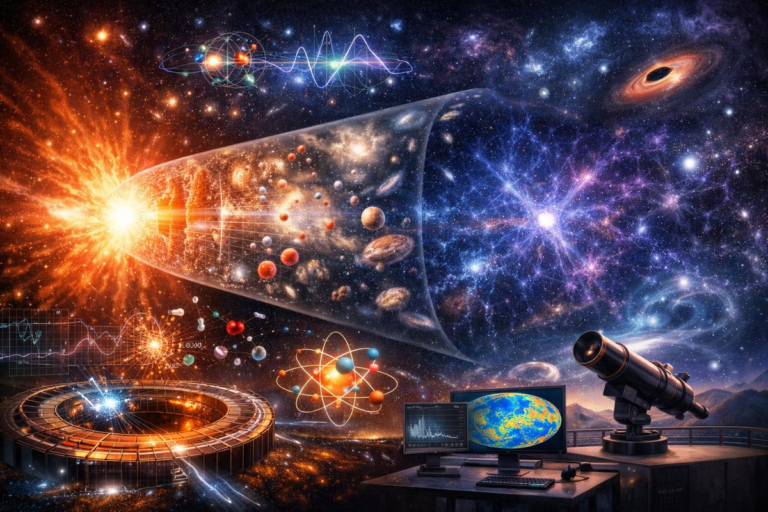
Modern cosmology has become a true multi-messenger endeavor. By weaving together data from observatories tuned to light, gravitational waves, neutrinos, and even cosmic rays, researchers forge a holistic narrative of cosmic history. Each messenger carries a unique signature-photons record thermal history, gravitational waves trace violent dynamics, neutrinos preserve the record of nuclear processes, and cosmic rays probe magnetic fields in early galaxies.
Several next-generation facilities will drive breakthroughs in the coming decade. Space-based interferometers will hunt low-frequency gravitational waves unobservable from Earth. Ground-based telescopes equipped with thousands of superconducting detectors will chart polarization in greater detail than ever before. Radio arrays may one day detect the 21-centimeter signal from neutral hydrogen during the cosmic dark ages, unveiling the formative stages of structure before stars even existed.
Ambitious proposals for lunar or orbiting observatories promise an even quieter environment, free from terrestrial noise and atmospheric contamination. Placing telescopes on the Moon’s far side could yield pristine measurements of the CMB spectrum and faint radio signals. By extending our observational reach, these platforms could test exotic theories such as cosmic string networks or primordial black hole creation during the first instants of time.
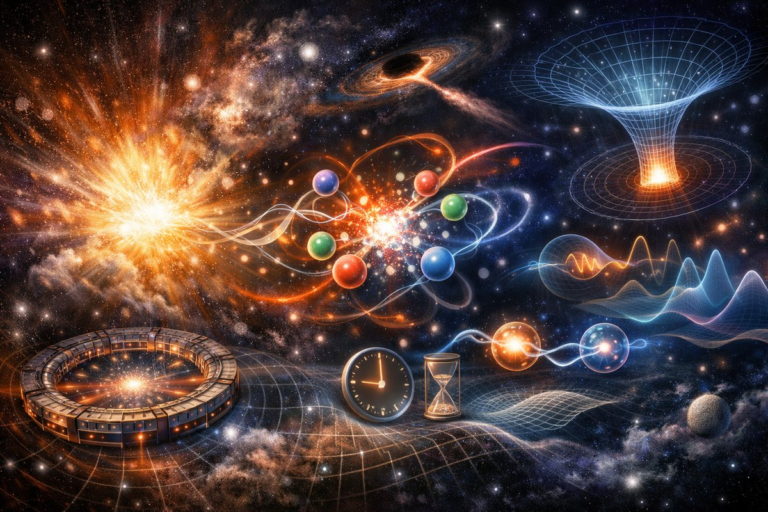
On the theoretical front, researchers are refining models that unify quantum mechanics and gravity. Approaches ranging from loop quantum gravity to string-inspired cosmologies aim to eliminate the singularity at the Big Bang and replace it with a smooth, pre-existing phase. These frameworks often predict subtle observational signatures-specific non-Gaussian patterns in the CMB or tiny departures from perfect isotropy-that next-generation surveys could detect.
These empirical quests also raise profound philosophical questions about the nature of beginning and existence. If time itself emerged from quantum geometry, what does it mean for something to have a “first moment”? Is our universe part of a larger meta-cosmos where creation is an ongoing process? Such lines of inquiry blend physics with metaphysics, reminding us that the search for origins is as much an intellectual journey as a technical challenge.
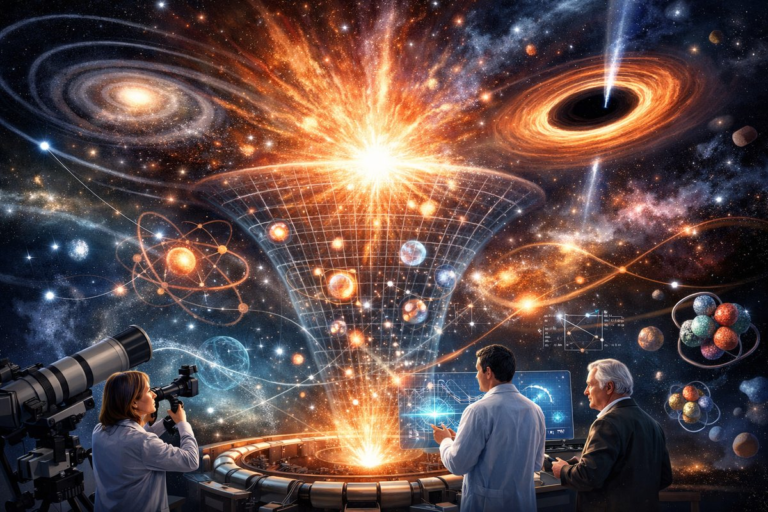
Public involvement is growing through citizen science initiatives that invite enthusiasts to help classify galaxy images or search for anomaly signatures in CMB maps. Open-source data portals let anyone explore real cosmic microwave background maps or listen to sonified gravitational wave signals. By democratizing access to raw data, these efforts foster broader engagement and inspire the next generation of cosmologists.
For amateur observers eager to connect with these cosmic themes, the right equipment can bring distant phenomena into focus. Telescopes reveal the star fields that trace the large-scale filamentary structure, while backyard radio antennas pick up bursts from pulsars that served as cosmic laboratories. Portable spectrometers can even hint at the chemical composition of nebulae, linking nearby observations to the primordial elements forged in the first minutes of the universe.
Educational tools such as home planetarium projectors and interactive software offer immersive ways to visualize the universe’s infancy. Projecting simulated cosmic microwave background maps onto a ceiling or wall transforms abstract data into awe-inspiring panoramas. Interactive modules let learners tweak parameters of inflationary models and observe how tiny quantum fluctuations blossom into the cosmic web.
We stand at a threshold where every new detector, satellite, or algorithm has the potential to rewrite our cosmic origin story. As multi-messenger facilities come online and theoretical models sharpen their predictions, the universe is poised to reveal secrets concealed since before the first atoms formed. Amateur and professional efforts converge in this grand journey, reminding us that the quest to understand our beginnings is a shared adventure-and that the echoes of cosmic dawn will continue to captivate our curiosity for generations to come.