Location
Mount Vernon, WA 98274

Location
Mount Vernon, WA 98274
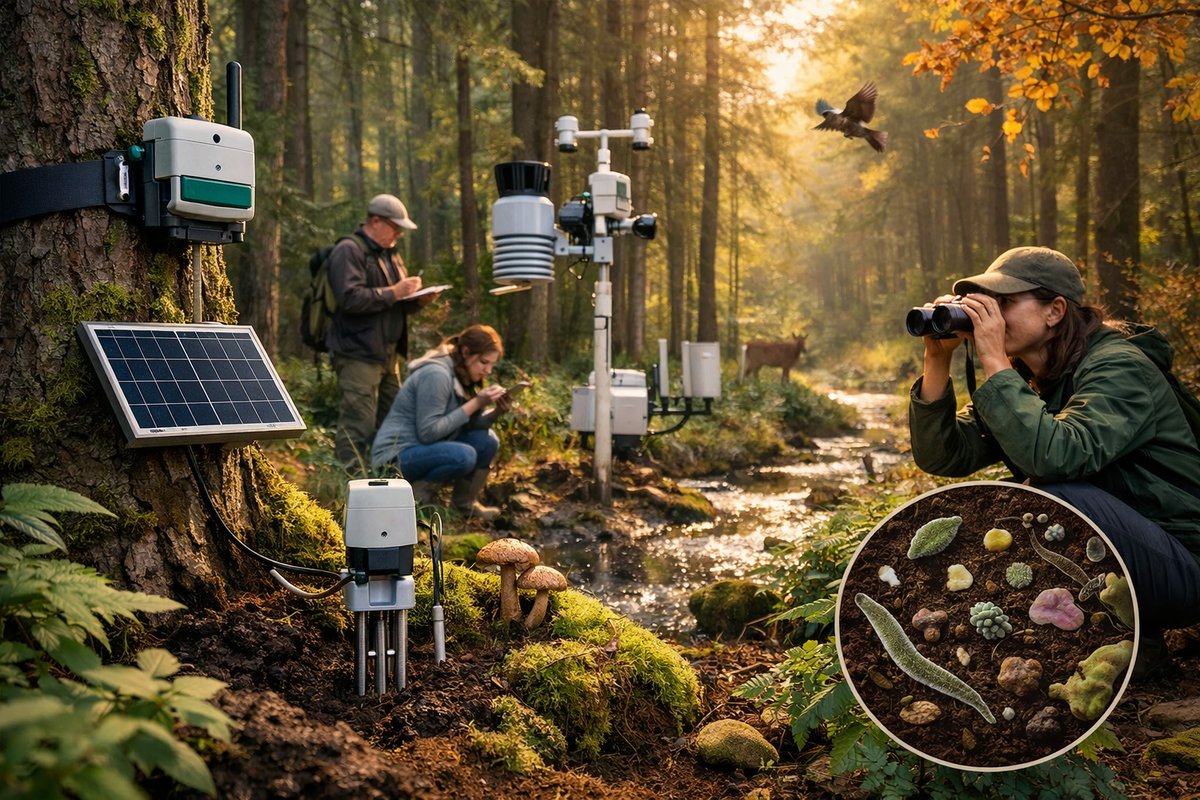
A new wave of environmental monitoring combines tiny wireless sensors, soil probes and community-led observations to capture the hidden rhythms of forests. Early results from pilot sites reveal surprising drivers of tree stress, microbial resilience and seasonal cues-offering practical insights for safeguarding ecosystems under pressure.
In a quiet clearing at dawn, thin beams of light sift through moss-draped branches, illuminating droplets of dew on ancient ferns. Beneath the surface of this stillness, an array of devices hums softly: wireless soil probes reporting moisture levels, acoustic loggers tracking dawn chorus patterns, and miniature weather stations measuring microclimate shifts. Alongside them, volunteers kneel with weatherproof notebooks, sketching leaf shapes, timing bud breaks and noting subtle color changes. This fusion of technology and human curiosity is at the heart of an innovative monitoring network aimed at mapping the pulse of the living world.
Over the past year, a coalition of ecologists, engineers and local community groups has been deploying sensor clusters across forested reserves, riparian corridors and urban fringe woodlands. Each cluster integrates a suite of tools: soil moisture and temperature probes inserted at multiple depths, ultrasonic acoustic monitors that detect insect chorusing and bird calls, and microclimate stations that record air temperature, humidity and barometric pressure at canopy and understory levels. Data streams flow hourly to an open‐access platform where volunteers and researchers alike can explore real‐time graphs, download raw files and flag anomalies.
One surprising insight emerged from a pilot site in a coastal temperate forest. During an unseasonal dry spell, the soil moisture sensor reported a gradual decline in water availability well before nearby weather stations registered an official drought alert. Within days, thermal imaging from a small tethered drone revealed elevated canopy temperatures in certain oak stands-signaling early water stress that had previously gone unnoticed until leaf wilting appeared. This early warning prompted forest managers to adjust prescribed thinning plans, reducing competition and helping vulnerable trees conserve moisture.
Simultaneously, acoustic monitors detected a shift in bird song patterns. Dawn chorus counts-a long-standing method of gauging biodiversity-showed a subtle delay in the arrival of migratory warblers by two days relative to historical norms. Volunteer observers, armed with smartphone apps calibrated to the same timestamps as the sensors, confirmed the pattern on the ground. By combining automated audio analysis with human verification, the project achieved a higher confidence level in phenological tracking than either approach alone.
Below ground, an experimental network of microbial ‘sentinel’ kits is shedding light on soil resilience. These kits consist of mesh envelopes filled with sterilized organic material, buried at prescribed depths for set intervals. After retrieval, laboratory assays measure microbial colonization, enzyme activity and carbon turnover rates. Early results indicate that shaded microsites near decaying logs host more robust microbial communities-suggesting that small-scale structural diversity in forests enhances subterranean ecosystem services, from nutrient cycling to carbon sequestration.
Data integration is powered by an open-source dashboard that layers predictive models, real‐time readings and participatory reports. Machine learning algorithms scan for emerging patterns-such as clusters of pest outbreak signals or correlated drops in soil moisture across adjacent sensors. When thresholds are triggered, automated alerts guide field teams to investigate potential threats like bark beetle infestations or sudden dieback events. In one case, a cluster of trees showing elevated trunk temperatures and reduced sap flow was examined within 48 hours, enabling early intervention against a fungal canker.
Crucially, this effort is not just about cutting‐edge gadgets. Local communities and school groups have been invited to contribute systematic phenology logs, seasonal insect surveys and water‐quality tests along nearby streams. Training workshops teach simple protocols-how to inoculate sentinel kits, calibrate sensors and standardize bird call identification-so that citizen-driven data aligns seamlessly with machine‐collected metrics. The result is a richer tapestry of ecological intelligence, uniting high‐resolution hardware with the observational wisdom of those who know the landscape intimately.
One volunteer remarked on the project’s forums: “I’ve walked these woods for years, but seeing soil moisture graphs side by side with my leaf‐bud timing gives me a new understanding of how today’s weather shapes tomorrow’s ecosystem. It feels like we’re listening to the forest’s heartbeat.” This emotional connection has galvanized a sense of stewardship among participants, who report greater motivation to advocate for local conservation measures and habitat restoration initiatives.
Despite these early successes, challenges remain. Sensor calibration can drift over time in high‐humidity environments, requiring periodic field checks. Data gaps arise when wildlife chews through cables or heavy rainfall intermittently floods ground stations. Ensuring data quality from volunteer logs demands ongoing support and feedback loops. To address this, the team developed a modular field kit with ruggedized enclosures, solar panels for off-grid power and simple self‐test routines that volunteers can perform before each deployment.
Privacy and data sovereignty are also top of mind. Landowners hosting sensor sites retain full control over raw data and its release schedules. Indigenous stewards of ancestral territories are contributing knowledge on seasonal indicators-traditional fire moss maturity, spring ephemeral blooms-and shaping decisions about which forest sections to prioritize for monitoring. This partnership acknowledges that technology alone cannot capture the full spectrum of ecological wisdom.
Looking ahead, researchers plan to scale up the network by integrating aerial drones equipped with multispectral cameras, allowing for rapid canopy health assessments over several square kilometers. Underwater sensors will be added along forested streams to measure pH, turbidity and nutrient loads-linking terrestrial processes to aquatic ecosystems. Advances in low‐power wide‐area network protocols promise to extend connectivity into remote wilderness zones, while miniaturized air‐quality sensors will track volatile organic compounds emitted by vegetation under stress.
The broader vision is a living atlas of ecosystem vitality, accessible to scientists, land managers and curious citizens alike. By harmonizing advanced sensing with grounded observation, this approach offers pragmatic tools for anticipating ecological change-whether driven by climate shifts, land‐use pressures or emerging pests. In a time of accelerating environmental uncertainty, such anticipatory insights can guide more adaptive, responsive stewardship.
As the morning light climbs higher, drones ascend in organized patterns, gathering thermal snapshots of the canopy. Volunteers close their notebooks, upload their field logs and head home with a renewed sense of connection to the unseen processes beneath their feet. In the interplay of sensor and soul, a new chapter of environmental science is unfolding-one that invites us all to become active listeners to Earth’s intricate signals.
Parting Reflections
Wherever you encounter the living world-amid city parks or ancient woods-consider the myriad rhythms humming beneath the surface. From the whisper of microbial networks in the soil to the shifting chorus of migrating birds, nature is continually communicating. By blending intelligent sensors with our own attentive observations, we can deepen our understanding of these signals, build resilience into the landscapes we care for and foster a sense of belonging in the vast, interconnected web of life.