Location
Mount Vernon, WA 98274

Location
Mount Vernon, WA 98274
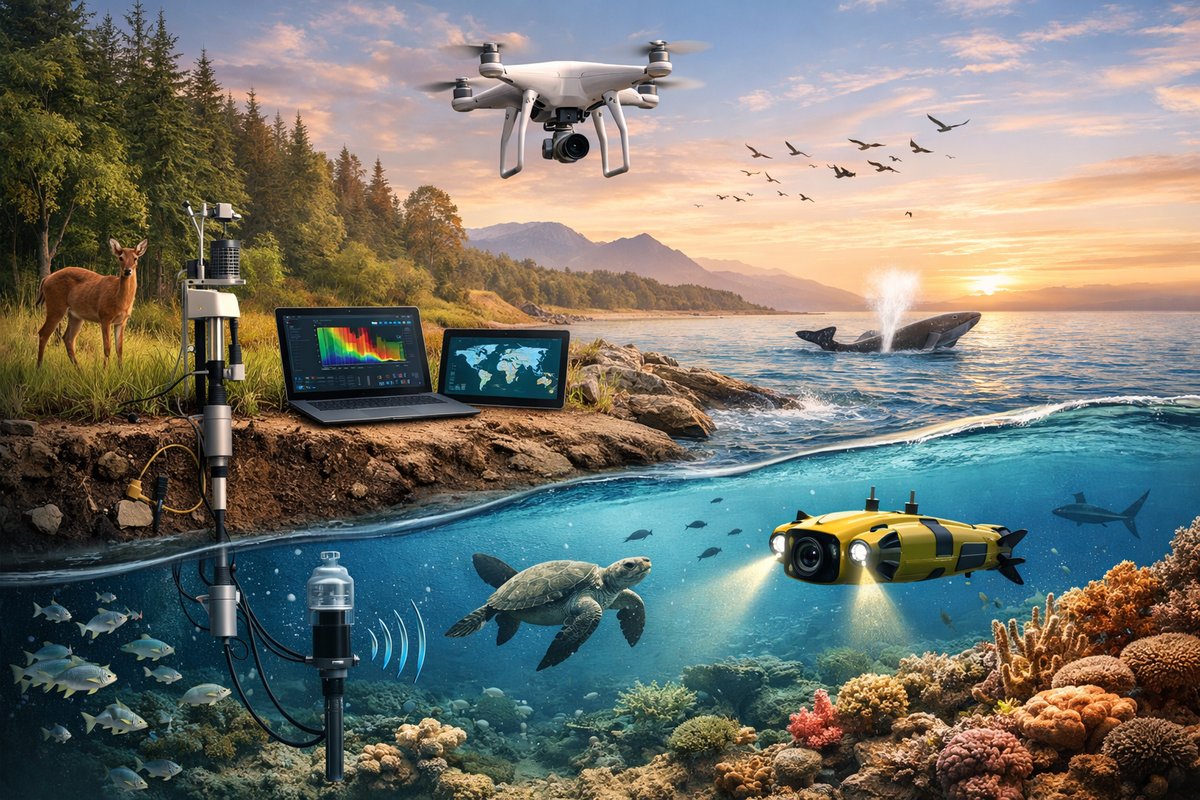
A new collaborative project is weaving together autonomous drones, underwater microphones, soil probes and AI platforms to track biodiversity and ecosystem health across continents and oceans. Early findings reveal unexpected interactions between land and sea, and invite citizens worldwide to join in a collective effort to better understand our planet's living pulse.
In a landmark effort to decode Earth’s complex biological signals, researchers and conservation groups have launched the Living Pulse Initiative, a global sensor network designed to track ecological rhythms from forest canopies to coastal reefs. By integrating a suite of autonomous devices-drone swarms, underwater hydrophones, soil moisture probes and stationary acoustic recorders-scientists aim to capture real-time data on biodiversity trends, climate stressors and species migrations.
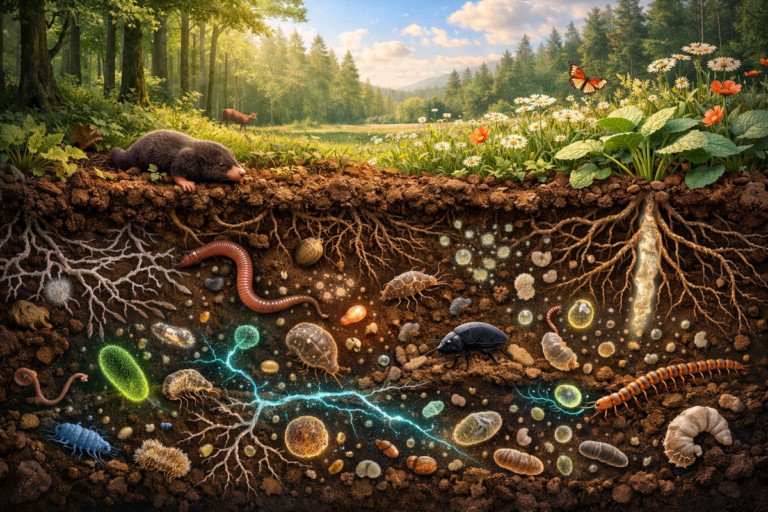
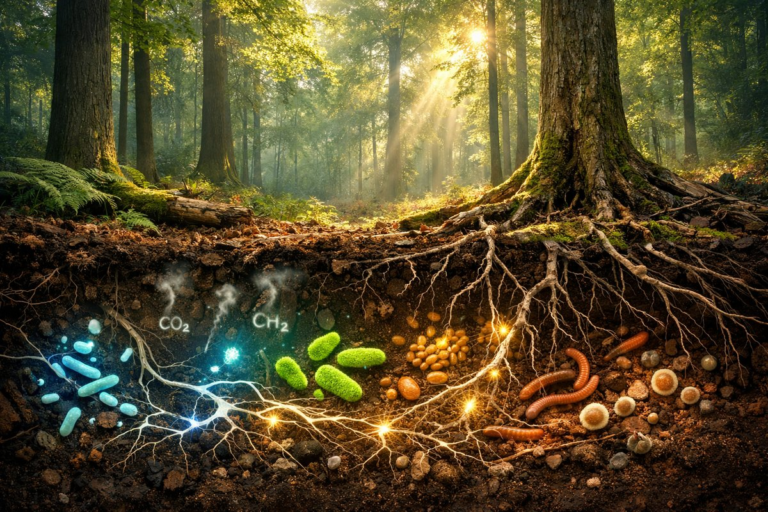
Early deployments in tropical rainforests, savanna grasslands and coral atolls have already generated surprising insights. At a research station on the edge of the Amazon basin, drone-based thermal cameras and bioacoustic sensors recorded nocturnal pollinators vibrating flowers at frequencies linked to air temperature shifts. Underwatersound arrays installed along a remnant coral reef in Southeast Asia picked up fish choruses that intensified when nutrient flows increased after heavy rains upstream. Simultaneously, a network of underground soil sensors mapped fluctuations in moisture and temperature, revealing how microhabitat conditions prime fungal networks to engage in carbon cycling and nutrient exchange.
Pulling these diverse data streams together is a centralized AI platform hosted on a federated cloud infrastructure. Machine-learning algorithms trained on millions of labeled audio and environmental samples can differentiate frog calls, insect buzzes, bird songs and even distant whale vocalizations. A team of data scientists developed predictive models that correlate acoustic patterns with changes in vegetation cover, water quality and species abundance. When a sudden shift in insect call frequency aligns with a spike in soil temperature, the system flags a potential heat-stress event and alerts nearby field teams.
Citizen scientists play a critical role in expanding the network’s reach. Volunteers can host plug-and-play acoustic nodes in backyard gardens, urban parks or schoolyards. An open-source mobile app guides participants through installation, calibration and sample collection. Once active, each node streams encrypted snippets of audio and sensor readings to a secure portal, where volunteers can review automated species identifications and contribute manual annotations. In return, participants receive interactive visualizations that show how their locale’s “living pulse” compares to remote sites in the Arctic tundra or African savanna.
Field biologist Dr. Amina Ruiz, who oversees coastal deployments in the Gulf of Mexico, describes the network’s power to reveal hidden ecological linkages. “We’ve long studied marine and terrestrial systems separately,” she explains. “But when our hydrophones pick up shrimp snapping near mangrove roots, and our soil probes record salinity fluctuations deep in the mud, we begin to see a continuous web of life, not isolated patches. The Living Pulse sensors let us measure the blur between land and sea.”
The initiative’s first phase focused on establishing baseline readings. In Northern Europe, acoustic loggers in boreal forests recorded dawn choruses of passerine birds and woodpecker drumming patterns as winter snow melted. In Central Asia’s steppe grasslands, solar-powered weather stations and insect traps documented the timing of grasshopper emergences under shifting precipitation regimes. Meanwhile, off the coast of East Africa, miniature submersible gliders outfitted with underwater cameras and spectrophotometers tracked coral bleaching events-offering near-instant alerts when water temperatures crossed critical thresholds.
With baseline data in hand, scientists can now detect anomalies more quickly. Last summer, a prolonged heatwave in western North America triggered an alert when bioacoustic sensors registered unusually low call rates among tree-frogs. Simultaneous readings from soil sensors indicated record-low moisture levels. Local wildlife managers mobilized to provide targeted water sources and seed plantings to help amphibian populations weather the drought. Similar rapid responses have since been deployed in Mediterranean shrublands, Amazon floodplains and South Pacific coral lagoons.
The platform’s open-data policy ensures that research institutions, conservation NGOs and indigenous communities can access and analyze the streams. Local partners in Central America are using the data to design wildlife corridors that link fragmented forest patches. In the Australian Outback, traditional custodians blend sensor readings with oral histories to refine fire-management practices that support both biodiversity and cultural heritage. By combining cutting-edge tech with time-honored stewardship, the Living Pulse Initiative seeks to foster resilient ecosystems and livelihoods.
Of course, challenges remain. Powering remote sensors in dense canopies or deep offshore deployments demands robust energy solutions. Solar panels can falter under closed forest canopies, and battery life limits underwater glider missions. To address this, engineers are testing small-scale wind turbines and kinetic harvesters that convert branch movement into electricity. Data transmission also presents hurdles-satellite uplinks remain costly, and local cellular networks can be unreliable. Project teams are experimenting with low-frequency radio links that bounce signals off high-altitude balloons, creating an interoperable mesh network.
Another concern is data overload. The AI platform currently ingests terabytes of audio and environmental records each day. Ensuring data integrity, preventing biases in species identification models and safeguarding privacy for citizen scientists all require continuous refinement. Project leads have established advisory groups with ethicists, data-security experts and indigenous knowledge holders to maintain transparency and equitable governance.
Despite the technical and logistical complexities, the Living Pulse Initiative is gathering momentum. Over the next year, plans call for expanding monitoring to polar sea-ice margins, alpine tundra meadows and remote desert springs. Researchers hope that as more regions come online, the combined dataset will inform global conservation strategies, climate-adaptation policies and biodiversity credit schemes.
Ultimately, the project aims to foster a deeper public connection with the living world. By tuning into the vibrations of beetles, the songs of whales and the hum of forest floors, participants and scientists alike can better appreciate the intricate systems that sustain life. In an era of rapid change, the Living Pulse Initiative offers a dynamic soundtrack to Earth’s resilience-and a reminder that preserving these rhythms depends on collective curiosity, innovation and care.