Location
Mount Vernon, WA 98274

Location
Mount Vernon, WA 98274
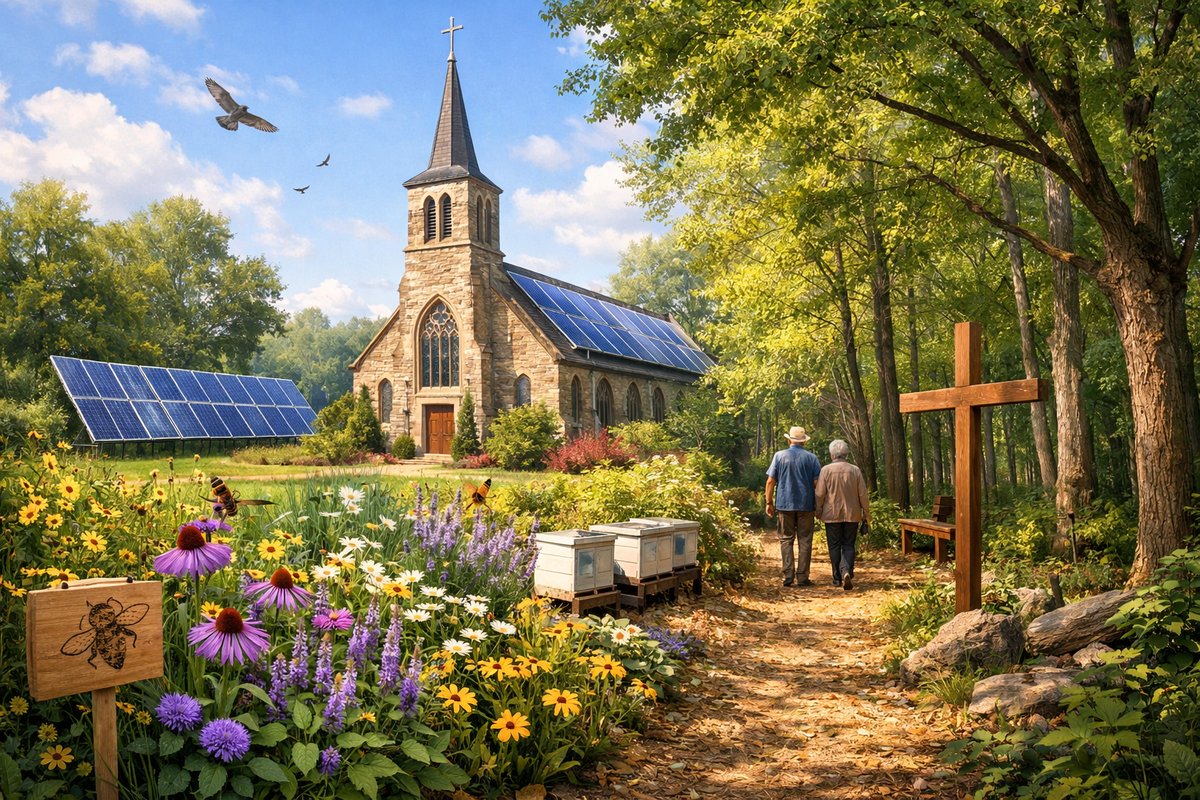
A growing coalition of Christian congregations is turning sacred spaces into hubs of environmental action, from pollinator gardens and solar installations to forest prayer paths. Rooted in theological reflections on creation care, communities across regions are finding fresh ways to connect worship with conservation.
In towns and cities across North America, a quiet movement is gaining momentum: Christian congregations are integrating environmental stewardship into their core ministries, transforming churchyards into demonstration sites for sustainable practices and inviting worshipers to see creation care as a spiritual calling. Last month, more than fifty congregations joined the inaugural launch of the Green Faith Trail, a network of eco-spiritual waystations stretching from urban rooftops to rural woodlands. Participants will follow marked paths through pollinator plots, native tree groves and outdoor chapels, pausing for guided prayers and reflections on the interplay between faith and the natural world.
The Green Faith Trail initiative was organized by a coalition of denominational creation care ministries and interfaith organizations. It seeks to bridge the gap between Sunday worship and weekday witness by offering congregants a hands-on encounter with environmental challenges. At each stop, visitors find interpretive panels explaining local ecology, climate impacts and scripture passages that celebrate the earth. A solar-powered “Prayer Pavilion” at one site is equipped with benches made from reclaimed timber and low-energy LED path lighting, while another features a demonstration apiary showcasing how church gardens can support native bees.
“The idea emerged from conversations with pastors who wanted a tangible way to embody stewardship theology,” says one network coordinator. “Creation care isn’t just an abstract principle-people want to plant trees, build rain gardens and restore pollinator habitats in their backyards and churchyards. This trail connects those scattered efforts into a pilgrimage.”
Early pilot sites saw enthusiastic participation. In an urban neighborhood, a former parking lot was converted into a biodiversity sanctuary, complete with rainwater catchment and raised beds for vegetables, flowers and herbs. Local families volunteer on Saturday mornings, tending to native perennials that attract butterflies and birds. “We used to drive past vacant asphalt every day,” recalls a member of that congregation. “Now, our kids learn how earthworms work, and our elderly neighbors find solace sitting under a maple tree we planted together.”
A rural congregation in the Pacific Northwest has taken a different approach. Their century-old chapel stands beside a small forest fragment. Members enlisted forestry students to conduct an ecological assessment, then worked with volunteers to remove invasive species and reintroduce cedar and fir seedlings. An outdoor meditation area invites small groups to practice centering prayer amid rustling leaves. “It’s a living classroom,” says a deacon who led the project. “We’re reminded that stewardship isn’t just for Sunday-it’s daily care for our common home.”
Data from a recent survey by the National Congregations Study indicate that nearly 58 percent of Protestant churches have launched at least one environmental initiative in the past five years-a 20-point increase over the previous decade. Catholic dioceses have issued statements on climate responsibility, and mainline denominations continue to publish creation care curricula for use in congregational education. Mentorship networks pair experienced church eco-volunteers with congregations just beginning their green ministry journeys.
The theological roots of these endeavors trace back to scriptural texts that celebrate the earth’s goodness and charge humanity with responsible dominion. Clergy and lay educators emphasize that dominion in Genesis does not imply exploitation, but rather faithful guardianship. Sermons on Psalm passages depicting mountains, seas and skies stir congregants’ imaginations, while study groups explore theological reflections on cosmic Christology-seeing Christ as active within all creation.
Some congregations have also embraced solar power. Rooftop panels adorn sanctuaries built decades before such technology was imaginable. One midwestern church installed a 30-kilowatt system that now generates more electricity annually than the building consumes, selling surplus power back to the grid. That project was funded partly by a local grant program aimed at reducing carbon emissions, as well as by a “green pew” giving campaign where worshipers pledged to support renewable energy.
Volunteer-driven recycling and composting programs have become staples at many parish halls. Coffee hours now feature reusable mugs and containers, while event planners seek local and organic snacks. Gardening ministries coordinate seed swaps and host workshops on soil health. Youth groups study climate justice, connecting environmental issues with social equity, tackling topics such as food deserts and water quality.
Yet challenges remain. Some congregations struggle with upfront costs for solar installations, and older church buildings can be difficult to retrofit. Theological hesitancy persists in circles that view environmental activism as politicized. To address these concerns, creation care advocates stress a values-driven approach: care for the vulnerable, gratitude for divine provision and a humble recognition of human impact on ecosystems.
Funding partnerships with nonprofits and local government agencies have helped ease financial barriers. At one site, a church’s rain garden project received a municipal stormwater grant. In another, volunteers raised funds through bake sales, concerts and online crowdfunding. Shared resources-such as low-interest loans and discounted equipment-flow through denominational networks. Some congregations opt for gradual upgrades, starting with LED lighting and programmable thermostats before moving on to larger-scale projects.
Environmental educators note that these faith-inspired efforts often reach beyond church walls. Walks and tree-planting days are open to neighbors, forging community alliances. Local schools collaborate on nature journaling workshops held in church gardens. Food pantries stocked by church orchards supply fresh produce to families facing food insecurity. In so doing, congregations broaden their witness, demonstrating how spiritual practice and civic engagement can reinforce each other.
Looking ahead, the Green Faith Trail coalition plans to expand its network, offering digital resources for churches in remote areas. Virtual tours and downloadable activity packets will allow congregations without easy trail access to create mini-pilgrimages on their campuses. A training series will equip faith leaders with liturgies and lesson plans that weave ecological themes into worship services and youth curricula.
For many participants, these projects have rekindled a sense of wonder. Worshipers report feeling more connected to daily rhythms of nature-sunrise services on the solstice, guided nights under full moons, and harvest festivals celebrating bounty. Environmental stewardship has moved from a peripheral concern to a central expression of faith, highlighting the conviction that caring for creation honors the Creator.
As the movement grows, churches are finding that sustainable practices and spiritual formation go hand in hand. By planting seeds-literal and metaphorical-they seek to demonstrate love for neighbor, gratitude for God’s gift of the earth, and hope for future generations. In the words painted on a trail marker at one site: “Where faith and forests meet, new life springs forth.”