Location
Mount Vernon, WA 98274

Location
Mount Vernon, WA 98274
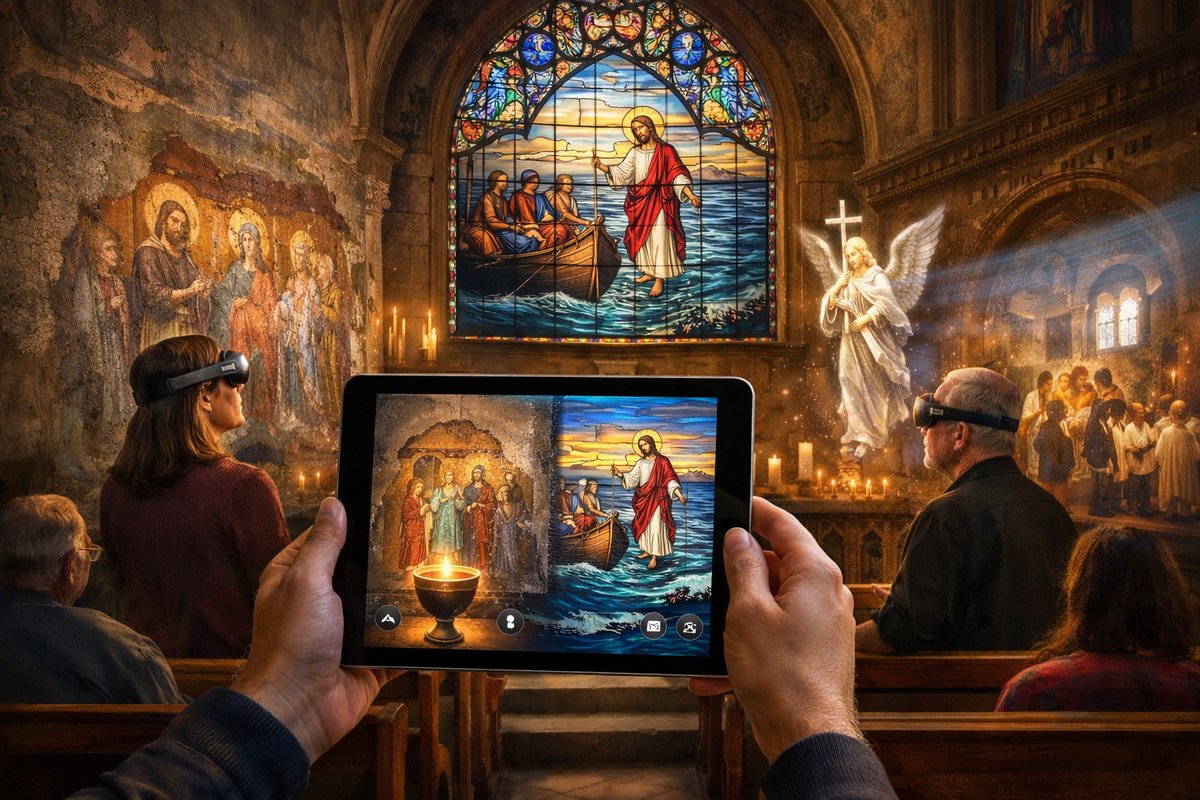
Historic and contemporary congregations across the country are deploying augmented reality tools to animate centuries-old stained glass, murals, and relics, inviting worshippers into an interactive encounter with faith heritage. From digital reconstructions of lost frescoes to immersive audio-visual tours, this melding of technology and tradition is reshaping how communities experience sacred spaces.
In a century-old cathedral nestled in a midwestern town, parishioners donned lightweight augmented reality headsets during the evening vesper service. As the lights dimmed, the flicker of candlelight was joined by digital projections that brought to life angels hovering above arches, the original pigments of medieval frescoes, and animated calligraphy tracing the words of ancient hymns overhead. It was a service unlike any other-a seamless blend of ritual and innovation that has sparked fresh conversation about what it means to experience the sacred in a digital age.
Church leaders say the pilot program, launched earlier this spring, grew out of a desire to engage younger generations raised on screens without sacrificing the reverence and mystery central to Christian worship. “Our stained glass windows tell stories of patience, sacrifice, redemption-narratives that still resonate,” said one rector. “But when you overlay animations that highlight details and play a soundtrack quoting the original Latin inscriptions, people pay closer attention. They linger. They ask questions again.” Digital filters reveal chipped paint and weathered stone replaced by vivid color, while short video clips tell the lives of saints portrayed in each pane. Visitors report feeling immersed in both history and hope.
Across town, a small parish with limited resources has partnered with a nearby university’s digital lab. Theology students volunteer to create 3D models of the church’s wooden carvings and brass candelabras. Thanks to open-source AR software, these reconstructions appear to float beside the physical objects, annotated with interactive pop-ups that describe biblical themes, construction techniques, and the voices of parishioners who commissioned them centuries ago. On any smartphone or tablet, congregants can scan a pew end and discover how the early settlers financed their building one brick at a time, forging a tangible connection between past generosity and present stewardship.
Worship isn’t the only setting transformed by AR. Sunday school classrooms are testing digital prayer mats that visually map each step of a familiar prayer sequence. Children follow glowing footprints leading to stations where they touch virtual tokens-like a loaf of bread or chalice-and hear gentle narration about the Eucharist, its symbolism, and how gratitude infuses everyday life. Educators report a surge in curiosity, as students huddle in pairs and share newly discovered details, often pausing lessons to ask for more stories. “It’s not a substitute for personal guidance,” emphasized a director of youth ministry, “but a spark that leads children to ask deeper questions and talk about their faith with parents and mentors.”
Behind the scenes, technology teams work closely with clergy to ensure the storytelling remains consistent with doctrine and liturgical norms. Animators consult theological advisors on iconography, while digital artists receive training in respectful representation. Servers are set up to stream high-resolution content without disrupting already fragile church networks. Local sponsors cover hardware costs in many cases, seeing the project as an investment in heritage preservation. Foundations focusing on cultural conservation have earmarked grants specifically for faith-based AR initiatives, recognizing their potential to attract wider audiences to historic sites that might otherwise struggle to remain open.
Visitors from other faith traditions have begun requesting tours, curious to see how Christians translate sacred narratives through emerging media. Interfaith panels hosted at the cathedral lobby foster dialogue about technology and worship across religions. A Buddhist monk praised the approach as a creative way to bring scripture to life, while a Jewish rabbi noted similarities with digital tools used in Torah study. The project director hopes this crossover will encourage joint events and partnerships, reinforcing faith’s role in public life rather than confining it to institutional walls.
One of the most profound impacts emerges during contemplative services. In a chapel dedicated to memorial prayers, a projection of a flickering hearth glows on the altar wall. Light smoke swirls around a stylized tree of remembrance, and soft choral music emerges when worshippers approach. As they stand in silence, names of loved ones appear gently on screen, accompanied by their favorite hymns or prayers recorded by family members. The combination of personal audio, visual ceremony, and tactile elements-holding a physical candle-has drawn tears, gratitude, and a sense of collective healing. “It gives people permission to sit with grief,” said a pastoral counselor, “and reminds them that technology, when sensitively applied, can carry the weight of sacred emotion rather than distract from it.”
Critics argue that overlaying digital images risks turning worship into entertainment. Some traditionalists have voiced concern that screens-even in AR form-might pull focus away from prayer and sacrament. Church leadership acknowledges the tension and insists the technology remains optional, available only during special services or designated tours. Regular Sunday masses continue without any multimedia enhancement. The choice, they say, empowers individuals to decide how they wish to engage with the space.
Early attendance data is encouraging. The cathedral reported a 20 percent increase in evening service attendance and a surge in midweek visitors who come specifically for the AR experience. Donations directed toward maintenance and outreach programs have risen alongside. Participants credit the novelty but also the deeper sense of connection that follows. One retiree shared how exploring the digital layers prompted new reflections on familiar scriptures, while a college student said she planned to return with her friends to show them the hidden details she uncovered.
Looking ahead, planners envision expanding content to include seasonal reflections, such as animated Advent wreaths that glow with different colors each Sunday, or digital Stations of the Cross that feature narrated meditations from modern writers alongside classical artwork. They’re exploring partnerships with musical ensembles to synchronize live choir performances with AR visuals, creating multisensory concerts that honor the musical heritage of centuries-old choirs. Mobile app developers are prototyping custom filters so remote users can join in virtual pilgrimages from anywhere in the world, preserving a sense of communal worship even when travel isn’t possible.
While augmented reality may feel cutting-edge, project leaders stress that the core impulse remains age-old: inviting people to lean into mystery, to see more deeply, and to remember that faith stories aren’t static artifacts but living narratives that speak to each generation. They believe this blend of craftsmanship, artistry, and technology can revitalize spaces that might otherwise struggle to remain relevant or accessible. By situating high-tech tools within low-tech stone walls, churches are offering a new lens on ancient truths.
Unfolding across cathedrals, chapels, and parish halls, this movement does more than highlight artistic treasures. It cultivates wonder, sparks dialogue, and opens fresh channels for faith formation. Whether through a glowing angel hovering above an altar or an interactive prayer guide in a children’s class, augmented reality is proving to be a surprising ally in the ongoing work of inviting hearts to kneel, minds to ponder, and communities to come together in shared encounter with the divine.