Location
Mount Vernon, WA 98274

Location
Mount Vernon, WA 98274
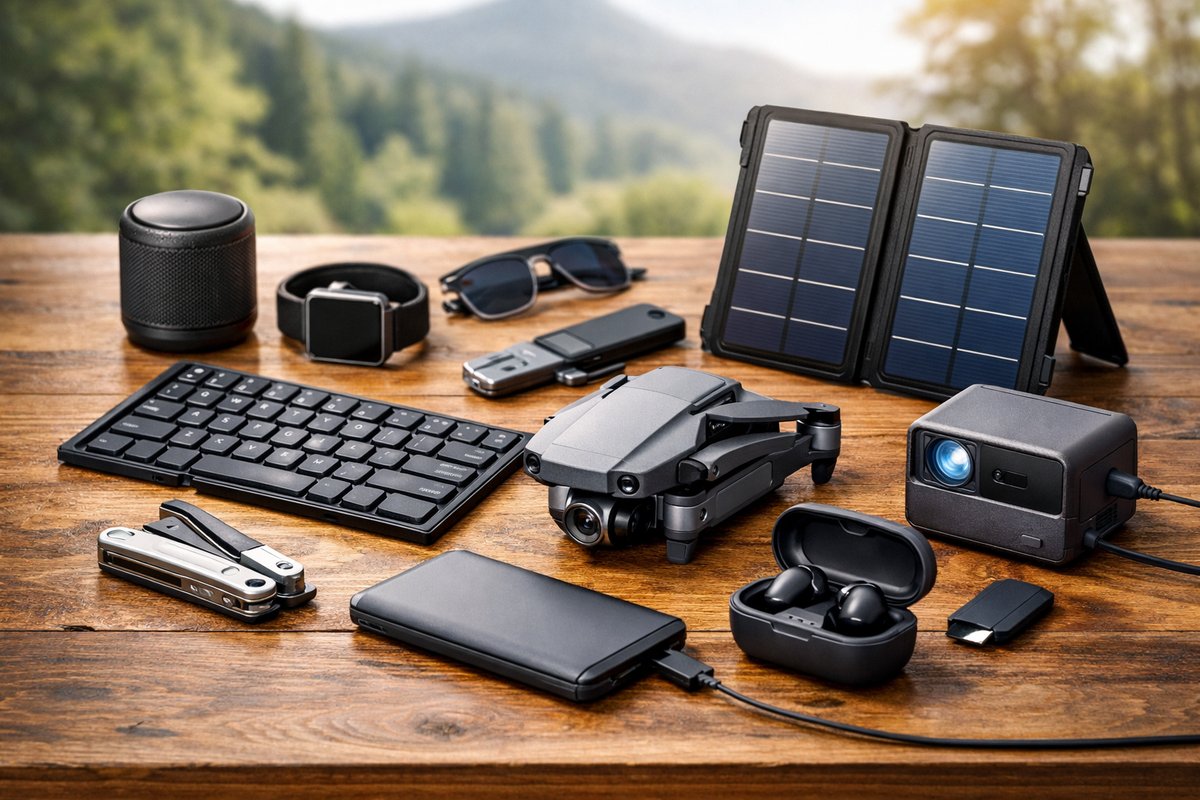
From foldable keyboards to solar-powered chargers, the latest wave of miniaturized tech is going far beyond novelty. These ultralight, multifunctional tools are reshaping how we work, play, and connect-without weighing us down.
In a bustling café, a graphic designer unfurls a slim, foldable keyboard onto a tabletop barely larger than her sketchbook. A few taps later, her smartphone transforms into a robust workstation. Across town, a commuter steps off the train and slips a palm-sized projector into her tote, ready to share a last-minute presentation. These scenes are becoming everyday sights as an emerging generation of ultra-portable gadgets reimagines what small-scale tech can do.
Not so long ago, the idea of carrying powerful computing or multimedia tools in the palm of your hand was the stuff of science fiction. Today, advances in battery density, display miniaturization, wireless protocols and high-efficiency solar cells are converging to deliver devices that weigh ounces instead of pounds, yet still pack enough performance to keep pace with our on-the-go lifestyles.
Analysts forecast that the global market for pocket-sized devices and micro-gadgets will exceed $45 billion by 2028, driven by demand for flexible work setups, outdoor adventure gear and experiential entertainment. “People want tech that adapts to their day, rather than forcing them to adjust their routines,” explains Dr. Marianne Patel, a materials scientist specializing in energy storage. “That requires not only smaller form factors, but smarter power management and versatile functionality.”
One of the fastest-growing categories is foldable input devices. Once dominated by rigid Bluetooth keyboards, modern variants use bending circuitry and magnetic hinges to collapse into credit-card-thin stacks. The result is a satisfying typing experience on par with desktop peripherals, without sacrificing portability. Designers are even experimenting with self-healing polymers that seal minor scratches automatically, extending the lifespan of these daily drivers.
Meanwhile, pico projectors-once limited by dim lasers and bulky cooling fans-have undergone a renaissance. New diode arrays can output 500 lumens from a unit no bigger than a candy bar, while passive cooling modules eliminate whirring fans. For students, this means instant movie nights or pop-up study sessions in dorm lounges. For remote workers, it means on-the-fly presentations in co-working spaces, complete with crisp visuals and stereo-quality audio.
But compact tech isn’t just about work and entertainment. Outdoor enthusiasts are embracing ultra-light solar chargers that double as waterproof phone cases, merging protection and power generation in a single clamshell design. These devices leverage gallium arsenide cells-usually reserved for aerospace applications-to deliver up to 10 watts of charging capability, rivaling wall adapters. In practice, a couple of hours under bright sun can fully top off most smartphones or GPS trackers.
Behind the scenes, material innovations are driving these leaps. Graphene-infused battery electrodes allow faster charging cycles and higher energy density, while nanocoatings on circuit boards repel moisture and dust without adding bulk. The net effect is gadgets that can endure rainstorms, beach trips or backpacking routes, all while running for days on a single charge.
Beyond hardware, software is playing a key role. Modular companion apps let users configure and combine devices in unexpected ways. Picture linking a foldable keyboard, a portable translator dongle and a vest-mounted battery pack into a pop-up travel station. Or tapping into an AI-driven audio assistant embedded within a pair of tiny earbuds that translate foreign phrases in real time, support voice-to-text dictation and even detect signs of hearing fatigue.
Such integration is fueling creativity across fields. Independent filmmakers are using micro-gimbals and pocket-sized light panels to shoot documentary footage in tight quarters. Field researchers in remote ecosystems deploy drone-equipped moth traps, capturing high-resolution images of insects without disturbing habitats. And digital artists combine smart pens with foldable touchpads to sketch on the go, then instantly upload layered files to cloud render farms.
Of course, there are challenges. Miniaturization often carries premium price tags, and the ecological toll of rapid device turnover is a growing concern. Industry groups are responding with modular repair kits-snap-apart housings, swappable batteries and recyclable circuit modules-that extend product lifespans and reduce e-waste. Some startups are even trialing buy-back programs where customers return aged gadgets for recycling credits.
Privacy advocates are keeping a close eye on these pocket companions as well. Tiny cameras and microphones embedded in everyday tools pose new surveillance risks. In response, manufacturers are embedding hardware kill switches and open-source firmware options, giving users transparent control over sensor activation and data collection.
For the average consumer, the proliferation of ultra-portable tech raises an exciting question: how will you harness this newfound mobility? Whether you’re a digital nomad craving a clutter-free workstation, a weekend hiker in need of reliable off-grid power, or simply someone who loves carrying less while doing more, today’s mini gadgets are blurring the line between pocket gear and powerhouse gear.
As engineers and designers continue to refine materials and power systems, the next wave promises even more surprising alliances. Imagine clothing that charges devices through body heat, or smart badges that project guided museum tours onto gallery walls. We’re on the cusp of an era where the smallest chips unlock the grandest experiences, and carrying possibility-in your pocket-has never felt so powerful.