Location
Mount Vernon, WA 98274

Location
Mount Vernon, WA 98274
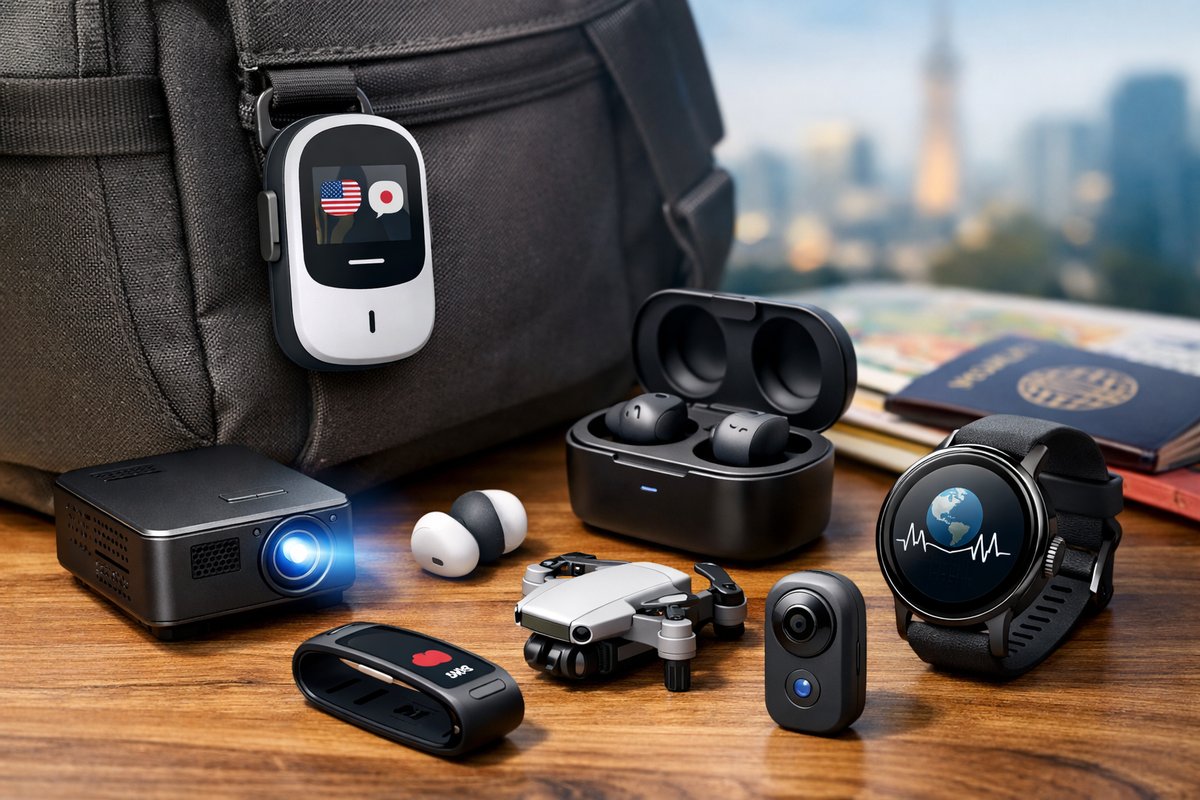
From palm-sized projectors to wearable language translators, a wave of miniature gadgets is transforming how we work, explore, and connect. These ultra-compact innovations pack advanced sensors, AI capabilities, and power management into devices you can slip into a pocket or clip onto your bag.
In a world saturated with screens, cords, and bulky hardware, a different kind of revolution is underway: one that shrinks powerful functions into palm-sized gadgets. Recent market analysis by a leading research firm reveals that shipments of ultra-portable devices grew by nearly 20 percent last year, reflecting a surge of curiosity about lightweight tools that can go anywhere. From digital nomads chasing the next horizon to parents juggling work and play, the miniaturization of tech is making complex capabilities feel effortless and immediate.
Imagine delivering a presentation without hauling a laptop or bulky projector case. A pocket-sized projector, no larger than a paperback novel, can beam crisp images onto any flat surface, whether you’re in a café corner or on a park bench. Integrated LED lamps now offer enough brightness for casual meeting rooms, and many models include built-in speakers that fill a small space. As professionals gather offsite more often, these handheld projection units are stepping in to streamline setup and tear-down, turning any impromptu spot into a collaboration zone.
While big screens shrink, language barriers are dissolving too. Wearable language translators-lightweight devices that tuck inside a jacket pocket or clip onto a lapel-combine voice recognition and neural-network translation to deliver near-instant interpretations across dozens of languages. Early adopters on international trips report greeting locals in their native tongue within seconds, transforming cross-border conversations into seamless exchanges. Behind the scenes, these gadgets rely on offline AI models that handle everything on-device, preserving privacy and ensuring fast responses even in remote areas with spotty connectivity.
Environmental monitoring is also going mobile. Researchers and outdoor enthusiasts can now slip air-quality sensors into a backpack or mount them on a bike helmet. These palm-sized modules measure particulate matter, volatile organic compounds, temperature, and humidity, streaming real-time data to a smartphone app. A pilot program in urban parks has already mapped pollution hotspots with unprecedented granularity, informing community gardens and wellness events. For anyone keen on personal air tracking-whether to optimize jogging routes or to understand indoor ventilation-these mini sensors offer desktop-grade insights without the bulk.
Creativity goes compact, too. Electronic musicians have embraced pocket-sized synthesizer units that deliver analog-style sound engines and tactile controls in a breeze-proof housing. Songwriters can capture loops anywhere, layering beats in a hostel dorm or under a festival tent. Photographers and videographers are finding a similar freedom in miniature gimbals and stabilizers, less than half the size of traditional rigs. These devices fold down, fit into camera bags, and deploy in seconds, turning smartphones into cine-quality shooters for documentaries, vlogs, or spontaneous art projects.
Behind these marvels is a common thread: smarter power management. Advances in battery chemistry and charging efficiency have compressed hours of runtime into slim frames. High-density cells now slip into unibody enclosures that remain warm to the touch but never feel bulky. Wireless charging mats and magnetic power banks gratify the grab-and-go lifestyle, so you can top up multiple devices without rummaging for different cables. Whether powering a translator, projector, or portable speaker, these compact energy hubs ensure you stay connected throughout the day.
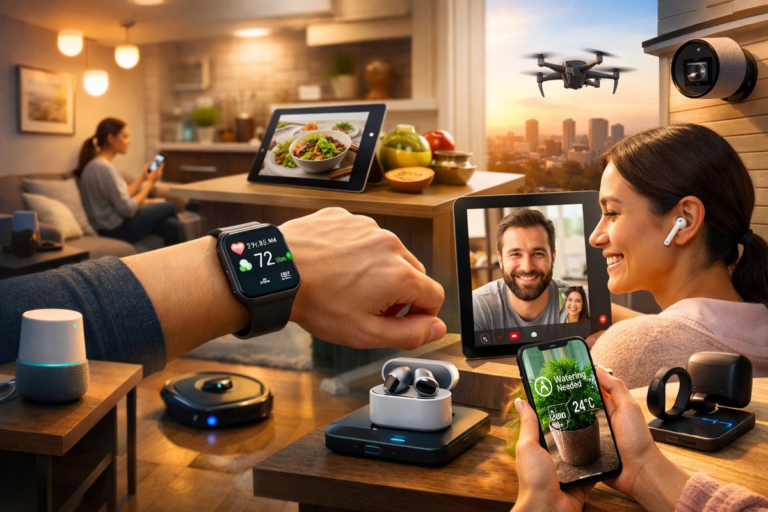
Everyday carry is also getting a smart upgrade. Bluetooth trackers no larger than a coin attach to keys, wallets, or bags, emitting signals that help locate lost items in seconds. Some models even feature ultra-wideband radio for pinpoint accuracy within a few inches, and community-sourced networks can detect lost tags beyond your own device range. Meanwhile, smart rings equipped with biometric sensors slip onto a finger, monitoring heart rate and sleep quality without the bulk of a wristband. When paired with mobile health apps, they offer discreet wellness feedback that adapts to your lifestyle rather than interrupting it.
Privacy and security concerns have shaped the design of this next wave of mini gadgets. On-device AI handles sensitive tasks like face recognition or voice decoding without sending raw data to the cloud. End-to-end encryption is standard on communication tools and translation devices, keeping personal conversations private. As tiny tech becomes woven into everyday routines, manufacturers are prioritizing user control-offering clear toggles for data collection, storage, and sharing, so you decide exactly how much information stays local versus what travels to servers.
The drive toward pocket-sized powerhouses is far from a novelty trend. It reflects a deeper shift in how we value both mobility and agency. As more functions move into lean hardware-projectors, translators, sensors, wellness wearables-we’re redefining the boundaries of what “portable” means. No longer limited to charging up a smartphone, portable tech now spans work, health, creativity, and environmental awareness, all wrapped up in devices that fit in a coat pocket or clip to a backpack strap.
Looking ahead, the line between gadgets and everyday objects will blur further. Smart materials, flexible circuits, and micro-LED displays promise wearable patches that provide both notifications and health feedback. Foldable phones and tablets will fold again, nestling into the width of a wallet. And modular ecosystems will let you swap sensor heads, audio modules, or input methods on the fly-customizing a toolkit that stays light but grows with your needs. As these innovations cross from early adopters to mainstream markets, they’ll redefine convenience on a fundamental level: making full-featured computing, projection, translation, and sensing as commonplace as checking the time.
In the coming months, look for palm-sized marvels at trade shows, on crowdfunding platforms, and in storefront windows. Whether you’re a business traveler, a field researcher, a content creator, or simply someone who wants more capability without more bulk, tiny tech offers a gateway to new experiences. The real story isn’t just how small these gadgets can get, but how expansively they can reshape our routines, our adventures, and our interactions. In that sense, the smallest devices may cast the biggest impact of all.