Location
Mount Vernon, WA 98274

Location
Mount Vernon, WA 98274
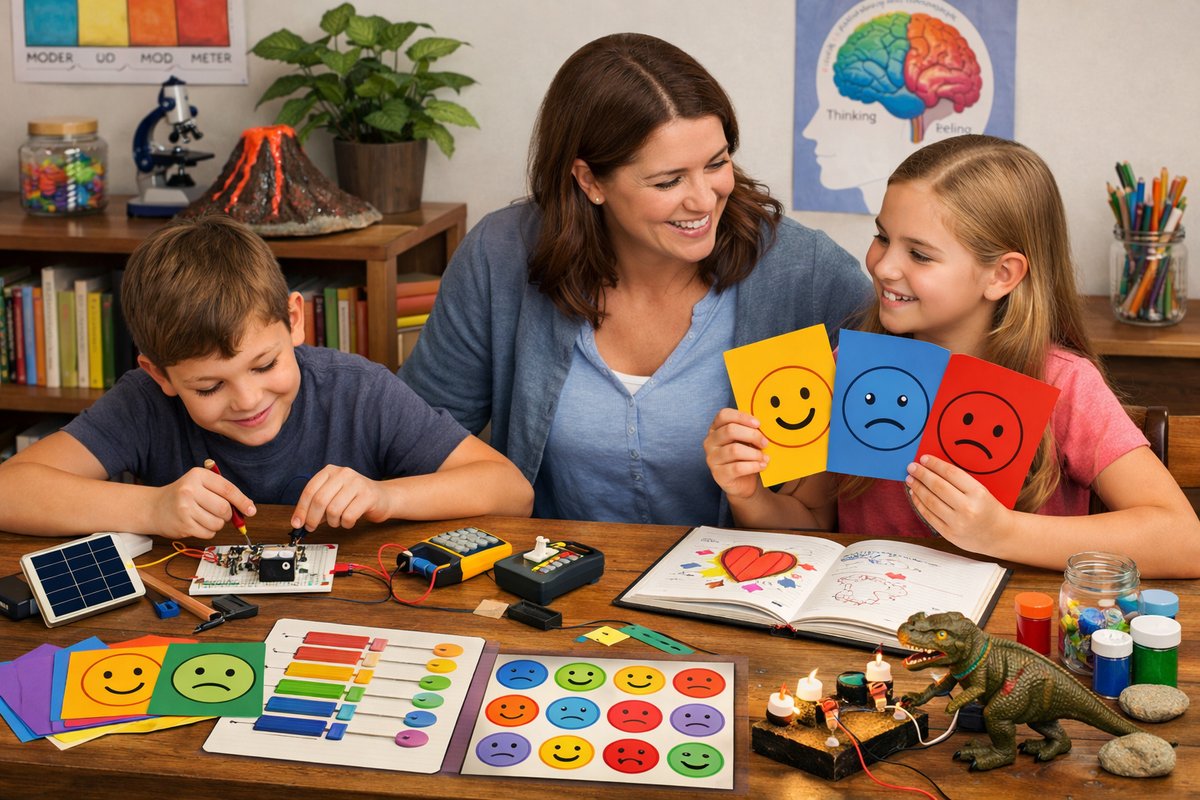
As families seek deeper connections between heart and mind, innovative at-home learning approaches are weaving emotional awareness into hands-on exploration. From color-coded feeling cards to DIY circuitry adventures, parents and educators report surprising gains in engagement and resilience.
Across living rooms and kitchen tables, a quiet revolution is underway. Families once focused solely on math drills and reading logs are now pairing every lesson with an invitation to explore feelings. In homes from urban lofts to suburban basements, parents are blending emotional literacy tools with STEM activities, storytelling exercises and tactile play-a trend experts are calling the era of “emotion-infused learning.”
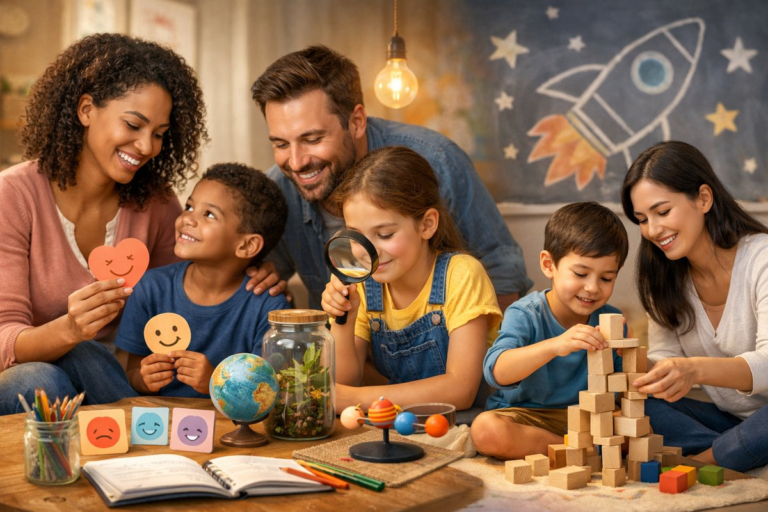
After two years of remote schooling, many parents noticed that academic progress alone didn’t capture their children’s well-being. One mother in Portland shares how a simple deck of color-coded emotion cards transformed her son’s attitude toward geometry: he would choose a blue card for calm when building shapes, a yellow card for joy when discovering new angles. That daily ritual, she says, helped him tackle challenging problems with less frustration.
Researchers at a leading child development institute recently published findings showing that learners who regularly pair reflective prompts with math or science experiments demonstrate higher perseverance and a 15% gain in creative problem solving over a six-week period. The study’s lead author credits the boost to what she calls “emotional anchoring”: learners anchor abstract concepts to personal feelings, forging stronger cognitive pathways.
Families are embracing a variety of tools to spark these connections. One popular option is an emotion journal designed for kids, featuring guided prompts and stickers. On a rainy afternoon in Chicago, a 9-year-old used it to record her reaction to a homemade solar oven experiment. She wrote about both the frozen ice cream that refused to melt and the pride she felt in predicting the outcome. That dual reflection gave her a sense of ownership over the process, her mom notes.
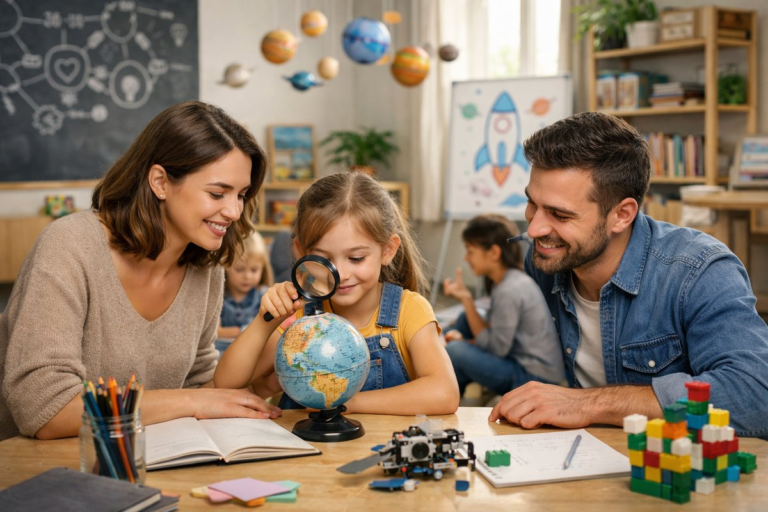
Not all solutions are paper-based. DIY circuitry kits with modular sensors are finding their way into playrooms, encouraging children to build simple machines while monitoring heart rate or temperature data. In one Brooklyn household, siblings wired a basic light circuit to a pulse sensor. As they calmed down, the light dimmed naturally-a real-time lesson in physiology and control. Parents say it turned what might have been a tense evening into a collaborative exploration of cause and effect.
Beyond gadgets, creative role-playing scenarios are helping youngsters practice empathy. A family in Seattle stages a miniature “community clinic” where one child takes on the role of doctor, examining stuffed-animal patients. With a bag of foam shapes and an anatomical poster, they talk through heartbeats, breathing and emotions. It’s not just drama-it’s anatomy, social skills and emotional vocabulary rolled into one.
Community learning pods are also adapting. In a warehouse-turned-classroom outside Denver, a local collective hosts weekly pop-up “Emotion Labs.” Facilitators guide small groups through mindfulness exercises followed by hands-on design challenges, like crafting paper circuits shaped as emojis. Parents observe as children negotiate materials and share feelings, then celebrate prototypes that reflect both technical skill and personal insight.
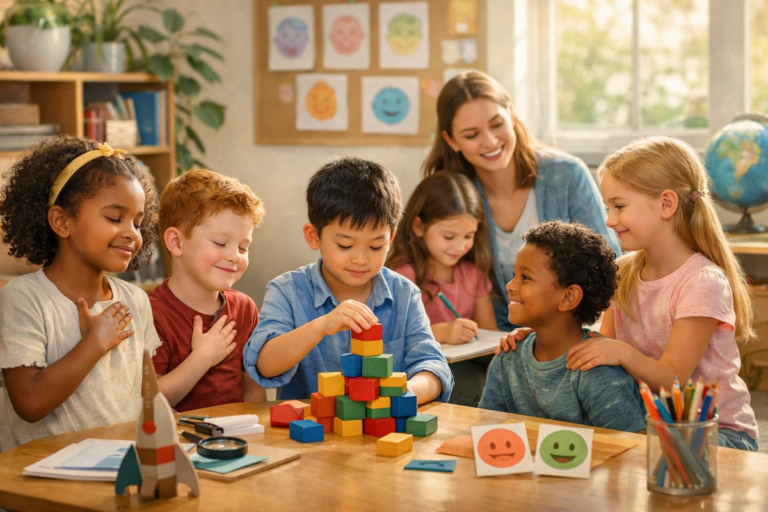
Educators are taking note of classroom successes too. Some schools have begun dedicating a corner of the room to emotion-infused stations-a quiet writing nook next to a chemistry set, or a sandbox adjacent to a robotics corner. When students step from one zone to the other, they’re encouraged to jot down a feeling and a scientific hypothesis before switching tasks. Teachers report calmer transitions and fewer behavioral disruptions.
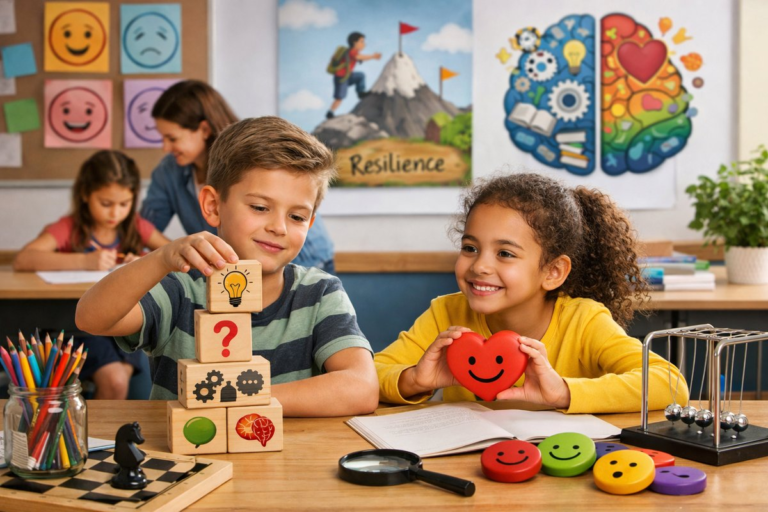
Experts emphasize balance. “We don’t want every lesson to feel like therapy,” cautions a child psychologist who consults with public schools. “The key is intentional pairing: a five-minute emotional check-in before diving into a hands-on project can yield outsized benefits.” She recommends simple tools-like a set of washable mood markers or a small collection of fidget-friendly stress balls-to gently nudge reflection without derailing academic flow.
Parents appreciate the flexibility. A dental hygienist in Miami explains how she uses a sand-and-water tray to help her 7-year-old sibling group breathe deeply after a tough spelling test. Once calm, they race to construct towers with biodegradable building blocks, marveling at balance and architecture. “It’s not rocket science,” she laughs. “But when emotions and exploration dance together, learning sticks.”
Digital platforms have joined the movement. A new story-creation app invites children to script and illustrate short adventures, then share them with family members. Each chapter ends with an emotion scale: happy, curious, frustrated, excited. As kids select their feeling icons, they organically revisit narrative arcs, refining both writing skills and self-awareness. Educators report that reluctant writers become more engaged when their own experiences drive the plot.
Some skeptics worry that layering too much reflection onto technical tasks could slow down progress. Yet pilot programs show that the “emotion break” rarely exceeds ten minutes, and it often reignites focus for the next round of problem-solving. A robotics coach in Austin recalls a particularly stubborn motor challenge: after fifteen minutes of frustration, she led her team through a quick breathing exercise. The next attempt worked flawlessly.
Stories like these are fueling a growing market for hybrid learning tools. Toy makers are debuting construction sets packaged with emotion exercise guides. App developers are embedding mood-tracking stickers into coding puzzles. And small publishers are printing pivotable deck games that let kids match feeling words with physics principles.
As the school year collars its final stretch, many families are eager to sustain momentum. Teacher conferences now include discussions about at-home emotional STEM activities, and neighborhood Facebook groups exchange insider tips on which empathy-building board game best complements geometry lessons. One parent sums up the trend this way: “When kids see how their minds and hearts work together, even the hardest concepts feel within reach.”
The movement’s next frontier may lie in community partnerships-libraries hosting “feelings-and-formulas” workshops, museums designing exhibits that balance empathy scenarios with sensory experiments. If recent months are any indication, that blending of curiosity and compassion is poised to redefine what it means to learn at home.