Location
Mount Vernon, WA 98274

Location
Mount Vernon, WA 98274
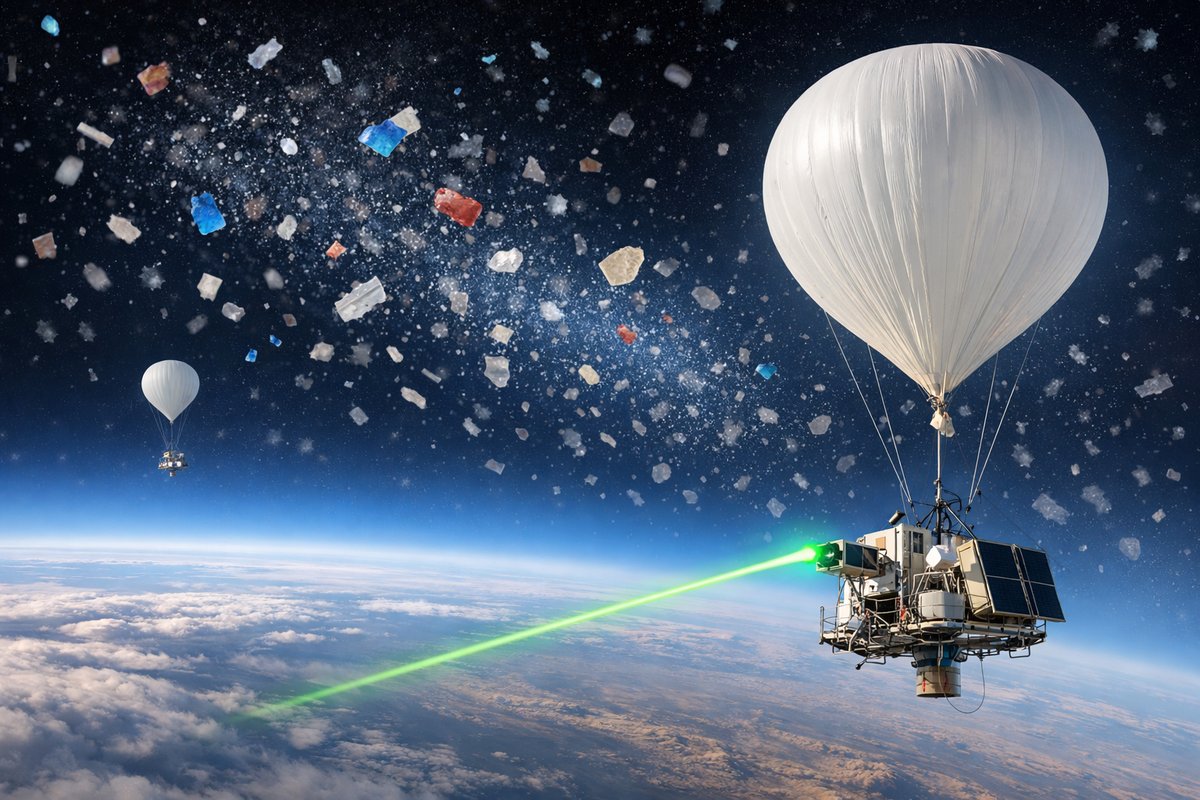
A recent international study reveals the surprising presence of microplastic particles high in the stratosphere, prompting questions about long-range transport, climate impacts, and human health. Using high-altitude balloons and laser-based sensors, scientists have mapped airborne plastic fragments up to 20 kilometers above ground, highlighting a new frontier in environmental monitoring.
From remote mountaintops to bustling city streets, microplastic particles have already been detected in some of the planet’s most inaccessible corners. Now, an international team of atmospheric researchers has taken pollution sampling to new heights-literally-by mapping microplastics in Earth’s stratosphere. Deploying a fleet of high-altitude balloons equipped with precision air-sampling instruments and laser-based detection systems, the study documents plastic fragments and fibers at altitudes reaching twenty kilometers. The findings, published in a recent peer-reviewed report, open a window on a hidden dimension of human impact, raising questions about long-range transport mechanisms, potential effects on cloud formation, and unknown risks to aviation crews and high-altitude ecosystems.
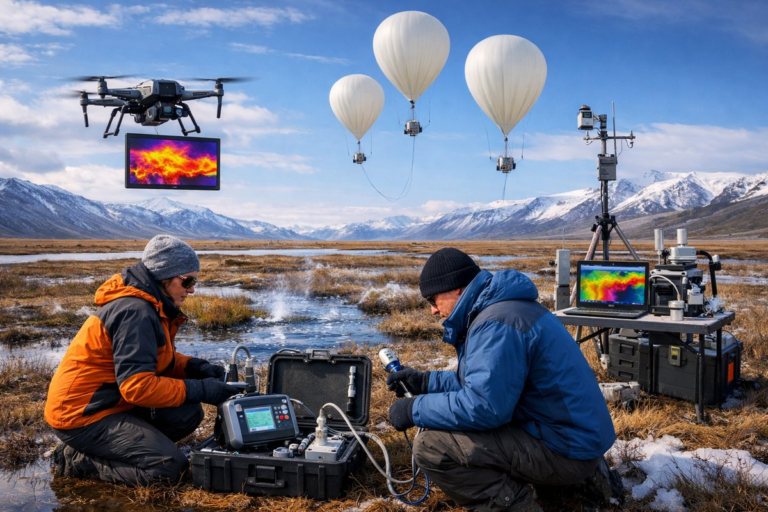
In a field campaign that spanned six continents, scientists launched over thirty high-altitude balloons from remote airstrips in Patagonia, central Asia, northern Europe, and desert regions in Australia. Each balloon carried a custom-built sampling pod containing ultra-fine polytetrafluoroethylene (PTFE) filters, miniature vacuum pumps, and optical particle counters. Once the balloons reached their target altitudes, the pumps drew ambient air across the PTFE filters, capturing particles down to a few micrometers in size. Back on the ground, samples were analyzed using Fourier transform infrared spectroscopy and Raman microscopy to identify polymer types and characterize particle shapes.
Complementing the physical sampling, researchers integrated a compact laser-based aerosol spectrometer into several pods. By emitting a finely tuned laser beam and measuring light scattering, the spectrometer counted and sized airborne particles in real time. Data streamed via satellite link, allowing the team to map vertical profiles of microplastic concentration. In many flights, concentrations peaked between fifteen and eighteen kilometers-levels previously assumed to be largely free of human-made debris. The detected particles included common polymers such as polyethylene, polypropylene, and polystyrene, often in the form of microscopic fibers shed by synthetic textiles.
Perhaps the most striking discovery was consistency: despite vastly different launch sites and weather systems, microplastic signatures emerged at all sampling locations. Prevailing wind patterns and jet streams appear to transport particles thousands of kilometers from urban centers and coastal regions. Some balloons detected a sudden spike in concentration when passing through cross-border air streams that link the Northern Hemisphere’s industrial belt. Elsewhere, desert launches revealed that arid dust storms can lift local sand and plastic debris into higher layers, where swift winds carry them across oceans.
The presence of microplastics at stratospheric altitudes carries implications that extend beyond pollution tracking. In the upper atmosphere, microscopic particles can serve as condensation nuclei for cloud droplets, potentially altering cloud microphysics and regional climate patterns. Laboratory studies suggest that plastic fragments may influence ice nucleation in cirrus clouds, affecting radiation balance and precipitation. While the net impact remains uncertain, researchers argue that these airborne particles could represent an unaccounted factor in climate models.
Beyond climate concerns, the study highlights questions about human health and aviation safety. Pilots and flight attendants spend hours at cruising altitudes, breathing air that may now contain trace plastic fibers. Although concentrations are low compared to ground-level urban environments, the long-term effects of inhaling polymer particles at altitude are unknown. Similarly, high-altitude research stations, weather observatories, and even sensitive atmospheric instruments could be vulnerable to contamination by these microscopic travelers.
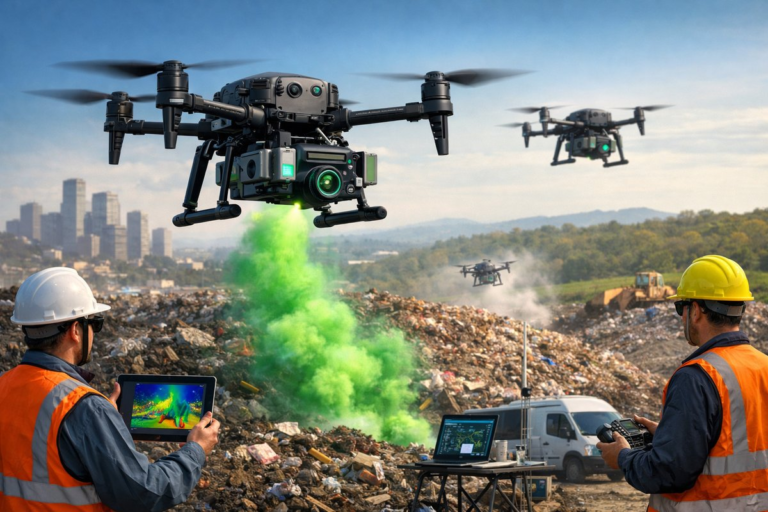
Atmospheric chemists not involved in the study are taking notice. Several research groups are now planning follow-up campaigns using unmanned aerial vehicles equipped with advanced sampling arrays. These drone missions aim to fill spatial gaps between balloon launches and provide more granular data on horizontal transport patterns. Collaborative efforts are also underway to incorporate microplastic measurements into existing satellite-based aerosol observation networks. While satellite sensors cannot yet distinguish plastic polymers, multispectral imaging combined with ground-based validation may soon offer indirect detection methods.
Policy makers have taken note of the new findings. An environmental advisory panel convened earlier this month called for expanded monitoring of airborne plastics and encouraged plastic producers to fund research into degradation pathways at high altitudes. Several governments are exploring regulations aimed at reducing the release of microfibers from industrial sites and wastewater treatment facilities. International bodies charged with aviation safety are also considering guidelines to assess cabin and cockpit air quality more rigorously.
At a scientific workshop following the balloon-borne campaign, participants emphasized the need for standardized sampling protocols. Variations in filter materials, pump flow rates, and analytical methods can lead to inconsistent results across studies. The workshop produced a set of draft guidelines recommending minimum detection limits, calibration procedures for laser counters, and harmonized reporting formats. Once published, these standards could enable a global network of coordinated observations, much like existing programs for greenhouse gases and ozone monitoring.
Community engagement is a key part of this effort. Citizen science groups have expressed interest in building low-cost ground stations that deploy miniaturized filtering devices on rooftops and balconies. By involving schools and local environmental organizations, researchers hope to expand spatial coverage and raise awareness of microplastic pollution in the air we breathe. Open-source designs for sampling hardware and data logging software are already circulating online, allowing enthusiasts to contribute their own measurements to a shared database.
While the presence of microplastics in the stratosphere may seem like an abstract concern, it underscores the pervasive reach of human activity. From discarded plastic bottles washing ashore to microscopic fragments riding high-speed jet streams, our synthetic materials now form an atmospheric layer that blankets the globe. The new study marks the beginning of a scientific journey to understand how these particles move, interact, and perhaps even shape the environment in subtle ways.
Looking toward the future, researchers are exploring new sensor technologies to improve detection limits and differentiate between plastic types. One promising approach involves fluorescence spectroscopy, which can exploit the inherent luminescent properties of certain polymers. Other teams are investigating mass spectrometry methods that could identify additives and pigments, shedding light on the original sources of airborne fragments.
Expanding our observational capabilities in the stratosphere will require partnerships across disciplines-combining expertise in materials science, atmospheric physics, analytical chemistry, and data science. As the scientific community unites around this challenge, the appearance of microplastics in the upper atmosphere stands as a reminder: our modern materials have woven themselves into Earth’s most remote realms. Understanding their journey may hold the key to mitigating impact, protecting fragile ecosystems, and safeguarding the air on which all life depends.
Beyond its environmental significance, the project exemplifies a drive to map unseen phenomena, to peer into corners of the planet we rarely consider. Whether it leads to new climate insights, novel sensor technologies, or fresh regulations on plastic production, the campaign to track stratospheric microplastics is a testament to scientific curiosity and collective action. As research balloons rise into the thin air above our heads, they carry more than just instruments-they bear a collective hope for cleaner skies and a deeper grasp of our planetary impact.