Location
Mount Vernon, WA 98274

Location
Mount Vernon, WA 98274
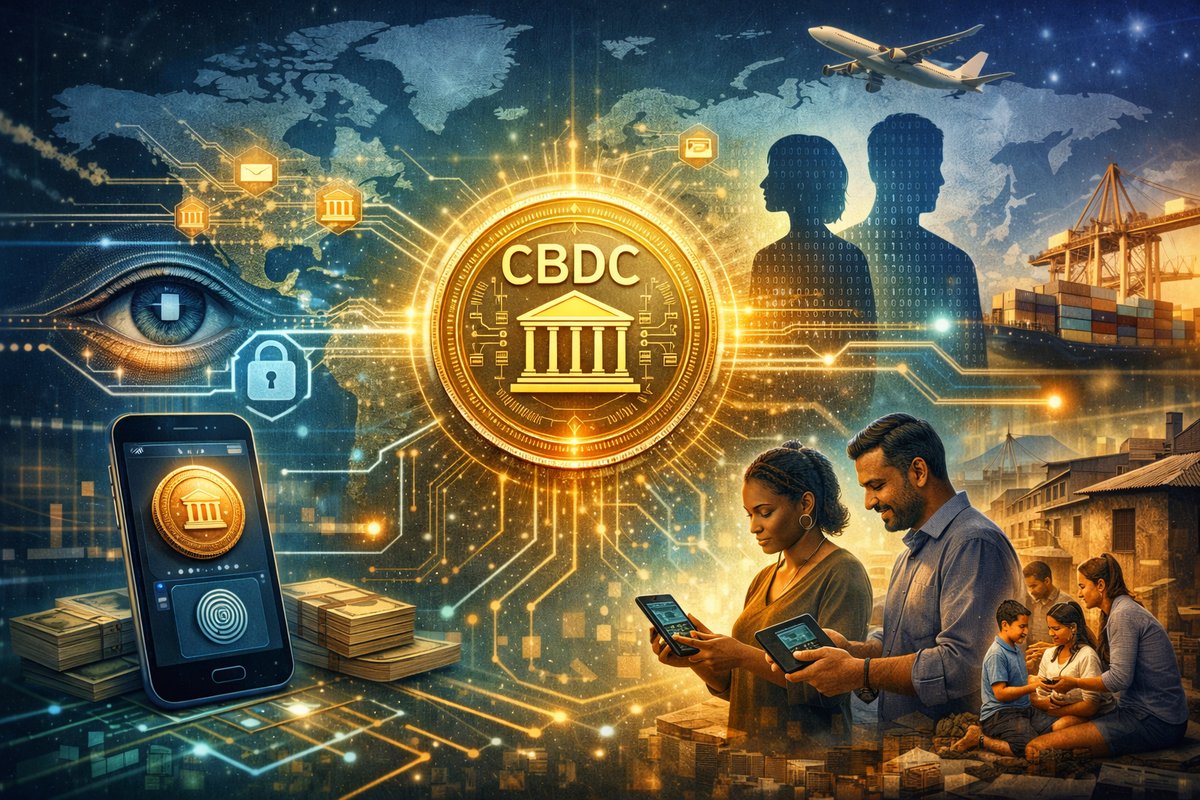
Central bank digital currencies (CBDCs) have moved from concept to pilot programs in dozens of countries. As governments explore programmable cash, privacy concerns and new payment rails are emerging alongside promises of faster remittances and greater financial inclusion.
From the Bahamas’ Sand Dollar to China’s digital yuan pilot, central banks around the world are racing to issue their own digital currencies. Once a theoretical exercise in monetary research, central bank digital currencies (CBDCs) have now entered real-world trials. A recent survey by the Bank for International Settlements found that more than 90 percent of central banks are actively investigating digital legal tender, with roughly a dozen nations already in pilot or launch phases.
Enthusiasm stems from multiple drivers. In some emerging markets, cash remains expensive to print, distribute, and safeguard. Digitizing legal tender promises lower transactional costs and faster settlement. In advanced economies, central banks see CBDCs as a way to stay relevant amid the rise of private stablecoins and big-tech payment services. The long-term vision is a resilient national payment infrastructure that can operate even if private networks falter.
Several pilots demonstrate distinct approaches. The Bahamas rolled out the Sand Dollar nationwide, offering citizens and businesses digital wallets they can top up at commercial banks. Transactions can occur peer-to-peer offline for small amounts, preserving a basic level of functionality when internet connectivity falters. In China, the digital yuan has been tested in tens of millions of transactions across major cities, integrated with existing mobile wallets and point-of-sale terminals.
Europe’s central bank is moving more cautiously. The European Central Bank has launched a multi-phase investigation for a digital euro, focusing first on how to maintain privacy and data protection while satisfying anti-money laundering rules. Regulators have proposed offline and online modes, device-to-device transfers, and tiered limits-allowing small everyday purchases to remain largely anonymous while higher-value transfers require identification.
Across these experiments, standard themes emerge: privacy versus traceability, wholesale versus retail access, and account-based versus token-based architectures. In an account-based model, users hold balances with a central authority and authenticate transactions like a bank account. In a token-based system, digital cash tokens move from one digital wallet to another, much like handing over paper bills. Token models can enable offline transfers but also face challenges in preventing counterfeiting or double-spending.
One major rationale for CBDCs is to enhance financial inclusion. In parts of Latin America and Sub-Saharan Africa, many people lack bank accounts but own mobile phones. A digital currency directly issued by the central bank could open new access points-allowing remote communities to receive government payments, wages, and remittances without needing a brick-and-mortar branch. Yet success depends on widespread literacy, reliable connectivity, and robust consumer protections to prevent fraud.
CBDCs could also reshape monetary policy tools. Some economists envision programmable money that automatically applies negative interest rates or distributes helicopter drops to targeted populations. This “smart cash” could allow central banks to implement stimulus measures faster and with more precision than conventional open-market operations. However, these powerful capabilities raise ethical and legal questions: Would programmable money erode personal autonomy? Who decides the rules embedded in code?
Cross-border payments represent another compelling use case. Today, sending money across borders remains slow and expensive, often relying on a web of correspondent banks. A shared digital currency framework between central banks could enable near-instant settlement and reduced fees for businesses and individuals. Still, achieving global interoperability requires coordination on regulatory standards, foreign exchange mechanisms, and cybersecurity safeguards.
Private sector reactions have been mixed. Traditional banks worry that CBDCs could disintermediate deposits, pushing retail funds from commercial banks directly to central banks. To address this risk, some central banks plan to distribute digital currency through licensed intermediaries-banks and payment service providers-rather than deal directly with the public. Fintech firms, on the other hand, view CBDCs as an opportunity to build new services on top of a trusted digital backbone, from micropayment platforms to programmable loyalty programs.
Consumers have shown cautious curiosity. In pilot zones, adoption rates vary. Young, tech-savvy users appreciate the idea of instant, free peer-to-peer transfers. Older populations often prefer cash or familiar payment methods and express concerns about privacy and government surveillance. Education campaigns, easy-to-use wallet apps, and clear legal frameworks will be crucial for mass acceptance.
Cybersecurity and resilience remain top priorities. A digital currency ecosystem must withstand sophisticated cyberattacks, hardware failures, and software bugs. Some central banks are exploring offline transaction capabilities and distributed ledger technologies to avoid single points of failure. Regulatory bodies are also developing frameworks for incident response and consumer compensation in case of system disruptions.
Despite the progress, global consensus on standards and best practices is still forming. The International Monetary Fund, the Bank for International Settlements, and multilateral groups are working to develop cross-border guidelines. At the same time, geopolitical tensions could complicate deeper cooperation. If a major economy issues a widely adopted CBDC, that digital currency could rival established reserve currencies-potentially shifting the balance of economic power.
What does this mean for everyday personal finance? Even if CBDCs never fully replace cash, they signal the next wave of payments innovation. Digital wallets-already ubiquitous in many markets-may soon support multiple forms of money, from commercial bank deposits to central bank tokens and private stablecoins. Consumers will need tools to manage multiple wallet accounts, compare transaction fees, and safeguard digital keys.
Budgeting habits will adapt. Money may move in programmable envelopes, automatically allocating portions for rent, bills, savings, and discretionary spending. Financial apps will need to integrate seamlessly with official digital currencies to provide real-time balance updates and alerts. Privacy-focused features, such as burner addresses or pseudonymous wallets, could become a selling point for users wary of over-reaching surveillance.
In emerging markets, local entrepreneurs are already building solutions for digital currency distribution. Agents equipped with smartphones can onboard new users, verify identities, and cash out digital tokens for physical currency or mobile airtime. These agent networks may mirror the growth of mobile money ecosystems seen over the past decade-extending access to the unbanked and underbanked.
Looking ahead, the success of CBDCs hinges on practical design choices and effective governance. Central banks must balance innovation with stability, ensuring that digital currencies enhance financial resilience rather than introduce new systemic risks. Public trust will depend on transparency, clear legal protections, and robust privacy safeguards.
For consumers, the era of digital cash brings opportunities and responsibilities. Faster payments, lower fees, and programmable features can streamline everyday money management. At the same time, digital money heightens the need for cybersecurity vigilance, financial literacy, and privacy awareness.
As more central banks pilot retail CBDCs and refine their approaches, the contours of tomorrow’s payment landscape will emerge. Whether digital legal tender becomes as common as banknotes or remains a niche tool for specialized use cases, one thing is clear: the future of money will be digital, programmable, and reshaped by the debate over who controls the keys to our cash.