Location
Mount Vernon, WA 98274

Location
Mount Vernon, WA 98274
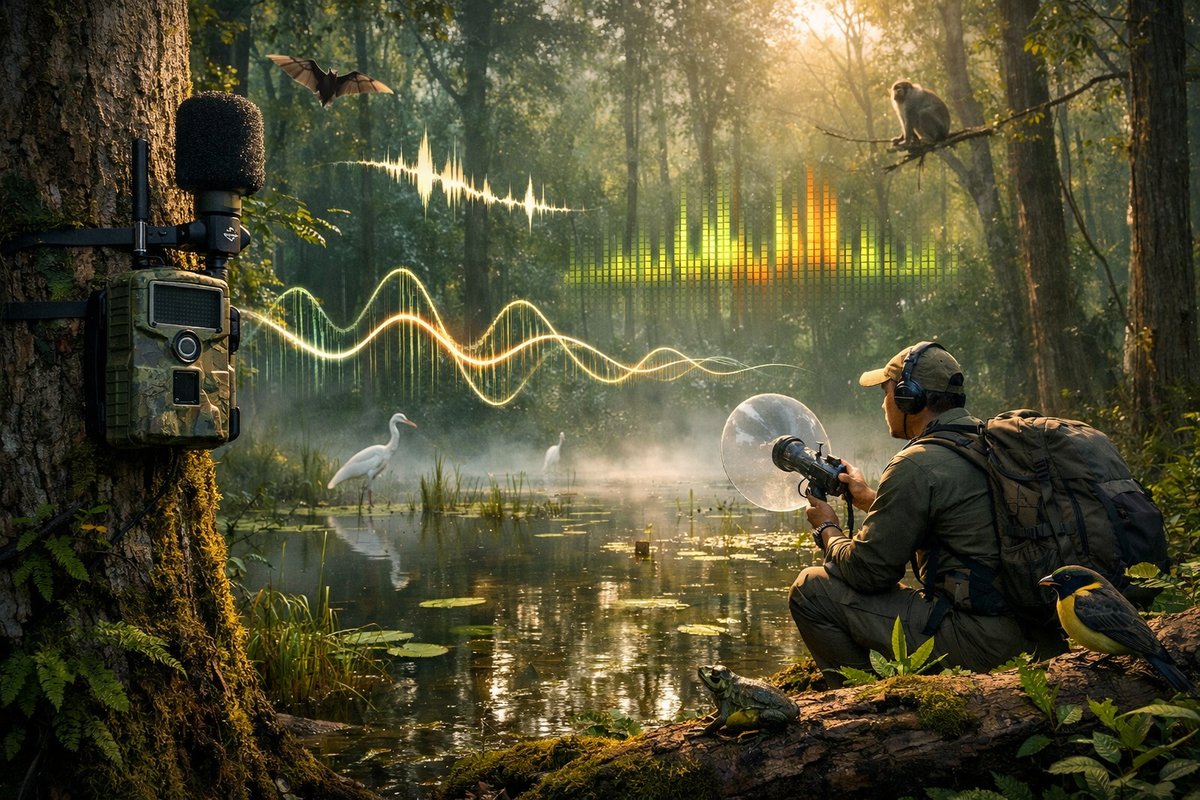
In the dense forests and sprawling wetlands around the globe, a subtle yet powerful shift is underway. Passive acoustic monitoring-using sound to understand ecosystems-is revealing hidden patterns of wildlife behavior and environmental health, offering new hope for conservation efforts.
Nature’s symphony is all around us, yet much of it goes unnoticed by human ears. The rustling of leaves, bird calls at dawn, insect choruses after dusk-these sounds compose a living soundtrack that holds vital clues about the health and dynamics of ecosystems. Recent advances in environmental science have embraced this auditory dimension through passive acoustic monitoring (PAM), a technique that records and analyzes natural sounds to monitor biodiversity and ecosystem changes with minimal human intrusion.
Passive acoustic monitoring involves deploying autonomous recording devices in natural habitats to capture sounds over extended periods. Unlike traditional wildlife surveys that rely on visual sightings or manual observations, PAM offers a continuous, non-invasive window into the lives of elusive and nocturnal species, as well as broader ecological processes. This approach has gained momentum in recent years due to improvements in recording technology, data storage, and artificial intelligence algorithms capable of identifying species and behaviors from complex soundscapes.
One of the most compelling applications of PAM is in tracking bird populations. Birds are sensitive indicators of environmental changes, and their vocal activity often reflects shifts in habitat quality, climate patterns, and human disturbance. For example, in tropical rainforests, where dense foliage makes visual surveys challenging, acoustic data have uncovered surprising diversity and temporal patterns of bird calls. Scientists can now detect declines in species richness or changes in migration timing, information crucial for conservation planning.
Beyond birds, PAM has illuminated the secret lives of amphibians, insects, and mammals. Frogs’ croaks and insect chirps serve as bioindicators of water quality and ecosystem integrity, while the low-frequency calls of elephants or whales reveal social structures and migration routes. In marine environments, underwater acoustic sensors track the presence of endangered species and the impact of noise pollution from shipping lanes and industrial activities.
The power of PAM lies not only in data collection but also in fostering community engagement. Citizen science projects increasingly invite local residents and nature enthusiasts to participate by deploying simple recording devices and contributing to sound libraries. This democratization of environmental monitoring enhances public awareness and stewardship, bridging the gap between scientific research and everyday experience.
Moreover, the integration of machine learning has revolutionized sound analysis. Algorithms trained on vast datasets can now automatically identify species-specific calls, detect anomalies, and even estimate population densities. This automation accelerates data processing and reduces human error, making large-scale, long-term acoustic monitoring feasible.
However, challenges remain. The sheer volume of audio data demands robust storage solutions and efficient processing pipelines. Background noise from weather, human activity, and overlapping animal calls can complicate analysis. Ethical considerations also arise regarding data privacy and the potential disturbance caused by deploying devices in sensitive habitats.
Despite these hurdles, the environmental insights gained through PAM are invaluable in an era of rapid biodiversity loss and climate change. By listening closely to the natural world, scientists and conservationists can detect early warning signs of ecosystem stress, evaluate the effectiveness of protected areas, and inform adaptive management strategies.
Looking ahead, innovations such as solar-powered recording stations, real-time acoustic alerts, and integration with other sensor networks promise to deepen our understanding of ecological complexity. As we attune ourselves to nature’s hidden conversations, passive acoustic monitoring invites us into a quieter, more intimate relationship with the living planet-one where listening becomes a vital act of care and curiosity.
This quiet revolution in environmental science underscores a profound truth: sometimes, the most powerful insights come not from what we see, but from what we hear.