Location
Mount Vernon, WA 98274

Location
Mount Vernon, WA 98274
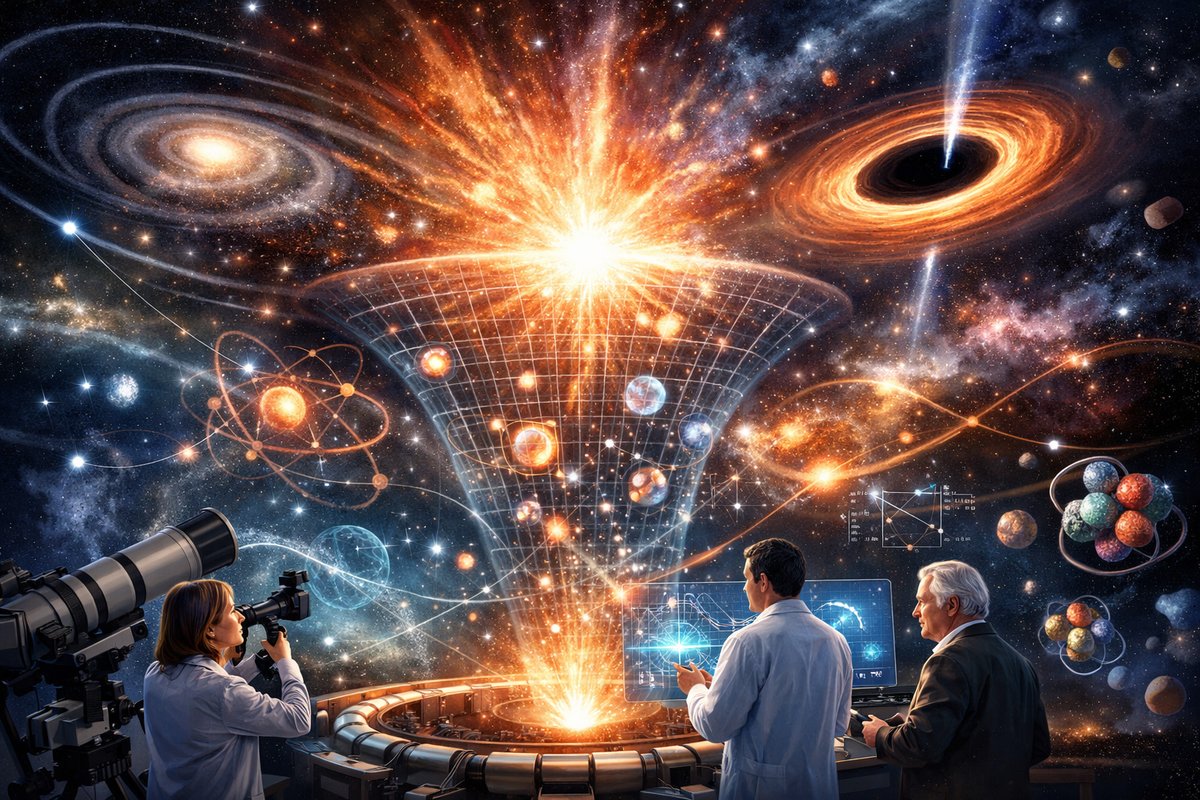
The quest to understand the universe's beginnings continues to challenge and inspire, as scientists probe deeper into the fundamental particles and forces that shaped existence. Recent advances in observational technology and theoretical physics are revealing unexpected complexities and paradoxes that reshape our cosmic narrative.
The universe, in all its vastness and complexity, remains one of humanity’s most profound mysteries. From the smallest subatomic particles to the grandest cosmic structures, every element of reality traces back to an origin story that is still being pieced together. Modern cosmology and particle physics have made remarkable strides in unveiling the forces and phenomena that governed the earliest moments after the Big Bang, yet many questions linger-questions that challenge our understanding of time, space, and the very fabric of existence.
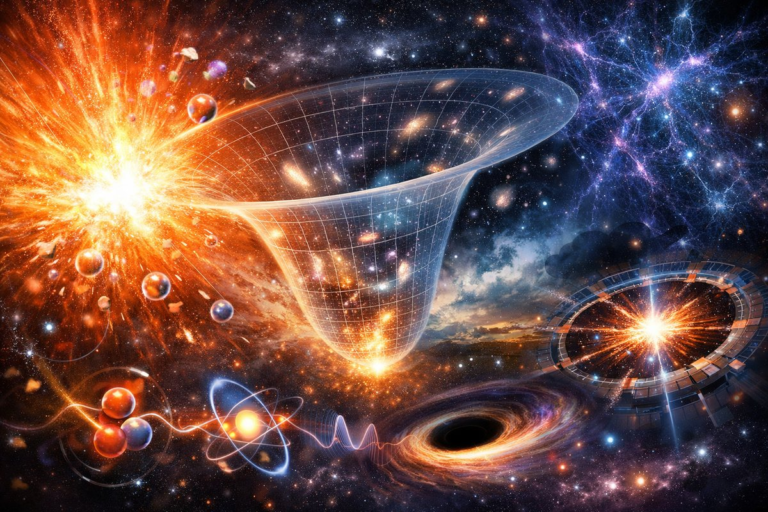
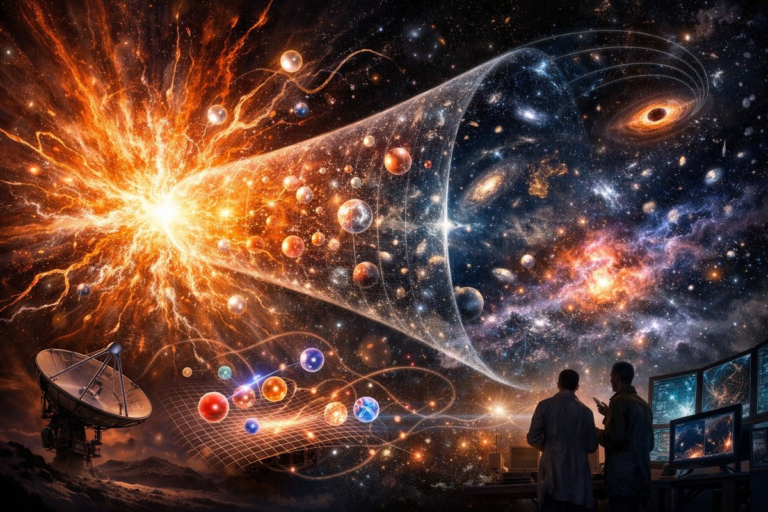
At the heart of these inquiries is the nature of the primordial universe. Approximately 13.8 billion years ago, the cosmos emerged from an unimaginably hot and dense state. In the first fractions of a second, the universe underwent rapid expansion, known as inflation, smoothing out irregularities and setting initial conditions for the formation of matter. Yet, the mechanisms driving inflation remain elusive. Competing theories propose different particles and fields that could have triggered this exponential growth, with some models suggesting the influence of hypothetical entities like the inflaton field.
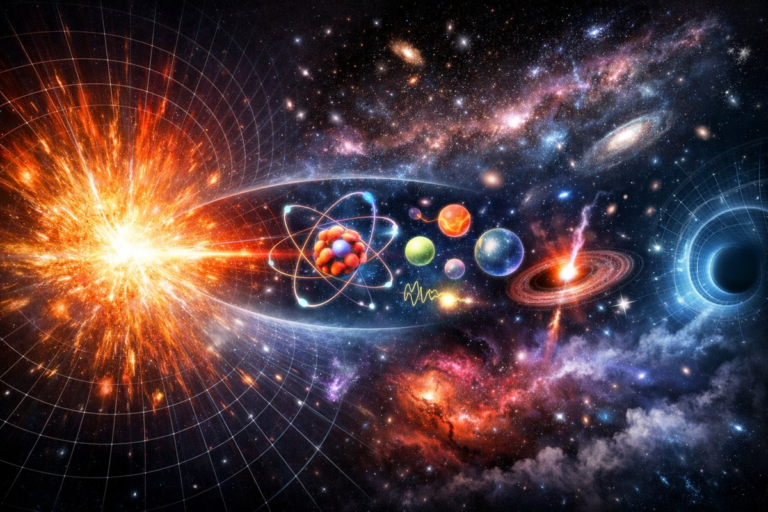
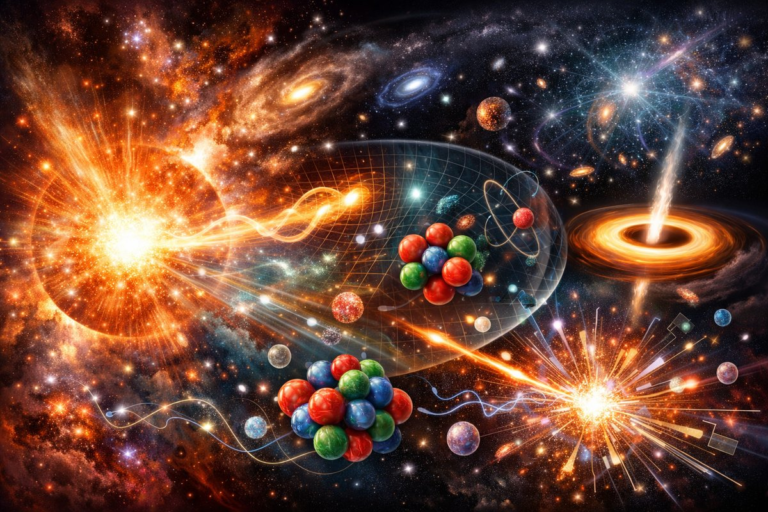
As the universe cooled, fundamental forces began to differentiate. The strong nuclear force, weak nuclear force, electromagnetism, and gravity separated, each governing interactions at different scales. Understanding how these forces unified and then diverged is crucial to decoding the universe’s early evolution. Grand Unified Theories (GUTs) and efforts toward a Theory of Everything aim to reconcile these forces within a single framework, but experimental verification remains challenging due to the extreme energies involved.
One of the most intriguing puzzles is the matter-antimatter asymmetry. The Big Bang should have produced equal amounts of matter and antimatter, which would annihilate each other, leaving a universe filled with radiation but no matter. Yet, our universe is overwhelmingly matter-dominated. This imbalance implies processes that violated certain symmetries in fundamental physics, a phenomenon known as CP violation. Current experiments in particle accelerators and neutrino observatories seek to uncover these subtle asymmetries, hoping to explain why anything exists at all.
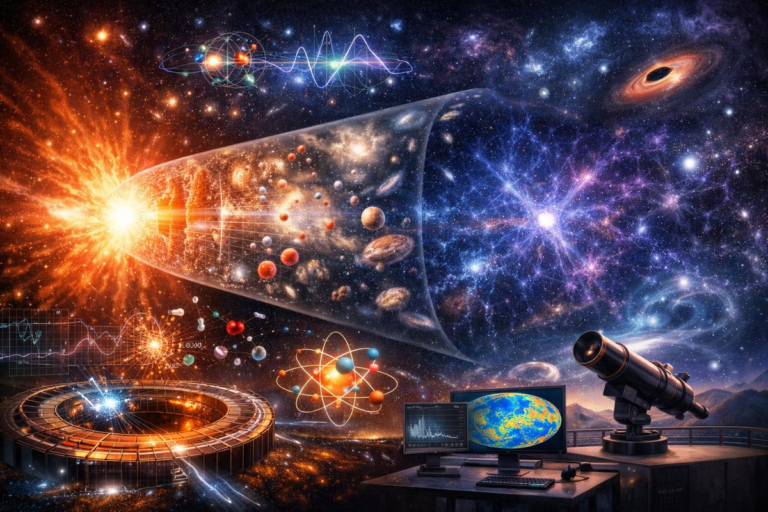
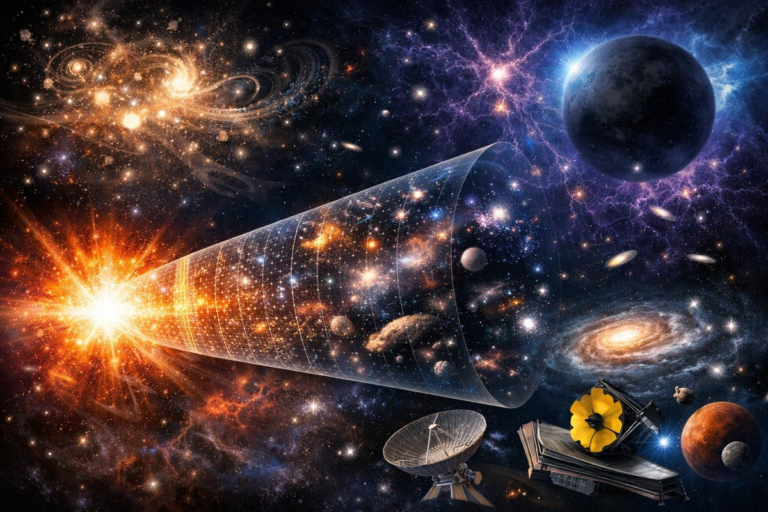
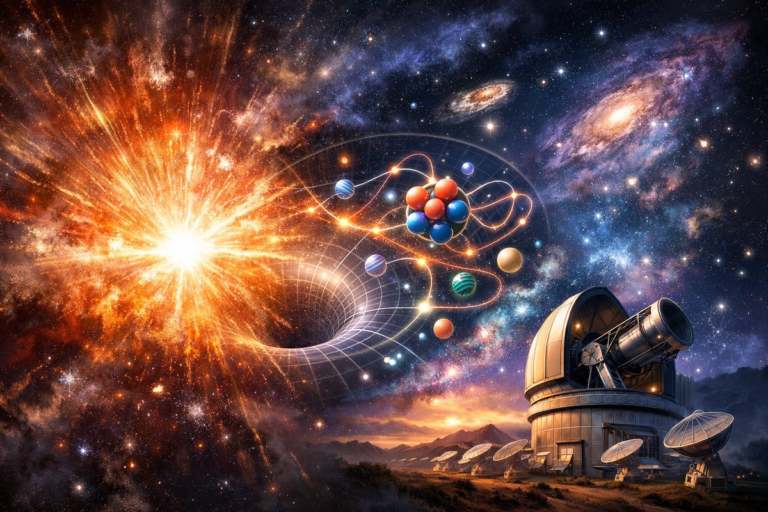
Recent advances in observational cosmology have opened new windows into the universe’s infancy. Instruments like the James Webb Space Telescope and next-generation cosmic microwave background (CMB) observatories are providing unprecedented data on the earliest galaxies and the relic radiation from the Big Bang. These observations help constrain models of inflation and particle physics, allowing scientists to test hypotheses about dark matter, dark energy, and the initial conditions of cosmic structure formation.
Moreover, the discovery of gravitational waves has added a new dimension to our understanding. Ripples in spacetime, generated by cataclysmic events such as black hole mergers, may also carry imprints from the universe’s birth. Primordial gravitational waves, if detected, would offer direct evidence of inflation and shed light on physics at energy scales far beyond current particle accelerators.
Beyond these empirical pursuits, theoretical physics grapples with paradoxes that challenge classical notions of reality. Quantum mechanics and general relativity, the twin pillars of modern physics, are fundamentally incompatible in extreme conditions like those near the Big Bang or inside black holes. Efforts to develop a quantum theory of gravity-through approaches such as string theory, loop quantum gravity, or emergent spacetime models-aim to unify these frameworks and reveal a deeper understanding of the cosmos’ origin.
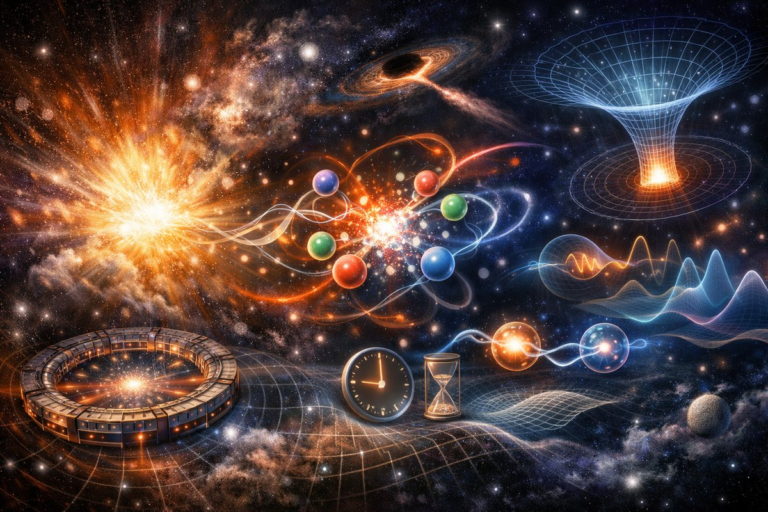
These theoretical explorations also touch upon the nature of time itself. Some proposals suggest that time may not be fundamental but emergent from more basic quantum processes. This raises profound questions about causality, the arrow of time, and the possibility of multiple or cyclic universes. Such ideas expand the scope of cosmology beyond observable phenomena into the realm of metaphysical inquiry, inviting us to reconsider what it means for the universe to begin.
The journey to the universe’s beginning is not merely a scientific quest but a deeply human endeavor. It reflects our innate curiosity and desire to connect with the cosmos. Each discovery, whether confirming or challenging existing theories, enriches our understanding and fuels further questions. As observational tools grow more sophisticated and theoretical models more refined, the tapestry of the universe’s origins becomes increasingly intricate, revealing a cosmos that is both stranger and more beautiful than previously imagined.
In embracing the unknown, we honor a tradition of inquiry that spans cultures and centuries. The forces and particles that shaped everything we know continue to whisper secrets through the fabric of spacetime, inviting us to listen, explore, and imagine new horizons. The origin of the universe remains an open chapter-one that beckons us to journey beyond the limits of current knowledge toward the profound mysteries that lie at the dawn of existence.