Location
Mount Vernon, WA 98274

Location
Mount Vernon, WA 98274
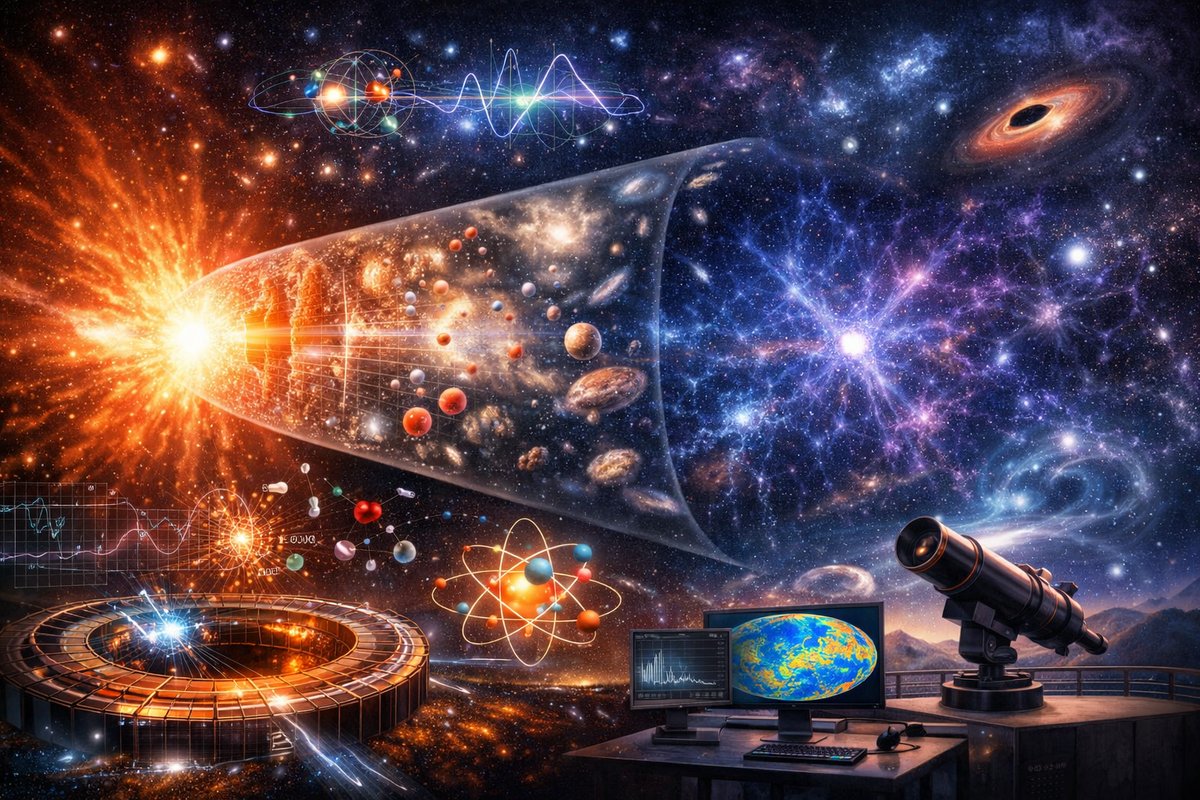
Modern cosmology is peeling back the layers of the universe's infancy, revealing a complex interplay of fundamental particles, forces, and paradoxes that sculpted the cosmos. From quantum fluctuations to the mysterious nature of dark matter and energy, scientists are reconstructing the earliest moments that set the stage for everything we observe today.
Our universe, vast and enigmatic, continues to challenge our understanding with questions about its very beginning. The quest to unravel the origin story of everything-from the tiniest particles to the grandest cosmic structures-has evolved dramatically with advances in observational technology and theoretical physics. Today, the narrative of the cosmos is no longer a simple tale of expansion but a rich tapestry woven from the threads of quantum mechanics, relativity, and emergent phenomena.
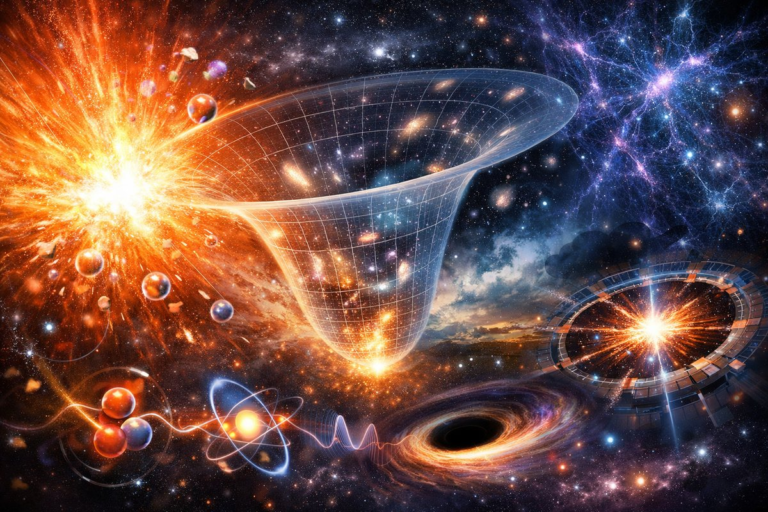
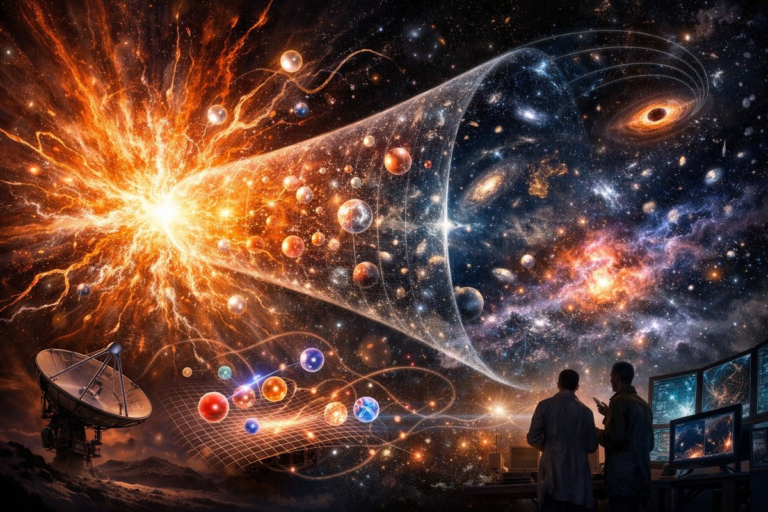
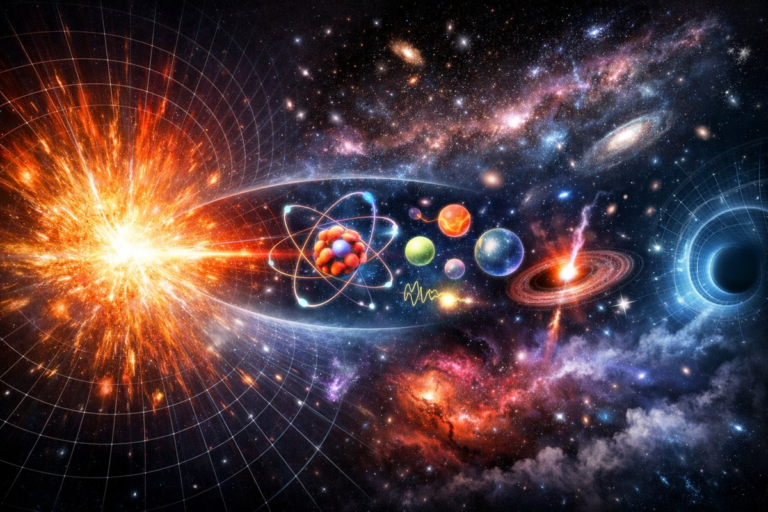
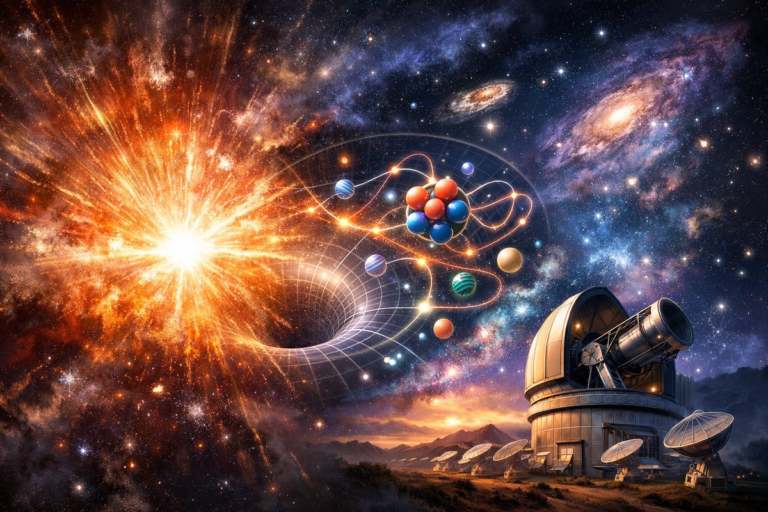
At the heart of this exploration lies the concept of the Big Bang, the event that marks the universe’s rapid expansion from an incredibly hot, dense state. While the Big Bang framework has been the cornerstone of cosmology for decades, recent research probes even deeper, investigating what preceded this event and how the fundamental forces and particles emerged.
One of the most compelling mysteries is the nature of the quantum fluctuations that seeded the universe’s large-scale structure. These minute variations in energy density, amplified during a brief period known as cosmic inflation, laid the groundwork for galaxies, stars, and planets. The inflationary epoch itself, theorized to occur within fractions of a second after the Big Bang, remains an active area of inquiry, with scientists seeking signatures in the cosmic microwave background radiation-the afterglow of the early universe.
Simultaneously, the role of dark matter and dark energy is reshaping our cosmic perspective. Dark matter, an invisible substance accounting for about 27% of the universe’s mass-energy content, exerts gravitational influence that shapes galaxy formation and motion. Dark energy, even more mysterious, drives the accelerated expansion of the universe. Together, they challenge the completeness of the Standard Model of particle physics and hint at new physics beyond our current theories.
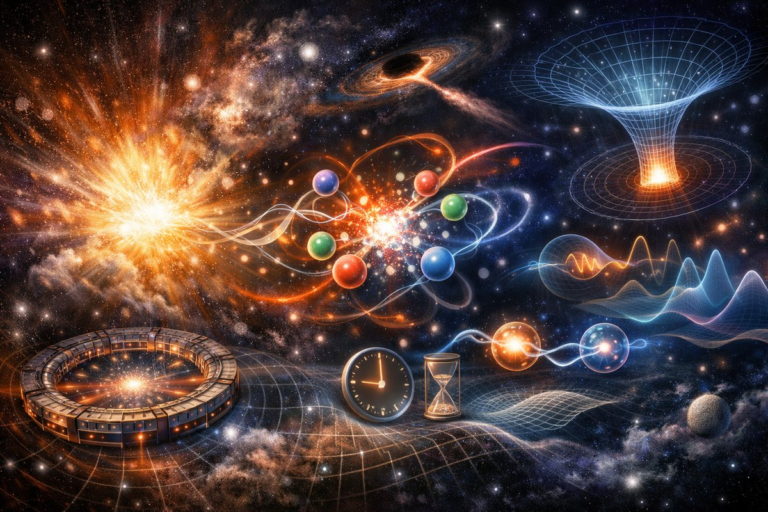
The interplay between the quantum realm and gravity introduces paradoxes that push the boundaries of our understanding. Black holes, for instance, embody this tension by linking quantum effects with gravitational collapse. The information paradox-whether information swallowed by black holes is lost forever or somehow preserved-has spurred innovative theoretical frameworks such as holographic principles and quantum gravity models.
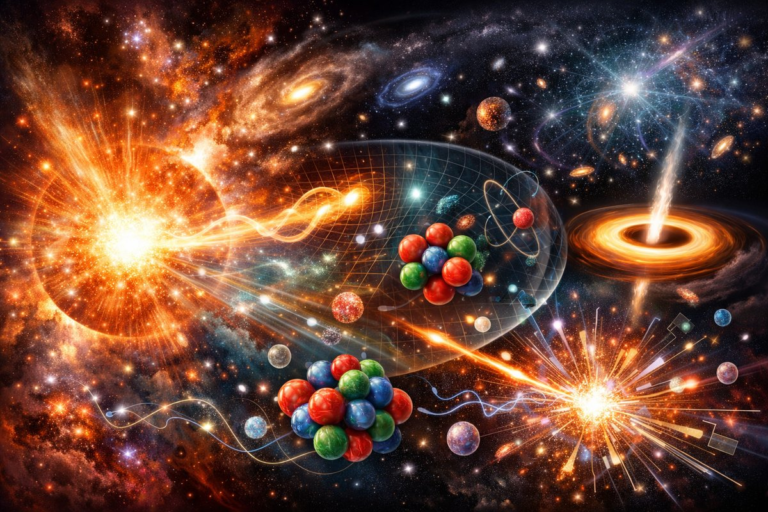
Moreover, the search for the universe’s origin intersects with the study of fundamental particles and forces. Experiments at particle accelerators and neutrino observatories aim to replicate conditions akin to the early universe, offering glimpses into symmetry breaking events that differentiated forces and gave mass to particles. These investigations also explore the possibility of additional dimensions and multiverse scenarios, expanding the cosmic horizon beyond our observable universe.
Philosophically, these scientific advances invite reflection on the nature of existence and reality itself. The universe’s beginning is not merely a temporal event but a convergence point of physical laws, mathematical structures, and perhaps even informational constructs. This fusion of empirical evidence and conceptual innovation fuels a dynamic dialogue between science and philosophy, enriching our collective curiosity.
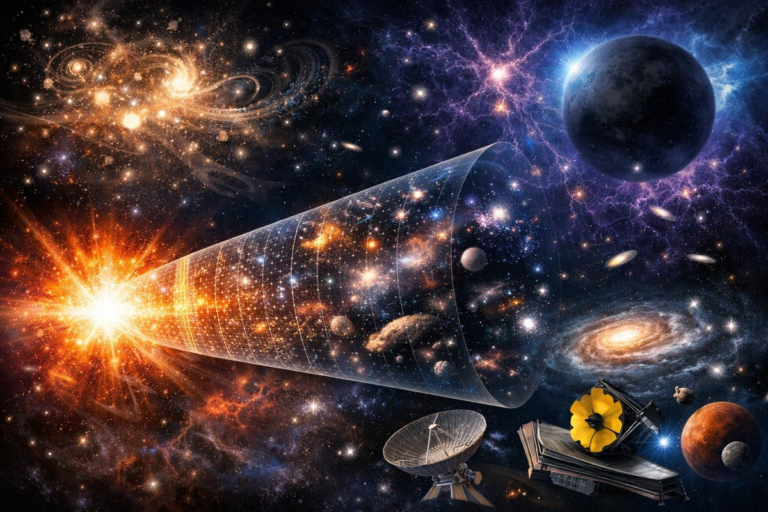
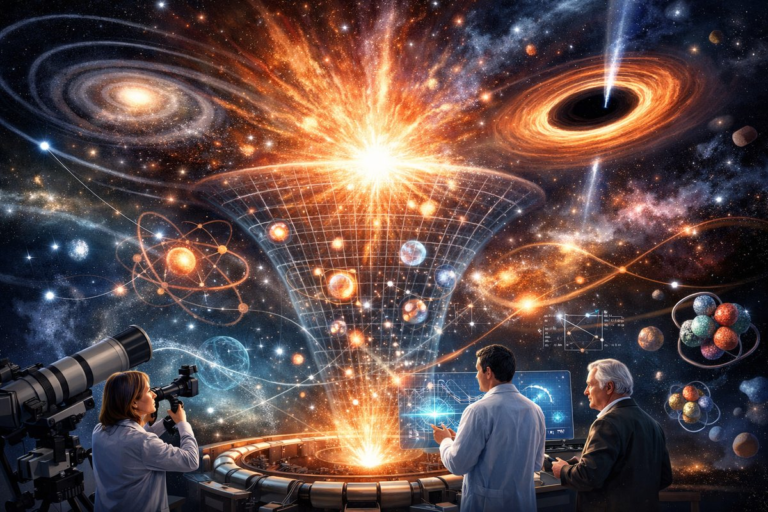
As technology progresses, instruments like space-based telescopes, gravitational wave detectors, and quantum sensors promise unprecedented precision in capturing the universe’s infancy. These tools enable us to test hypotheses about the primordial soup of particles, the behavior of spacetime under extreme conditions, and the echoes of cosmic events billions of years past.
Ultimately, the journey to understand the universe’s origin is a testament to human curiosity and resilience. Each discovery not only illuminates the cosmos but also deepens the mystery, inviting us to imagine realms beyond the known and to embrace the paradoxes that define our cosmic heritage. In this pursuit, we are not just observers but participants in the unfolding story of existence itself.