Location
Mount Vernon, WA 98274

Location
Mount Vernon, WA 98274
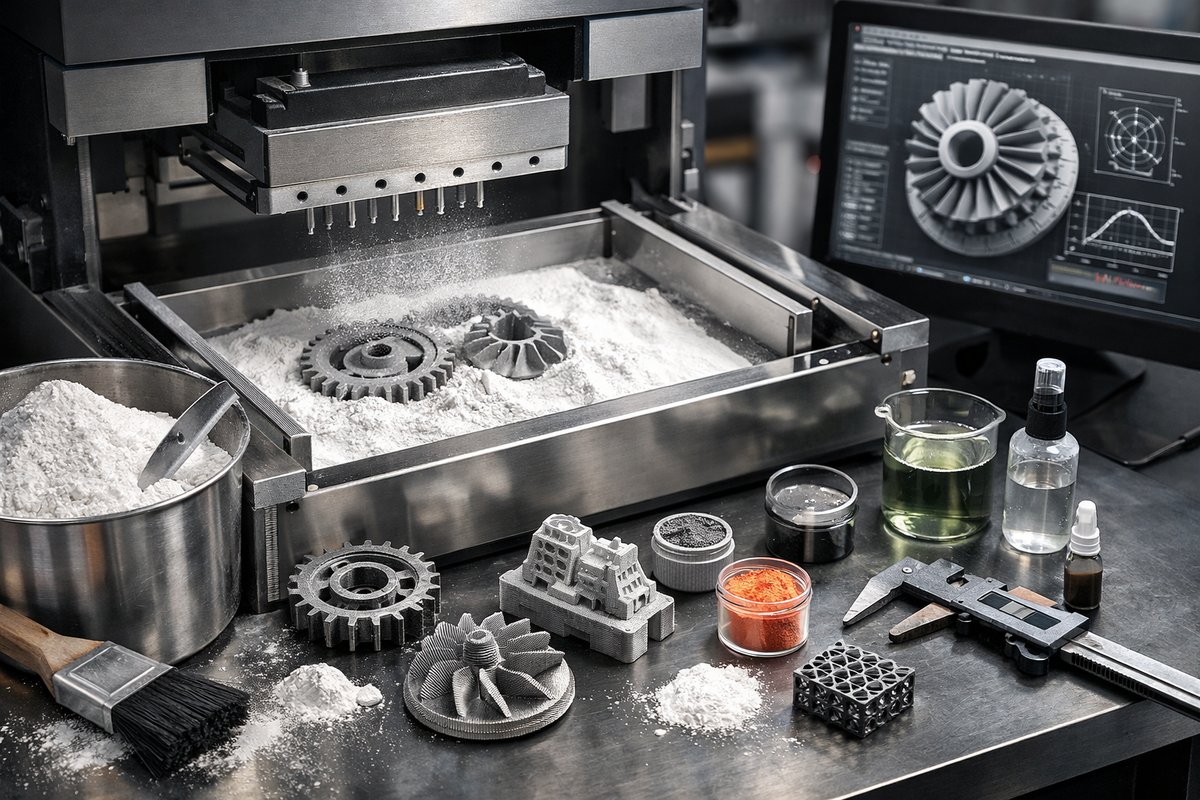
Binder jetting is an additive manufacturing technique that combines precision and versatility by selectively depositing a binding agent onto powdered material. This guide explores the process in detail, highlighting essential components and tools to help enthusiasts and professionals alike harness its unique advantages.
Additive manufacturing continues to revolutionize how we approach design and production, offering new possibilities beyond traditional subtractive methods. Among the many techniques available, binder jetting stands out for its ability to create complex geometries with speed and material flexibility. Unlike processes that rely on melting or sintering during printing, binder jetting uses a liquid binder to fuse powder particles layer by layer, enabling the use of metals, ceramics, and even sand in a variety of applications.
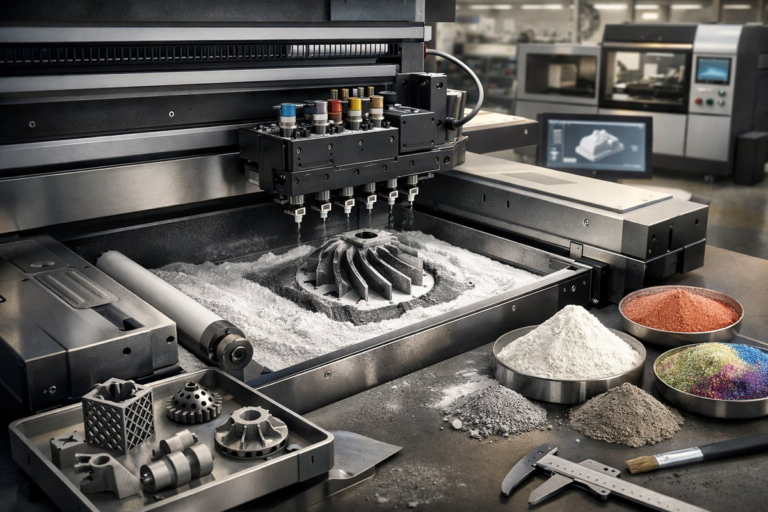
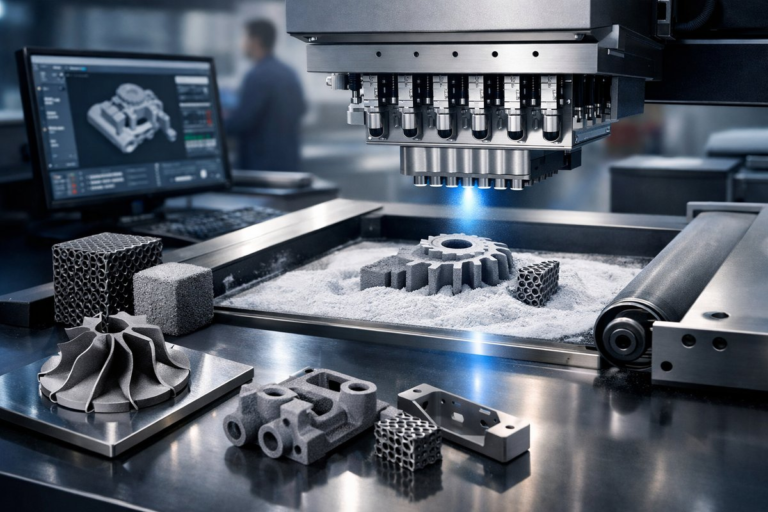
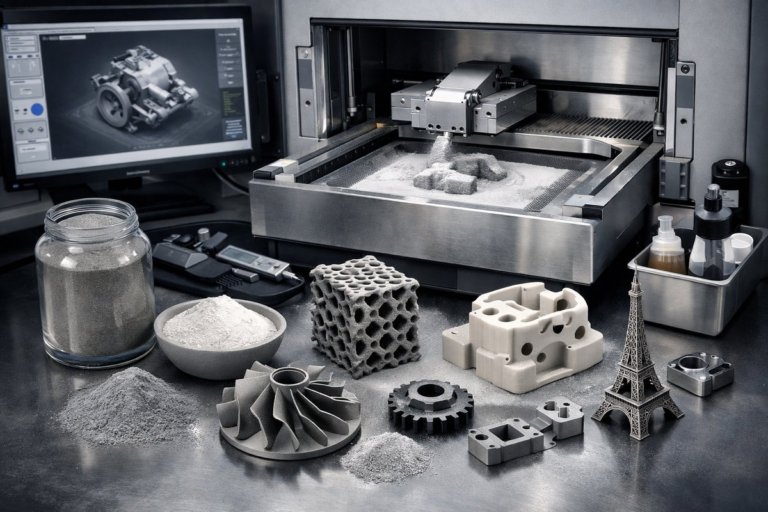
Understanding the binder jetting process is key to appreciating its strengths. It begins with spreading a thin layer of powder across a build platform. A print head then selectively deposits a binding agent onto the powder bed, adhering particles only where the object is to be formed. Once a layer is complete, the platform lowers, and a new layer of powder is spread on top. This cycle repeats until the entire part is formed within the loose powder matrix. After printing, the unbound powder is carefully removed, and the part typically undergoes post-processing such as curing, sintering, or infiltration to enhance mechanical properties.
One of the most compelling aspects of binder jetting is its compatibility with a wide range of materials. Metal powders like stainless steel, bronze, or tool steel can be used, as well as ceramics and composites. This versatility allows for functional prototypes, complex tooling, and even production parts with intricate internal features that would be challenging to machine subtractively. Moreover, because the process does not rely on high heat during printing, it avoids thermal stresses and warping common in other metal additive techniques.
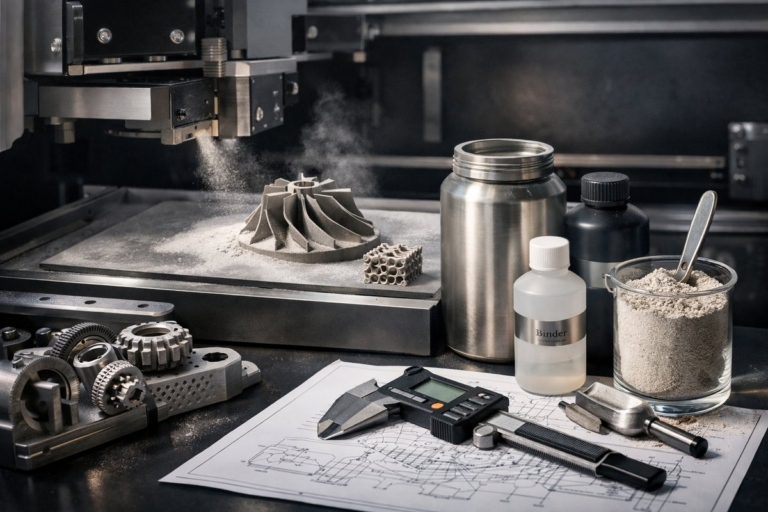
To successfully explore binder jetting, certain components and tools are indispensable. A high-quality powder spreader ensures consistent layer thickness and powder distribution, which is critical for dimensional accuracy. Print heads designed for binder jetting must provide precise droplet placement and control over binder viscosity. Additionally, a robust powder handling system is necessary to manage the flow and recycling of powder safely and efficiently.
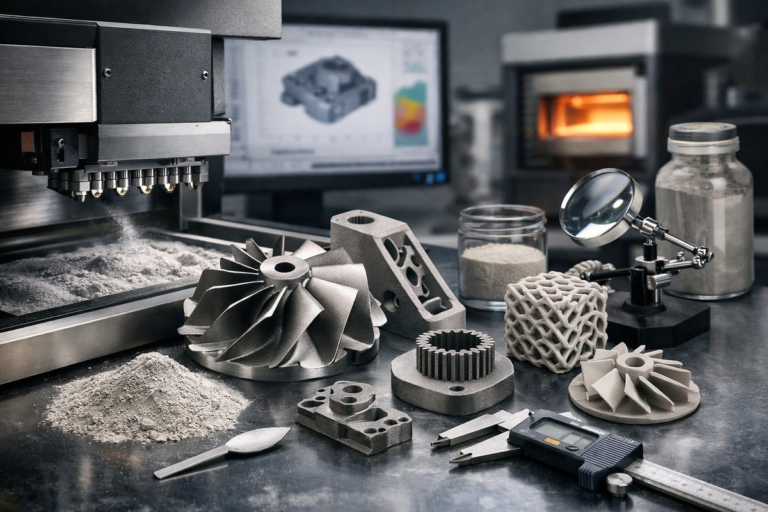
Post-processing equipment also plays a vital role. Debinding ovens or furnaces are used to remove the binder and sinter metal parts, consolidating particles into a dense structure. For ceramic parts, infiltration with resins or metals can improve strength and surface finish. Safety gear, including dust masks and gloves, is essential when handling fine powders to protect operators from inhalation and skin contact.
For enthusiasts interested in integrating binder jetting into their workflow, desktop and industrial-scale machines are available. Desktop models provide a hands-on introduction to the technology and are suitable for rapid prototyping and educational purposes. Industrial systems offer larger build volumes and higher throughput, supporting small batch production and complex assemblies.
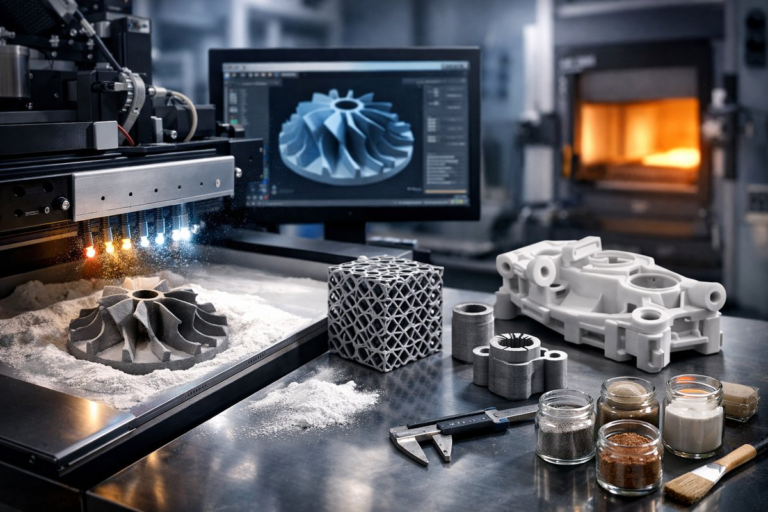
The appeal of binder jetting lies not only in its technical capabilities but also in its potential to inspire creativity. Designers can experiment with lattice structures, conformal cooling channels, and multi-material assemblies that challenge conventional manufacturing limits. The process encourages iterative development, enabling quick adjustments and refinements without the need for tooling changes.
In summary, binder jetting is a powerful additive manufacturing technique that complements traditional subtractive methods by enabling the creation of complex, functional parts with diverse materials. Its reliance on precise powder handling, controlled binder deposition, and thoughtful post-processing underscores the importance of specialized tools and components. Whether you are a curious maker or a seasoned professional, exploring binder jetting offers a rewarding journey into the evolving landscape of manufacturing innovation.