Location
Mount Vernon, WA 98274

Location
Mount Vernon, WA 98274
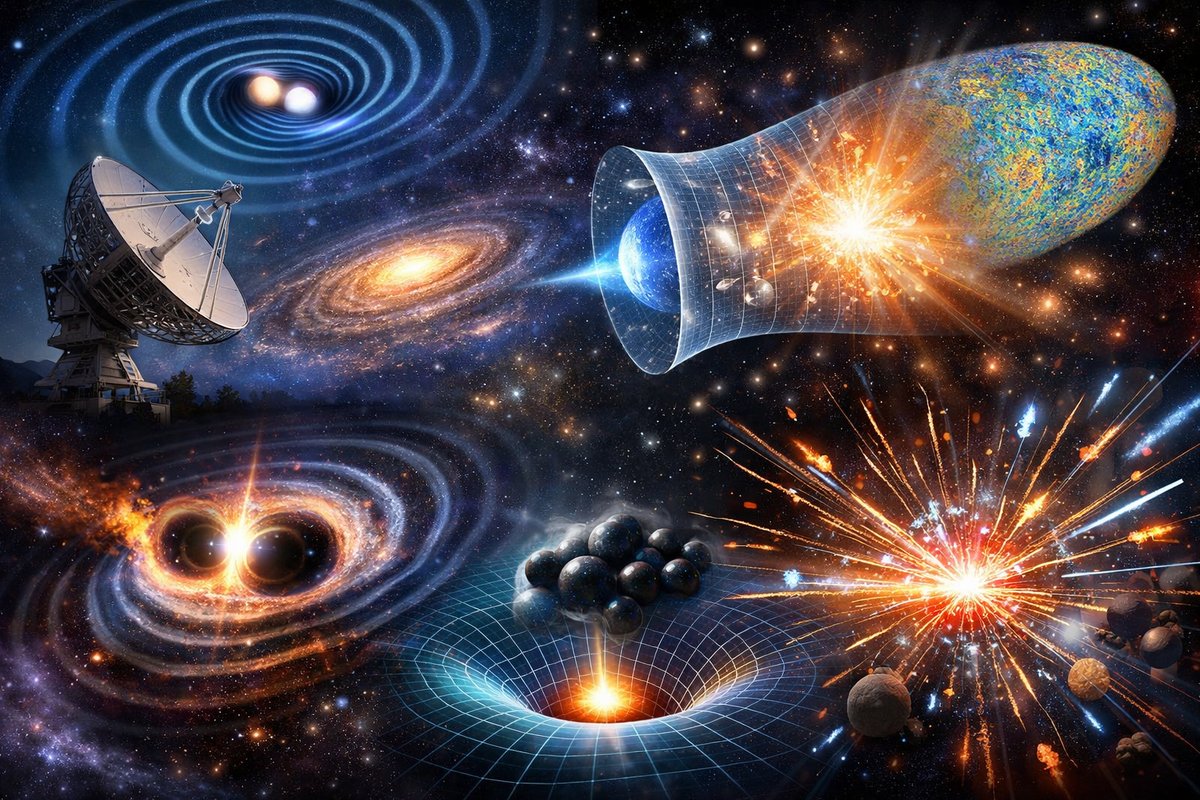
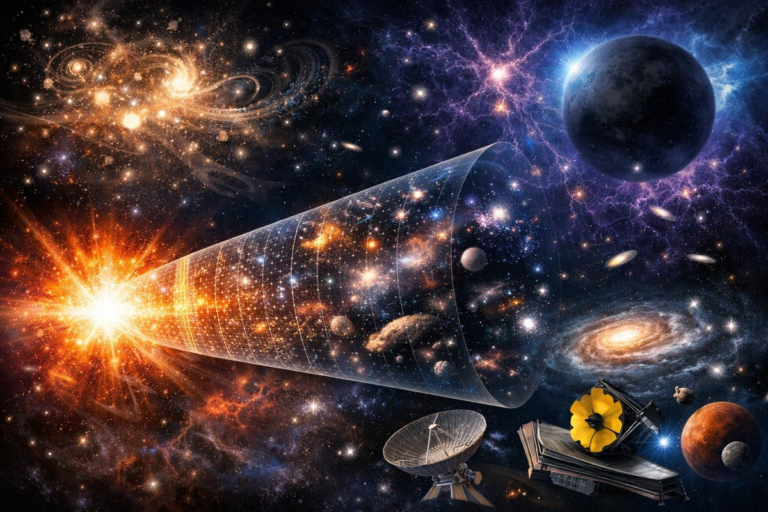
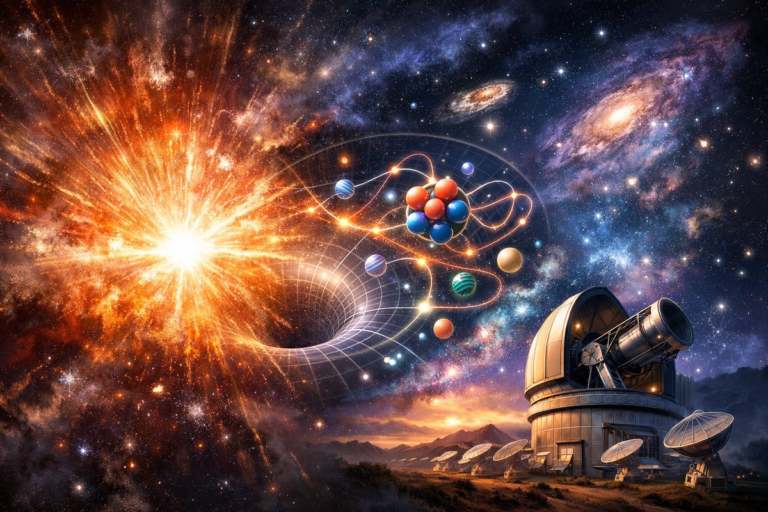
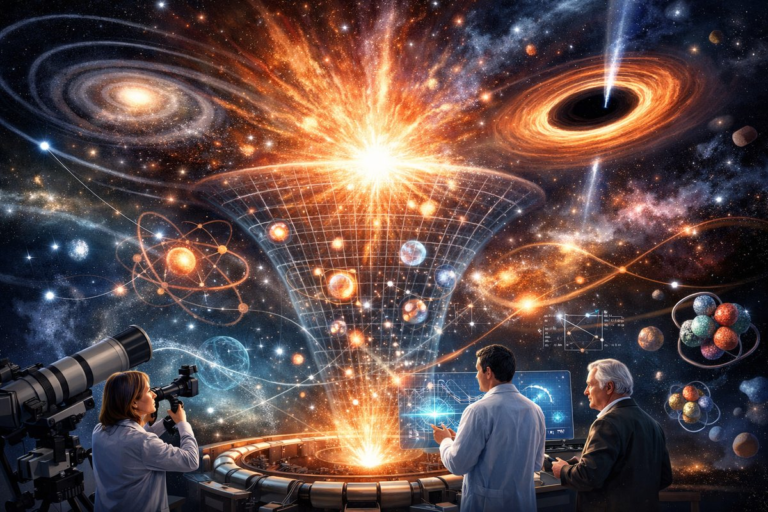
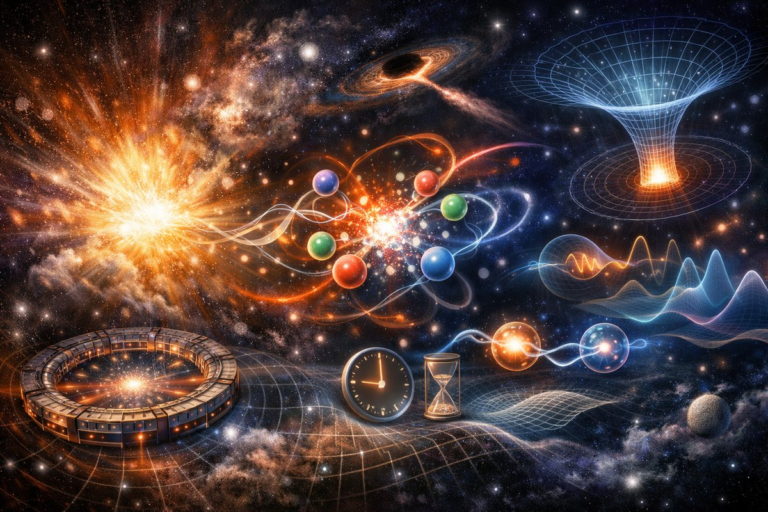
Recent breakthroughs in space observation, gravitational wave detection, and particle research are uncovering clues about the forces and paradoxes that shaped the cosmos. From the turbulent instant of inflation to the lingering glow of the cosmic microwave background, today's findings are rewriting our understanding of everything from dark matter to quantum gravity.
A confluence of cutting-edge observations and experiments is transforming our understanding of how the Universe sprang from an almost incomprehensible singularity into the sprawling tapestry of galaxies we observe today. From the extraordinary clarity of new space-based infrared telescopes to the faint ripples measured by gravitational wave observatories, researchers are piecing together a narrative of cosmic origins that spans the first fractions of a second after the Big Bang through to the slow dance of dark energy stretching space apart.
At the heart of this effort lies the theory of cosmic inflation, a brief but furious expansion that magnified quantum jitters into the seed patterns of galaxies. While the idea has guided cosmology for decades, recent data have pushed theorists to refine its parameters. Measurements of temperature fluctuations in the cosmic microwave background-the afterglow of the primordial fireball-are now more precise than ever, revealing anomalies and subtle alignments that challenge simple inflation models. This has fueled debate around whether inflation was driven by one field or multiple interacting fields, each leaving its signature amid the starlight.
Fluctuations at the quantum scale-once only mathematical abstractions-are being mapped onto the grand architecture of galaxy clusters. By combining deep surveys of distant galaxies with sophisticated simulations running on eco-friendly data centers, scientists can trace the growth of structure under the tug of gravity. The result is a new virtual cosmos where clouds of dark matter, traced only by their gravitational fingerprint, assemble filaments and nodes that mirror the vast web of galaxies captured by telescopes.
One enduring enigma is baryogenesis-the process that tipped the cosmic balance in favor of matter over antimatter. Laboratory experiments that recreate harsh, high-energy conditions aim to uncover tiny violations of symmetry that would let more matter survive than antimatter. Facilities using intense beams of particles probe this asymmetry by studying rare decays and interactions, providing glimpses into physics beyond the familiar Standard Model.
The cosmic microwave background continues to be a treasure trove of information. New ground-based observatories are scanning the sky in polarized light to detect the faint imprint of primordial gravitational waves, which would confirm the violent primordial expansion. These efforts are dovetailed with proposals for next-generation satellites that could operate for years in space, capturing the sky in unprecedented detail and potentially revealing a signature swirl that no telescope on Earth could detect.
Meanwhile, the hunt for dark matter and dark energy has reached a fever pitch. Underground laboratories filled with ultrapure detectors sit shielded by rock to block ordinary radiation. They watch for the faintest collisions between hypothetical dark matter particles and atomic nuclei. Other teams deploy giant telescopes that map billions of galaxies to chart how their motions are influenced by the invisible substance that outweighs normal matter by a factor of five. At the same time, measurements of distant supernovae and galaxy clustering sharpen our picture of dark energy’s role in accelerating cosmic expansion.
Quantum gravity remains the most tantalizing frontier. Researchers are exploring whether the smooth spacetime of general relativity dissolves into discrete quanta at the smallest scales. Some proposals envision spacetime as a network of tiny loops or as vibrations of fundamental strings. Efforts to detect quantum gravity effects involve monitoring the interference of laser beams over kilometers, looking for minute disruptions that could betray an underlying granular structure. At the same time, gravitational wave detectors have begun to probe frequencies where exotic high-energy phenomena might leave their mark.
Another puzzle arises from the so-called Hubble tension, a discrepancy between the Universe’s expansion rate measured via local distance ladders and that inferred from the cosmic microwave background. This conflict might signal new physics affecting early cosmic dynamics or hint at unseen components influencing expansion. Resolving it will demand ever more precise distances to galaxies and novel calibration techniques, some using fast-burning stellar explosions and others relying on gravitational wave “standard sirens.”
Multi-messenger astronomy is expanding the toolbox for cosmic archaeology. Neutrino telescopes buried in ice or submerged in deep lakes detect ghostly particles from the most extreme cosmic cataclysms. When combined with electromagnetic observations and gravitational waves, these neutrino signals reveal details about black hole collisions, neutron star mergers, and the mechanisms that forge heavy elements.
Behind every measurement lies a demand for computational power. Massive simulations reconstruct the interplay of forces, tracking billions of particles from raw quantum fields to organized clusters under gravity. To limit environmental impact, institutes are optimizing code, using renewable energy for high-performance clusters, and sharing data through open platforms that minimize duplication of effort.
As our instruments grow more sensitive, public engagement has blossomed. Visitors at science centers now walk through immersive domes simulating the first moments of time, while home star projectors let families recreate the cosmic panorama in their living rooms. Citizen science projects enlist volunteers to classify galaxies or search for unusual signals in gravitational wave archives, making cosmic discovery a shared endeavor.
Looking ahead, space missions designed to map gravitational waves from space, together with next-generation ground telescopes, promise to fill in the gaps of the cosmic timeline. When these projects come online, they will not only test competing theories of inflation and quantum gravity but also offer a deeper appreciation for the fine-tuned balance of forces that made stars, planets, and life possible.
In the span of a human lifetime, we have gone from speculating about the Big Bang to reading the faint echoes of the Universe’s birth. Each discovery peels back another layer of mystery, revealing a cosmos far richer and more surprising than we imagined. Yet for every paradox solved, a dozen new questions emerge, inviting each generation to step closer to the moment before time itself unfurled.