Location
Mount Vernon, WA 98274

Location
Mount Vernon, WA 98274
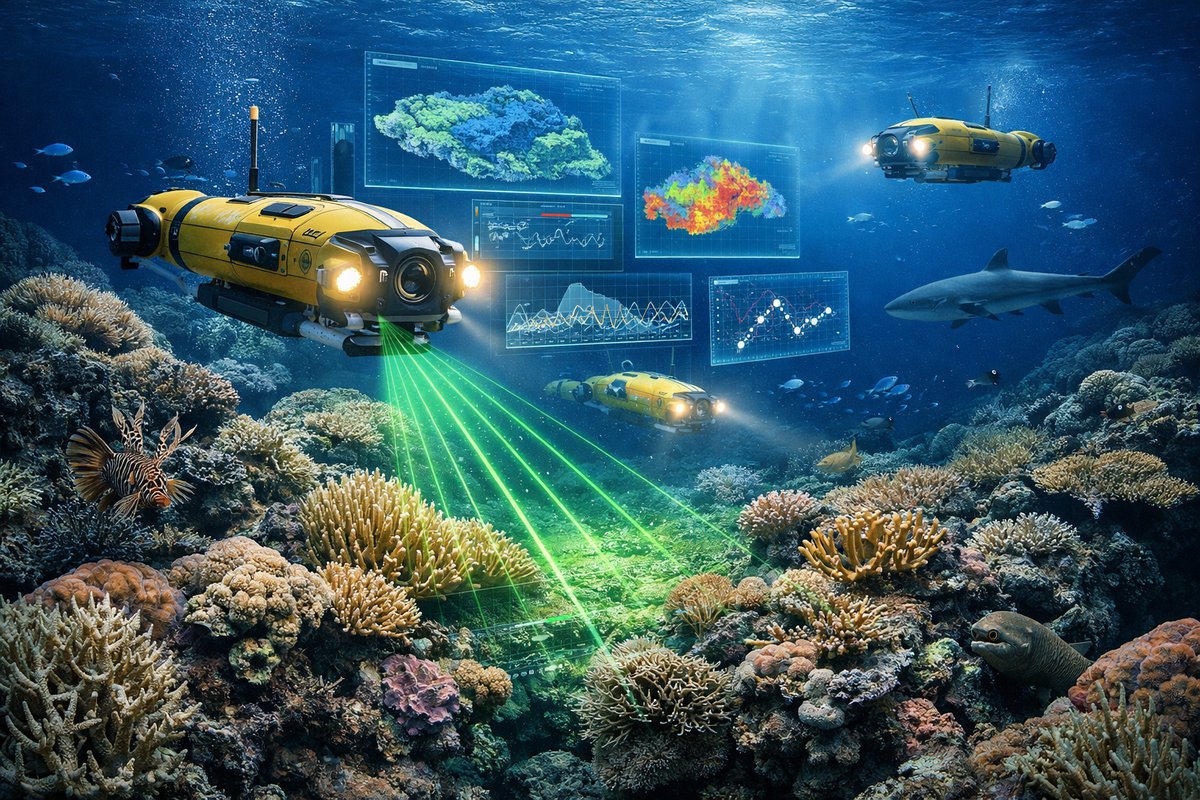
A fleet of autonomous underwater vehicles, guided by advanced artificial intelligence, has mapped coral ecosystems with unprecedented detail. Researchers are now decoding subtle patterns of reef health, nocturnal predator hotspots, and early bleaching signals-opening a new chapter in marine conservation.
An international team of oceanographers and engineers has unveiled the first large-scale deployment of AI-driven underwater drones to monitor coral reef ecosystems in real time. Operating across multiple ocean basins-from the Caribbean Sea to the Coral Triangle-the network of over fifty robotic vehicles promises a revolutionary shift in how scientists understand and protect the world’s most biodiverse marine habitats.
Equipped with hyperspectral imaging cameras, chemical analyzers, and environmental sensors, each drone glides through reef canyons and seagrass meadows, building three-dimensional maps of coral structures and capturing subtle changes in water chemistry. But the real breakthrough lies in the onboard artificial intelligence: deep-learning algorithms trained on millions of images are now identifying coral species, fish populations, and even nocturnal predation events without human intervention.
“Traditional reef surveys rely on divers and occasional sonar scans, which provide only snapshots in time,” explains a lead researcher from Scripps Institution of Oceanography. “Our autonomous drones can patrol 24/7, detect early signs of thermal stress, and alert us to bleaching before it’s visible to the naked eye.” Early trials have already spotted microalgae blooms that precede coral bleaching by days, giving conservationists a critical window to deploy mitigation measures.
One striking discovery emerged when drones recorded thousands of small predatory fish emerging at dusk from reef crevices. By combining low-light cameras with AI-based behavior analysis, the team mapped feeding hotspots that were previously unknown. These nocturnal gatherings play a vital role in nutrient cycling, and understanding their patterns could reshape fishery management strategies aimed at sustaining reef fish stocks.
Beyond behavior, the chemical sensors onboard measure pH, dissolved oxygen, and microplastic concentrations. In a recent survey at a remote Pacific atoll, drones detected a localized acidification event linked to an underwater volcanic vent-information that diver teams alone would never have captured. Coupled with machine-learning models, these real-time readings feed into regional climate projections, improving accuracy on how ocean chemistry shifts might accelerate coral decline.
Data transmission posed a significant hurdle. Instead of relying solely on satellite uplink, the project introduced a mesh network of surface buoys that relay compressed datasets via low-power radio frequencies. This hybrid system slashes energy use, extending drone patrol cycles from hours to days without resurfacing. Field teams can download high-resolution mosaics of reef terrain directly from the nearest buoy stationed within 10 kilometers.
Sustainability is woven into every aspect of the program. Drones employ biodegradable antifouling coatings to prevent marine growth on their hulls, and energy management algorithms optimize battery usage based on mission priorities. Solar-powered recharge stations anchored to buoys harness sunlight to top up vehicle batteries and power communications hardware.
In the Caribbean, the network pinpointed sections of reef suffering from nutrient overload due to agricultural runoff. By cross-referencing drone data with land-use maps, authorities have initiated targeted reforestation and wetland restoration projects upstream. In Southeast Asia, drones revealed that certain coral species are more resilient to warming waters than previously thought-a finding now informing restoration efforts that transplant robust colonies to vulnerable reef sites.
The science community has greeted these developments with cautious optimism. While the drones generate an unprecedented volume of data, managing and interpreting terabytes of imagery and sensor readings remains a formidable challenge. To tackle this, researchers are collaborating with cloud-computing providers to develop scalable analytics pipelines. Open-source tools will allow global conservation groups to tap into the data stream, fostering a collaborative network of reef guardians.
Looking ahead, the project aims to integrate passive acoustic sensors into the next generation of vehicles. Capturing reef soundscapes could unlock further insights into fish spawning events, sponge health, and even the presence of elusive marine mammals. Citizen scientists may soon participate through smartphone apps that crowdsource acoustic recordings, enriching the AI’s training database.
Perhaps most exciting is the potential for real-time intervention. In the coming months, drones will be piloted with micro-dispensers capable of delivering probiotic treatments to corals-beneficial microbial cocktails designed to boost resilience against heat stress. Early lab studies suggest these treatments can increase coral survival rates by up to 30 percent during thermal anomalies, and the robotic fleet could scale up applications across hundreds of reef patches.
This convergence of robotics, machine learning, and marine ecology represents more than a technological milestone: it embodies a values-driven approach to conservation. By prioritizing minimal environmental impact, open data sharing, and local stakeholder involvement, the project underscores a new era of collaborative ocean stewardship. For the first time, researchers, policymakers, and coastal communities share a unified, high-resolution window into reef health-one that may tip the balance in the fight against climate-driven degradation.
As the sun sets over the turquoise waters of remote atolls and bustling coral cities, the silent fleet of underwater drones continues its vigil. In every scan, every spectrum, and every algorithmically detected pattern, there lies hope that science can illuminate pathways to preserve nature’s most intricate underwater tapestries. The ocean’s secrets are vast-but with AI-powered eyes beneath the waves, humanity is poised to listen more closely and act more wisely than ever before.