Location
Mount Vernon, WA 98274

Location
Mount Vernon, WA 98274
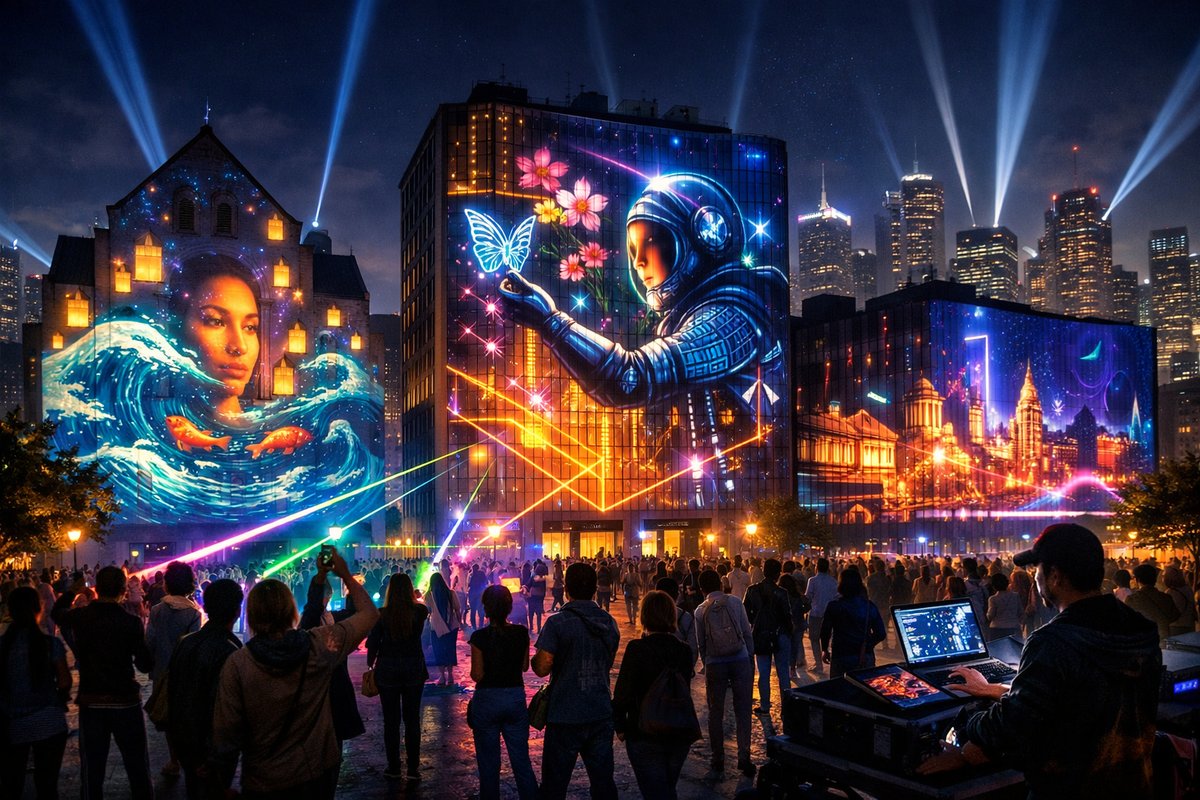
An emerging wave of projection mapping artists is turning blank urban façades into immersive, interactive displays. At this year's Night Canvas Festival, creators fused coding, light, and local narratives to sketch dynamic murals across the city's nighttime skyline.
When the streetlights dimmed and traffic thinned last month, a new kind of mural came alive on the side of a century-old warehouse in the city’s industrial quarter. Instead of spray cans and scaffolding, artists wielded code, mini projectors, and motion sensors to paint shifting shapes, historical photos, and poetic lyrics in cascading beams of light. This is projection mapping art, and at the inaugural Night Canvas Festival, it took urban storytelling to a cine-poetic dimension.
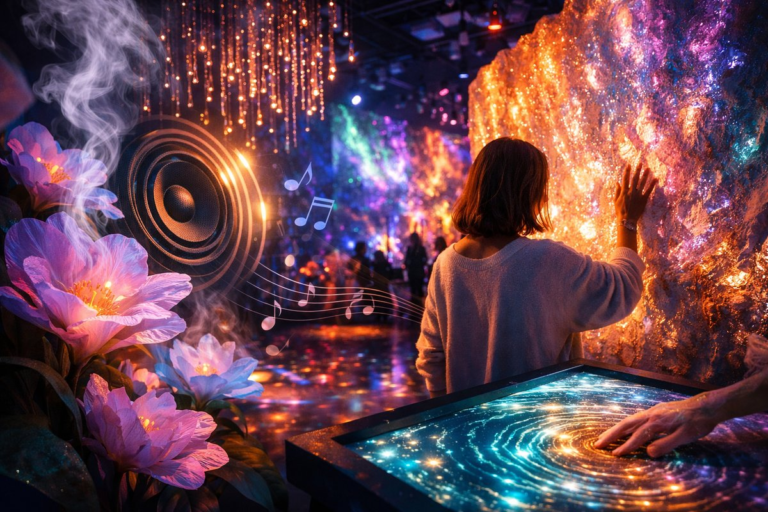
Organized by a collective of designers, technologists, and community organizers, Night Canvas Festival turned ten key façades across downtown into reactive canvases. Passersby could trigger animations by waving their hands or scanning QR codes with their smartphones. One installation reimagined a dull brick wall as a 3D model of the neighbourhood circa 1920, complete with horse-drawn carriages and fading vintage signage. Moments later, the scene dissolved into modern architectural renderings, underscoring the city’s layered history.
“This feels like a dialogue between past and present,” said festival curator Lina Ortega. “Projection mapping lets us bring archival photographs off the page and onto the streets, inviting residents to walk through time rather than just look at it in a gallery.” Over five nights, more than 15,000 visitors explored works that blended augmented reality overlays, ambient soundscapes, and live coding sessions. Each piece showcased a distinct technique-from generative visuals driven by real-time data streams to interactive poetry that responded to ambient noise levels.
In one notable piece, a duo of digital artists used open-source projection mapping software to choreograph hundreds of floating lanterns that drifted across a concrete pillar. Attendees wearing AR smart glasses saw the lanterns glimmer as if lit by fireflies, while a hidden microphone captured crowd applause and translated it into rippling light pulses. According to the artists, this required syncing three portable projectors and calibrating each with millimeter precision. They carried out test runs during afternoon light to ensure colors would pop after dusk, adjusting focus, keystone correction, and lens shift on the fly.
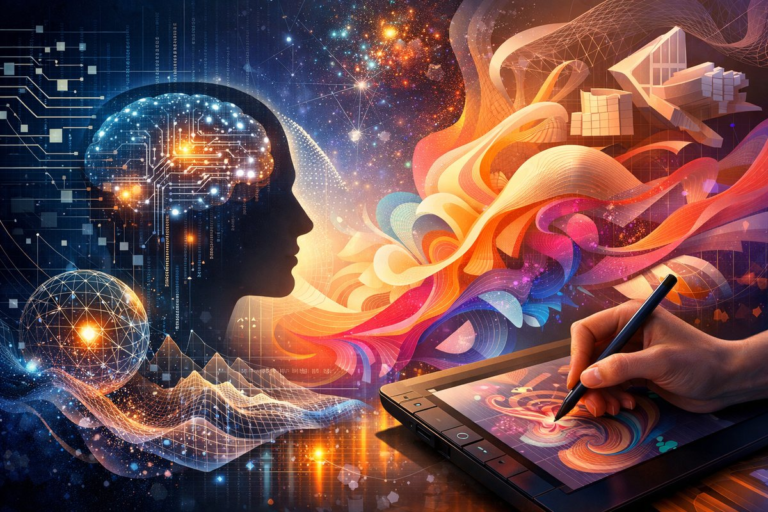
Another standout used a wireless drawing tablet to create live illustrations that projected onto a former factory wall. The artist sketched outlines of local wildlife-foxes, owls, and a river otter-while an on-site mirrorless camera captured the evolving city skyline. Through photogrammetry techniques, the camera data merged with hand-drawn strokes, weaving nature and industrial elements into a singular narrative. Spectators watched as architectural beams and water ripples emerged from the tablet, filling every brick crevice with organic linework.
Beyond aesthetics, festival programmers stressed sustainability. Instead of diesel-powered generators, the team deployed portable power stations charged by nearby solar arrays. Low-energy LED projectors kept power draw under 200 watts each, while reusable rigging frames minimized metal waste. Organizers also partnered with a recycling collective to take back old projection equipment and e-waste from local businesses, reinforcing an ethos of circular creativity.
For many residents, the event offered more than fleeting Instagram moments. Community groups ran storytelling booths where attendees could share memories tied to each site. Those anecdotes became inspiration for two collaborative pieces: one depicted a timeline of neighborhood block parties dating back four decades, the other visualized dreams recorded by students at a nearby high school. During the final night’s grand finale, both installations merged on a central plaza wall, interlacing sepia-toned photographs with abstract bursts of color drawn from the students’ hope-filled sketches.
Yet technical hurdles abounded. Sudden rainstorms forced crews to waterproof full-HD projectors in custom enclosures within 30 minutes. Gusty winds tested the stability of lightweight tripods, prompting last-minute replacements with reinforced steel stands. A power surge knocked one installation offline, leading technicians to reroute backup batteries mid-show. Organizers credit meticulous site surveys and contingency rehearsals for keeping all ten displays running on schedule.
Local businesses reported a bump in evening foot traffic throughout the festival. Cafés extended hours, art supply stores ran out of specialty projection film and light-diffusing gels, and bike-share docks emptied by 10 p.m. The success has municipal leaders eyeing a permanent “Digital Art Corridor,” where projection mapping and interactive installations could run year-round. Talks are underway to retrofit street-facing walls with dedicated pre-calibrated mounts and power outlets, transforming underused spaces into a living canvas.
Looking ahead, artists and technologists at Night Canvas see projection art as a bridge between virtual and physical realms. By layering digital content onto real-world architecture, they hope to spark conversations about urban identity, history, and collective creativity. Planners emphasize that no coding background is needed: workshops offered during the festival equipped more than 200 people with basic mapping skills and low-code tools that demystify the process.
In one workshop, participants used a simple smartphone app to map small animations onto a cardboard model of a storefront. The exercise demonstrated that projection art isn’t confined to sprawling murals-it can enliven shop windows, public phone booths, or even community notice boards. As festival volunteer Marco Chang put it, “When people realize they can code or draw and put it on their own block, that’s when the true transformation begins.”
As dawn broke on the festival’s final day, the city’s evening blank slate returned to brick and mortar. But the glow of that week lingers in minds and smartphones-videos of glowing arches, migrating lanterns, and mosaic-like portraits continue to circulate online. For a moment, urban walls spoke in pixels and poetry, reminding us that public art can evolve at the speed of light and code.
Whether Night Canvas becomes a once-a-year spectacle or the seed of a continuous creative ecosystem, it demonstrates how art and design can merge technology, community engagement, and sustainability. By transforming ephemeral beams into living stories, projection mapping may well herald a new era of public expression-one where the cityscape itself becomes an open-source gallery inviting everyone to contribute a line, a shape, or a flicker of imagination.