Location
Mount Vernon, WA 98274

Location
Mount Vernon, WA 98274
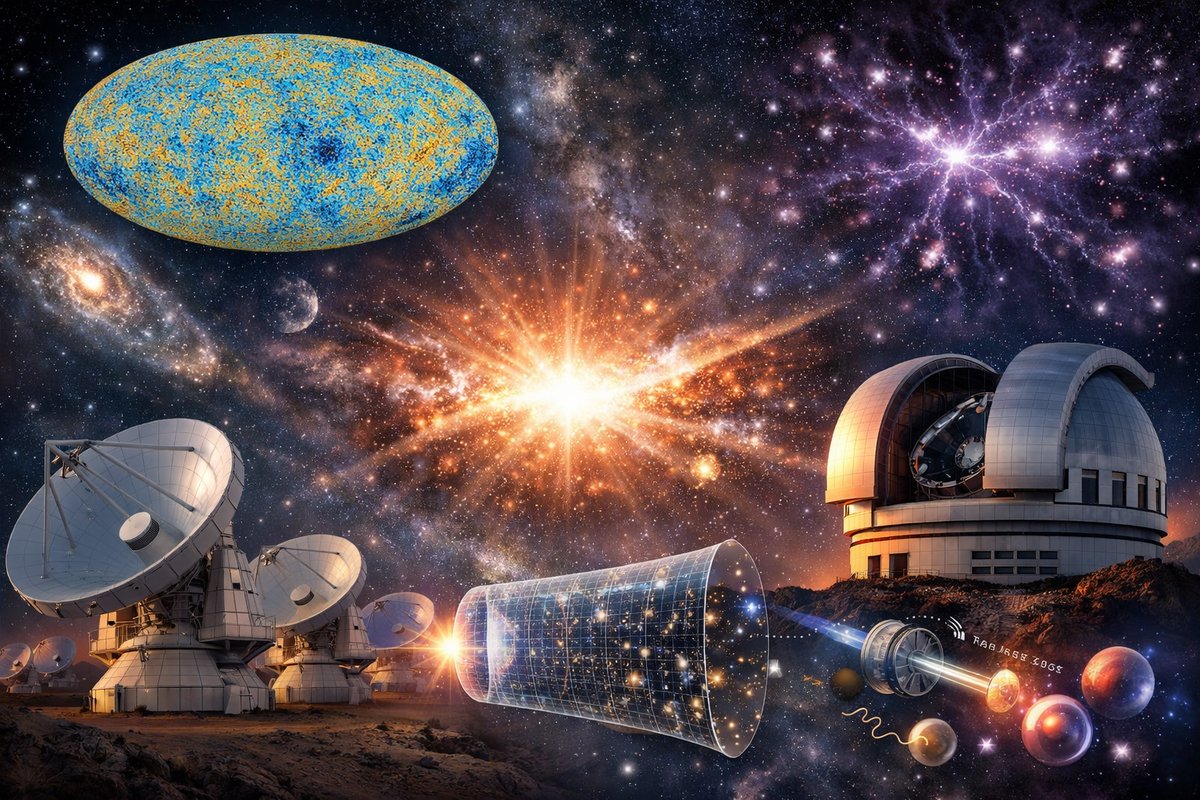
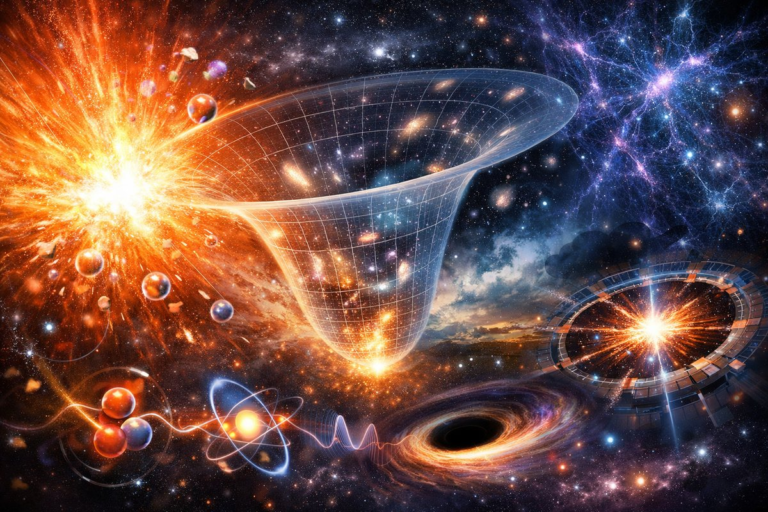
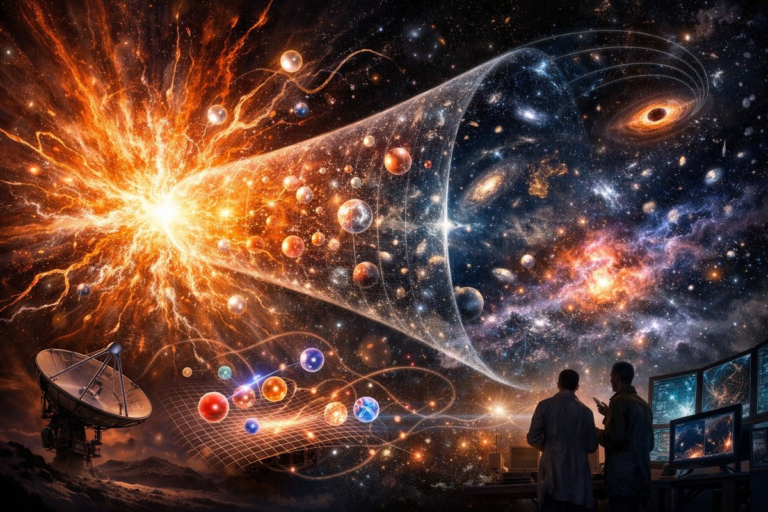
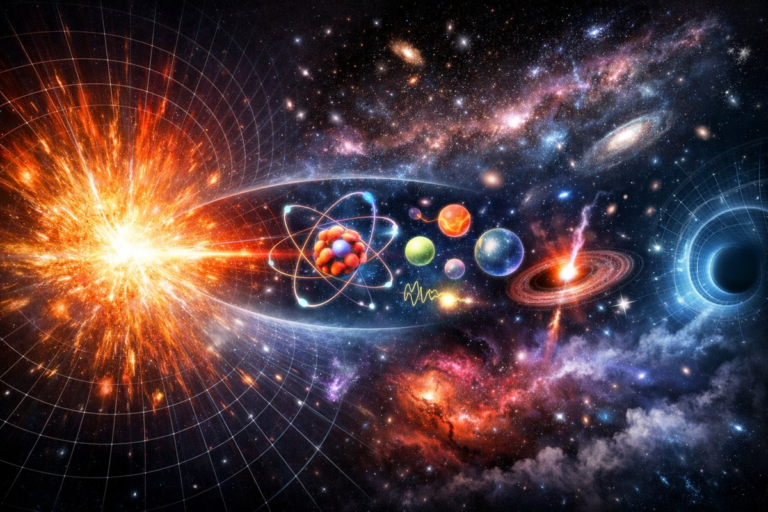
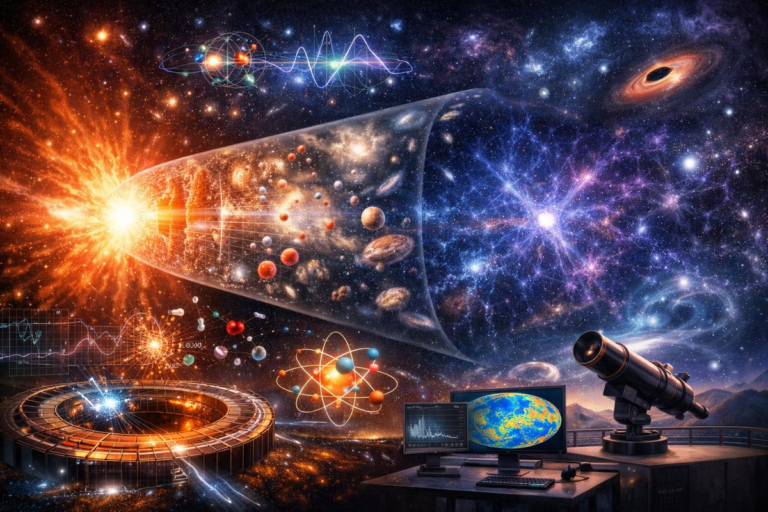
An array of cutting-edge observatories and theoretical breakthroughs is rewriting the story of how the universe began. From surprising hints in the cosmic microwave background to whispers of dark matter particles, researchers are piecing together a richer, more complex origin tale than ever before.
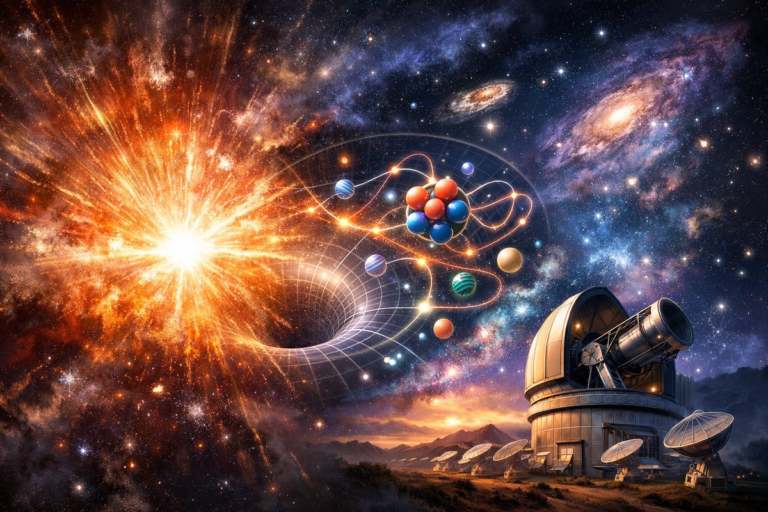
Humanity’s quest to trace the universe back to its inception has entered a thrilling new phase. Observatories both on Earth and in orbit are delivering data that challenge long-held assumptions about the moments after the Big Bang. Sophisticated detectors are tuning into exotic signals-primordial gravitational waves, elusive neutrino clouds and faint echoes in the cosmic microwave background (CMB)-that promise to transform our account of cosmic dawn.
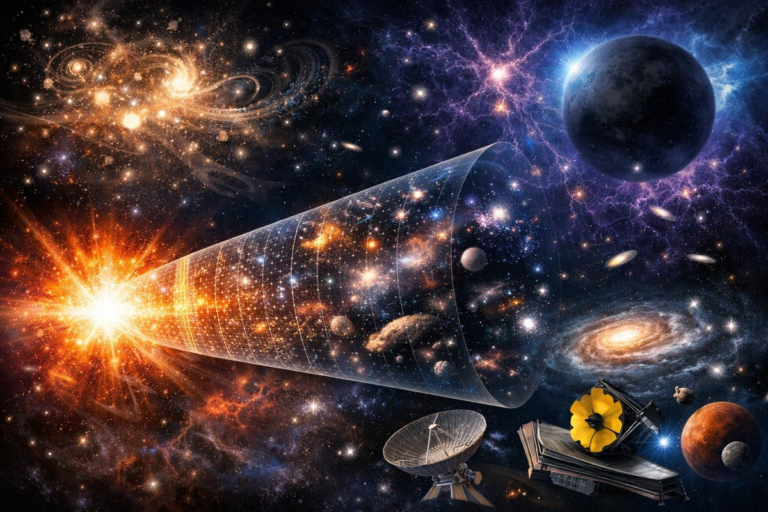
The James Webb observatory’s deep-field images already hint at galaxies forming far earlier than predicted by standard models. While those observations grab headlines, ground-based experiments are unearthing subtler curiosities. Teams working on the Simons Observatory and the upcoming CMB-S4 array have reported unexpected temperature asymmetries in the CMB’s polarization patterns. These anomalies may point to previously unknown interactions among the universe’s earliest particles.
Meanwhile, the long-standing “Hubble tension,” referring to discrepancies between expansion-rate measurements from the early universe and those from local galaxies, refuses to relent. New data from the Dark Energy Survey and independent measurements via strong gravitational lensing persist in showing a faster expansion than the CMB’s inference. Some theorists propose that a form of early dark energy briefly dominated the cosmos, rewriting the expansion history between one second and one million years after the Big Bang.
In underground laboratories beneath ice sheets and mountain ranges, neutrino detectors are on the verge of observing the cosmic neutrino background-a relic sea of ghostly particles left over from the universe’s first second. Pinpointing their energies and arrival directions would open a direct window into the ultra-hot plasma that preceded atom formation. Successfully detecting those neutrinos could confirm or challenge inflationary theories that describe how space stretched faster than light in the universe’s first trillionth-of-a-trillionth-of-a-trillionth of a second.
Dark matter, an invisible form of matter whose gravitational pull shapes galaxies, remains a persistent enigma. Direct-detection experiments continue to come up empty while astronomical surveys trace its outsized influence on cosmic structure. Now, axion haloscope projects are tuning cavities to catch signals from hypothetical low-mass particles whose oscillations would subtly shift electromagnetic fields. Simultaneously, underground xenon chambers await rare interactions that would reveal heavier dark matter candidates.
Adding to the intrigue, laser interferometers designed for gravitational-wave astronomy are being tuned to pick up primordial ripples. LIGO’s collaborators plan to extend sensitivity to frequencies theorized to arise from quantum fluctuations during inflation. Should such a signal emerge, it would constitute a “smoking gun” for inflation-offering a direct measurement of the universe’s expansion rate when it was smaller than an atom.
On the theoretical frontier, quantum gravity frameworks are introducing radical ideas about how spacetime itself may have emerged from entangled quantum bits. Holographic principles, drawn from black hole physics, suggest our three-dimensional universe could be a projection of more fundamental processes on a distant boundary. While still speculative, these ideas are spurring new calculations with testable consequences for the CMB’s fine-grained features.
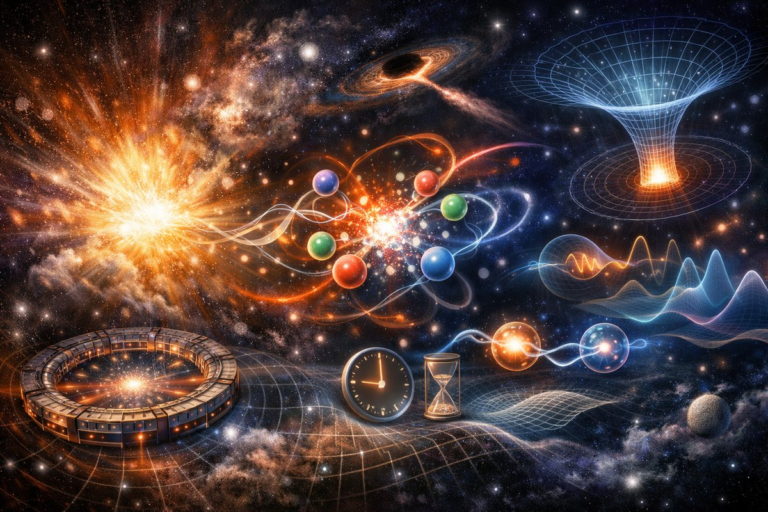
Philosophical paradoxes shadow all these advances: if the universe will eventually succumb to heat death, what does it mean to explain its beginning when its end seems predetermined? Could spontaneous fluctuations in a vacuum create Boltzmann brains-self-aware entities arising from random particle assemblies-so ubiquitous that our own memories become statistically suspect? Researchers debate whether a theory of cosmic origins must also account for the arrow of time and why entropy has always increased.
Space-based missions slated for launch in the coming decade aim to address these puzzles. The Euclid satellite’s precision mapping of galaxy clustering will refine our picture of dark energy and its interplay with dark matter, while the Roman telescope will survey rapacious supernovae to trace expansion history across cosmic epochs. Beyond optical surveys, proposals for spaceborne interferometers like LISA promise to hear gravitational waves from even earlier cosmic phases.
Back on Earth, upgrades to particle colliders will explore energy scales once thought beyond reach, seeking signatures of exotic particles that may have shaped the infant universe. Novel materials-ultra-cold crystals and superconducting sensors-offer sensitivity to minute forces and fields, enabling laboratory analogues of cosmological phenomena. Combined with progress in quantum computing, these tools may simulate conditions close to the Planck era, where space, time and matter entwined in ways current theories barely grasp.
Amid the technical innovation, collaborations are embracing openness: data from sky surveys and detector runs are rapidly released into public archives, allowing researchers worldwide to mine the signals. Citizen-science initiatives invite amateur astronomers to hunt for transient phenomena that could illuminate cosmic expansion, while open-source software frameworks facilitate cross-disciplinary work between cosmologists, particle physicists and quantum theorists.
Despite the sophistication of instruments and simulations, mysteries endure. The precise mechanism behind inflation remains unclear; the nature of dark energy and dark matter still eludes direct detection; and the potential for new physics lurking at high energies or in extra spatial dimensions remains wide open. Yet this swirl of questions has energized a new generation of scientists hungry to decode the universe’s origin story.
Educational outreach efforts are translating these complex ideas into accessible programs, with planetarium shows and interactive exhibits that let participants “walk” through a digital timeline from the Big Bang to the present. Virtual reality pilots are taking users inside a simulated quantum field, illustrating how particles pop in and out of existence in the seething vacuum.
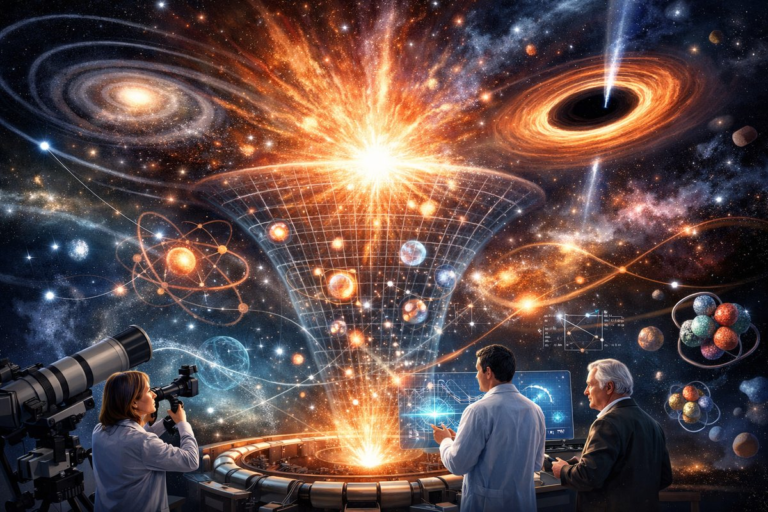
As telescopes peer deeper into space and detectors grow ever more sensitive, the coming years may see the first decisive answers to some of these cosmic riddles. Even if certainty remains elusive, each anomaly and each new hint enriches our understanding, weaving a more intricate tapestry of origins than classic textbooks could ever depict.
Ultimately, the pursuit of cosmic beginnings is not merely an academic exercise. It shapes technology-from superconducting sensors to data-analysis algorithms-that finds applications in medicine, communications and climate science. It also reframes humanity’s sense of place, reminding us that the atoms composing our bodies were once forged in the hearts of the earliest stars, and that our quest for knowledge remains as boundless as the cosmos itself.
This unfolding revolution in studying cosmic origins highlights a profound truth: every new discovery is both an answer and an invitation to further questions. As probes and telescopes push ever closer to the universe’s first moments, they reveal a reality more mysterious and wondrous than we ever dared imagine.