Location
Mount Vernon, WA 98274

Location
Mount Vernon, WA 98274
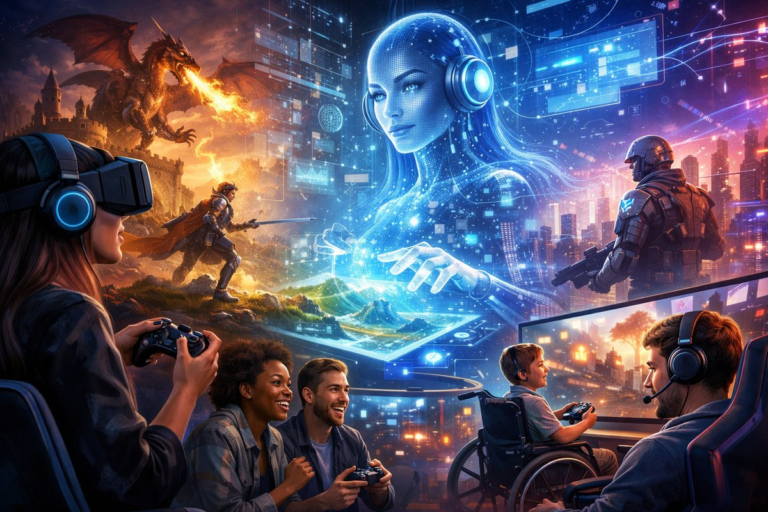
A surge of hardware innovations, generative AI storytelling, and cloud-based arenas is reshaping how we level up our gaming experiences. From modular controllers to immersive audio engines, here's a deep dive into the technologies and trends transforming play into a multisensory adventure.
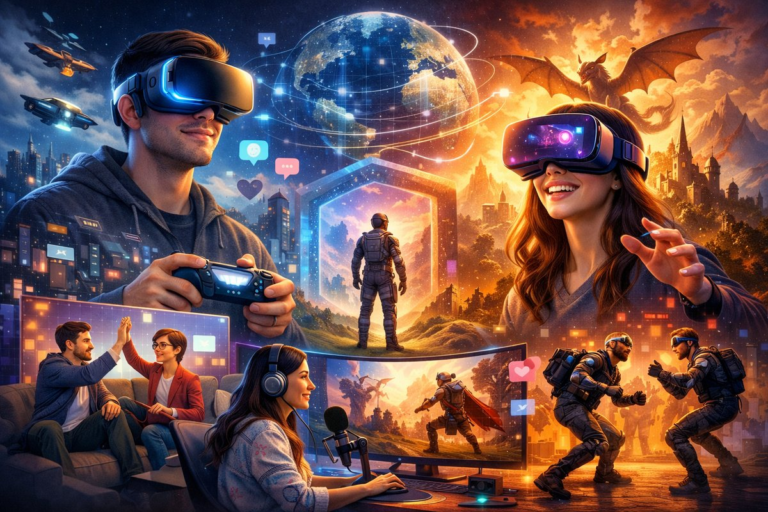
Over the past few months, the gaming landscape has transformed at a blistering pace, ushering in a new era where the lines between software, hardware, and social connection blur into one cohesive playground. Developers are rolling out AI-driven NPC companions that adapt to your playstyle, indie studios are releasing VR adventures built around emotional resonance, and cloud platforms are hosting massive cross-platform tournaments without a tether to a traditional console. For players seeking more than just button-mashing thrills, these changes signal a chance to elevate every session from casual diversion to fully immersive odyssey.
Adaptive Audio Engines Bring Worlds to Life
One of the most immediate breakthroughs is the rollout of spatial audio engines that dynamically adjust to in-game events. Gone are static surround-sound presets-modern engines analyze ambient noises, character movements, and even your own head position (via compatible headsets) to render footsteps, environmental effects, and directional cues in three dimensions. This leap forward is particularly resonant in horror and stealth titles, where the snap of a twig behind you or the faint drip of water in a cavern can mean the difference between victory and a sudden virtual demise.
Recent patch notes for a popular stealth thriller highlighted the integration of dynamic occlusion, ensuring that gunshots echo through corridors differently when you duck behind walls. This fluid audio integration builds tension and rewards players who invest in high-fidelity headsets equipped with multiple drivers. As immersive audio standards take hold, look for more midrange headsets to adopt these features, making professional-grade soundscapes accessible to a wider audience.
Modular Controllers and Customizable Haptics
While immersive sound lures us deeper into virtual realms, the way we physically interact with games is evolving too. Modular controllers have arrived, enabling gamers to swap thumbsticks, D-pads, paddles, and even trigger modules on the fly. Competitive racers can fine-tune their grip for precision braking, while fighting game enthusiasts can reconfigure button layouts mid-tournament.
Building on this trend, a handful of peripherals now offer programmable haptic modules that can produce localized feedback-like simulating the recoil of a bowstring or the subtle vibration of a magic spell winding up. Indie developers are partnering with these hardware makers, publishing free haptic profiles for upcoming titles. Soon, the choice between a one-size-fits-all gamepad and a bespoke control rig will be as stark as choosing between a mass-market sedan and a custom-tuned sports car.
Cloud Gaming Lounges: The Living Room as Esports Arena
Cloud gaming isn’t new, but its application in home settings has gained traction. A growing number of households are converting spare corners into cloud gaming lounges-stripped-down setups with streamlined consoles, ambient lighting, and low-latency routers. The appeal is simple: access ultra-high-end rigs remotely without the upfront cost of cutting-edge GPUs.
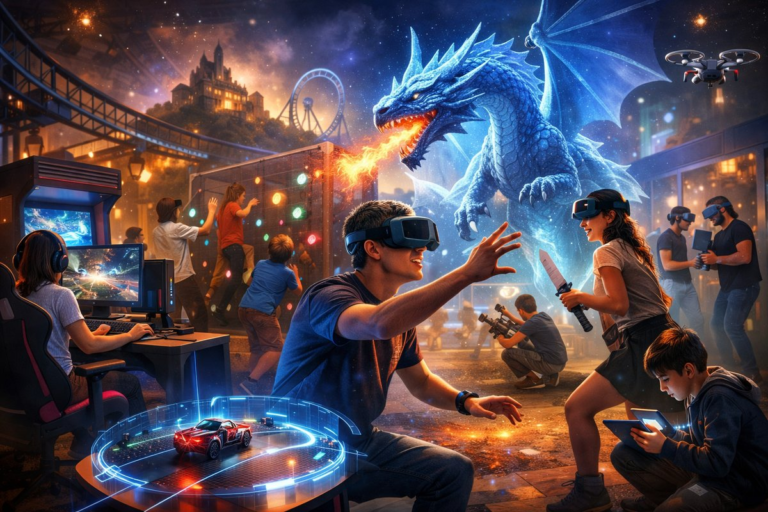
Publishers have responded by hosting pop-up virtual arenas where players can enter region-locked servers from anywhere. Last quarter, a charity tournament saw teams competing across six continents on the same map, with local streaming partners broadcasting matches in real time. These events are more than exhibitions; they’re blueprints for how community-driven tournaments can thrive without traditional LAN infrastructure.
Generative AI Narratives: Beyond Branching Storylines
On the storytelling front, branching dialogues and fixed moral systems are giving way to generative AI narratives that construct responses on demand, based on a character’s history, voice pattern, and in-game relationships. Early tests in a sprawling RPG demo showed characters weaving backstory threads that developers hadn’t scripted-commenting on events that happened hundreds of hours earlier or responding to your playstyle in unexpected ways.
This level of nuance requires robust natural-language processing libraries and beefy server arrays, but some studios are offering scaled-down versions for single-player titles running offline. Imagine an AI sidekick whose humor adapts to how many times you’ve fallen into the same trap, or a villain who sends you taunting messages that evolve as your skill level improves. The dream of truly reactive storytelling is within reach, and it might just redraw the map of narrative design forever.
Indie Worlds and Experimental Spaces
While juggernaut studios grab headlines with mega-budget releases, indie developers are carving out niches that mainstream publishers can’t. A recent VR stealth thriller built around emotional storytelling is leaving its mark with minimalistic art design and zero combat. Instead of guns or swords, your only tool is a pair of noise-cancelling earbuds that let you “tune in” to distant conversations. This quiet, contemplative approach to interactive drama is proof that innovation often sprouts where financial risk is lower.
Experimental game jams have also pivoted toward unconventional hardware-like brain-wave sensors and motion-capturing gloves-to prototype experiences that feel more like performance art than traditional gameplay. While most of these experiments won’t hit retail shelves, they highlight the creative alchemy that emerges when developers view technology as a collaborator rather than just a tool.
Social Connectivity: From Voice Chats to VR Hangouts
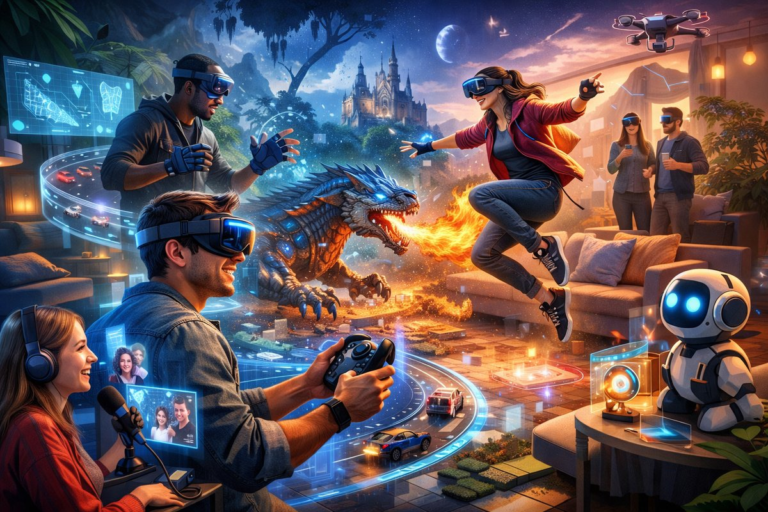
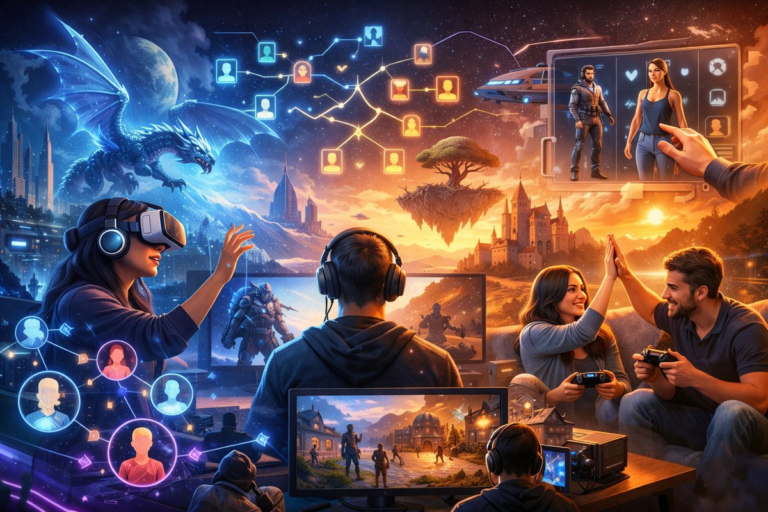
Community remains at the heart of gaming, and the channels for social play keep multiplying. Beyond text and voice chats, players are congregating in freeform VR hangouts where they can meet avatars, listen to live-DJ sets, or explore user-created environments. These virtual cafes are self-organizing: one night you might attend a live reading of a fan-fiction megacong, while the next you’re jamming in a communal pixel art workshop.
Cross-platform integration has improved dramatically, too. Mobile friends can queue into the same match as console players, share in-game resources, or join co-op raids without switching devices. This fluidity lowers the barrier for mixed-device parties, turning casual mobile players into full-fledged guildmates.
Sustainability and Ethical Play
As the hardware cycle accelerates, sustainability has become a hot topic. Some peripherals now come with repairable parts-thumbstick modules you can replace yourself, battery packs you can swap without soldering. Manufacturers are experimenting with biodegradable plastics and carbon-offset programs to temper the environmental footprint of our leisure pursuits. For socially conscious gamers, these green credentials are becoming as important as RGB lighting or polling software for custom macros.
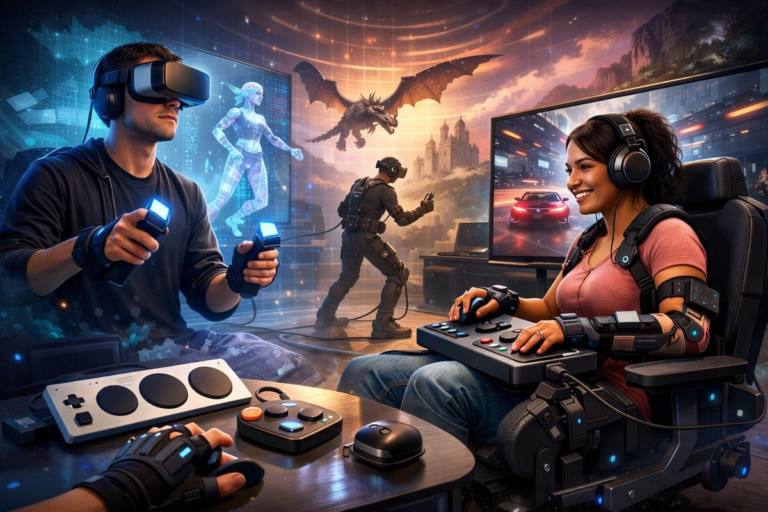
Inclusivity also plays a role in the next wave of peripherals. Adaptive gamepads designed around one-handed play, eye-tracking interfaces for hands-free navigation, and audio-described cutscenes for visually impaired players are moving from niche to mainstream. These advances ensure that digital playgrounds remain open to anyone with the curiosity to explore.
Preparing Your Space for the Next Level
All these advances-from dynamic audio to AI-driven dialogue-demand a setup that can keep pace. Here are a few practical tips:
• De-Clutter the Desk: Keep your workspace free of cables and unnecessary gadgets. Invest in cable management solutions and a modular power strip to keep everything organized.
• Upgrade Network Hardware: Low-latency routers with gaming-tuned QoS settings can reduce lag spikes in cloud matches and maintain chat stability in crowded VR lounges.
• Calibrate Display Settings: High-refresh monitors are only as good as their calibration. Use software calibration tools to balance color accuracy, refresh rate, and motion clarity.
• Integrate Ambient Lighting: LED strip kits that sync with on-screen action can heighten immersion and reduce eye strain during marathon sessions.
• Ergonomic Support: A well-designed chair or adjustable desk can minimize fatigue during extended raids, ensuring you stay focused even when boss health bars dwindle.
Whether you’re diving into an AI-written epic, strategizing in a cloud-hosted tournament, or simply catching up with friends in a VR coffee shop, the boundaries of play continue to expand. The gear and platforms emerging now aren’t just conveniences-they’re gateways to experiences that reimagine what it means to game. As hardware becomes more modular, audio more atmospheric, and narratives more responsive, each choice you make in your setup will shape the stories you help write.
Welcome to the next frontier of entertainment, where technology and creativity intersect to turn every session into an odyssey worth exploring.