Location
Mount Vernon, WA 98274

Location
Mount Vernon, WA 98274
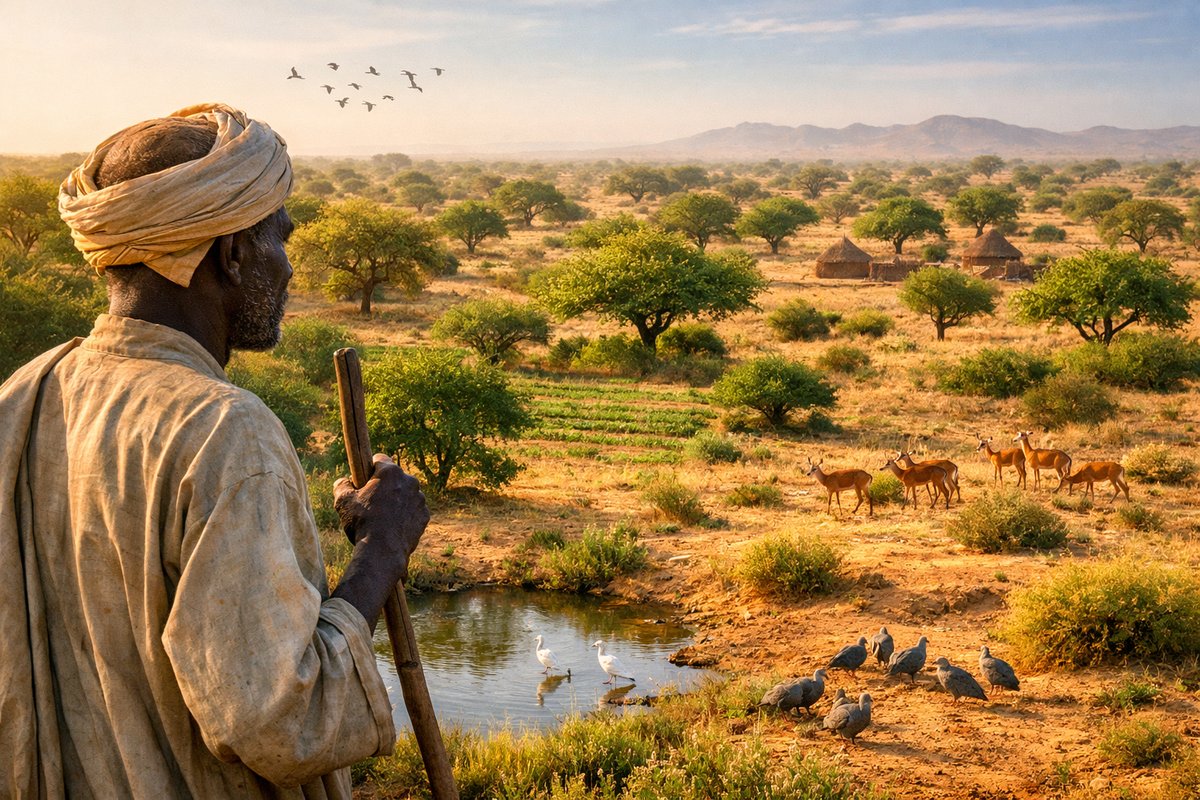
Across decades of drought and uncertainty, communities in the Sahel have quietly reclaimed tens of thousands of hectares of degraded land through a simple practice known as farmer-managed natural regeneration. Recent data reveal this grassroots movement has boosted tree cover, revitalized soil health and contributed to a resurgence of local wildlife-offering a blueprint for sustainable restoration in arid regions worldwide.
On a recent morning in a remote village on the edge of Niger’s central belt, farmers stepped away from barren fields to survey a surprising sight: saplings sprouting where just a few years ago only dust and thorns thrived. This landscape reversal is the result of a practice called farmer-managed natural regeneration (FMNR), which encourages landholders to protect and harvest new shoots from surviving tree stumps instead of clearing them. Although modest in technique, the impact of FMNR across the Sahel is turning scientific heads and restoring hope in a region long gripped by desertification.
An international research team, led by ecologists at a consortium of African universities and environmental institutes, recently published a multi-year analysis showing that FMNR has increased tree cover by an average of 10 percent across more than 20,000 villages. The findings, based on satellite imagery cross-referenced with on-the-ground surveys, mark one of the most significant land rehabilitation successes in recent memory. In a region that supports the livelihoods of more than 100 million people, even a small uptick in vegetation can translate into improved crop yields, better water retention and stronger food security.
“FMNR isn’t rocket science,” says a lead researcher at the Global Ecology Institute who preferred not to be named. “But what makes it powerful is that it builds on existing knowledge. Farmers know which trees survive dry seasons and which species return resilience to their fields. Our job was simply to document that this localized knowledge scales up when communities adopt consistent protection measures.”
The process begins by identifying stumps or root systems of native trees such as old Acacia, Shea and Baobab that have proved drought-tolerant. Instead of clearing these stumps during land preparation, farmers prune away competing shrubs, leaving the main trunk and capacity for regrowth intact. Over successive rainy seasons, those stumps send up strong, healthy shoots that can be thinned for firewood or left to grow into new trees. The result is a mosaic of crop plots shaded by young trees, creating microclimates that reduce evaporation and strengthen soil structure.
Satellite data from multiple earth-observation platforms show that pockets of regreening have spread steadily since the early 2000s. Villages that opted into community-led FMNR initiatives saw the most dramatic increases in biomass, with some locales doubling their tree density in under a decade. In contrast, areas without such programs remained largely unchanged-still dotted with the bare earth scars of past windstorms and erosion gullies.
Beyond the aesthetic transformation, the ecological benefits are manifold. New tree growth captures carbon, making FMNR a potential contributor to climate change mitigation efforts. Compact root networks curb topsoil loss, while falling leaves replenish organic matter. The returning shade lowers daytime temperatures, which can translate into improved seed germination rates for scattered millet and sorghum. Finally, the presence of woody vegetation draws back native pollinators and small wildlife, reknitting disrupted food webs.
Villagers describe the changes in simple terms: less wind-blown dust, cooler afternoons and more reliable harvests. In one community cooperative, farmers reported a 25 percent increase in groundnut yields after only three years of FMNR practice. Local women’s groups, which often manage shea-butter production, noted a richer supply of nuts on newly flourishing shea trees-critical for both nutrition and income.
While FMNR owes its success to local stewardship, partnerships with non-governmental organizations and regional agencies have helped scale training and secure legal recognition for regenerated forests. In Burkina Faso, for example, policy shifts formalized community rights over young woodlands, prompting a wave of adoption among landholders wary that new trees might be claimed by outsiders or taken as state resources.
However, the movement isn’t without challenges. Erratic rainfall patterns tied to global climate shifts can delay regrowth or stunt sapling development. Farmers need reliable seasonal forecasts to plan pruning and planting cycles effectively. Additionally, tenure disputes and population pressures can hamper cooperative efforts to protect regenerating land. In two neighboring communities studied, encroachment by herders during dry seasons led to selective pruning of young shoots for fodder, setting back regreening goals by up to two years.
To address these obstacles, local leaders have begun drafting informal grazing calendars and rotational grazing zones. Some villages convene monthly councils that include both farmers and pastoralists, forging agreements to leave designated FMNR plots untouched until trees reach a threshold height. Early reports from pilot communes suggest that these governance mechanisms help balance immediate needs for livestock feed with longer-term ecological resilience.
The economic incentives for FMNR extend beyond improved yields. As tree cover expands, opportunities arise for carbon-credit schemes and sustainable woodlot management. In certain pilot districts, cooperatives have negotiated community-level carbon offsets with international buyers interested in supporting soil and tree restoration. Any revenue generated is reinvested in shared infrastructure, such as solar-powered wells or communal grain banks.
Yet perhaps the most compelling testament to FMNR’s value comes in moments of quiet observation. Early each morning, villagers spot the return of warblers and sunbirds, flitting through freshly leafed branches. Small herds of antelope venture closer to once-barren hamlets, grazing on tender shoots at the forest’s edge. Seasonal rains now echo through a patchwork of green where the desert wind once howled unchallenged.
As global development agencies search for scalable, nature-based solutions to land degradation and climate adaptation, the story of FMNR in the Sahel offers a model rooted in community agency and ecological synergy. It underscores the principle that restoration need not always rely on expensive plantations or heavy machinery-sometimes, the key lies in protecting what has survived and trusting people intimately connected to the land.
Moving forward, researchers aim to refine best practices by monitoring genetic diversity among regrown trees and assessing long-term carbon sequestration rates. There is also interest in exploring how FMNR could integrate with agroforestry approaches that introduce beneficial shrubs or fruit trees alongside naturally regenerating species. By weaving together traditional knowledge with emerging ecological tools, communities in the Sahel may continue to turn back the tide of desertification while forging a more resilient future.
In dusty courtyards across the region, where children once coughed through haze and parents feared failing rains, signs of renewal now hum softly. Each shoot safeguarded by a farmer’s hand stands as a testament to the hidden potential that lies beneath even the most parched soils. And as those small trees grow toward the horizon, they carry the promise of a Sahel not just surviving, but thriving.