Location
Mount Vernon, WA 98274

Location
Mount Vernon, WA 98274
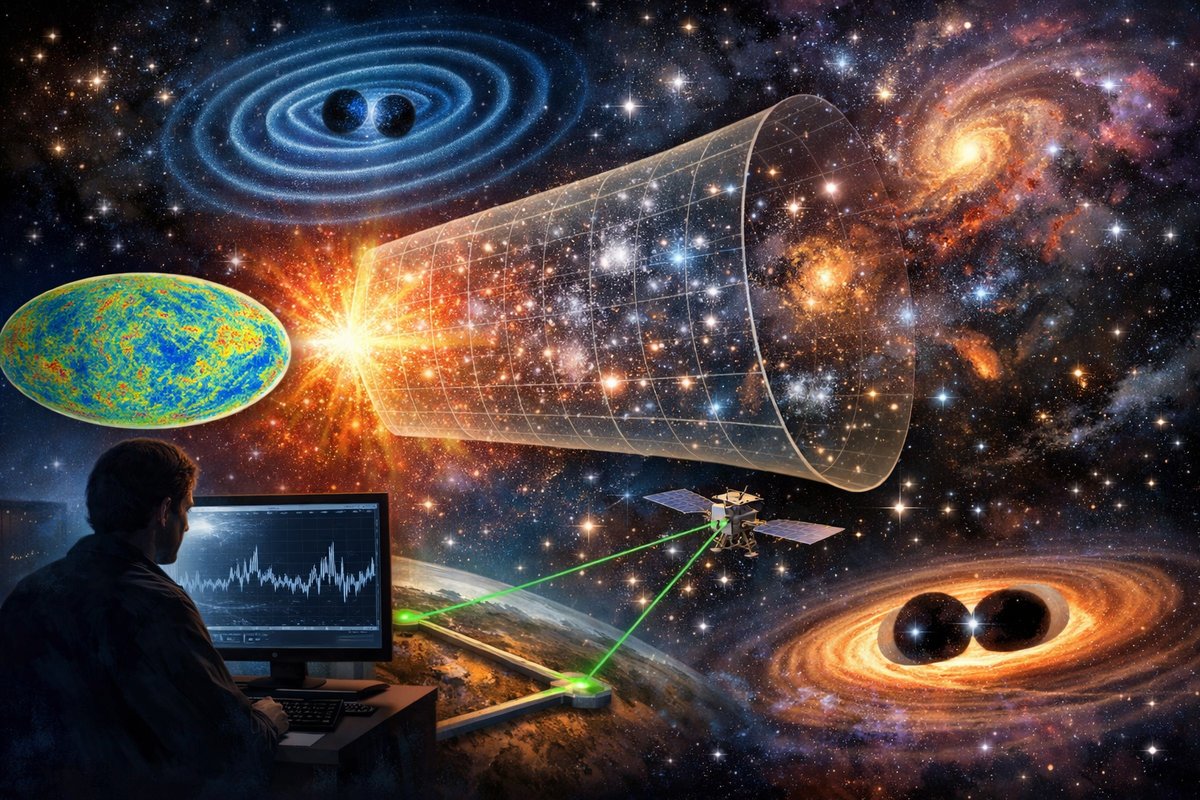
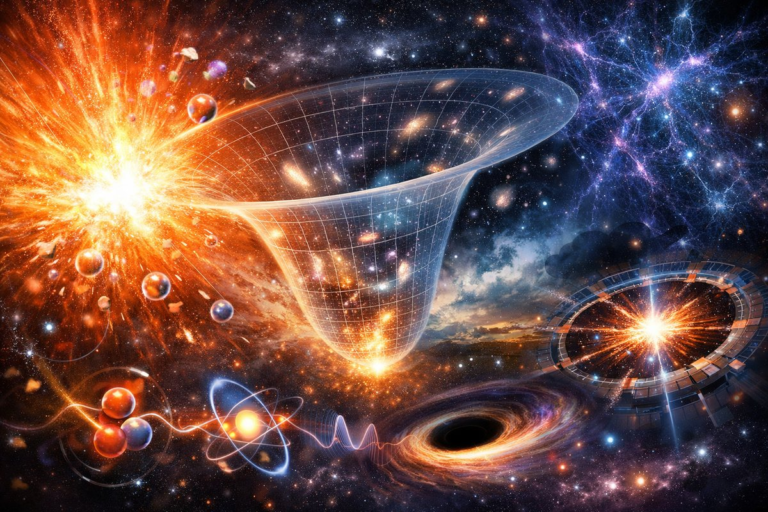
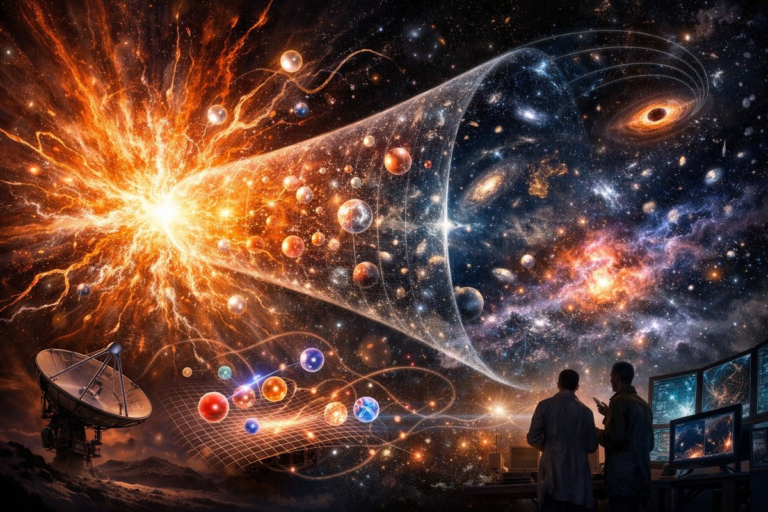
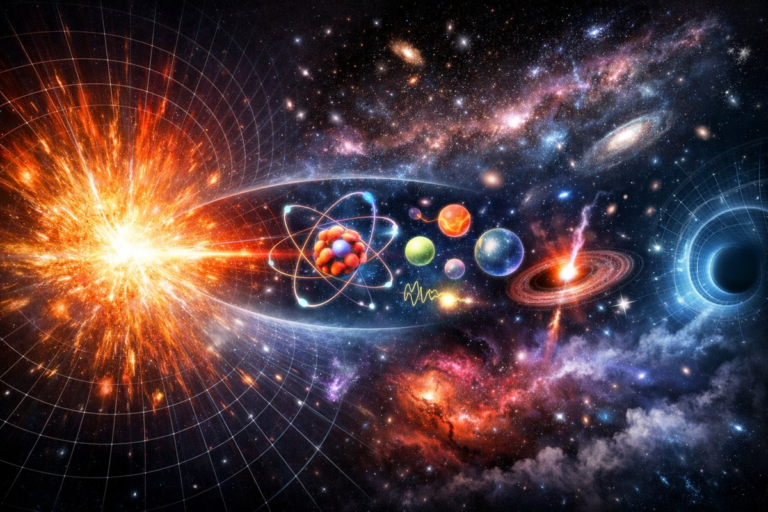
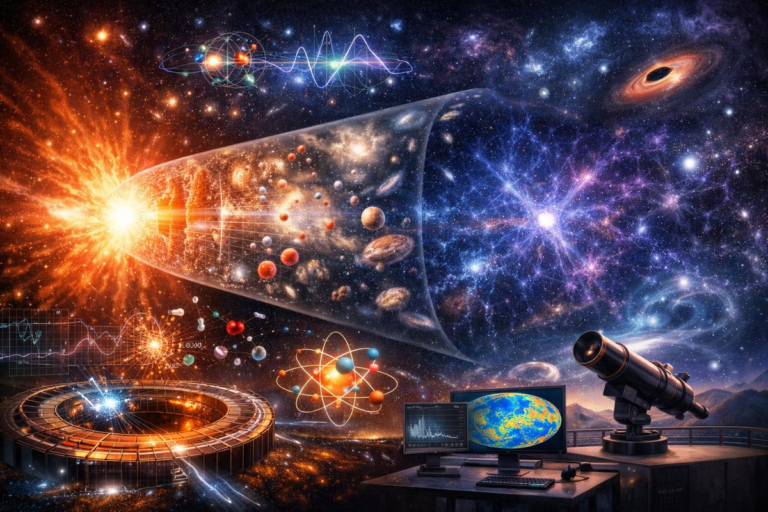
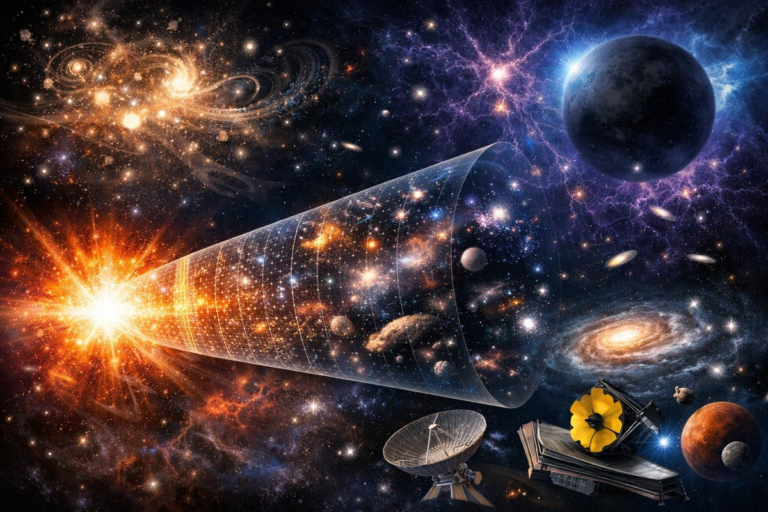
Scientists are piecing together fresh evidence from cosmic remnants that date back to the universe's earliest heartbeat. From unexpected patterns in the cosmic microwave background to emerging gravitational wave probes, researchers are reopening questions about how the cosmos sprang into being.
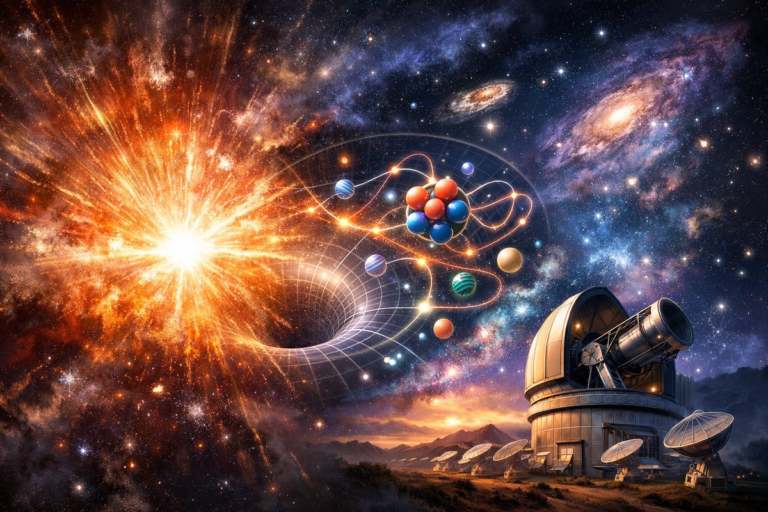
In laboratories and observatories around the globe, a new wave of experiments is pushing back the curtain on the universe’s first instants. Long after the Big Bang, but long before the first stars and galaxies took shape, the cosmos left behind faint signals imprinted on relic radiation, primordial particles, and subtle distortions of spacetime. By decoding these whispers, scientists hope to untangle the forces that governed reality at energies far beyond any terrestrial collider.
One of the most compelling sources of information is the cosmic microwave background, the afterglow of the primordial fireball that now bathes the sky in microwave light. Recent reanalyses of data from balloon-borne and ground observatories have revealed tiny anomalies in polarization patterns-ripples once attributed solely to quantum fluctuations during inflation. These anomalies challenge the simplest models, hinting at additional fields or subtle interactions among the four fundamental forces in the first trillionth of a second.
At the same time, space telescopes are spotting faint galaxies much closer to the dawn of time than ever before. By charting their distribution and clustering, researchers can infer how quickly matter coalesced under gravity’s pull. Intriguingly, the observed pace of expansion, known as the Hubble constant, conflicts with rates measured from the early universe. This “Hubble tension” has reached a level of statistical significance that demands new physics-perhaps an exotic form of dark energy active only in the first billion years, or an unseen sea of neutrinos altering the cosmic energy budget.
Meanwhile, gravitational wave detectors are preparing to listen for echoes from the primordial universe. Current observatories detect ripples from black hole and neutron star mergers, but next-generation facilities aim to probe much lower frequencies. These could carry signatures of phase transitions in the infant cosmos, when forces separated and particles acquired mass. A detection of such a background would open a direct window into energy scales trillions of times beyond those achievable at particle colliders.
Complementing these cosmic probes, underground neutrino experiments are gearing up to chase the ghostly relic neutrinos, particles that decoupled seconds after the Big Bang. Although their energies lie near absolute zero, innovative technologies-such as ultra-cold tritium sources paired with high-resolution spectrometers-seek to register the faint kicks these neutrinos impart during beta decay. Success would mark the first direct detection of the cosmic neutrino background and offer a new handle on the universe’s earliest temperature and density.
On the theoretical side, these observational surprises are fueling fresh models of inflation-a rapid expansion phase proposed to solve the horizon and flatness paradoxes. The simplest “single-field” scenarios are under pressure, leading cosmologists to explore multi-field and bouncing-universe frameworks. Some invoke a cycle of contractions and expansions, while others embed inflation within higher-dimensional theories where gravity and quantum mechanics unify at the Planck scale.
Yet the picture remains incomplete. Dark matter and dark energy still dominate the cosmic ledger, but their origins lie shrouded in mystery. Could dark matter particles have formed in exotic symmetry-breaking events during the first microseconds? Might dark energy be a residual vacuum effect encoded in the initial quantum state? These questions bridge cosmology and particle physics, prompting collaborations between astronomers, high-energy theorists, and experimentalists designing next-generation colliders.
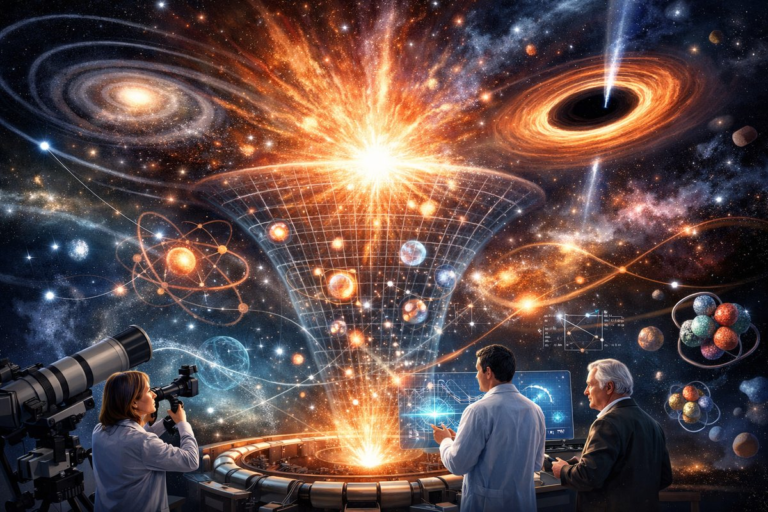
New survey telescopes will soon map billions of galaxies across more than half the sky, tracking how cosmic structure grows over time. Coupled with precise measurements of the CMB and gravitational waves, the data flood promises to constrain parameters governing inflation, neutrino mass, and dark sector interactions. If anomalies persist, they could point toward revolutionary shifts in our understanding of space, time, and matter.
For amateur astronomers and citizen scientists, these developments offer an invitation to participate in cosmic discovery. Sky surveys often release public data sets, enabling enthusiasts to hunt for gravitational lenses, supernovae, and other transient phenomena. Software tools for analyzing microwave sky maps are also freely available, allowing anyone to explore the same polarization patterns that hint at new physics.
In academic halls, debate rages over the fine-tuning problem: why did inflation kick in at just the right energy scale? Philosophers and physicists alike wonder if anthropic arguments-invoking a multiverse with varied laws-are necessary, or if a deeper principle of symmetry will eventually emerge. Regardless of the outcome, the pursuit of the universe’s origins has never been more dynamic, with each new data point testing the limits of human ingenuity.
Ultimately, the quest to understand cosmic beginnings is a story of pushing instruments and theories to extremes. It demands ultra-sensitive detectors, vast computing power, and collaborations spanning continents. Progress often builds on the shoulders of unexpected discoveries: an unexplained blip in microwave polarization, a puzzling discrepancy in galactic distances, or a faint hum in gravid wave data. Each puzzle piece brings us closer to answering one of humanity’s oldest questions-how did everything begin?
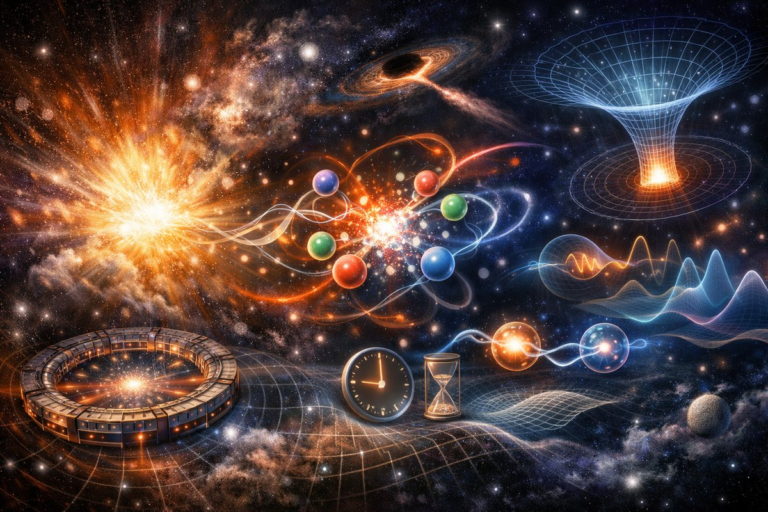
As the next generation of observatories comes online, researchers will sift through exabytes of data for the faintest signals. From balloon flights over Antarctica to deep-sea neutrino arrays and spaceborne interferometers, the experimental frontiers are as vast as the cosmos itself. If the earliest echoes are finally heard, they will speak of quantum events that shaped spacetime, seeded galaxies, and set the stage for life. In chasing those echoes, we chase our own origins, peering back to when time and space themselves were being born.
The cosmic dawn remains elusive, but the scientific community is closer than ever to illuminating the universe’s birth narrative. With each new observation and theoretical breakthrough, the primordial tapestry becomes richer, revealing the forces and particles that penned the prologue to everything we know. And as this grand detective story unfolds, it reminds us that to study the heavens is to explore the very roots of existence.