Location
Mount Vernon, WA 98274

Location
Mount Vernon, WA 98274
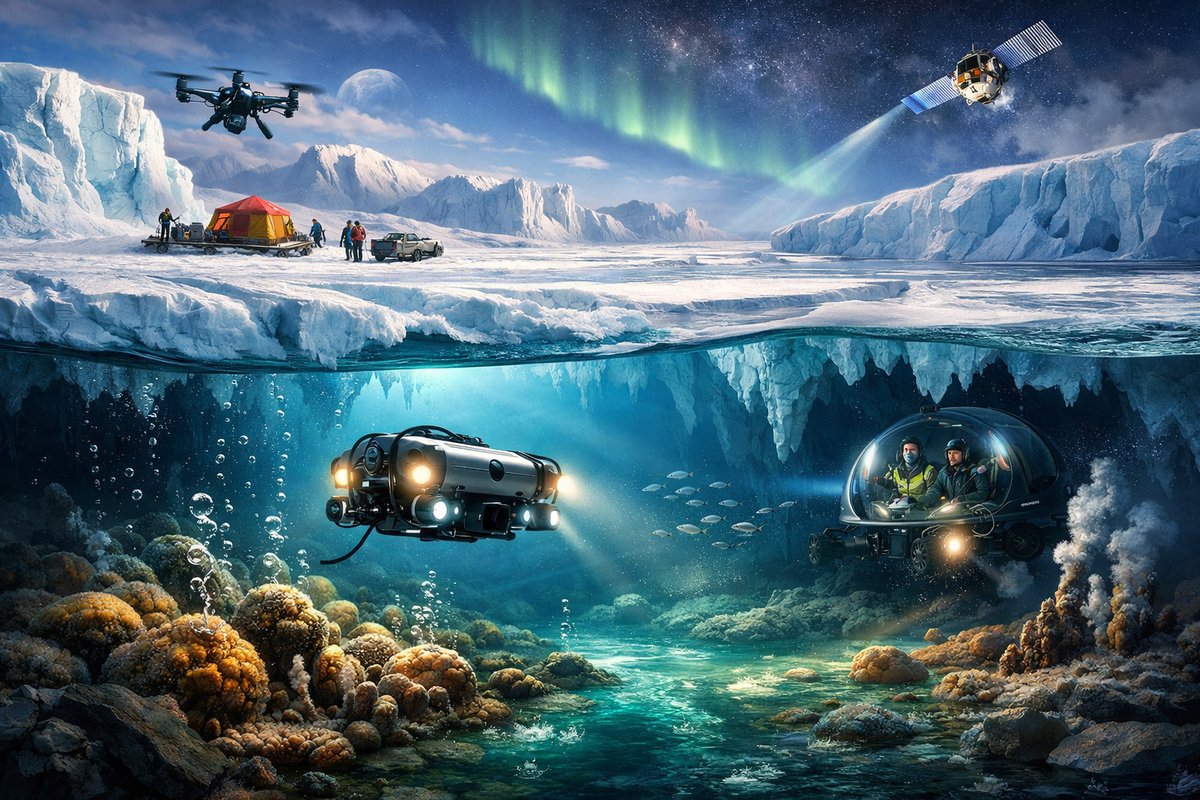
Far beneath the polar ice sheets, isolated lakes harbor microbial communities that influence global carbon cycles and offer clues to Earth's climate resilience. Recent expeditions employing underwater drones and remote sensing are decoding these hidden ecosystems, revealing their potential to modulate greenhouse gas flows. Researchers hope that understanding these frigid habitats could unlock new insights for tackling climate change above the ice.
Deep beneath kilometers of ice, an extraordinary world has remained sealed for millennia. Subglacial lakes-bodies of water trapped beneath the Greenland and Antarctic ice sheets-have long been theorized, but only in recent years have scientists begun to explore their dark, pressurized depths. Thanks to advances in remote sensing, autonomous underwater vehicles, and sterile sampling techniques, researchers are finally lifting the veil on these hidden reservoirs of microbial life. Their discoveries are reshaping our understanding of how Earth’s most isolated ecosystems can influence the global carbon cycle and offer lessons in resilience under extreme conditions.
Early hints of subglacial lakes came from satellite altimetry that detected subtle surface bulges on the ice sheet-signal of water shifting far below. By analyzing radar reflections and ice-penetrating lidar, teams mapped the outlines of dozens of lakes, some spanning tens of kilometers. The largest, known as Lake Vostok beneath East Antarctica, measures nearly twice the surface area of Lake Ontario. While its discovery excited scientists-and fueled speculation about life in isolation-it also posed formidable logistical challenges. How to bore through nearly four kilometers of solid ice without contaminating a pristine environment?
In 2012, a breakthrough came when a hot-water drill designed to minimize microbial intrusion reached Lake Whillans under West Antarctica. As the drill pierced the final icy threshold, pressurized water from the lake rose through the borehole, carrying samples of sediment and water. Researchers retrieved sterile syringes that plunged into subglacial darkness to collect microbes and chemical signatures. Back at field camps, preliminary analyses revealed living cells and evidence of metabolic processes adapted to cold, nutrient-poor conditions. Yet obtaining just a few milliliters of water required weeks of drilling, strict sterility protocols, and specialized equipment to maintain in situ pressure and temperature.
Building on these first forays, international teams now rely on remote-operated vehicles (ROVs) that can traverse sub-ice corridors and swim into hidden caverns. Lightweight ROVs equipped with high-definition cameras, temperature sensors, and sampling chambers are lowered through boreholes, steering around rocky walls to reach unexplored basins. These drones capture images of biofilms clinging to submerged rock faces and spot feathery colonies of microbes thriving in geothermal vent upwellings. Instruments measure oxygen, pH, and dissolved organic carbon in real time, generating datasets that scientists compare with surface ecosystems. By correlating subglacial conditions to microbial community structure, they hope to model how these isolated habitats process organic material and sequester greenhouse gases over millennia.
One expedition beneath Greenland’s ice sheet recorded higher-than-expected methane concentrations in a subglacial lake fed by bedrock springs. Methane is a potent greenhouse gas, and its presence in locked-away reservoirs raises questions about how climate warming might mobilize these underground stores. Laboratory tests on retrieved samples showed methanogenic archaea converting carbon compounds into methane at near-freezing temperatures-a metabolic pathway offering both risks and potential benefits. While thawing permafrost and melting ice may release trapped carbon, subglacial microbes also metabolize organic material, potentially mitigating emissions by locking carbon into biomass or mineral precipitates.
Mapping the size and connectivity of subglacial lakes has further revealed hydraulic networks that redistribute water beneath ice sheets. Seasonal meltwater at the surface percolates through crevasses and moulins, eventually feeding a dynamic web of channels that link lakes over hundreds of kilometers. This circulatory system influences how ice moves and how microbes disperse, carrying organic matter from the surface into the deep. When lakes fill and drain, they lubricate the ice base, accelerating glacier flow toward the ocean. Understanding this process is crucial for predicting sea-level rise, since abrupt drainage events can destabilize vast ice shelves.
Back in laboratory settings, researchers cultivate microbial communities under simulated subglacial conditions-pressurized bioreactors set to subzero temperatures and low light. These experiments reveal that some microbes conserve energy by switching between metabolic pathways, using sulfur compounds, hydrogen, or methane depending on availability. By sequencing their genomes, scientists have identified novel enzymes that remain active at temperatures near the freezing point of water. Such cold-adapted proteins may have industrial applications, from wastewater treatment in cold regions to bioremediation of pollutants in alpine environments.
Beyond potential applications, subglacial research underscores nature’s capacity for resilience. In an environment devoid of sunlight, with crushing pressure and near-freezing temperatures, life not only persists but flourishes through innovation at the molecular level. These microbial communities have evolved over hundreds of thousands of years in isolation, raising tantalizing questions about life on other icy worlds-like the subsurface oceans of Jupiter’s moon Europa or Saturn’s Enceladus. Discoveries here on Earth inform astrobiology, guiding the design of probes that might one day sample extraterrestrial brines for signs of life.
As climate change accelerates, ice sheets are warming and thinning, potentially altering subglacial habitats before we fully understand them. Melting increases connectivity between previously isolated lakes, reshaping ecosystems and impacting carbon fluxes. Scientists emphasize the need for long-term monitoring, combining satellite observations with repeated sampling campaigns. Portable field camps now include solar-powered generators and modular laboratories that can remain operational through winter darkness. Data transmitted via satellite link feed into global climate models, improving projections of ice-sheet dynamics and greenhouse gas feedbacks.
In the quiet depths beneath the ice, subglacial lakes tell a story of hidden life, fragile connections, and Earth’s astonishing resilience. By listening to the echoes from these frozen worlds, researchers are piecing together the complex interplay between biology, geology, and climate. Their findings remind us that even in the most extreme corners of our planet, nature holds secrets that could reshape our understanding of life, sustainability, and our role in a changing world.