Location
Mount Vernon, WA 98274

Location
Mount Vernon, WA 98274
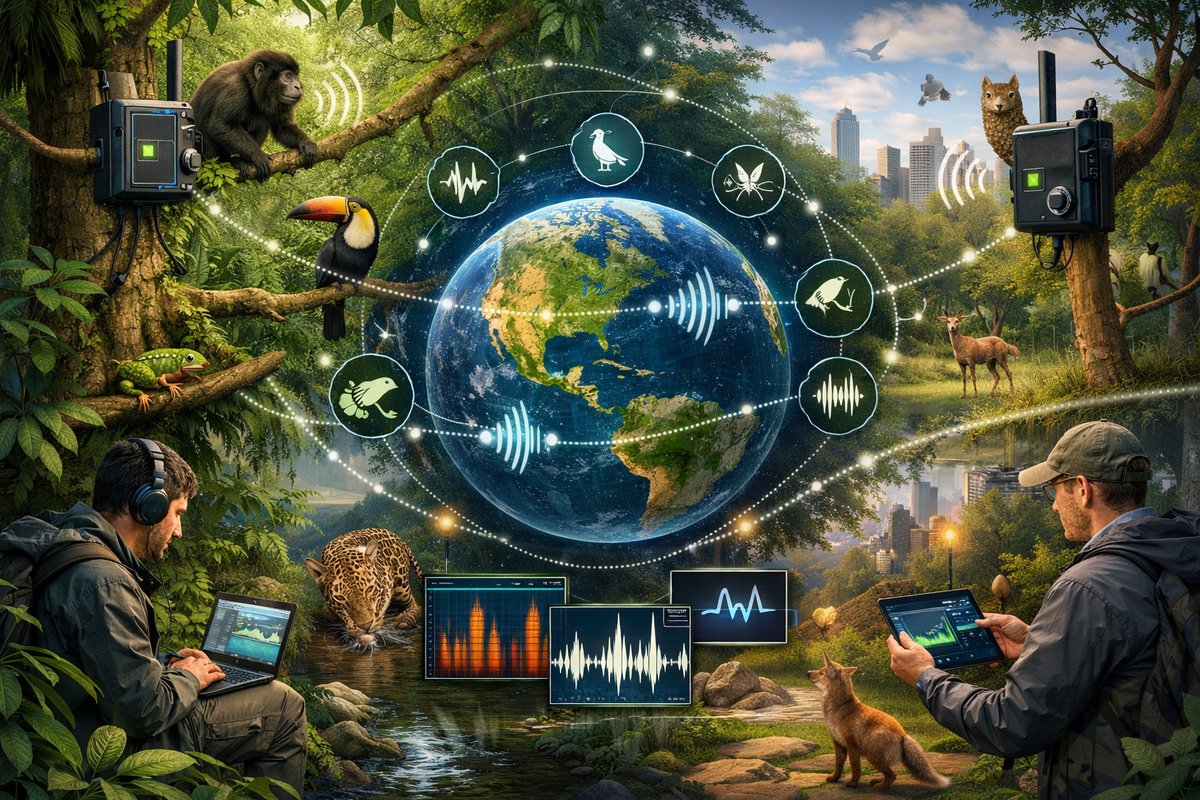
A network of autonomous audio recorders armed with machine learning is transforming the way scientists monitor biodiversity. From remote rainforests to urban parks, researchers are tapping into the natural chorus to track species, detect threats, and map ecological change in real time.
At the edge of a tropical forest as dawn breaks, a symphony of calls, chirps, and rustles unfolds around you. Each trill is a messenger, carrying clues about the health of the ecosystem. In many of the world’s wild places, these natural soundscapes form a delicate tapestry of life-one that scientists are now unraveling with surprising precision. A recent surge in autonomous acoustic monitoring powered by artificial intelligence is revealing patterns of biodiversity in forests, wetlands, and urban green spaces faster and more affordably than ever before.
Over the past two years, research teams have deployed small, weatherproof audio units-often repurposed mobile devices or custom-built recorders-across dozens of sites from the Amazon basin to Southeast Asian reserves. These devices, known as autonomous recording units (ARUs), capture continuous sound for weeks at a time. What once required hours of manual surveillance now generates terabytes of raw audio, which is then processed by machine-learning models trained to recognize the unique signatures of birds, frogs, insects, and even mammals.
One landmark study in Malaysian lowland rainforest streamed two months of dawn and dusk recordings into a neural-network classifier developed by an international coalition of universities. The system identified over 150 vocalizing species per day, including several rare amphibians that had evaded traditional surveys for years. In one notable case, the algorithm flagged a series of frog calls at night that matched a critically endangered species thought to be locally extinct-ultimately leading conservationists back to a hidden breeding pool deep in the understory.
Key to this boom in acoustic ecology has been the advent of off-the-shelf machine-learning frameworks and public sound libraries. Platforms like BirdNET and FrogID have amassed millions of labeled recordings, empowering researchers and citizen scientists to refine classifiers for their region’s species. Coupled with low-power hardware and solar charging, modern ARUs can operate for months without maintenance, dramatically reducing survey costs and the carbon footprint of fieldwork.
Beyond species detection, scientists are exploring acoustic diversity indices-metrics that quantify the complexity of a soundscape in place of labor-intensive counts. Early results show strong correlations between these indices and traditional measures of species richness and abundance. In Central American cloud forests, for example, rising acoustic diversity over a five-year period tracked an uptick in avian populations following a community-led reforestation effort.
Smartphone apps have also democratized soundscape monitoring. Enthusiasts armed with handheld recorders or even phone mics can upload snippets to global archives, contributing to real-time maps of phenological shifts-such as earlier dawn choruses linked to warming temperatures. In one pan-continental study, researchers observed a median advance of 20 to 30 minutes in peak bird-song activity across seven temperate zones over the last decade, offering an audible alarm over climate change’s impact on animal behavior.
Yet the promise of acoustic monitoring comes with challenges. Tropical downpours, wind, and human noise can overwhelm wildlife signals, confusing algorithms trained in cleaner soundscapes. To combat this, developers are integrating noise-reduction filters and context-aware preprocessing to tease out faint calls from the background. Edge computing solutions now allow recorders to preprocess audio in situ, uploading only tagged clips rather than entire waveforms-slashing bandwidth needs for remote deployments.
In urban environments, distributed listening stations are revealing surprising pockets of biodiversity amid traffic and construction. Acoustic surveys in several European cities have detected breeding colonies of barn owls and rare bats in abandoned industrial lots, prompting planners to preserve key green corridors. Municipal authorities are using these insights to craft “sound-friendly” zones that balance human activity with urban wildlife refuges.
Another frontier lies in real-time threat detection. By training models to recognize chainsaw blades, gunshots, and road traffic patterns, acoustic networks can alert rangers to illegal logging, poaching, or encroachment events the moment they occur. In a pilot in the Congo Basin, such alerts led to the swift interdiction of an unlicensed timber harvesting crew, showcasing how a few well-placed microphones can safeguard vast tracts of forest.
Indigenous guardians are among the earliest adopters of acoustic tools, combining centuries of local knowledge with modern analytics. In Australia’s Arnhem Land, community rangers use ARUs to monitor the calls of endangered magpie geese and green tree frogs, informing controlled-burn strategies that support both biodiversity and cultural traditions. Data sovereignty protocols ensure that recordings remain under local stewardship, honoring privacy and heritage.
Looking ahead, researchers envision a global acoustic network-an Earth-scale sensor array linking every biome from tundra to savanna. Such a system could provide continuous biodiversity dashboards, flagging ecosystem imbalances long before they show up in satellite imagery. As open-source software and affordable hardware spread, the barriers to listening are vanishing.
Ultimately, tuning into the planet’s soundtracks offers more than raw data; it fosters a deeper sense of connection to the web of life. Every call we capture, every chorus we decipher, invites us to pay attention, to belong, and to act as stewards of a world that still speaks in whispered melodies.