Location
Mount Vernon, WA 98274

Location
Mount Vernon, WA 98274
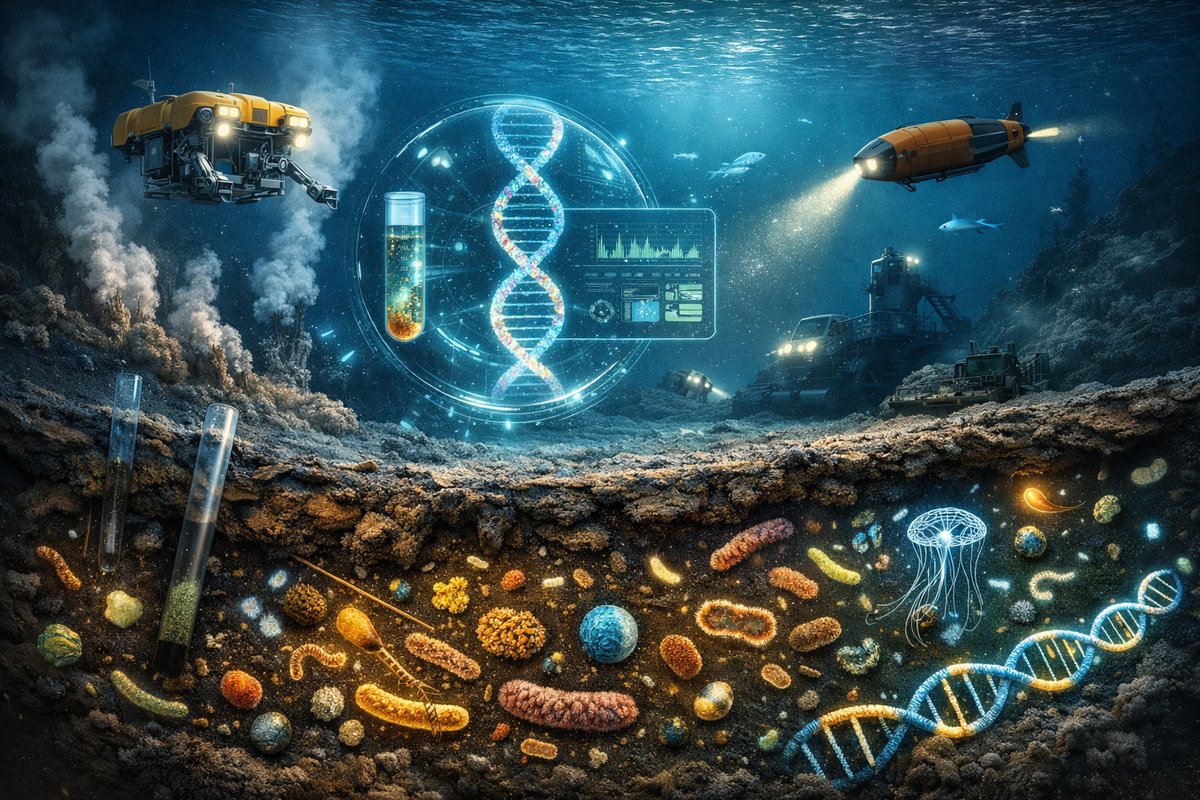
Beneath crushing pressures and eternal darkness, deep-sea sediments cradle a staggering diversity of microbial life-tiny sentinels that encode eons of adaptation. As mining interests and climate shifts threaten these hidden realms, researchers deploy innovative tools like environmental DNA analysis and underwater drones to map, safeguard, and learn from this vast microbial gene library.
Centuries ago, sailors whispered of ghost ships and sea monsters in the world’s trenches and abysses. Today, we know those depths bristle not with fantasy beasts but with microscopic marvels: bacteria, archaea, and fungi that have evolved wonders of biochemistry far beyond human imagination. Far from barren mud, deep-sea sediments form a living archive-an immense library of genetic blueprints that underpin global cycles of carbon, nitrogen, and sulfur. In recent expeditions to the Pacific and Atlantic basins, scientists have begun unlocking this archive, revealing tens of thousands of novel microbial lineages and genes with potential for medicine, industry, and ecological resilience.
The hidden troves beneath the waves are astonishing in scale. Although less than one percent of Earth’s surface area, abyssal plains may contain more than half of the planet’s microbial biomass stored in soil. A landmark survey published in Nature Microbiology described over 10,000 new species identified solely from sediment cores collected at depths exceeding 4,000 meters. Many belong to the so-called “microbial dark matter”-lineages that escaped detection in coastal and surface-water studies and whose metabolic capabilities remain mysterious.
Unraveling these secrets demands more than brute sampling. Environmental DNA (eDNA) techniques now allow researchers to filter minute traces of genetic material from seawater above sediment beds, reconstructing community profiles without disturbing the seafloor. Paired with high-throughput sequencing and machine-learning algorithms, eDNA surveys can detect rare species and track shifts in microbial diversity as ocean conditions change. Autonomous underwater vehicles equipped with eDNA samplers have clocked continuous transects spanning hundreds of kilometers, painting the first high-resolution maps of microbial hotspots around hydrothermal vents and cold seeps.
Mining interests and resource pressures are racing to catch up. The International Seabed Authority has received applications to explore polymetallic nodule fields for cobalt and manganese, prized for battery technology. Yet nodule extraction risks stirring sediments, releasing ancient microbes and potential toxins into the water column. Regulators face a stark choice: proceed with minimal rules or impose moratoria until microbial impacts are understood. Some nations have already paused pilot mining projects, citing the precautionary principle and calling for comprehensive baseline studies-a testament to how rapidly deep-sea science is influencing policy.
One striking example of interdisciplinary research took place in the Mariana Trench, the deepest known point on Earth. A joint oceanographic mission deployed remotely operated vehicles to collect sediment cores from nearly 11,000 meters below sea level. Back on the research vessel, each core underwent rapid DNA barcoding. Early results revealed microbes equipped with enzymes that can break down complex hydrocarbons and heavy metals-traits that may enable life in pitiless environments and hold clues to novel bioremediation strategies.
These discoveries are more than scientific curiosities. Deep-sea microbes participate in global biogeochemical cycles that influence climate and ecosystem health. For instance, certain sediment dwellers sequester carbon by converting dissolved organic matter into stable mineral compounds. Others mediate nitrogen transformation, limiting the buildup of greenhouse gases like nitrous oxide. Disrupting these microbial processes through sediment disturbance could release gigatons of sequestered carbon or alter nutrient flows, cascading through food webs from plankton to whales.
The biotech industry is already eyeing applications. Enzymes sourced from high-pressure, low-temperature microbes exhibit remarkable stability under conditions that would denature conventional proteins. Innovations in pharmaceutical research have led to new antibiotic candidates drawn from abyssal microbes, potentially addressing multidrug-resistant pathogens. Cosmetic companies are exploring DNA repair enzymes that evolved under intense radiation at hydrothermal vents. While commercial interest can spur conservation funding, it also raises ethical questions: who owns the genetic heritage of international waters, and how can benefits be shared equitably?
Collaboration between governments, scientists, and industry stakeholders is critical. The recent Deep Ocean Stewardship Initiative brought together ecologists, lawyers, and Indigenous representatives to draft guidelines for sustainable seabed mining and biodiversity protection. Their framework recommends no-take zones around biologically significant features, mandatory impact assessments using eDNA baselines, and benefit-sharing agreements for any commercial uses of marine genetic resources.
Community engagement extends beyond conference rooms. Citizen-science platforms now allow recreational divers and fishing fleets to report unusual specimens or water discoloration, uploading photos and GPS coordinates to ocean-mapping databases. While deep trenches remain inaccessible to most, coastal volunteers help calibrate remote sensing tools that infer sediment composition and biological activity from ship-based sonar and submersible data.
Despite technological leaps, many puzzles persist. How do such diverse communities establish themselves in permanently dark, food-scarce settings? What role do viral predators play in controlling microbial populations? Can sediment microbes adapt fast enough to changes in ocean acidity and temperature? Long-term observatories-moorings fitted with sensors and automated sampling modules-are beginning to record year-round fluctuations, but full understanding may require generations of research.
The stakes are high. As humanity confronts climate change, resource depletion, and ecosystem collapse, the deep-sea microbial archive offers both warnings and opportunities. Disturbing it carelessly could trigger unforeseen feedback loops, while unlocking its potential responsibly might yield new tools to heal the planet.
Echos from the abyss remind us that Earth’s resilience often lies in the smallest beings, hidden where we least expect them. Protecting these microbial sentinels calls for humility, curiosity, and a commitment to long-term stewardship. In doing so, we honor a shared heritage-one that plays out not only on mountain slopes and forest floors, but also in the silent sediments of the ocean’s darkest realms.